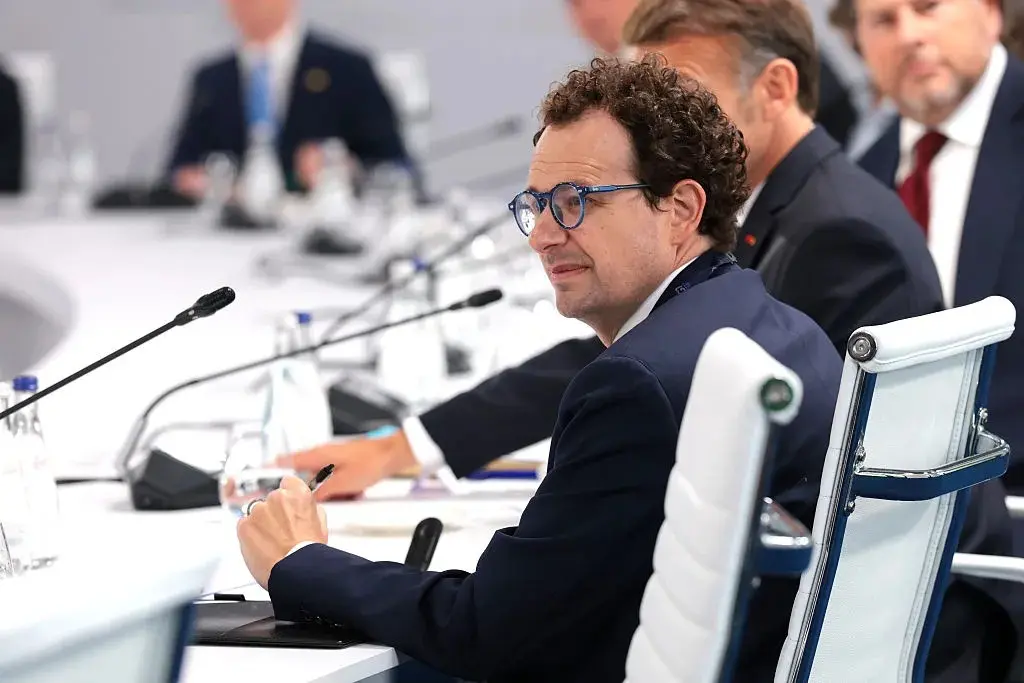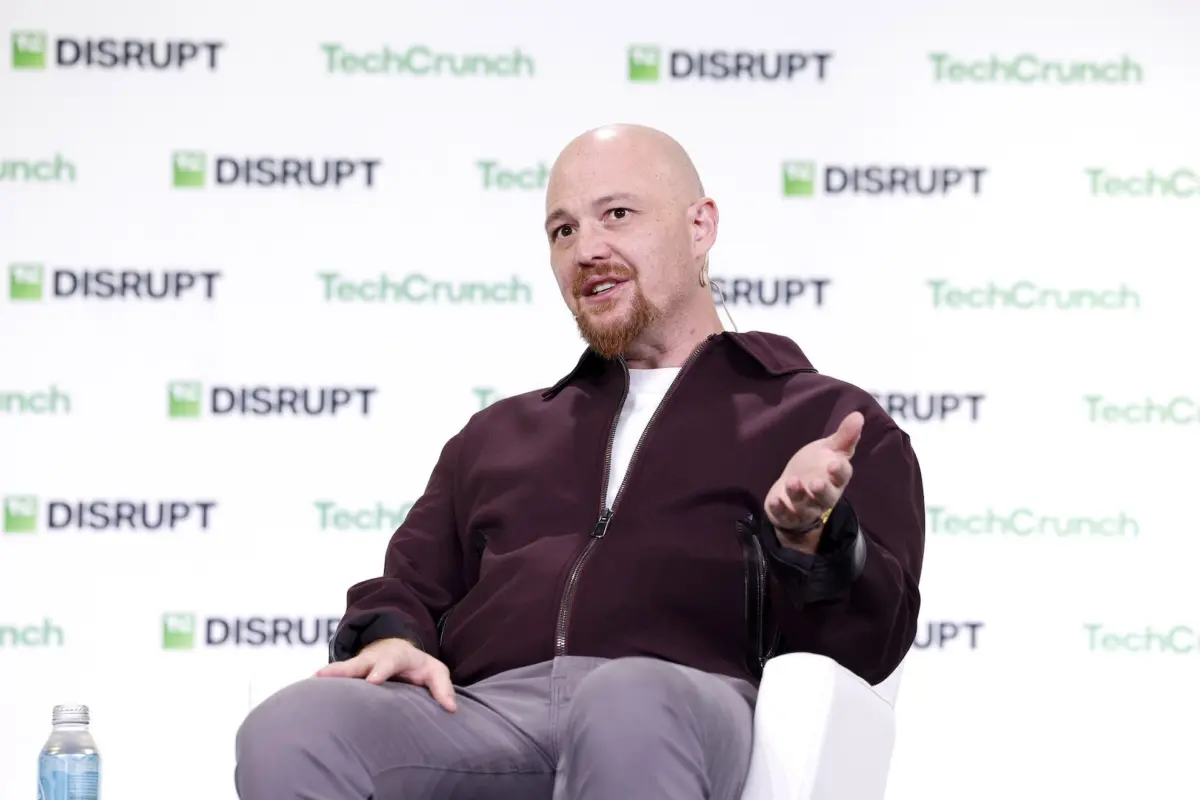
On a brisk Thursday evening in Brooklyn, neon yellow heels and floral mini dresses mingled effortlessly with the standard uniform of media insiders, tech executives, and policy advocates. It was New York, after all, where personal style goes unchecked, even at an election-season gathering dedicated to previewing the political landscape just days before the midterms. Inside a dimly blue-lit warehouse, the crowd was surprisingly robust, reflecting the palpable anxiety and anticipation surrounding the upcoming election.
The event, titled “Midterm Madness,” was hosted by Newsreel, the media company founded by former Forbes and Newsweek reporter Jack Brewster. The lineup of speakers was designed to draw a sharp focus on the intersecting worlds of technology, culture, and politics. Kenneth Schlenker, co-founder of the focus app Opal, sat down for a fireside chat examining “the state of attention,” while Aryan Banjan, creator of the campaign management software Barza, provided a comprehensive midterm forecast. Meanwhile, panels tackled emerging policy debates, including the massive infrastructural footprint of modern computing.
Brewster explained that the core intention behind the gathering was simple: to encourage attendees to put their phones away and engage in direct, face-to-face conversations about the election with less than a week to go before voters headed to the polls. As the evening progressed, however, it became clear that nearly every conversation would converge on a single, dominant theme: artificial intelligence, the explosive growth of data centers, and a rising grassroots backlash against the broader technocracy.
The Growing Chasm Beyond the Tech Bubble
Lately, spending days immersed in Silicon Valley culture makes it easy to overlook the mounting friction between the tech sector and the rest of the country. Within the industry, conversations are dominated by the immense benefits of artificial intelligence, driven by an unyielding ambition and an unshakable optimism that success is inevitable. Yet stepping outside that insular bubble quickly reveals how jarring and intimidating those same developments appear to everyday communities.
Far from being a distant abstract concept, data centers and generative AI have transformed into intense ballot-box issues capable of shifting outcomes in tight midterm races. Public pushback has reached unprecedented levels. According to a recent report from Data Center Watch, nearly $200 billion worth of data center projects were delayed, stalled, or entirely blocked during the first half of the year due to intense political and community opposition.

Across states like Pennsylvania, Georgia, Texas, New York, and Virginia, lawmakers are facing mounting pressure to introduce stricter guardrails, regulatory oversight, and transparency requirements for rapid digital infrastructure development. Virginia alone, long recognized as the data center capital of the world, is grappling with hundreds of new facility proposals that have ignited fierce local debates over land use and resources.
Accountability, Policy, and the Political Landscape
The evening’s programming set an urgent tone early on with a fireside chat featuring New York City Council member Chi Ossé. While AI emerged near the end of the discussion, Ossé admitted he rarely uses the technology, adopting a stance that was neither overtly pro- nor anti-AI. Instead, his primary focus was the urgent need to hold technology executives strictly accountable and to demand higher taxation for trillionaires like Elon Musk.
Describing himself as a democratic socialist with a law-and-order philosophy, Ossé argued that when corporate leaders promote technologies capable of causing catastrophic societal disruption, they should be subjected to rigorous congressional oversight and forced to testify publicly.
That tension carried directly into the subsequent panel on data centers, which featured Maia Woluchem, a technology and human rights researcher, and Hilary Flint, an environmental and public health advocate. Taking the stage, the moderator tested the room’s temperature with a direct question: “Who here is pro-AI data center?” The query was met with immediate and resounding boos.
The ensuing discussion explored the deep-seated grievances fueling public anger. Communities are increasingly frustrated by major technology companies reportedly cutting confidential agreements with local officials to fast-track billion-dollar infrastructure projects. In many municipalities, opaque zoning regulations mean residents remain entirely unaware of what is being built until it is too late to mount an effective protest.

The Human Cost and the Search for Prosperity
These anxieties are compounded by broader economic pressures. As everyday citizens struggle with the cost of living and attempt to preserve financial stability, tech leaders openly discuss scenarios where AI replaces human workers—or alters society fundamentally. For many residents, the unchecked expansion of digital infrastructure feels like a direct loss of community self-determination, compounded by legitimate worries regarding environmental degradation and public health risks. Experts on the panel agreed that data centers have effectively become the physical manifestation of public fear and resentment toward the rapid, unaccountable pace of technological advancement.
When the conversation touched upon the localized economic benefits sometimes promised by developers, Flint challenged the premise directly. “What is a life worth?” she asked, noting that residents continue to organize and protest because they ultimately value their health and communities far more than a temporary economic windfall.
A later panel examining the future of the Democratic Party—featuring NewsNation host Batya Ungar-Sargon, political strategist Morris Katz, and Vox’s Astead Herndon—similarly veered back to the topic of physical infrastructure. Ungar-Sargon pointed out that some labor unions initially support data center projects due to the promise of construction jobs, even though research shows employment figures drop sharply once building is complete.
Drawing a parallel to historical industrial shifts, Ungar-Sargon noted that past generations took immense pride in large, imposing industrial buildings across the Rust Belt because those facilities represented stable employment, community prosperity, and a secure pathway to the American dream.
Herndon observed that similar dynamics have played out across political lines, noting that figures like Vivek Ramaswamy faced pushback for highlighting the lack of public consent in these developments across regions like Ohio. Katz echoed these sentiments, expressing deep skepticism toward corporate promises. He argued that the same institutional powers that oversaw the decline of traditional union labor and working-class manufacturing jobs are now returning to extract the remaining value from local communities.

A National Flashpoint in Unexpected Places
Along the walls of the warehouse, sticky notes captured the anxious mood of the attendees, with handwritten responses to questions like “Will we ever be able to get Big Money out of politics?” yielding weary replies such as, “God, I hope so.”
As the formal panels concluded, the room transitioned into a networking mixer, with techno music pulsing as guests formed smaller circles to debate the societal impact of AI and digital infrastructure. Reflecting on the evening, Brewster expressed little surprise that the topic dominated both the stage discussions and audience RSVP submissions.
“It came up in every conversation on stage, and it was the second most common topic in the questions people sent us,” Brewster noted, observing that the debate resonated even in New York City, where physical facilities are less visible. “AI has become an election issue for regular voters. In rural communities, the backlash is about feeling replaced. In a place like Brooklyn, it’s more about who gets rich from it.”
Before the night wrapped up, casual conversations among attendees highlighted the growing cultural fatigue surrounding generative technology. Several participants noted that AI-generated imagery and synthetic art are increasingly associated with cheapness and a lack of authenticity. This cultural backlash may help explain why high-end luxury brands are deliberately shifting in the opposite direction; Prada’s holiday marketing campaigns have turned toward hand-drawn illustrations, while Hermès continues to spotlight handmade artisan work across social media channels.
For many professionals in attendance, the omnipresence of the technology debate underscored how deeply ingrained the issue has become in daily life. One software engineer recounted how a simple Halloween manicure sparked a joke about corporate tech initial public offerings, noting that data centers are now springing up in her Southern California hometown as well. Growing up in a Chinese immigrant community, she described how neighbors have begun erecting yard signs featuring imagery of dragons choking data center towers—signs that have since been translated into multiple languages to accommodate the neighborhood.

As the evening came to a close, the juxtaposition of high-fashion shoes, political strategists, and grassroots environmental resistance painted a vivid picture of an electorate grappling with a technological transformation moving faster than its democratic guardrails.