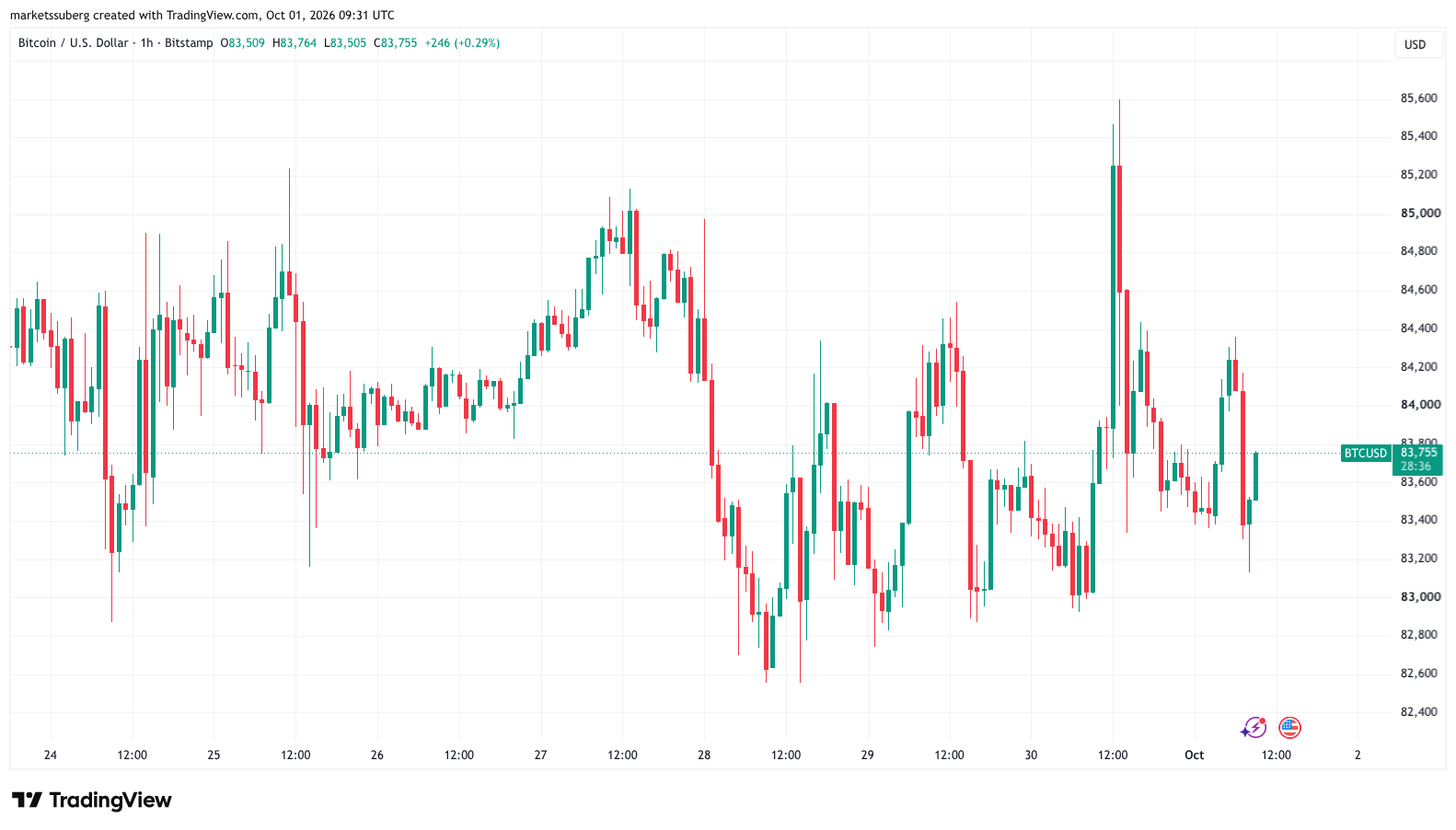
Bitcoin managed to maintain its footing above the $83,000 threshold on Thursday, steadying itself after giving back a portion of its recent gains. The minor correction followed the release of lower-than-expected United States inflation data, which injected a wave of short-term volatility into traditional and digital asset markets alike as traders navigated the transition into a new month and the conclusion of the third quarter.
Bitcoin Gives Back Gains After PCE Release
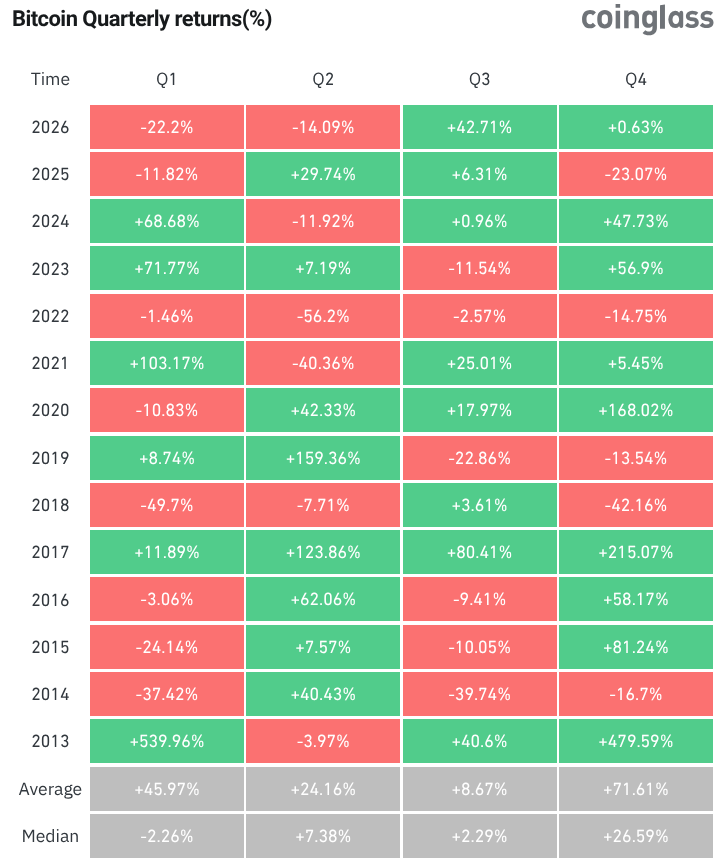
Data from major digital asset exchanges, including Coinbase, indicated that the BTC/USD trading pair remained largely flat on the day following a turbulent session leading up to the September monthly and third-quarter closes. The flagship cryptocurrency kicked off the fourth quarter—historically recognized as one of its strongest periods of the calendar year—trading at approximately $83,550. This followed an impressive third-quarter performance that saw the asset register gains of 42.7%, marking its best Q3 return since 2017, according to aggregate data compiled by CoinGlass.

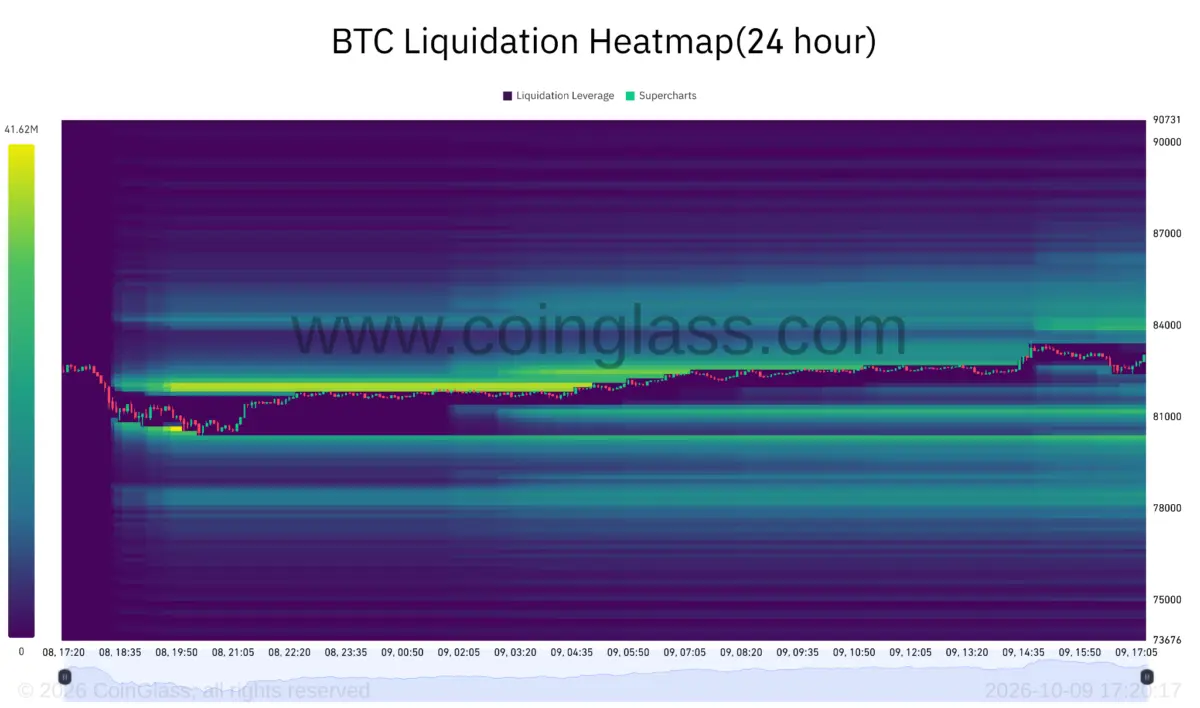
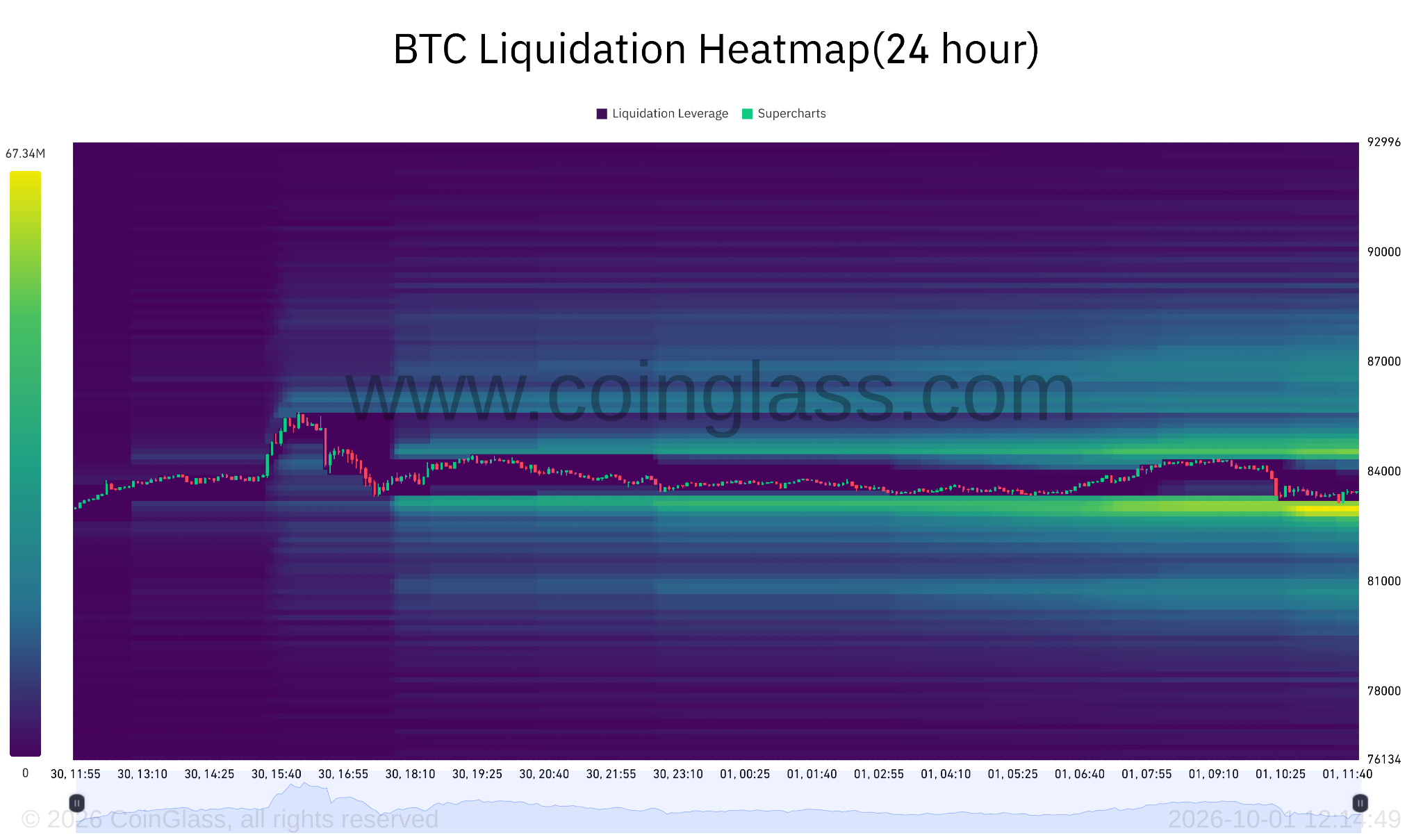
Despite the strong quarterly performance, market mechanics continue to show areas of localized risk. Analytics from CoinGlass’s liquidation heatmap highlighted notable clusters of estimated liquidation exposure sitting both above and below Bitcoin’s prevailing market price. On Thursday, a fresh $60 million cluster of estimated liquidation exposure materialized near the $83,000 mark. This concentration sits in close proximity to a critical technical support level at $82,500, a threshold that prior market analysis identified as pivotal for sustaining Bitcoin’s broader recovery trajectory from its previous lows recorded in June.
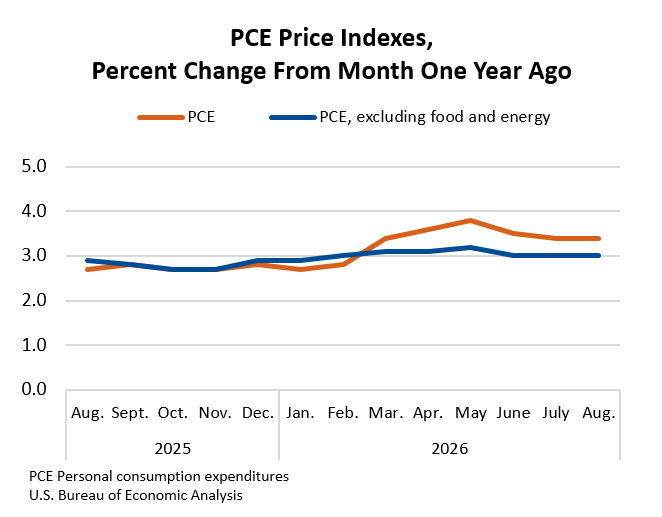
The latest upward momentum for Bitcoin hit a temporary ceiling on Wednesday when the BTC/USD pair peaked and subsequently reversed direction at $85,600. That advance had been catalyzed by the release of a cooler-than-expected US inflation reading. The Personal Consumption Expenditures (PCE) price index, which serves as the Federal Reserve’s favored barometer for tracking inflationary pressures across the economy, came in at 3.4% on a year-on-year basis for August. This figure came in notably lower than the consensus estimates from economists, who had projected the headline inflation rate to land closer to 3.7%.
Elaborating on the broader breakdown of the report, an official release from the Bureau of Economic Analysis (BEA) stated that core inflation metrics behaved similarly. "Excluding food and energy, the PCE price index increased 3.0 percent from one year ago," the agency noted in reference to the core PCE data.
Market analysts quickly pointed out that the report also incorporated several significant methodology updates. These adjustments affected how the government calculates data relating to portfolio management and investment advice, computer software and accessories, and legal services. Financial commentary publication The Kobeissi Letter highlighted the impact of these technical shifts in a post on social media, writing that the methodology change alone could reduce core PCE inflation calculations by up to as much as 20 basis points. The publication also noted that July’s headline and core PCE inflation figures had likewise been revised downward by 30 basis points.
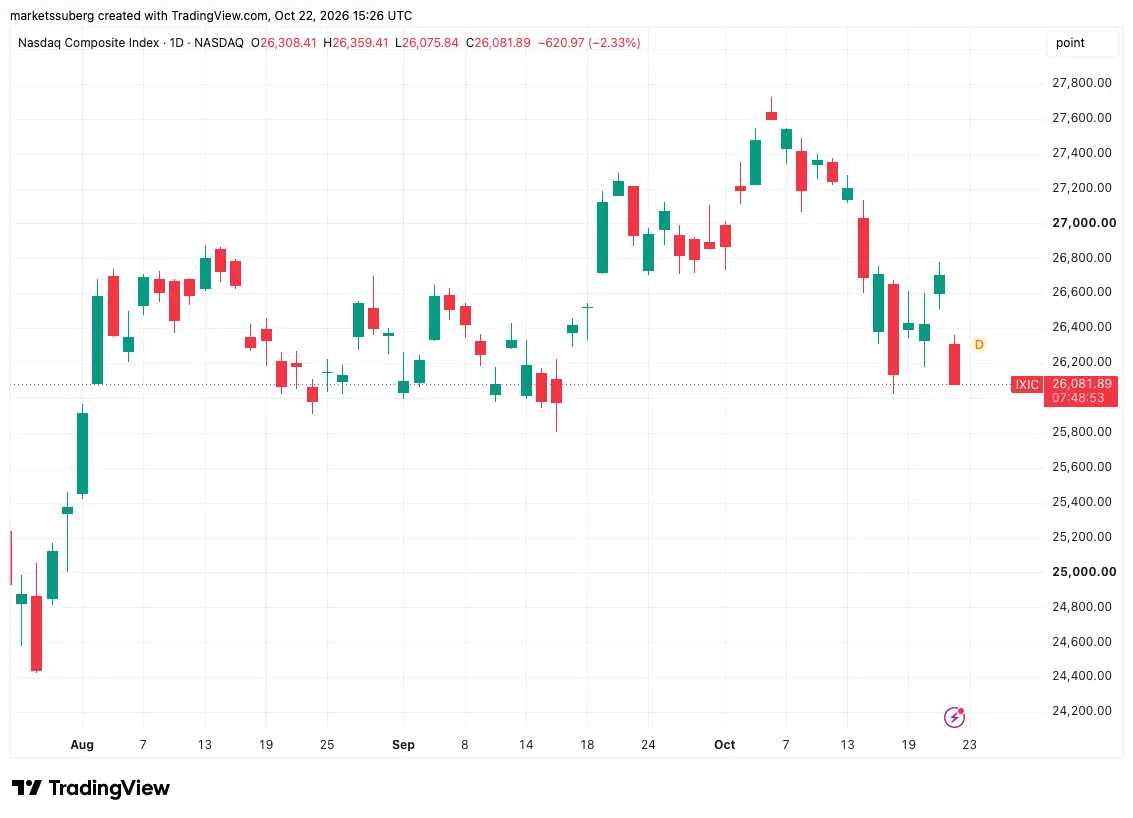
Given these revisions, The Kobeissi Letter forecasted that financial markets would heavily discount the significance of the August headline reading. Traditional equities felt the pressure during the Wednesday session, with the S&P 500 closing down 0.25% at 7,651 points, while the Dow Jones Industrial Average suffered a steeper decline, shedding 0.86% by the closing bell.
Meanwhile, expectations regarding the Federal Reserve’s upcoming monetary policy decisions remained relatively stable. Data sourced from the CME FedWatch Tool indicated that market participants priced the probability of a quarter-percentage-point interest rate increase at the central bank’s upcoming October meeting at approximately 37% on Wednesday, showing little change day-over-day. Unlike the sentiment dominating markets the prior week, traders leaned toward favoring a pause, expecting the Federal funds target range to remain unchanged at 3.75% to 4%.
Open Interest Falls to Lowest Since March Despite Bitcoin Gains
While Bitcoin’s spot price has demonstrated resilience, derivative markets are telling a complementary story that analysts suggest could foster a healthier macro environment for the ongoing trend. According to metrics provided by onchain analytics platform Glassnode, falling futures open interest could insulate Bitcoin’s ongoing price rally from the severe risks of cascading, forced liquidations that typically accompany over-leveraged market structures.
Glassnode drew attention to a distinct and noteworthy divergence between Bitcoin’s spot price appreciation and its coin-denominated open interest, a metric that tracks the total number of outstanding futures contracts measured in Bitcoin rather than fiat currency. Pointing out the discrepancy on social media, Glassnode noted that while the asset’s price has climbed roughly 35% from its lows recorded in August, coin-denominated open interest has dropped by nearly 20% over the same timeframe.
This contraction in leverage brings open interest down to levels not seen since March. Analysts suggest that this dynamic makes the current market rally considerably less susceptible to sudden, violent leverage flushes that have historically truncated previous bullish legs.
Nevertheless, overhead market resistance remains a tangible hurdle for buyers attempting to push prices higher. As previous market reports have outlined, a heavy concentration of sell orders clustered around the $85,000 level, combined with long-term holder supply accumulation sitting densely in the $84,000 to $85,000 range, continues to keep immediate record highs out of reach and reinforces a formidable supply ceiling above the current spot price.