The landscape of cybercrime is undergoing a significant transformation as threat actors increasingly integrate generative artificial intelligence into their toolkits. A sophisticated new Phishing-as-a-Service (PhaaS) platform, known as Athena StealthRoute, has emerged as a prime example of this evolution. By leveraging AI to both generate deceptive content and conceal malicious infrastructure, the platform is setting a higher bar for the operational capabilities of modern phishing campaigns.
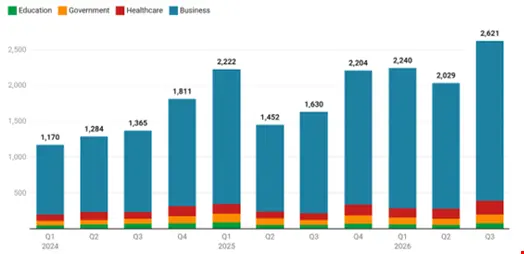
Researchers at the cybersecurity firm Abnormal AI first uncovered the infrastructure underpinning Athena StealthRoute during a broad-scale phishing campaign detected in August 2026. Since its emergence, the platform has demonstrated a rapid deployment capability, causing widespread concern among security professionals. Data gathered by the firm indicates that in the six-month period leading up to October 9, approximately 89,700 attack-related messages were distributed using the platform’s distinct link patterns. These campaigns were far-reaching, impacting roughly 2,280 organizations across the United States and Europe, highlighting the platform’s role as a potent weapon in the arsenal of modern digital adversaries.
The Rise of AI-Driven Deception
The most notable feature of Athena StealthRoute is its "AI Studio," a specialized component that provides threat actors with a suite of six distinct workflows. These workflows are designed to streamline the production of phishing lures, supporting materials, and decoy content. Instead of relying on static, pre-written templates—which are often easily flagged by signature-based security filters—users of Athena StealthRoute can request customized content tailored to specific pretexts and target demographics.
This integration of AI allows for a level of personalization that was previously labor-intensive for attackers. By automating the creation of contextually relevant lures, threat actors can conduct more convincing social engineering attacks at scale. The platform effectively lowers the barrier to entry for novice attackers while simultaneously increasing the efficacy of seasoned cybercriminals. The AI Studio represents a shift toward dynamic content generation, where the wording and tone of a phishing email can be adjusted in real-time to evade detection and increase the likelihood of victim engagement.
Beyond the AI Studio, the broader Athena StealthRoute architecture acts as a comprehensive ecosystem for cyber-attacks. It includes a marketplace for campaign assets and sophisticated link-cloaking capabilities. These cloaking mechanisms are engineered specifically to divert security scanners—such as automated bots and email security gateways—away from the true, malicious destinations, ensuring that only intended victims reach the final phishing page.
Strategic Packaging of Phishing Services
The researchers at Abnormal AI observed that Athena StealthRoute provides a profound look into how modern phishing operations are increasingly "packaged" as professional services. While the platform itself does not typically handle the final act of credential or token theft, it facilitates almost every stage of the attack lifecycle preceding that moment. By offering a single console from which to manage domain registration, link management, and decoy content generation, Athena StealthRoute allows operators to orchestrate complex campaigns without needing to build their own infrastructure from scratch.
This modular approach reflects a broader trend in the cybersecurity threat landscape: the commoditization of malicious services. Threat actors can now outsource the "dirty work" of content generation and delivery to specialized platforms like Athena StealthRoute, while focusing their own efforts on the downstream harvesting of sensitive data. This division of labor makes the entire phishing ecosystem more resilient; if one component, such as a specific domain or link-cloaking server, is identified and neutralized by defenders, the attacker can quickly pivot to another part of the service to continue their operation.

One of the more sophisticated aspects of the platform is its "White Page" option, which constitutes the sixth offering within the AI Studio. This feature is dedicated to generating structured, benign-looking web content. When security scanners or crawlers investigate a link, the platform’s cloaking layer directs them to this "White Page," which appears to be a legitimate, safe website. This strategy creates a significant challenge for security teams, as the content seen by automated defensive systems is entirely different from the content experienced by the end-user, who is steered toward the malicious phishing destination.
Challenges for Detection and Defense
The emergence of Athena StealthRoute underscores the limitations of traditional, reactive security measures. For organizations relying heavily on individual message inspection or static link analysis, the platform’s ability to cycle through dynamic, AI-generated lures and deceptive cloaking layers presents a formidable hurdle.
According to the analysis by Abnormal AI, security scanners often encounter benign, high-quality content that masks the underlying threat. Furthermore, because the AI Studio allows for endless variations in the wording and construction of phishing emails, defenders can no longer rely on specific, static indicators of compromise—such as exact phrases or known sender patterns—to identify ongoing campaigns. The "shape-shifting" nature of these lures renders traditional blocklists and signature-based detection methods increasingly insufficient.
However, the researchers emphasize that despite these advancements, the platform is not invisible. Athena StealthRoute still relies on shared backend infrastructure and a consistent, recognizable code structure within the operator console. These elements provide critical signals that defenders can use to track and mitigate threats. By focusing on these infrastructure-level patterns, security teams can develop more robust defenses that are capable of identifying the platform’s presence even as the individual domains and phishing lures continue to rotate.
Furthermore, because the platform delegates the final act of data theft to external, downstream services, security investigations must be holistic. Defenders are encouraged to look beyond the initial phishing message and investigate the entire chain of activity, including the specific mechanisms used for credential and token harvesting. By mapping the full journey from the initial lure to the final theft, organizations can gain a clearer understanding of the attacker’s methods and implement more effective, multi-layered security controls.
As the lines between legitimate digital content and malicious phishing lures continue to blur, the success of defense strategies will depend on moving toward behavioral analysis and context-aware security platforms. The rise of Athena StealthRoute serves as a stark reminder that the tools available to threat actors are becoming more sophisticated, personalized, and harder to detect, necessitating a shift toward more proactive and integrated defensive postures. For now, the platform stands as a significant milestone in the ongoing arms race between those who seek to exploit digital trust and the professionals tasked with protecting it. The ability to monitor, analyze, and disrupt these modular service providers will be essential in maintaining the integrity of organizational communications and user security in the face of an increasingly automated threat landscape.