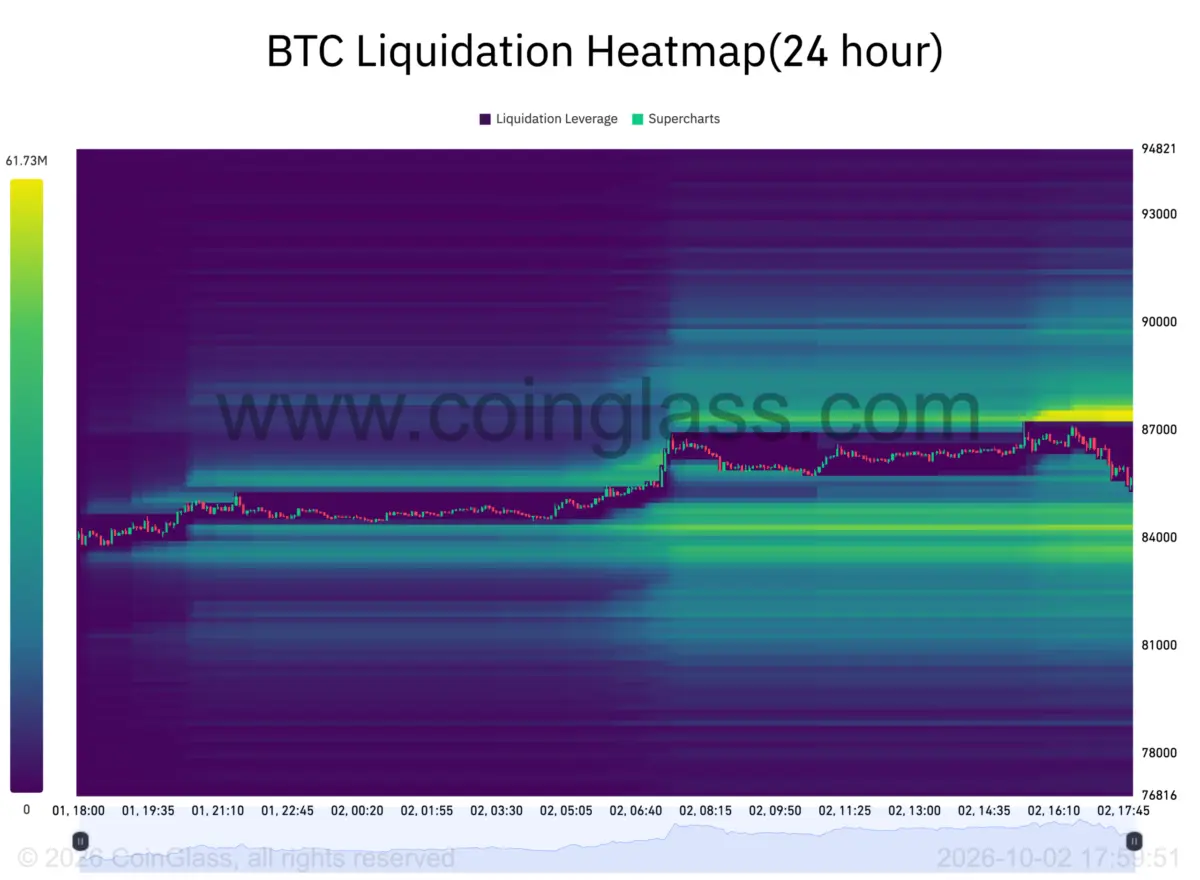
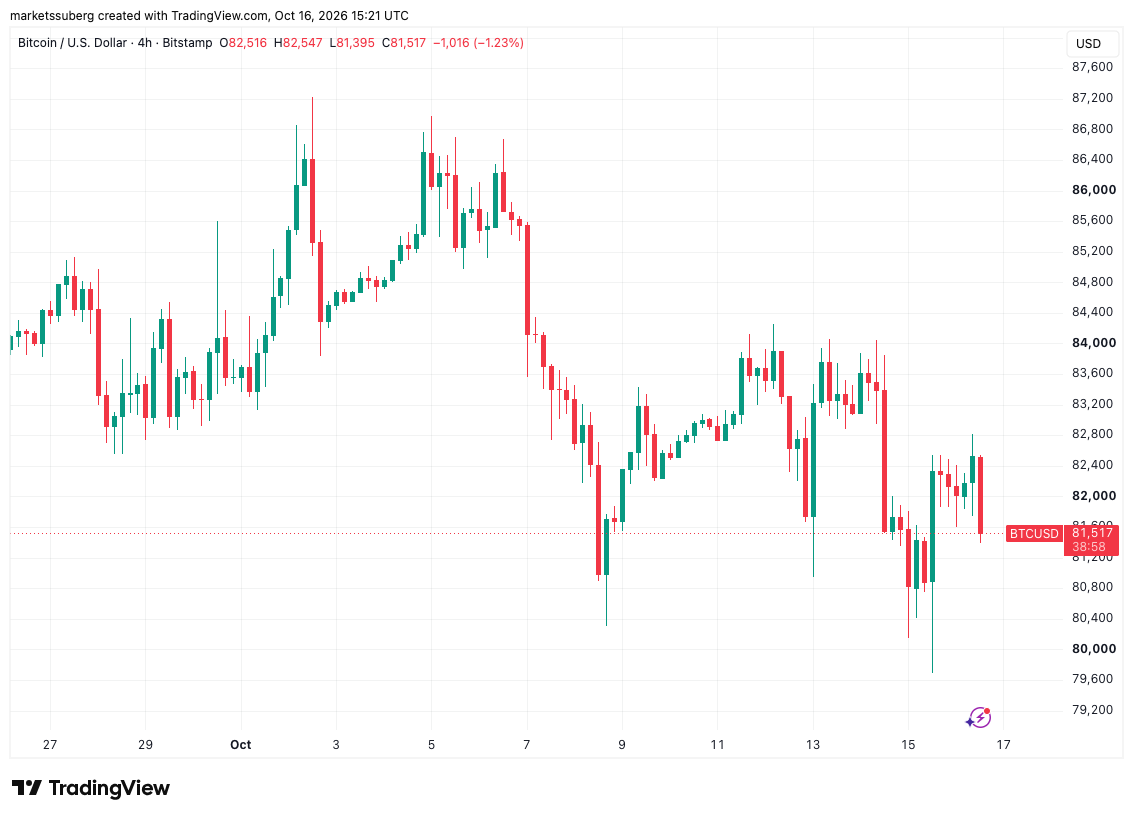
Bitcoin traded steadily near the $82,000 threshold around Friday’s Wall Street opening bell, as broader cryptocurrency markets found their footing alongside a partial recovery in South Korean equities. The flagship digital asset managed to hold the vast majority of its reclaimed ground following a sharp downside test that saw prices dip down to the $80,000 mark on Thursday before triggering a notable technical bounce.
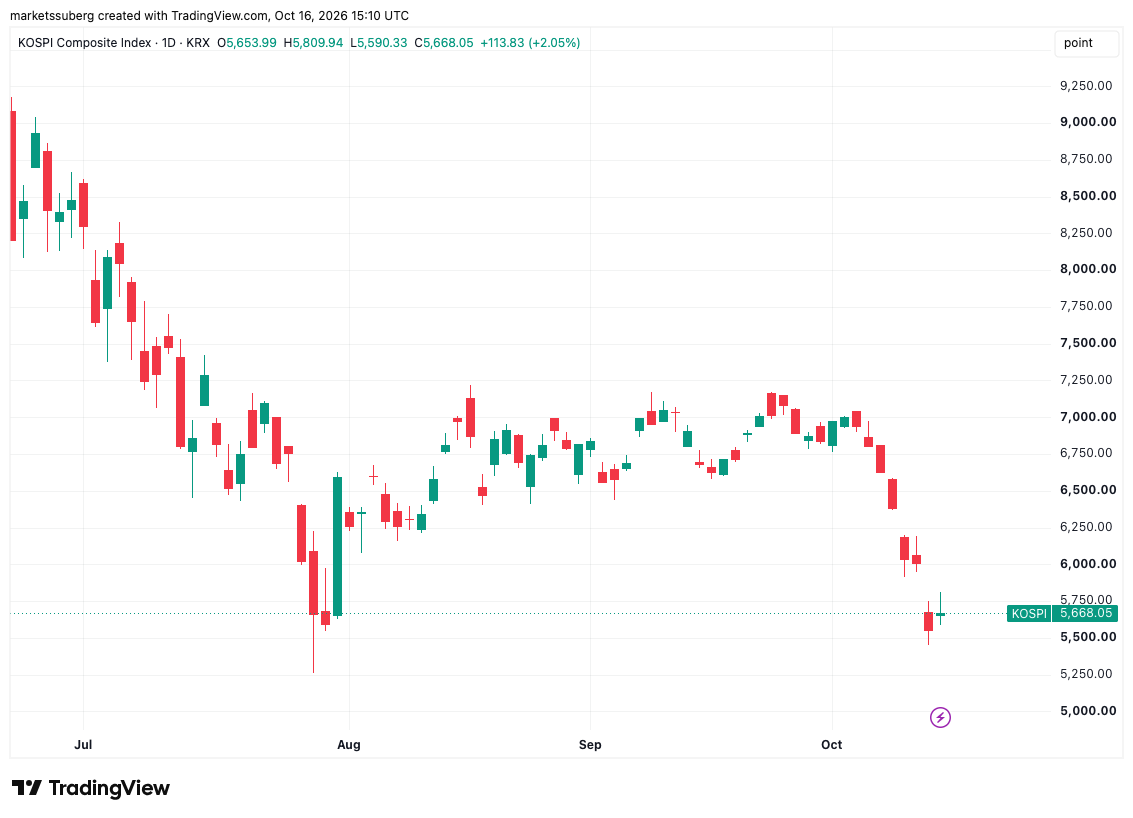
The preceding downward pressure across the crypto ecosystem was largely tied to a weeklong, punishing sell-off in South Korean technology stocks, which rattled regional risk sentiment. However, the final trading session of the week in Asia brought some measure of relief to bruised investors. The KOSPI Composite Index managed to stage a recovery, closing the day up 2% at 5,668. Despite Friday’s positive momentum, the index still finished the weekly period nursing a steep loss of 8.3%.
Meanwhile, United States equities largely managed to sidestep the worst of the contagion stemming from Asian markets, though Wall Street sentiment remained mixed on Friday. The tech-heavy Nasdaq Composite Index drifted lower, shedding 0.5% by the opening hours, while the broader benchmark S&P 500 index managed to eke out a 0.5% gain, signaling a cautious tug-of-war between buyers and sellers as traders weighed macroeconomic indicators and shifting monetary policy outlooks.

Traders See Dovish Edge to Warsh Comments
Providing a significant psychological boost to risk assets, Federal Reserve Chair Kevin Warsh offered investors a measure of relief during a high-profile discussion with International Monetary Fund Managing Director Kristalina Georgieva. During the dialogue, Warsh notably avoided making any direct or hawkish mentions regarding potential further interest-rate hikes, prompting market participants to reassess the central bank’s near-term trajectory.
“I don’t prejudge meetings. I don’t believe in saying now what I might do at the meetings that we have in the balance of this year,” Warsh remarked during the discussion.
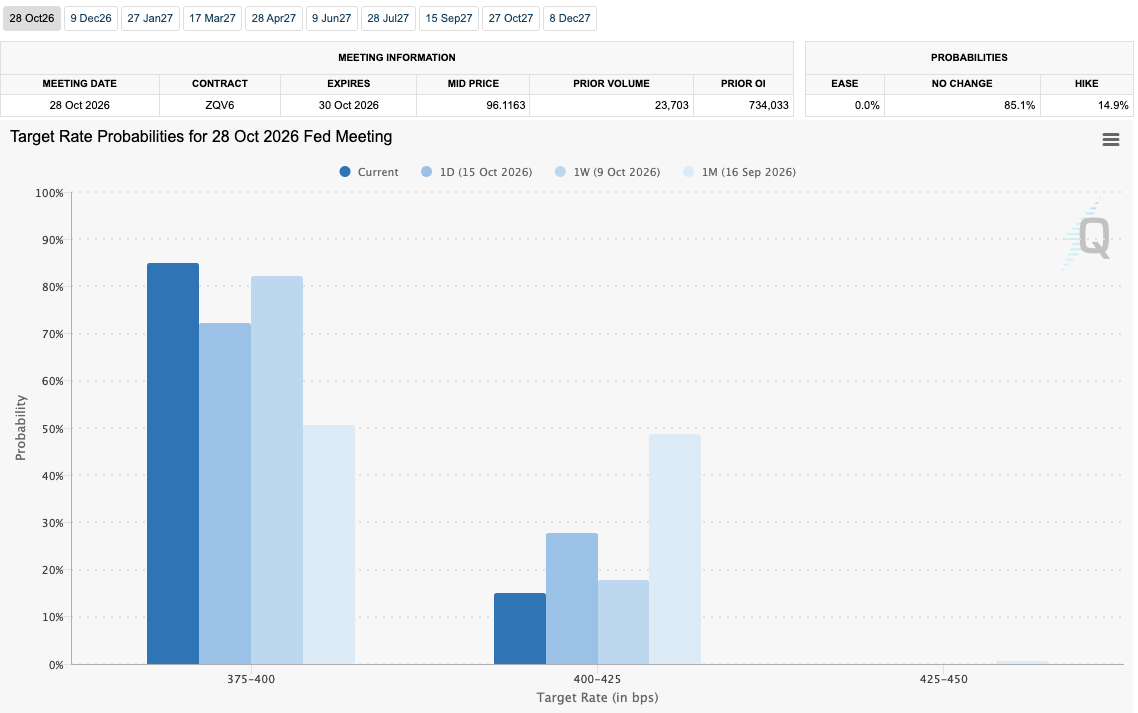
Financial markets quickly interpreted his deliberate tone as a decidedly dovish signal concerning future rate adjustments. Data captured from CME Group’s FedWatch Tool illustrated a rapid shift in market expectations, with the implied probability of a 25-basis-point interest rate hike at the upcoming October Federal Open Market Committee meeting tumbling to just 15%. This marked a sharp drop from the 27% probability recorded just one day prior.
Prominent economist Robin Brooks weighed in on the remarks, suggesting that underlying stress within the artificial intelligence sector—which had served as a primary catalyst for the steep sell-off in South Korean markets—might be playing a pivotal role in shaping the Fed chair’s measured and cautious approach.
“Warsh gave no indication the Fed’s in any hurry to hike, so the October meeting is now pretty much off the table in terms of a hike,” Brooks wrote in a detailed commentary shared online. He added that broader macroeconomic anxieties are actively influencing sentiment, noting that fears of potential turbulence or a correction in the AI sector are inadvertently helping the Federal Reserve by making financial markets far more receptive to a dovish communication style.
US Bond Yields Eye Rebound as Stocks Halt Upside
Even as equity markets and cryptocurrencies found temporary stability, traditional fixed-income markets experienced distinct crosscurrents. United States Treasury bond yields began edging upward as stocks attempted to halt their recent volatility. This dynamic sparked renewed discussions among analysts regarding whether the US Treasury might eventually find itself forced to navigate a delicate balancing act between taming an ongoing bond sell-off and supporting ongoing bullish momentum in equities.
The benchmark US 10-year Treasury yield hovered around 5.07% on Friday, having earlier attempted a more pronounced upside reversal that briefly pushed the yield as high as 5.13%.
Market commentary from institutional research provider The Kobeissi Letter highlighted that localized weakness in equities has functioned as the primary driver behind corrections in bond yields since August. In a detailed social media analysis published ahead of the weekend, the commentary suggested that global equities may currently be trapped within a paradoxical "bull-bear" market environment.
The analysis argued that without lingering geopolitical headwinds, such as ongoing concerns surrounding the US-Iran conflict, global stock markets would likely be trading significantly higher. Furthermore, persistent inflationary pressures have continued to drive aggressive investor demand for hard assets and equity exposure, even as the Federal Reserve has embarked upon a new phase of interest rate adjustments.
“Even as the S&P 500 hits year number five of its bull market, we believe a steep discount is currently priced into equities. This discount has functioned as a ‘stealth’ bear market, suppressing equity valuations in the world’s largest and fastest-growing companies,” the commentary concluded. It added that this unique market backdrop holds the underlying capacity to catalyze a violent, sharp upward rally in the S&P 500 if and when those geopolitical and macroeconomic risk factors are ultimately priced out by the broader market.