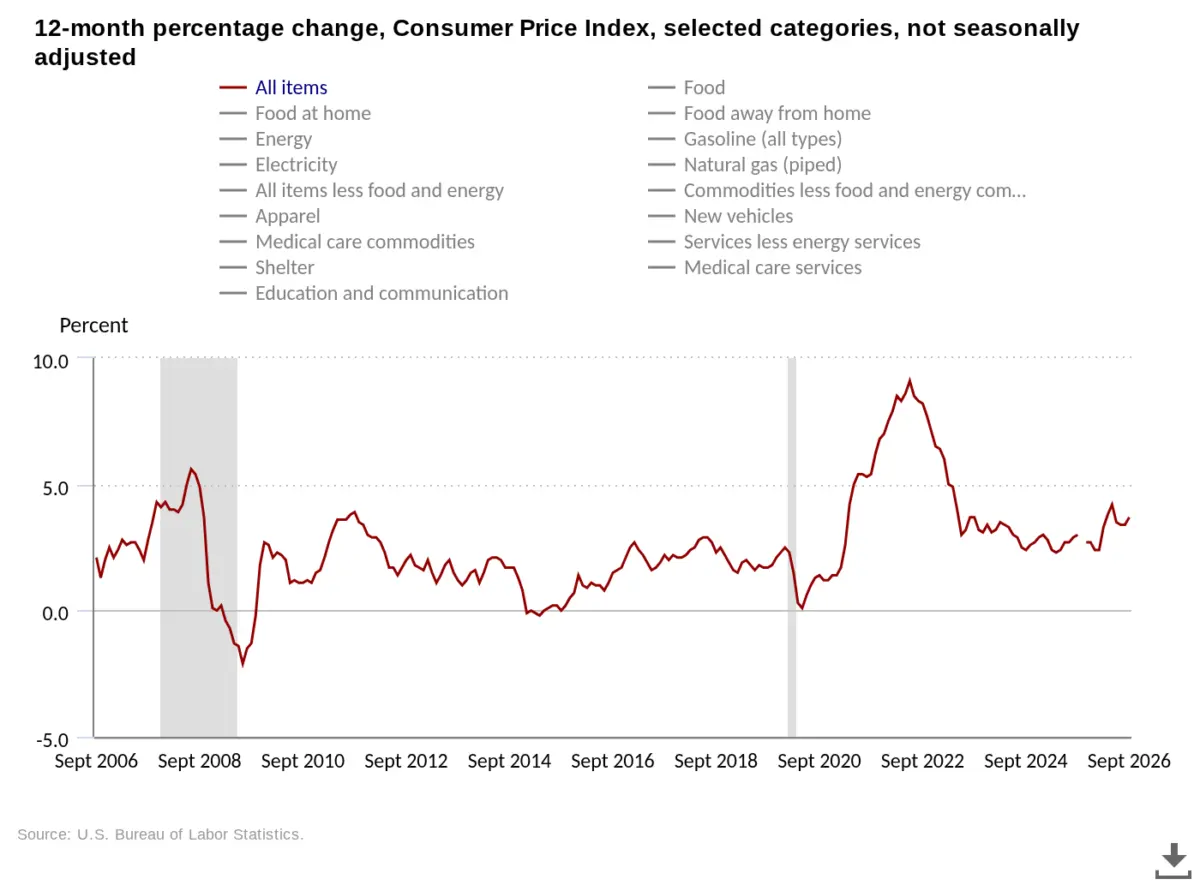
Bitcoin (BTC) dropped below the $82,000 threshold following Wednesday’s Wall Street opening bell, buckling under broader financial market pressure after United States consumer inflation figures for September came in hotter than anticipated.
The unexpected uptick in price pressures triggered a rapid repricing of monetary policy expectations across global financial markets, sending shockwaves through equities, bullion, and digital assets alike.
According to market data provided by TradingView, cryptocurrencies, gold, and major stock market futures experienced an immediate downward correction following the official release of the Consumer Price Index (CPI) data by the US Bureau of Labor Statistics (BLS).
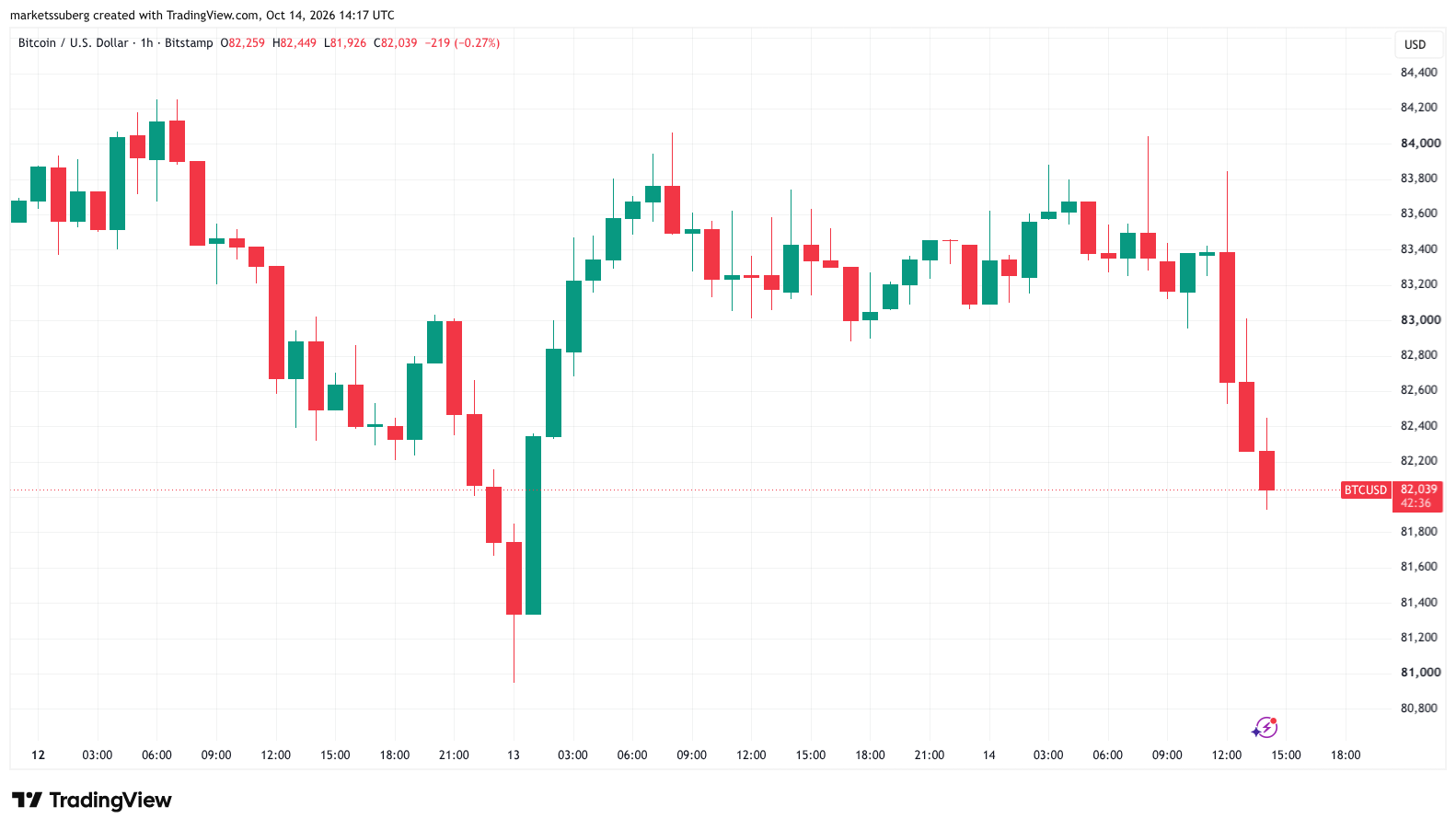
The headline inflation figure climbed to 3.7% on a year-on-year basis, outpacing the majority market consensus by 0.1 percentage points. Analysts pointed to escalating geopolitical tensions in the Middle East and a subsequent oil supply crisis as primary catalysts driving up fuel costs and fueling broader economic anxiety.

Official documentation released by the BLS highlighted the heavy contribution of the energy sector to the monthly figures. "The index for gasoline rose 9.1 percent in September, accounting for over half of the monthly all items increase. The energy index increased 5.2 percent over the month following a 2.1-percent increase in August," the official release stated.
Beyond volatile energy components, price increases proved stubborn across the broader economy. Core CPI, which strips out volatile food and energy items to provide a clearer picture of underlying inflation trends, also came in 0.1% higher than consensus projections, registering at 2.6% year-on-year.
Reacting to the data, Sonu Varghese, chief macro strategist at Carson Group, expressed frustration with the market’s recurring blind spots regarding macroeconomic trends. In comments made to CNBC, Varghese noted that elevated inflation readings should arguably have been priced in as a foregone conclusion.
"The only surprise is that investors keep getting surprised by broad-based inflation. And we’ve yet to see the full impact of higher diesel prices and the AI boom," Varghese remarked.
The hotter print forced traders and institutional investors to rapidly reassess the trajectory of Federal Reserve monetary policy. CME Group’s FedWatch Tool recorded a dramatic shift in market sentiment regarding the central bank’s upcoming policy decisions.
While market participants had previously leaned toward a pause, the probability of a 25-basis-point interest rate hike at the Federal Open Market Committee (FOMC) meeting scheduled for October 28 jumped significantly, registering at 53.7%, compared to just 22.1% the previous day. Furthermore, market pricing indicated a 50% probability of a second consecutive 25-basis-point rate hike arriving by December.
Theresa Sheehan, an economic analyst at Econoday, provided additional perspective on the delicate balancing act facing central bankers. "Taken in combination with the soft payroll numbers in the September employment report, the FOMC is probably on hold for any rate moves at the upcoming October 27-28 meeting although with a definite bias toward a hike in December," Sheehan noted.
With the September CPI figures now digested by the market, all eyes turn toward upcoming economic indicators. As previously reported, the next crucial batch of US inflation data—the September print of the Producer Price Index (PPI)—is scheduled for release on Friday, offering further insight into wholesale price pressures working their way through the economic pipeline.
Analysis: High CPI ‘Last Thing Global Bond Markets Needed’
The macroeconomic fallout extended far beyond the digital asset ecosystem, leaving deep footprints in traditional safe-haven assets and sovereign debt markets. Gold prices suffered a notable pullback, sliding as low as $4,079 per ounce in the immediate wake of the inflation report. Simultaneously, US Treasury bond yields experienced a sharp upward spike.
The benchmark 10-year US Treasury yield, known for its high sensitivity to energy price fluctuations and inflation expectations, surged to 5.329%. This put the yield just three basis points away from touching fresh 24-year highs, adding severe pressure to borrowing costs globally.
Eminent economist Robin Brooks did not mince words regarding the severity of the market reaction, taking to social media to highlight the dangerous trajectory of sovereign debt. "This is the last thing global bond markets needed. Prior to this number, it looked like the global bond sell-off was calming, but now bond markets are catching on fire again," Brooks wrote in a published commentary.
Amid the broader macroeconomic turbulence, Bitcoin price action found itself consolidating in a familiar territory. BTC continued to hover around a crucial technical zone ranging between $82,500 and $83,400, with technical analysts and market participants closely monitoring the region to see if historical support levels would hold firm against the renewed macro headwinds.