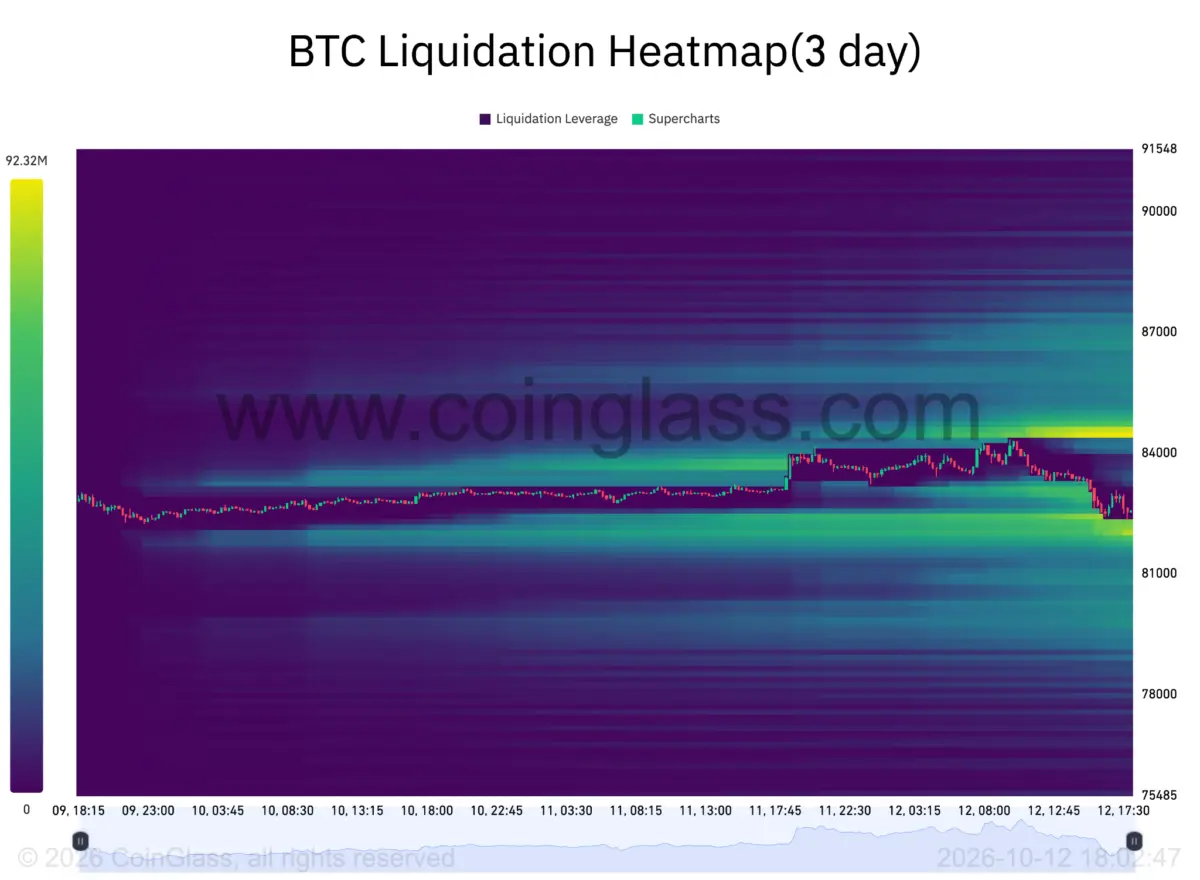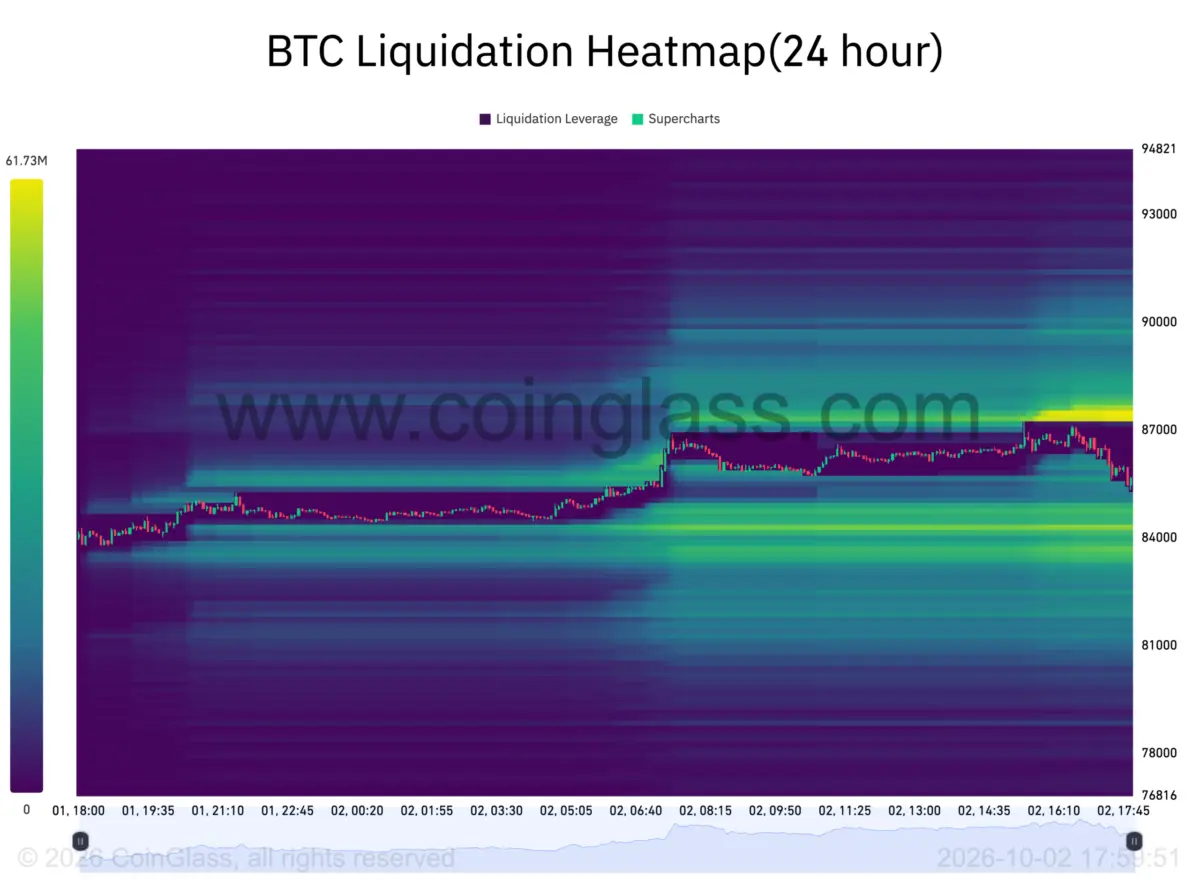
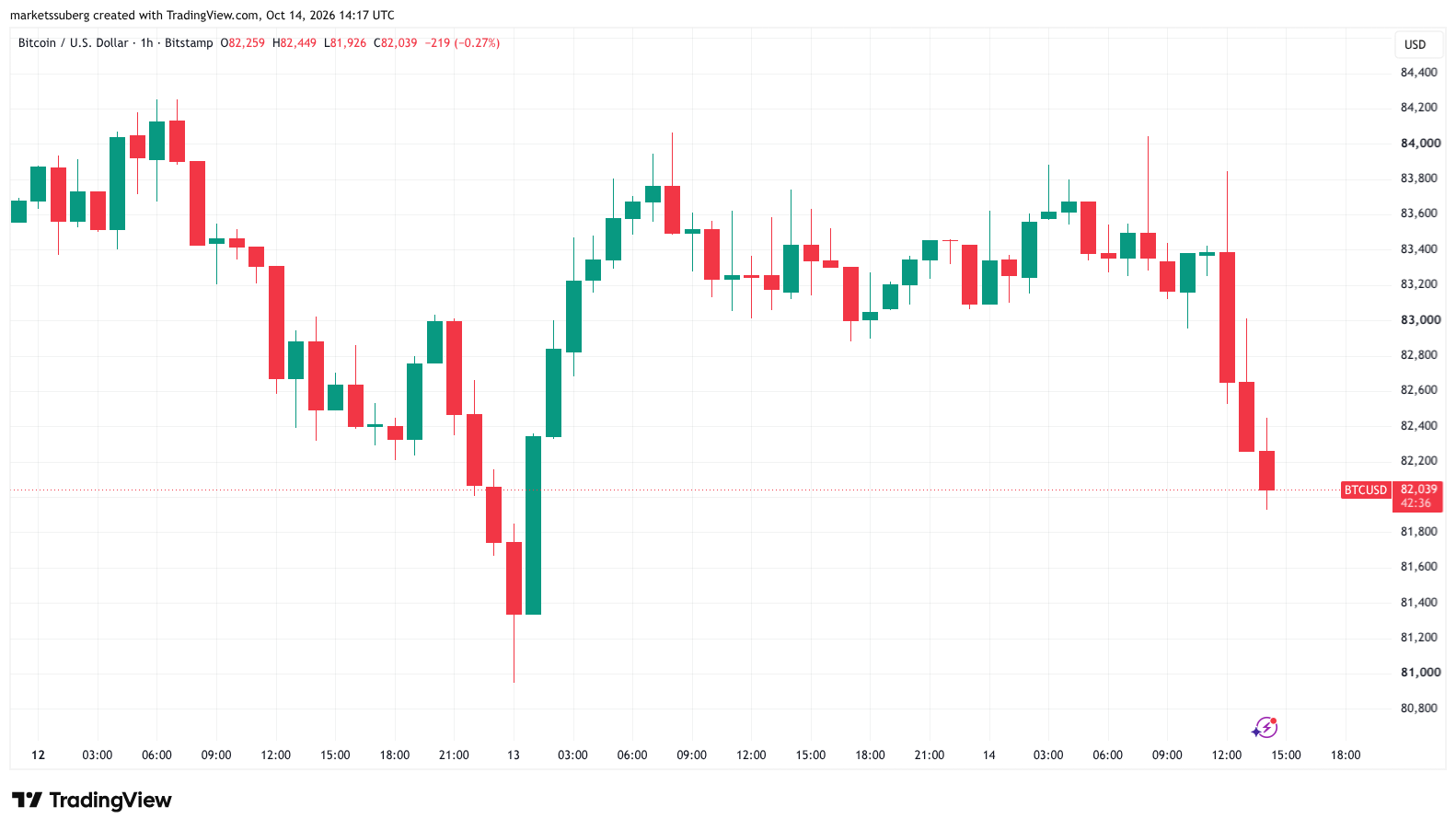
Bitcoin (BTC) retreated below the $82,000 threshold following Wednesday’s Wall Street opening bell, as a stronger-than-anticipated United States consumer inflation report sent shockwaves across global financial markets. Risk assets, precious metals, and equities alike experienced immediate downward pressure after macroeconomic data confirmed that inflationary pressures remain stubbornly persistent.
Market intelligence data from TradingView captured the rapid shift in sentiment, showing immediate contractions across crypto assets, gold, and major stock-market futures immediately following the official release of the Consumer Price Index (CPI) figures for September.
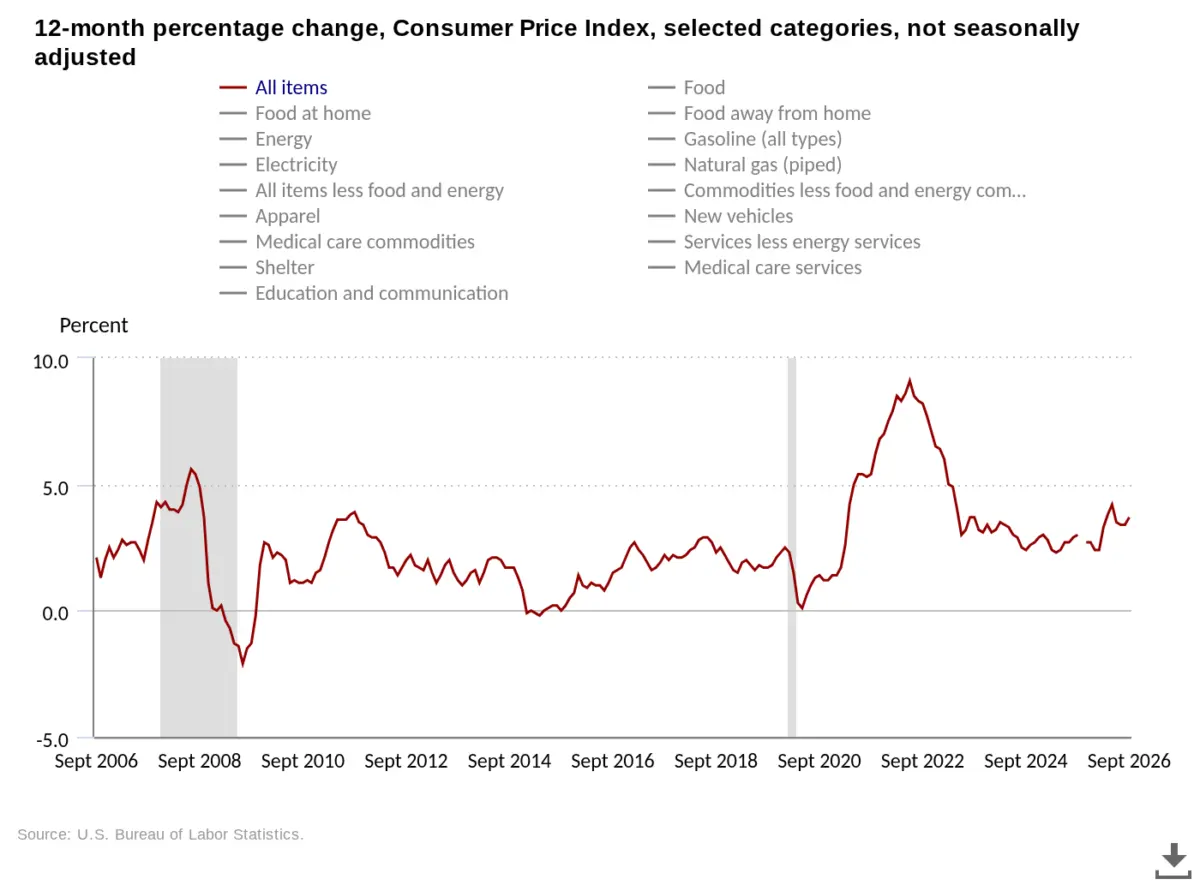
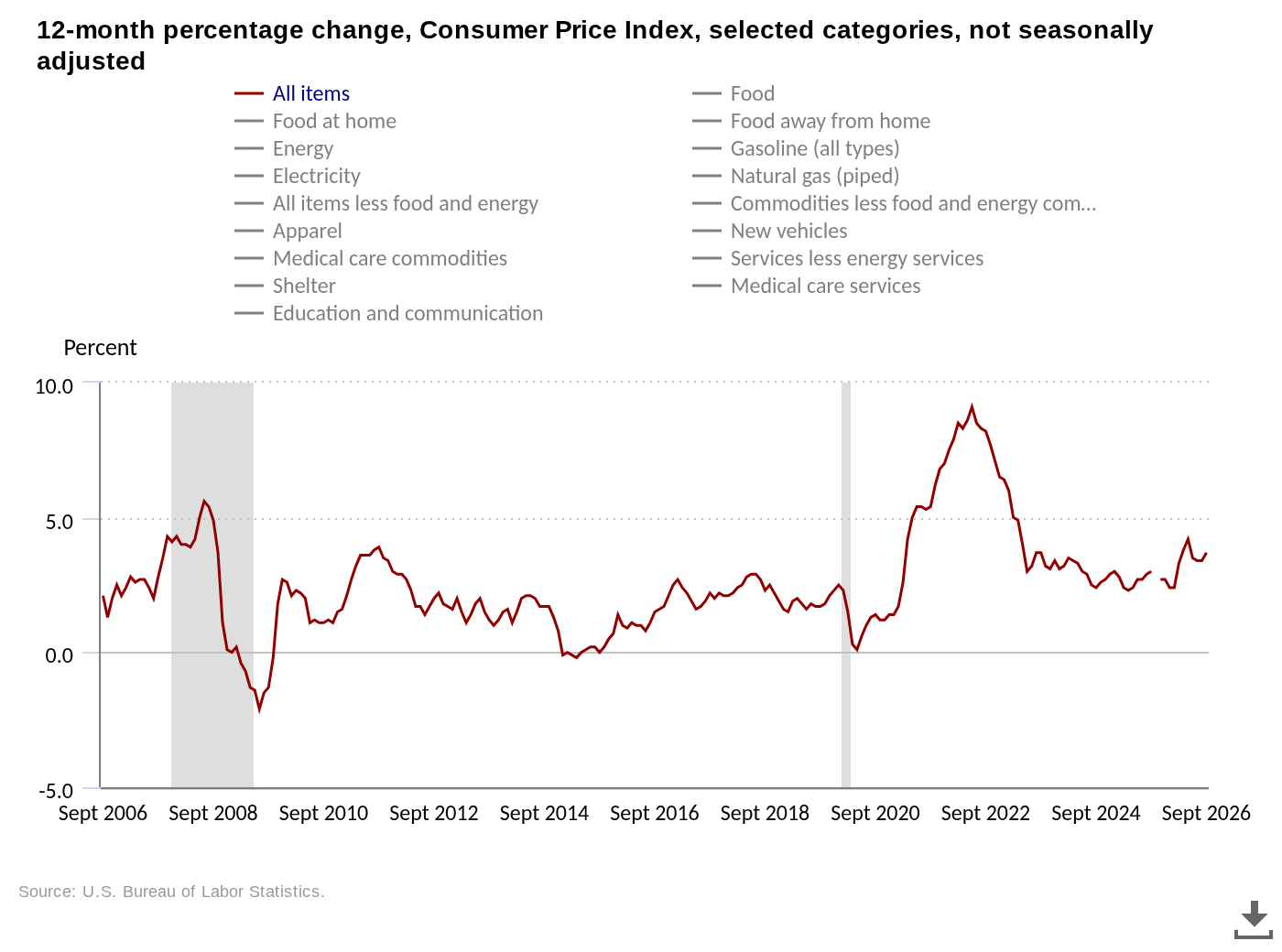
According to official data confirmed by the Bureau of Labor Statistics (BLS), headline inflation rose to 3.7% year-on-year. This reading came in 0.1% higher than the majority market consensus predicted by economists ahead of the release. The report highlighted how surging fuel costs, heavily influenced by ongoing geopolitical tensions in the Middle East and a broader oil-supply crisis, continue to feed directly into consumer prices.
"The index for gasoline rose 9.1 percent in September, accounting for over half of the monthly all items increase. The energy index increased 5.2 percent over the month following a 2.1-percent increase in August," an official release stated, underlining the vulnerability of the broader economy to energy market shocks.

The expansion in consumer prices was not isolated to energy sectors. Core CPI, which strips out volatile food and energy categories to provide a clearer picture of underlying price trends, also outperformed expectations by ticking 0.1% higher than anticipated to print at 2.6% year-on-year.
Weighing in on the broader implications of the data, Sonu Varghese, chief macro strategist at Carson Group, pointed to a persistent miscalculation among market participants regarding the stickiness of modern inflation drivers.
"The only surprise is that investors keep getting surprised by broad-based inflation. And we’ve yet to see the full impact of higher diesel prices and the AI boom," he told CNBC, highlighting looming economic catalysts that could continue to exert upward pressure on costs.
Shifts in Federal Reserve Rate Expectations
The hotter-than-forecast inflation print immediately forced traders and analysts to recalibrate their outlook for future monetary policy decisions by the US Federal Reserve. Fresh data extracted from CME Group’s FedWatch Tool revealed a sharp pivot in market probabilities regarding the central bank’s upcoming policy meeting.
Market pricing heavily favored a 25-basis-point interest-rate hike at the Fed’s scheduled meeting on October 28. The implied probability for this tighter monetary stance jumped to 53.7%, a dramatic shift from just 22.1% recorded the previous day. Furthermore, market participants began pricing in a sustained high-rate environment, with the probability of a second consecutive 25-basis-point rate hike hitting 50% for the December policy gathering.
Theresa Sheehan, an economic analyst at Econoday, noted that the data places the Federal Open Market Committee (FOMC) in a delicate balancing act amid mixed economic signals.
"Taken in combination with the soft payroll numbers in the September employment report, the FOMC is probably on hold for any rate moves at the upcoming October 27-28 meeting although with a definite bias toward a hike in December," she said.
Market watchers will not have to wait long for the next major piece of macroeconomic data, as the September print of the Producer Price Index (PPI)—serving as a crucial downstream indicator for wholesale price trends—is scheduled for release on Friday.
Global Bond Markets and Precious Metals React
The macroeconomic ripple effects extended far beyond digital assets. Gold prices tumbled significantly, sliding as low as $4,079 per ounce in the immediate wake of the CPI publication. Simultaneously, US Treasury bond yields experienced a sharp upward spike as fixed-income investors reassessed the trajectory of interest rates.
The benchmark 10-year US Treasury yield, which remains highly sensitive to energy-price movements and inflation expectations, climbed to 5.329%. This put the yield merely three basis points away from establishing new 24-year highs, adding severe stress to global debt markets.
"This is the last thing global bond markets needed. Prior to this number, it looked like the global bond sell-off was calming, but now bond markets are catching on fire again," economist Robin Brooks wrote in a detailed blog post addressing the sudden market volatility.
Within the digital asset ecosystem, Bitcoin price action struggled to find definitive footing, oscillating tightly around a critical technical zone between $82,500 and $83,400. Technical analysts and market participants continue to monitor whether this key historical area will successfully establish itself as robust support or give way to deeper macroeconomic-driven corrections as autumn trading unfolds.