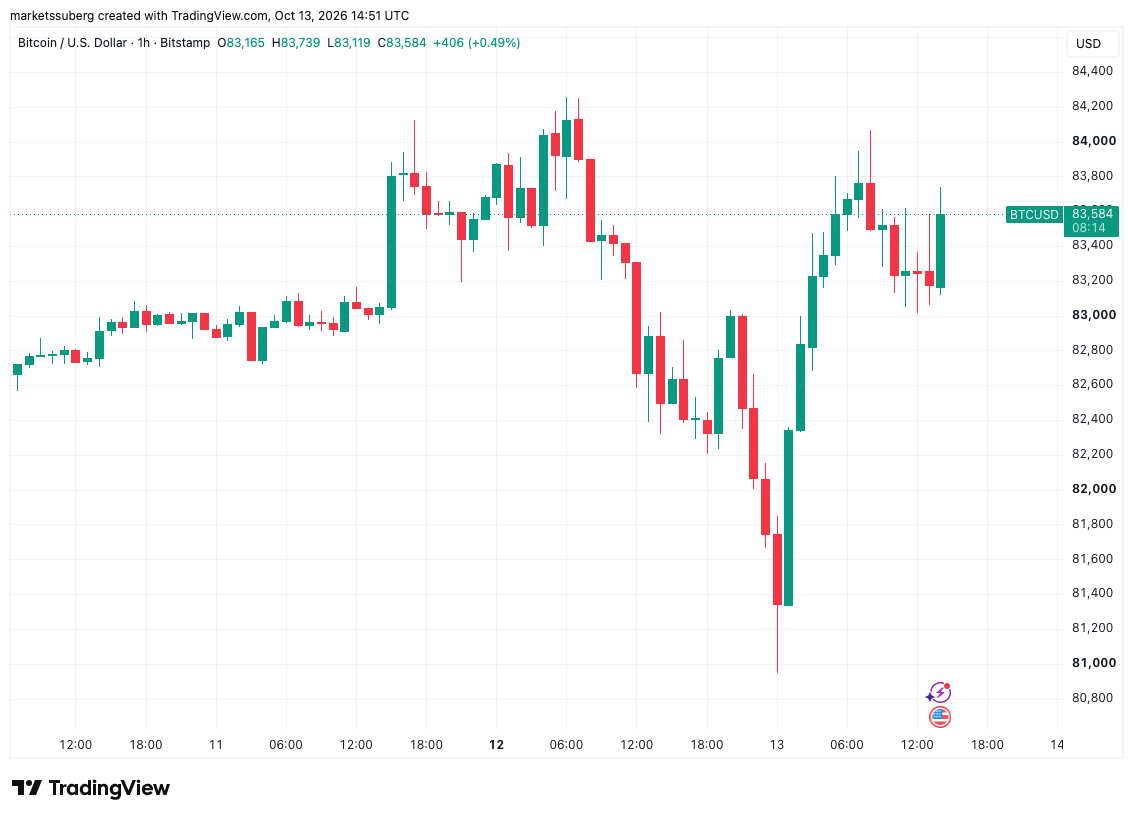
Bitcoin continued its steady march toward the $84,000 threshold during Tuesday’s Wall Street opening bell, showcasing surprising resilience as United States equities attempted to recover from a sharp overnight contraction triggered by a major tech rout in South Korea.
Data from TradingView captured the cryptocurrency trading near $83,800 at the official start of the domestic trading session, successfully retaining a substantial portion of the gains it accumulated overnight. The digital asset has spent consecutive sessions testing crucial overhead resistance levels, remaining heavily influenced by global macroeconomic crosscurrents, fluctuating bond yields, and shifting institutional risk appetites.

The broader turbulence began earlier in the global session when equity futures tumbled during Asian trading hours. The downturn was catalyzed by South Korea’s benchmark KOSPI Composite Index, which suffered a dramatic 7.4% decline over a brutal two-day sell-off. Semiconductor manufacturers bore the brunt of the losses as mounting anxieties over escalating artificial intelligence capital expenditures and intensifying competitive pressures from China rattled regional investors.
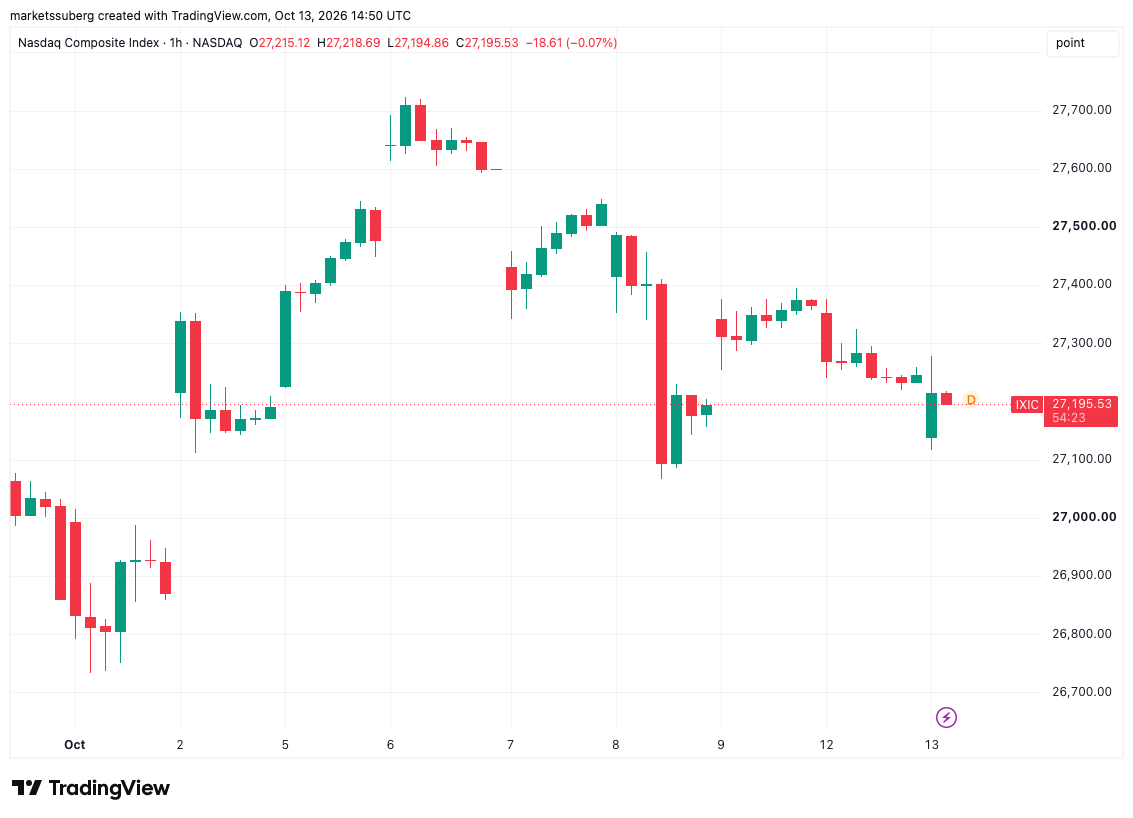
Despite the steep losses in Asian markets and an initially softer opening for domestic indexes, US stocks demonstrated notable resilience. Both the benchmark S&P 500 index and the technology-heavy Nasdaq Composite index mounted early intraday comebacks, briefly ticking into positive territory before dipping back down. At the time of writing, both major gauges were trading slightly lower, down less than 0.5% for the day.
Market analysts point to broader structural shifts in fixed-income markets as a primary driver of the underlying tension across global exchanges. Damien Boey, a portfolio strategist at Wilson Asset Management in Sydney, Australia, highlighted the growing pressure stemming from debt markets in comments to Reuters.
"The most important development has been not just bond yields going up, but the volatility for bonds… and that’s starting to work its way out through asset pricing across the board," Boey told Reuters. He characterized the current economic environment as an uncomfortable balancing act for investors worldwide. "It’s a very uncomfortable situation on many fronts… maybe AI capex just comes off the boil a little bit, and maybe a few players are casualties in that," he added.
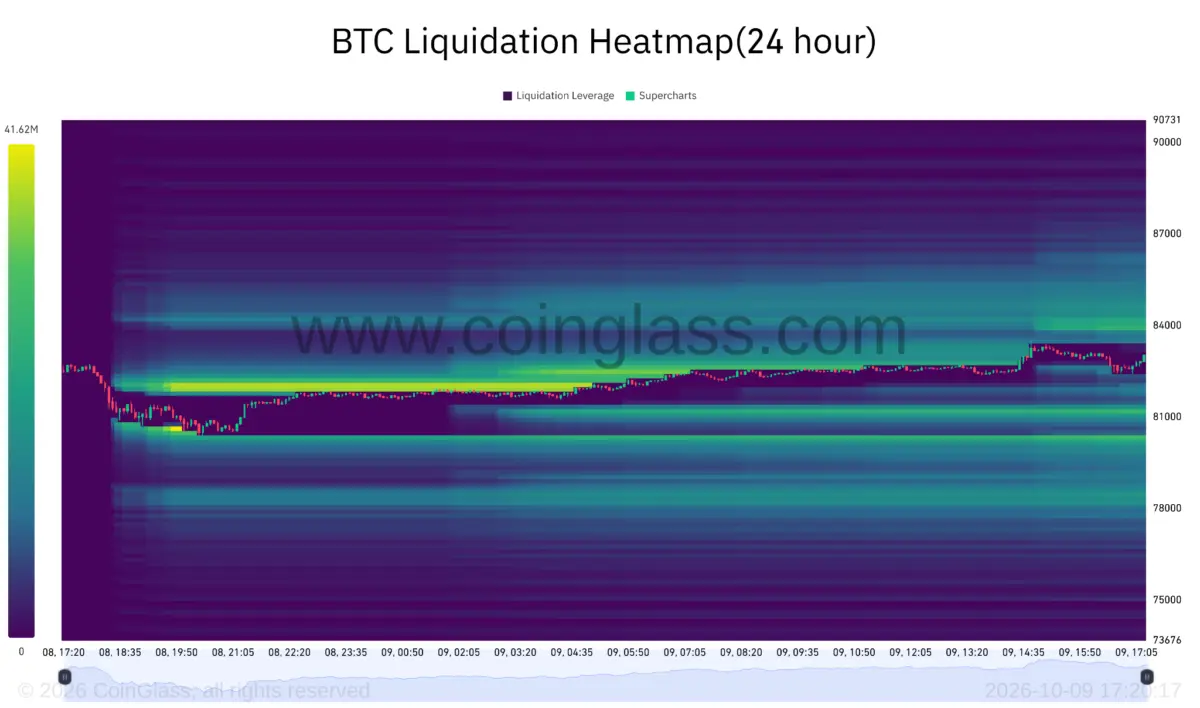
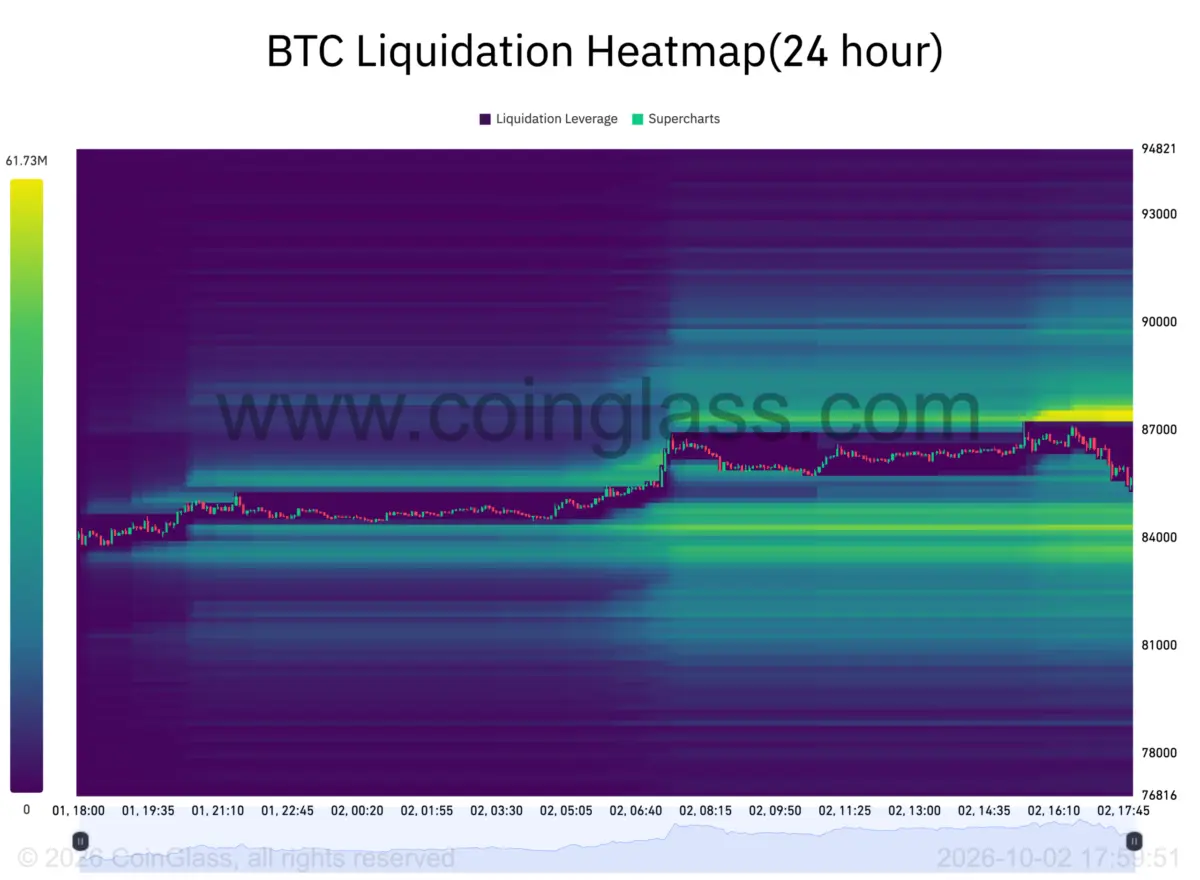
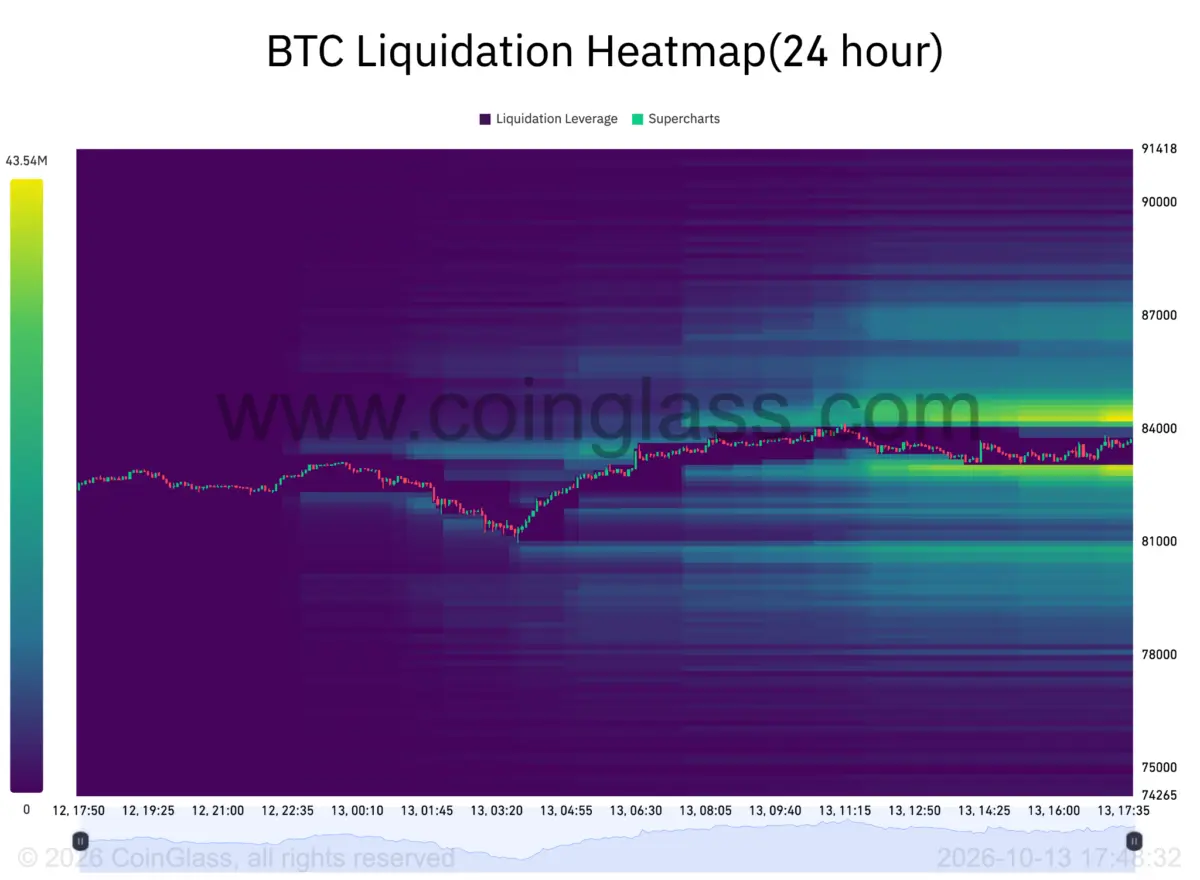
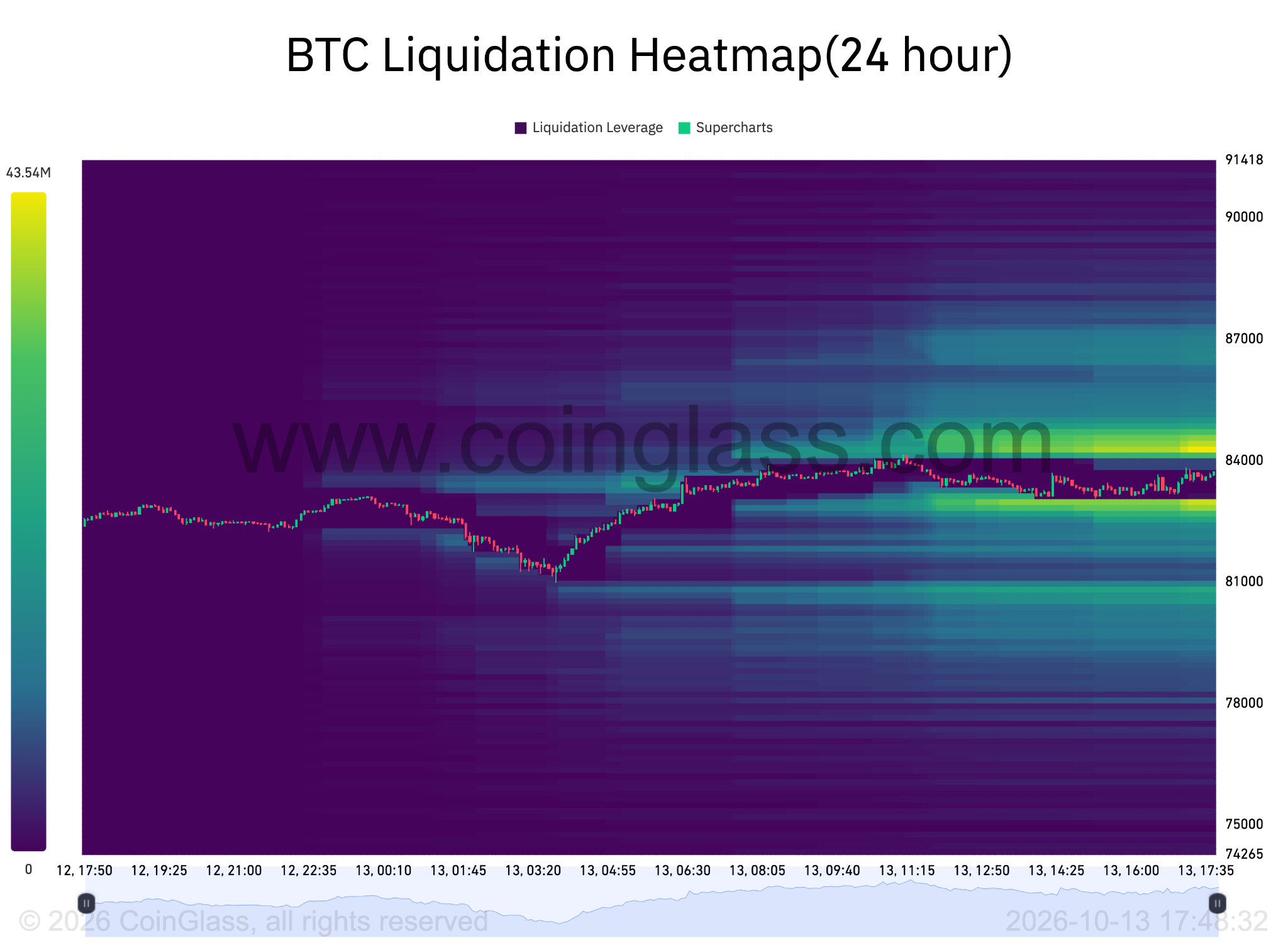
For Bitcoin, the pathway upward remains complicated by structural market mechanics. According to liquidation heatmap metrics provided by CoinGlass, the cryptocurrency remains caged underneath heavy exchange order-book liquidity. This dense concentration of sell orders continues to act as a formidable ceiling, capping upward momentum and creating a firm barrier just above the $84,000 mark.
Traders are closely monitoring these technical boundaries while simultaneously bracing for upcoming macroeconomic data releases, including crucial US Consumer Price Index (CPI) figures that traditionally introduce heightened volatility to both crypto and traditional financial markets.
Dollar Strength in Focus as DXY Hits 18-Month Highs
Beyond immediate technical resistance and regional equity sell-offs, Bitcoin bulls are confronting a compounding macro headwind throughout the month. Darkfost, a prominent contributor to the onchain analytics platform CryptoQuant, detailed these challenges in market commentary published on Tuesday.
The pressure is heavily tied to the relentless ascent of the US dollar, which has been fueled by bond yields hovering near their highest levels in nearly a quarter of a century. The US Dollar Index (DXY)—a widely followed metric that measures the greenback against a basket of currencies belonging to major US trading partners—has climbed roughly 5.5% since September 9. On Tuesday, the index touched 102.57, marking its strongest performance and highest valuation since April 2025.
Although the historical inverse correlation between the US dollar index and Bitcoin has noticeably weakened over the course of the year, modern crypto markets are still acutely vulnerable to broader contractions in systemic liquidity and risk sentiment. Darkfost emphasized in his onchain analysis that the prevailing economic climate stifles speculative capital allocation.
"Taken together, these factors constrain the liquidity available to markets and erode institutional confidence, leaving them reluctant to take on more risk," he wrote in his blog post. He further explained that the market environment remains hostile for digital assets. "The climate is therefore unfavorable for Bitcoin, which is perceived as a highly risky asset, while tech and the S&P 500, more mature markets, continue to surge and absorb what little liquidity remains."
As Wall Street navigates the ripples of the South Korean tech correction alongside strengthening currency and bond markets, participants across both traditional and digital asset sectors are watching to see whether incoming economic data will provide the necessary catalyst to help Bitcoin break through its stubborn $84,000 ceiling or force a broader consolidation phase.