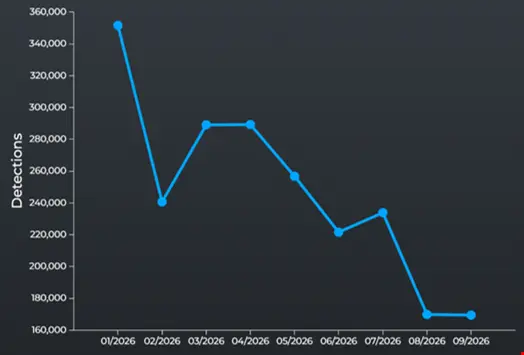
Cybercriminals are increasingly leveraging high-volume "mail bombing" attacks as a precursor to sophisticated social engineering schemes, specifically targeting IT helpdesks to compromise enterprise user accounts. Recent findings from the Fortra Intelligence and Research Experts (FIRE) team have shed light on this evolving threat vector, which blends automated chaos with targeted human interaction to bypass standard organizational security measures.
The campaign, which has been under intense observation by security researchers, involves the deliberate flooding of a target’s inbox with a massive influx of automated emails. In an update published by FIRE on November 19, the researchers clarified the technical mechanism behind this disruption: the attacks do not require the adversary to have gained prior access to the target’s mailbox. Instead, the process is automated and external. Attackers submit a target’s email address to a vast array of newsletter signup forms, registration portals, and marketing subscription services across entirely unrelated websites.
Because these signups are triggered across legitimate platforms, the resulting emails are technically authentic, which makes them notoriously difficult for traditional email security filters to block. The volume of incoming traffic is designed to be overwhelming, often reaching a peak of approximately 10,000 messages per active campaign, with an average cadence of 1,000 emails per day hitting a single user.
The Strategic Intent Behind the Flood
While the primary effect of such an attack is the disruption of day-to-day operations—preventing the target from performing customer service duties or handling routine correspondence—the underlying goal is far more malicious. By burying a user’s inbox under thousands of benign subscription confirmations, attackers effectively mask critical account alerts, security notifications, password reset requests, or payment confirmations that would typically signal that a breach is underway.
The FIRE team’s analysis indicates that these operations are likely powered by AI-driven agents. These agents are programmed to crawl the internet systematically, identifying every available webpage that features a newsletter subscription or registration box. By automating the registration process, the threat actors can scale their attacks rapidly, targeting multiple high-value individuals or entire departments simultaneously.
In terms of delivery infrastructure, the researchers noted that popular, reputable email service providers are the primary conduits for this activity. Mailchimp, along with its transactional service, Mandrill, emerged as the most frequently observed platforms for these floods, followed closely by Amazon SES and SendGrid. The use of these high-reputation services is a deliberate choice by the attackers; because these domains and IP addresses are typically allowlisted by corporate security policies to ensure business continuity, the flood of spam is often granted a "pass" through the organization’s secure email gateway.
The Pivot to Vishing and Impersonation
The most dangerous phase of these attacks begins after the target is sufficiently overwhelmed by the email deluge. As the victim struggles to manage the disruption, the attackers initiate the second phase of their plan: helpdesk impersonation.
In the observed cases, the threat actors contact the targeted user through platforms like Microsoft Teams, masquerading as representatives from the organization’s internal IT department. During these vishing—or voice phishing—calls, the attackers adopt a helpful, authoritative tone. They claim to be aware of the "email flood" and offer to assist the victim in stopping the influx. To make the ruse more convincing, the attackers provide the user with both verbal instructions and follow-up emails that appear to originate from legitimate corporate communication channels.
The reality, however, is that these instructions are designed to trick the user into revealing sensitive credentials, installing malicious software, or granting the attackers unauthorized access to the user’s account or system. By leveraging the stress and confusion caused by the mail bomb, the attackers manipulate the target into lowering their guard, turning a technical nuisance into a full-scale account compromise.
Fortra experts emphasize that these campaigns are exceptionally difficult for organizations to detect because the individual emails involved in the flood are technically benign. They often lack malicious links or attachments, meaning they do not trigger standard phishing or malware alerts. Furthermore, because security teams often create "allowlist" exceptions for major email delivery services to prevent legitimate newsletters or marketing emails from being quarantined, the flood of traffic is permitted to reach the end user without interference.
Recommendations for Security and IT Teams
In response to these findings, the FIRE team has urged security operations centers (SOCs) and IT administrators to adopt a more proactive approach to monitoring email traffic. The most effective defense, according to Fortra, is to monitor email volume per recipient against a well-defined historical baseline. Security teams should look for sudden, anomalous bursts of activity that involve a high number of unrelated senders, repetitive subscription-related language, or suspicious patterns in the email mailing-list headers.
When an anomaly is detected, the next step should be to confirm the scope and duration of the event directly with the email delivery provider involved. During their investigation, the FIRE team consulted with Mailchimp, which noted that they offer specific controls for this scenario. Senders—in this case, the companies whose forms are being abused—can request temporary subscription blocking for a specific recipient. Furthermore, Mailchimp has implemented automatic security controls that can restrict an email address from joining additional audiences for a 24-hour period if the system detects rapid, repeated signups, which serves as a significant deterrent to automated bots.
Beyond technical controls, organizations are encouraged to bolster their security awareness training. Employees should be instructed on how to handle unexpected spikes in email traffic and reminded that official IT helpdesk representatives will never ask for credentials or ask a user to perform suspicious actions to "fix" an email issue. By reinforcing the importance of verifying the identity of anyone claiming to be from internal IT, particularly during times of technical distress, organizations can mitigate the risk of falling victim to this two-stage attack.
As of the latest report, Fortra has not attributed these mail-bombing and impersonation campaigns to a specific known threat group. However, the use of AI-driven automation and the strategic combination of volume-based disruption with social engineering highlights a growing trend in cyber-adversary tactics. As organizations continue to rely on automated email services for business operations, the vulnerability of these systems to being turned against users will likely remain a significant challenge for security professionals in the months ahead. The ability to distinguish between legitimate marketing noise and a coordinated, malicious campaign will be the deciding factor in maintaining organizational integrity against this dual-layered threat.