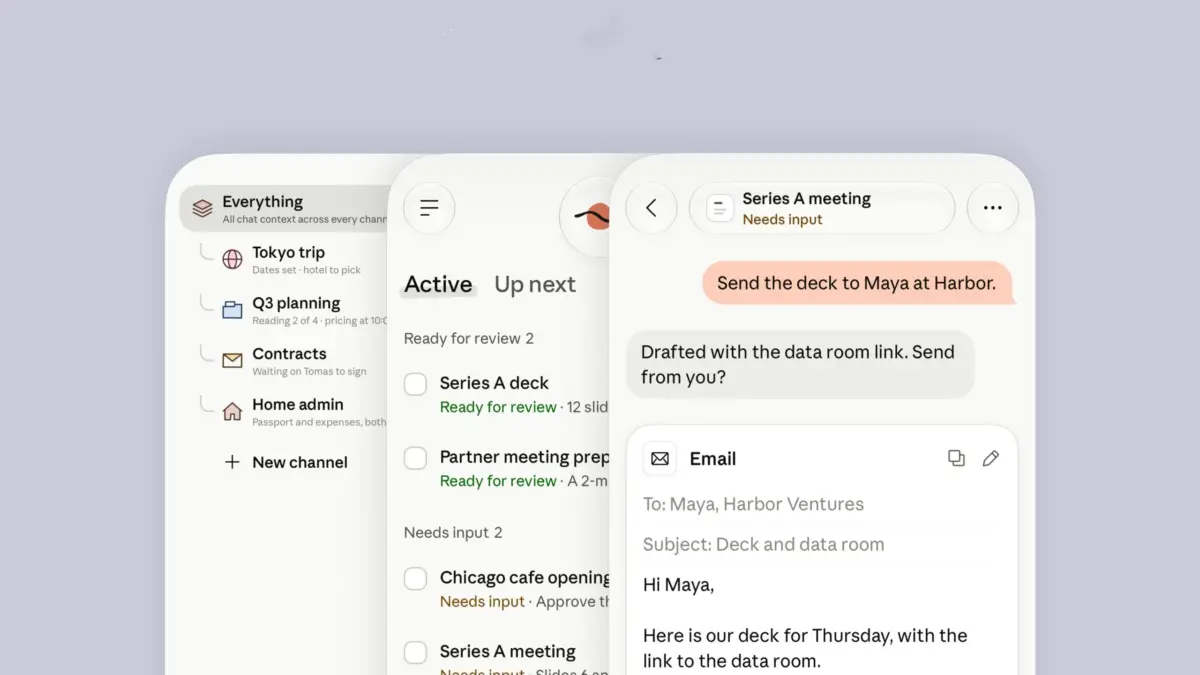
OpenAI has officially begun rolling out its long-discussed unified Chat and Work experience within ChatGPT, introducing the integrated system to an initial cohort of users. The update, which merges previously distinct conversational and productivity tabs into a single interface, arrives amid a wave of criticism from subscribers who have expressed deep concerns that the structural consolidation could lead to restricted usage and diminished access to advanced AI capabilities.
The deployment of the updated interface was confirmed on Tuesday by Thibault “Tibo” Sottiaux, a product lead at OpenAI, in a post on the social media platform X. This initial rollout to a small group of Pro subscribers follows a previous notification sent via email, in which OpenAI first alerted its user base to the impending merger of ChatGPT’s dedicated chat and work environments.
According to an OpenAI spokesperson, the vast majority of users are not anticipated to encounter an increase in the frequency of their usage limit resets. However, the company acknowledged that a small fraction of its heaviest and most intensive users might exhaust their allowances and hit their capacity limits sooner under the newly streamlined system.
This particular caveat has fueled apprehension among portions of the subscriber community. Over recent weeks, prominent concerns have been voiced across social media platforms like X, specialized forums such as Reddit, and OpenAI’s official community forums. Many paid subscribers argue that by combining the usage allocations for conversational interactions and intensive work-related tasks into a single pool, they risk facing significantly reduced access to OpenAI’s advanced reasoning models. Users have noted that this restriction could take effect even as they continue to pay the standard, unchanging subscription fees for their accounts.
Addressing these technical changes, the OpenAI spokesperson explained that under the newly minted architecture, Chat and Work will share a singular, unified usage meter across the ChatGPT platform. Despite this centralization, certain provisions have been made for continuous interaction. Conversations that leverage the Instant model will remain entirely unlimited and will not draw from or count toward the shared usage allowance. Furthermore, users will retain the ability to continue utilizing the Instant model even after they have completely exhausted their designated limits for more advanced reasoning tasks. The spokesperson added that OpenAI remains committed to ongoing efficiency optimizations to ensure subscribers can ultimately extract maximum value from their respective plans.
While the current phase of the rollout is restricted to a carefully selected group of early testers, OpenAI’s official support documentation indicates that the shared usage limits will be introduced more broadly to a larger audience in December.
The strategic shift by OpenAI mirrors similar moves across the artificial intelligence sector. Rival AI firm Anthropic implemented a comparable structural change in September, successfully merging its conversational chat service, Claude, and its work-focused environment, Cowork, into a single, cohesive user interface.
These industry-wide modifications come at a time when major generative AI companies are navigating mounting infrastructure expenditures and escalating global demand for increasingly sophisticated models. This surging popularity places unprecedented pressure on underlying computing resources and data center capacities. By consolidating conversational utilities and complex work-related tools into a singular interface, AI developers are also attempting to streamline the user experience, allowing individuals to transition fluidly between casual dialogues and heavy analytical or professional tasks without the friction of switching between separate tabs or application environments.