When Notable Capital poured roughly 10% of the U.S. portion of its $1 billion-plus fund into Anthropic’s Series E, many limited partners were left perplexed by the massive, concentrated bet. After all, the maker of the Claude AI assistant was still trailing its primary and much larger rival, OpenAI. Furthermore, DeepSeek had released its R1 model just weeks earlier, sparking widespread industry anxiety that open-source and low-cost models might quickly overtake closed-source competitors and compress profit margins. Compounding these fears, Anthropic’s valuation sat at $61.5 billion—by far the highest price tag that the predominantly early-stage venture firm had ever touched in its 25-year operational history.
Yet, behind closed doors, the investors at Notable—formerly known as GGV Capital before its high-profile 2024 split from its China-based operations—held profound confidence in the trajectory of the artificial intelligence lab. A dedicated team that included managing partners Hans Tung and Glenn Solomon, alongside principal Dan Cahana, crunched the underlying data and discovered a shifting tide among technology builders. Developers were increasingly turning away from OpenAI’s ChatGPT and favoring Claude, utilizing Anthropic’s models roughly 70% of the time—a staggering reversal from the adoption metrics recorded just the previous year.
“We just knew that for AI, the developer is at the center because they’re the early adopters,” Hans Tung, a co-founder of the firm, explained to TechCrunch.
Having navigated the complex geopolitical currents of U.S.-China relations firsthand throughout their history as investors, the team at Notable was also convinced of another critical market dynamic. Tung noted that enterprise-grade, "mission-critical" work would always demand secure, U.S.-based, closed-source models that corporations could trust with sensitive data and proprietary workflows.
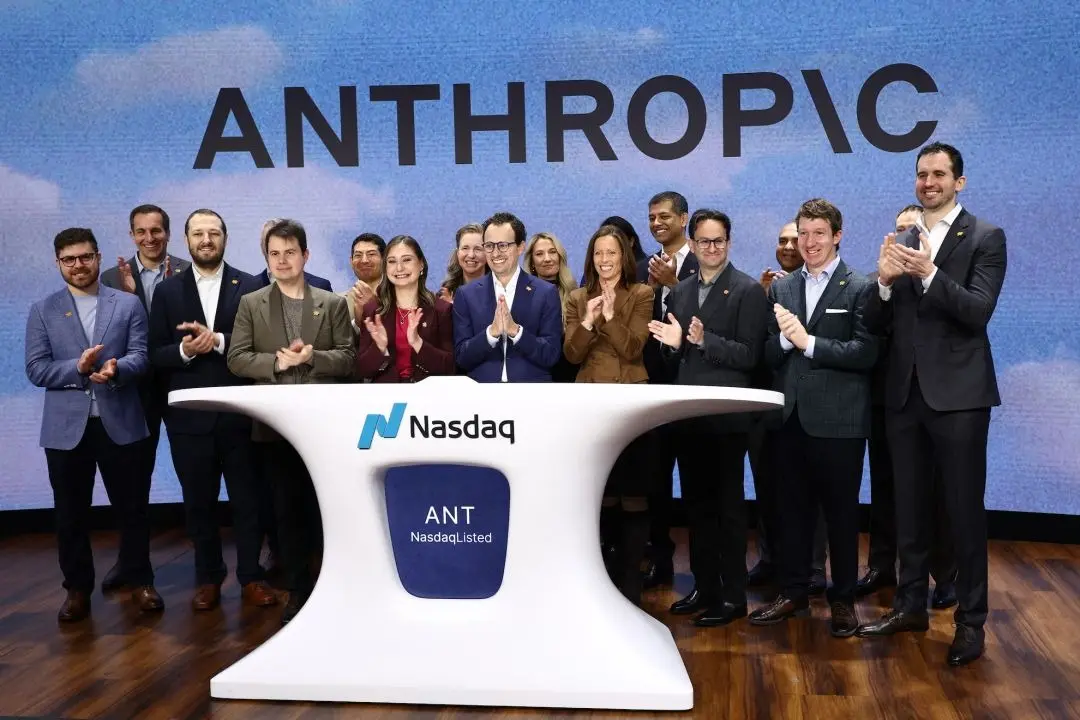
Less than two years later, Notable’s once-doubtful limited partners are no longer questioning the outsized investment. On Wednesday, Anthropic achieved a historic milestone by pricing its initial public offering at $81.3 billion, executing the largest IPO in history. The company reached a fully diluted valuation of roughly $1.5 trillion before its shares officially began trading on public markets the following day, translating to an astonishing paper return of approximately 15 times for Notable Capital.
Notable is, of course, not the only institutional player sitting on a massive paper windfall from the AI powerhouse. Even traditional late-stage investors, who routinely operate in market segments where venture-scale multiples are exceedingly rare, are currently positioned for historic gains following the unprecedented market debut.
Singaporean sovereign wealth fund GIC had been quietly tracking and researching Anthropic throughout the course of 2024. However, the organization did not pull the trigger on an actual investment until after Chris Emanuel, the head of the fund’s technology investments division, met with Anthropic Chief Financial Officer Krishna Rao at Che Fico, a popular Italian restaurant in San Francisco, in early 2025.
During that meeting, Rao helped crystallize and pique Emanuel’s interest in the company by walking through hard data showing that iterative model improvements were driving a sharp, compounding rise in actual enterprise adoption. Armed with these insights, GIC made its maiden investment during Anthropic’s Series F funding round, which was officially announced in September 2025 at a headline valuation of $183 billion.
“Claude Code was just released then,” Emanuel recalled to TechCrunch, highlighting the rapid pace of product iteration inside the AI lab. “It was very early, but even then, we could see signs that it was really popular with developers.”
GIC’s internal conviction in the artificial intelligence lab grew so strong that the sovereign wealth fund later went on to co-lead Anthropic’s Series G funding round alongside Coatue at a valuation of $380 billion. The fund further demonstrated its confidence by returning as one of the primary co-leads for the company’s pre-IPO financing round, which valued the business at a towering $965 billion. Across these three successive tranches of financing, GIC poured more than $4.5 billion into Anthropic, ultimately amassing a substantial equity stake equal to roughly 1% of the entire company following the completion of its record-shattering IPO, according to an individual familiar with the fund’s private financials.
Meanwhile, Lilian Li, who oversees U.S. growth investments at prominent asset manager Baillie Gifford, began studying Anthropic and engaging in deep-dive discussions with its executive team nearly two years before her firm deployed its first check into the company’s Series F round. Baillie Gifford ultimately chose to back the Claude creator once it became empirically clear that the management team was executing consistently on its long-term vision while simultaneously generating robust revenue streams and compelling gross profit margins, Li told TechCrunch.
Following Baillie Gifford’s initial investment, Anthropic continually delivered on its strategic roadmap, successfully expanding its commercial footprint out of general developer tools and into highly regulated, high-value vertical industries such as legal services and life sciences. The company also pushed deeper into broader consumer and corporate applications like Cowork and advanced enterprise cybersecurity solutions, Li noted.
“It’s actually quite incredible how consistent they have been with how quickly everything’s been changing,” she added, pointing to the dizzying pace of innovation across the broader generative artificial intelligence sector.
Driven by this operational consistency, Baillie Gifford ultimately deployed a total of $1.5 billion across three separate funding rounds. That high-conviction bet has now generated substantial paper gains for the investment manager, mirroring the fortunes of dozens of other institutional backers who took a leap of faith by funding the company at valuations that once seemed astronomical to traditional market observers.