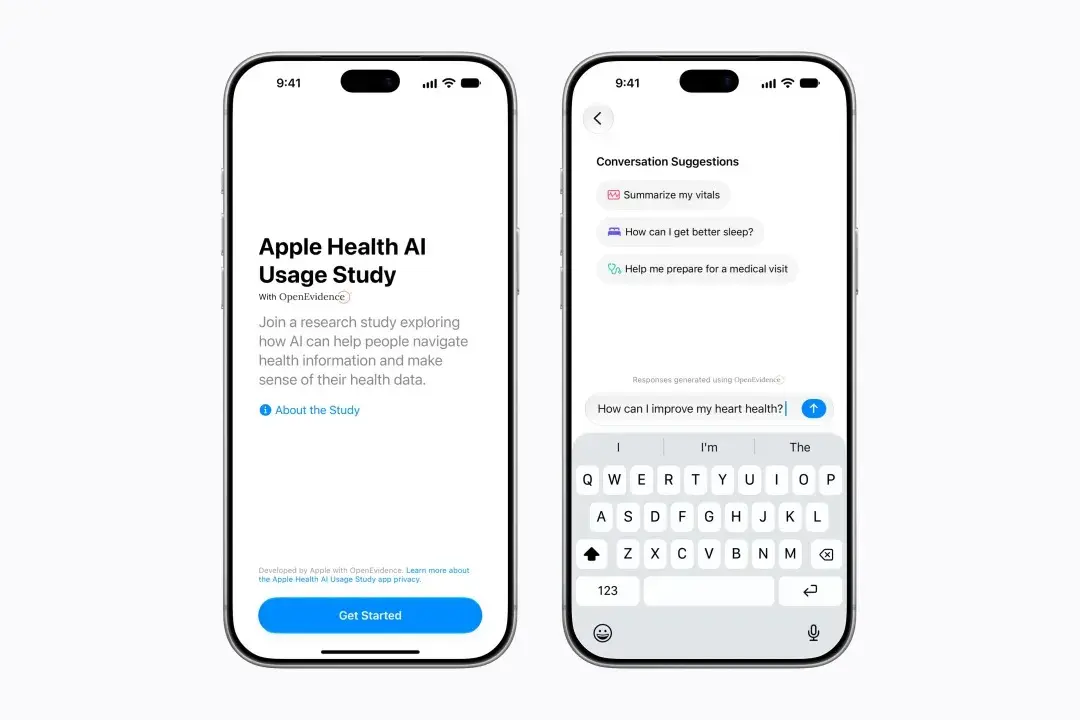
As major artificial intelligence laboratories aggressively position their conversational assistants as go-to tools for everyday medical inquiries, Apple is taking a more measured, clinically rigorous route. Rather than immediately deploying a consumer-facing medical chatbot to millions of devices, the iPhone maker is launching a comprehensive research study to understand precisely how everyday users interact with, comprehend, and evaluate clinically grounded AI answers.
To spearhead this initiative, Apple is partnering with OpenEvidence, a prominent healthcare-focused artificial intelligence company. The tech giant has officially introduced a dedicated study app designed to explore the real-world utility of medical AI. Through this ambitious endeavor, Apple aims to enroll up to 200,000 participants across the United States for a study period lasting over 12 months, setting a new benchmark for how large technology companies evaluate health-related artificial intelligence before broader deployment.
The initiative arrives at a time when health-focused conversational tools are experiencing unprecedented demand. Earlier this year, competitors like OpenAI reported that users were directing more than 300 million health-related queries to ChatGPT each week. Rival labs, including Anthropic, have similarly carved out specialized medical features for their platforms, such as Claude for healthcare. While these developments highlight a massive consumer appetite for digital health advice, Apple’s strategy emphasizes caution, data privacy, and strict clinical grounding over a rushed commercial rollout.

To participate in the new research initiative, users must meet specific criteria outlined by the company. The study is open to individuals in the United States who are 21 years of age or older, utilizing an iPhone 15 or a later model, running iOS 26 or higher, and having Apple Intelligence enabled on their devices. Eligible users who download the newly released app will be able to pose natural-language health queries, mirroring the conversational interactions they might have with standard AI models. However, unlike general-purpose chatbots that rely solely on broad internet data, the responses provided within Apple’s study app are explicitly grounded in rigorous clinical data and peer-reviewed medical literature.
The platform sources its information from highly respected medical publications, including The New England Journal of Medicine, the Journal of the American Medical Association, and Nature. According to Apple, the application is designed to distill complex medical literature into simplified, easy-to-understand answers addressing everyday medical questions. Participants are encouraged to actively engage with the system by rating the responses, providing qualitative feedback, and completing routine monthly surveys to track their ongoing experience with the technology.
To maximize the relevance and personalization of the insights, the study app allows participants to voluntarily share select data from HealthKit. By incorporating metrics such as resting heart rate, daily physical activity, sleep patterns, and laboratory results, the AI can tailor its suggestions more closely to the user’s individual health profile. Furthermore, the application is engineered to assist users in preparing more effectively for upcoming consultations with healthcare professionals, while also offering guidance on specific providers when queries involve concerning or urgent medical symptoms.
Data privacy and security remain a cornerstone of Apple’s health initiatives, particularly given the sensitive nature of medical information. The company has explicitly outlined strict safeguards for the study. All user data is thoroughly anonymized before being transmitted to a secure third-party cloud provider. Crucially, Apple and OpenEvidence have committed that none of the query or response data collected during the study will be utilized to train any artificial intelligence models. Additionally, OpenEvidence has confirmed that all individual query and response data is permanently deleted from its systems after 24 hours.

Sumbul Desai, M.D., Apple’s vice president of Health and Fitness, emphasized the deliberate and scientific philosophy guiding the project in an official statement. She noted that responsible innovation must begin with scientific rigor and strict clinical grounding, explaining that health is a deeply personal matter. Desai added that conducting a dedicated research study represents the most thoughtful approach to understanding how individuals engage with, comprehend, and evaluate health-related artificial intelligence in their day-to-day lives. She also noted that insights gleaned from the 12-month study will contribute to the broader scientific conversation, ensuring that as technology continues to evolve, trusted tools are built to genuinely support individuals at every stage of their health journey.
The newly released study app is available for download on the App Store for eligible users in the United States. While Apple has not yet confirmed whether the insights gained from this research will eventually pave the way for AI-powered answering capabilities within the native iOS Health app or through Siri, the immense potential of the space suggests that the findings will heavily influence the company’s long-term health roadmap. As the intersection of consumer technology and clinical medicine continues to expand, Apple’s methodical research initiative offers a glimpse into how the industry may seek to balance rapid technological advancement with stringent medical credibility and user trust.