As the cryptocurrency market matured through 2025, it grew significantly more institutionalized and heavily regulated. However, the widespread and explosive "altcoin season" that many market participants and retail traders eagerly anticipated never fully materialized. While Bitcoin reached fresh highs earlier in the market cycle, a large portion of the wider altcoin ecosystem lagged considerably behind the flagship digital asset.
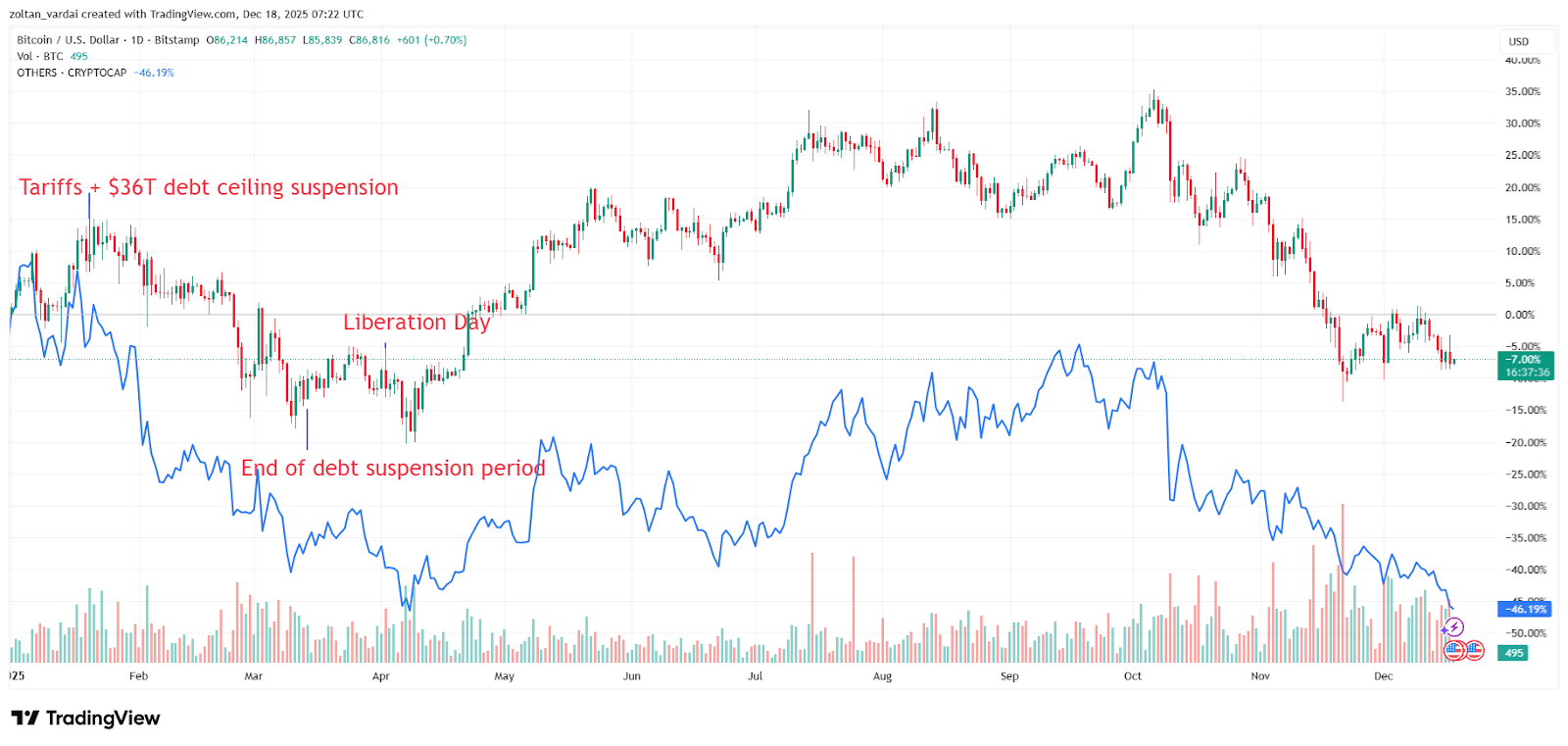
According to data compiled from TradingView, Bitcoin was down approximately 7% year-to-date following a notable market sell-off at the beginning of October. Meanwhile, the cumulative market capitalization of alternative cryptocurrencies suffered a much steeper decline, dropping by more than 46% from its peak earlier in 2025. This divergence underscored a fundamental shift in how capital flowed through the digital asset economy, moving away from broad-based speculative fervor and toward a highly selective, risk-averse environment.
Even amid these broader market headwinds and heavy regulatory scrutiny, a select few tokens managed to break away from the pack and outperform during the year. XRP drew fresh market momentum from major regulatory breakthroughs and subsequent institutional adoption. Zcash experienced a dramatic resurgence as investor interest pivoted back toward financial confidentiality and data privacy. Algorand capitalized on tangible, real-world tokenization efforts that connected blockchain technology directly to traditional corporate infrastructure.
XRP Gains as Regulatory Overhang Eases
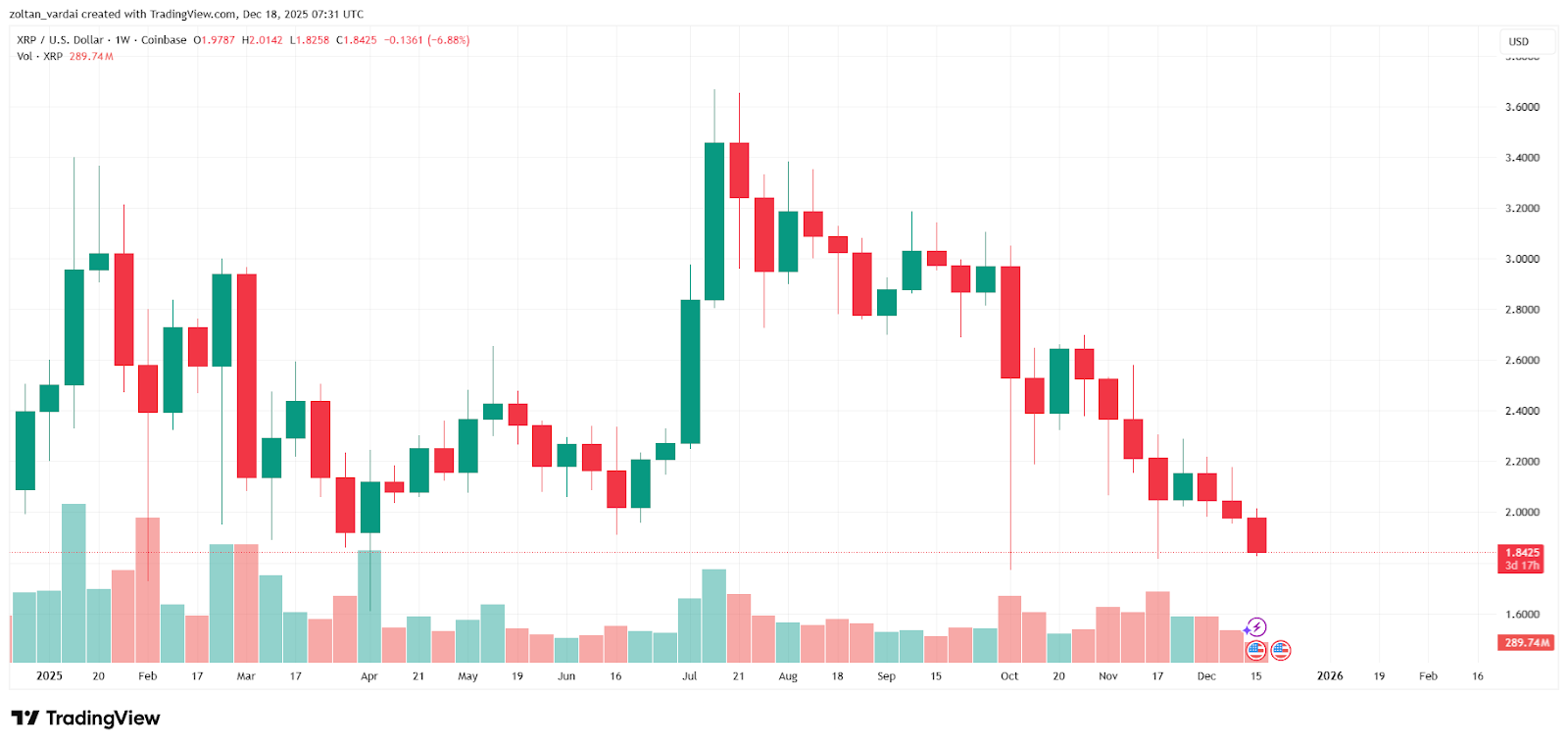
XRP emerged as one of the standout performers of the 2025 crypto market, managing to outshine the vast majority of digital assets despite the absence of a traditional altcoin season. TradingView data indicates that XRP surged over 35% in July alone, hitting a yearly high of $3.60 on July 23. This milestone represented an impressive eight-fold price increase from its previous year’s low of $0.43, which had been recorded on August 5, 2024.
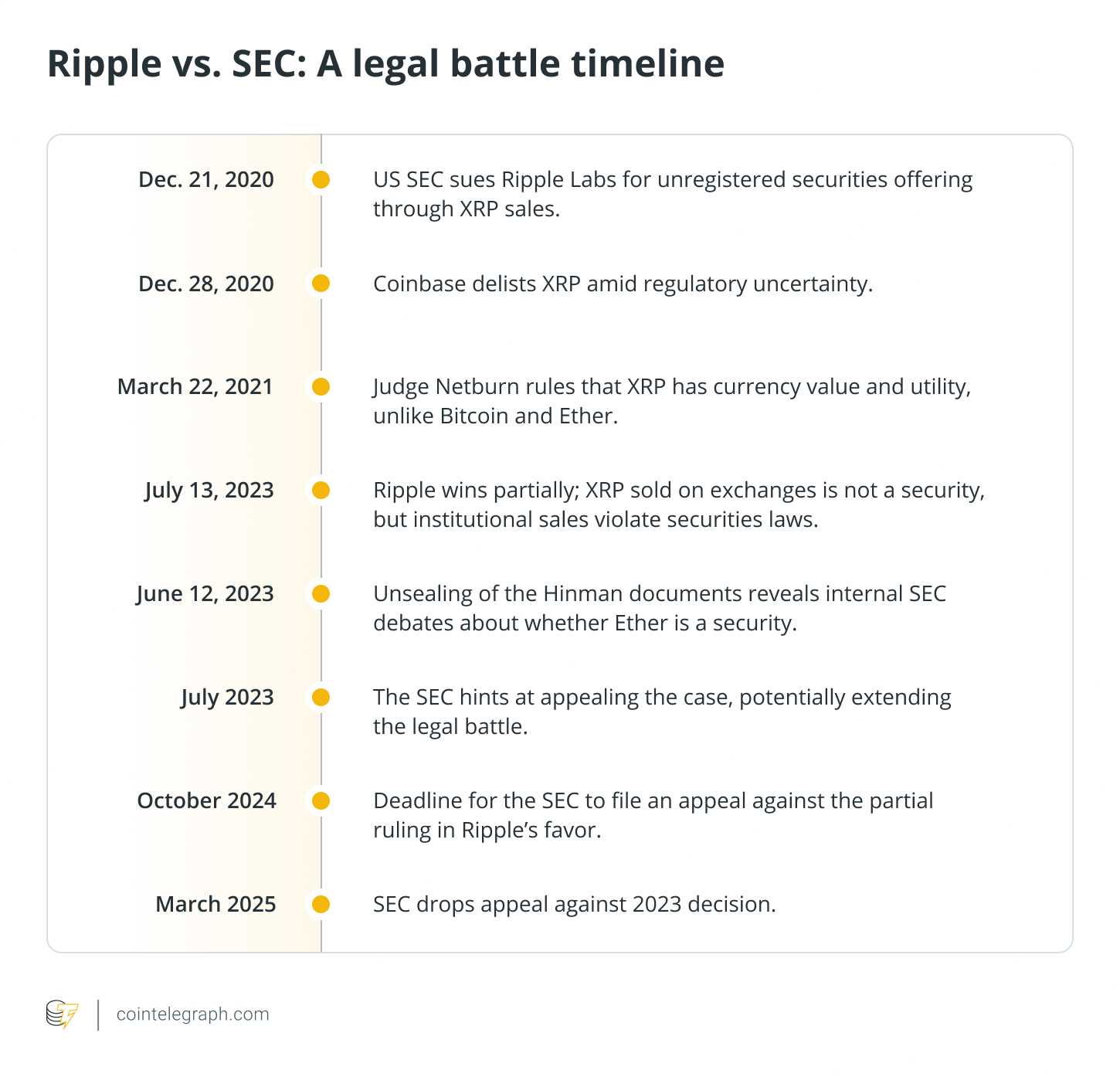
The token received massive tailwinds from growing regulatory clarity, most notably the initial reports signaling the eventual resolution of the long-standing legal battle between the United States Securities and Exchange Commission and Ripple Labs. Ripple and the SEC officially brought their protracted dispute to a close on August 8, according to court filings submitted by the company. The two parties filed a joint letter asking the court to dismiss the SEC’s pending appeal alongside Ripple’s cross-appeal, with each side agreeing to bear its own respective costs and fees.
Alex Davis, the founder and CEO of blockchain ecosystem Mavryk Dynamics, noted that the market was visibly rotating toward assets that regulators could easily classify, institutional entities could accurately model, and corporate compliance teams could officially approve. He pointed out that XRP fit that profile far better than most other alternative cryptocurrencies during the year. The removal of a multi-year regulatory cloud effectively reopened the door for substantial institutional participation.
The SEC had originally initiated its lawsuit against Ripple in December 2020, alleging that the firm had raised $1.3 billion through unregistered sales of XRP. Years of legal uncertainty followed, placing a heavy weight on the token’s market dynamics.
However, the debut of the Canary Capital XRP exchange-traded fund on November 13 sent another powerful signal to institutional investors who had been searching for compliant exposure to altcoins. Isaac Joshua, CEO of crypto startup platform Gems Launchpad, observed that XRP outperformed its peers due to three primary pillars: regulatory clarity, fresh institutional capital inflows, and a steadily growing perception of real-world utility. Looking ahead, Joshua suggested that if ETF demand remained resilient and global payment volumes continued to climb, XRP could successfully transition from a speculative altcoin into an established component of worldwide payment infrastructure. Data showed that XRP-focused ETFs generated an impressive $756 million in net positive inflows within their first eleven trading days.
Zcash Rallies as Privacy Trade Returns
Zcash also commanded significant attention in 2025, propelled by a powerful resurgence of interest in privacy-centric cryptocurrencies as global regulators tightened their oversight of digital transactions and user identity verification. By mid-November, Zcash shifted from a relatively low-profile asset to become the most-searched cryptocurrency on Coinbase, surpassing both Bitcoin and XRP in retail investor engagement.
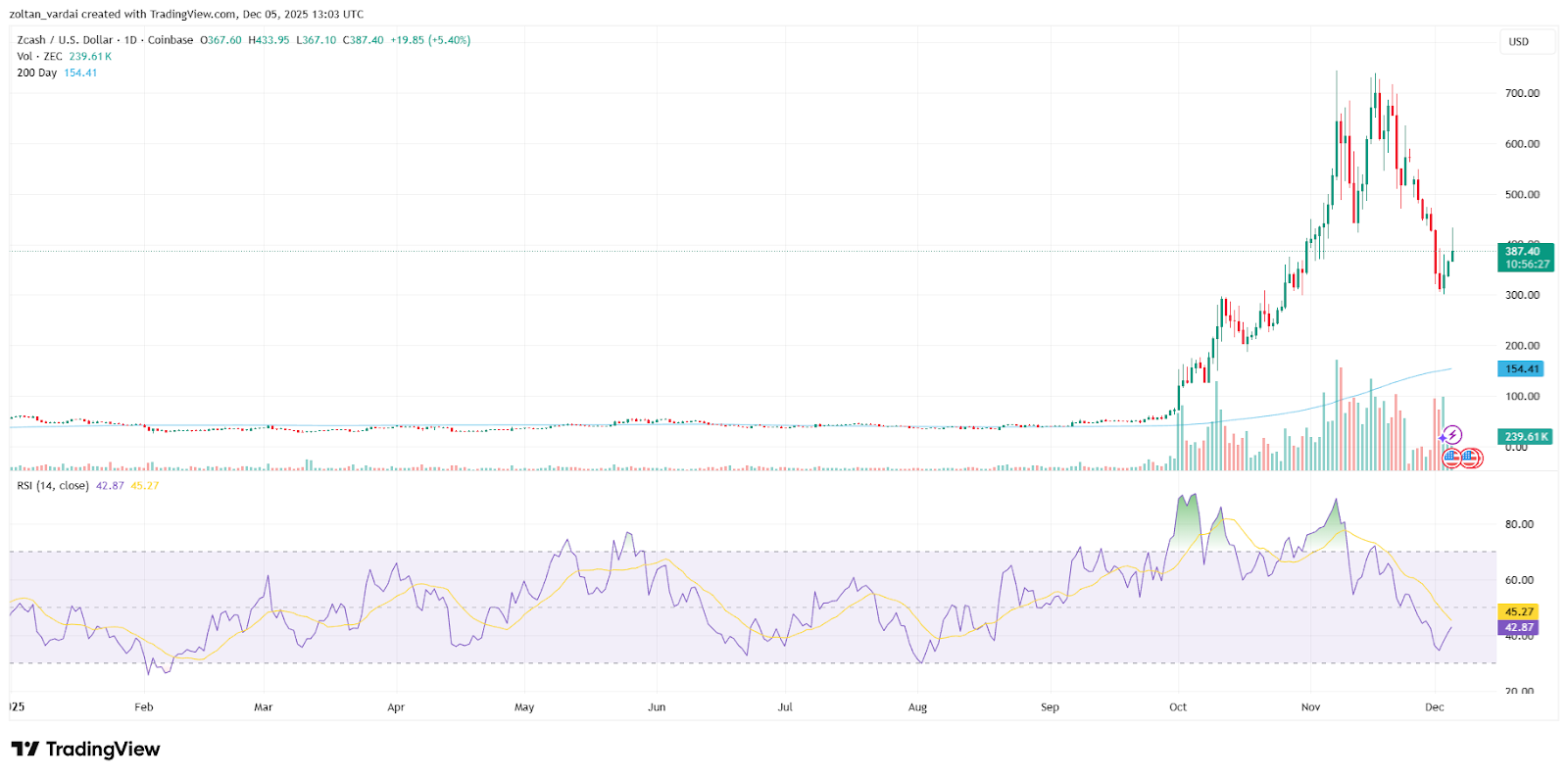
TradingView data reveals that Zcash mounted an extraordinary rally of over twelve-fold, climbing from a yearly low of $48 up to a high of $744 on November 7. This peak arrived roughly a month after a massive $19 billion market crash shook the broader crypto economy at the start of October. Despite reaching these impressive annual heights, Zcash remained well below its all-time high of $5,941, which had been set nearly a decade earlier on October 29, 2016.
Industry executives noted that privacy-focused assets outperformed the broader digital asset market due to escalating demand for financial confidentiality in the face of rising digital surveillance. Narek Gevorgyan, founder and CEO of crypto portfolio management platform CoinStats, explained that the recent market momentum was driven primarily by structural market factors. These included tightening Know Your Customer and Anti-Money Laundering regulations across centralized exchanges, heightened government surveillance of blockchain transactions, and renewed development interest in zero-knowledge cryptographic technologies.
Launched originally in 2016, Zcash merges a proof-of-work consensus mechanism with advanced zero-knowledge proof technology. This architecture allows users to choose between transparent transactions and fully shielded transactions where both the transaction amounts and wallet addresses remain completely hidden from public view.
Demonstrating this surging demand, the aggregate volume of Zcash tokens held within shielded addresses climbed from 1.7 million coins to approximately 4.5 million coins over the course of 2025, with a notable 1 million tokens transferred into privacy pools during a compressed three-week window. Additional supply-side pressure came from the network’s latest halving event on November 23, 2024, which cut block rewards from 3.125 ZEC down to 1.5625 ZEC. This reduction successfully lowered daily token issuance from roughly 3,600 coins to around 1,800 coins.
Algorand Jumps on Tokenization Push
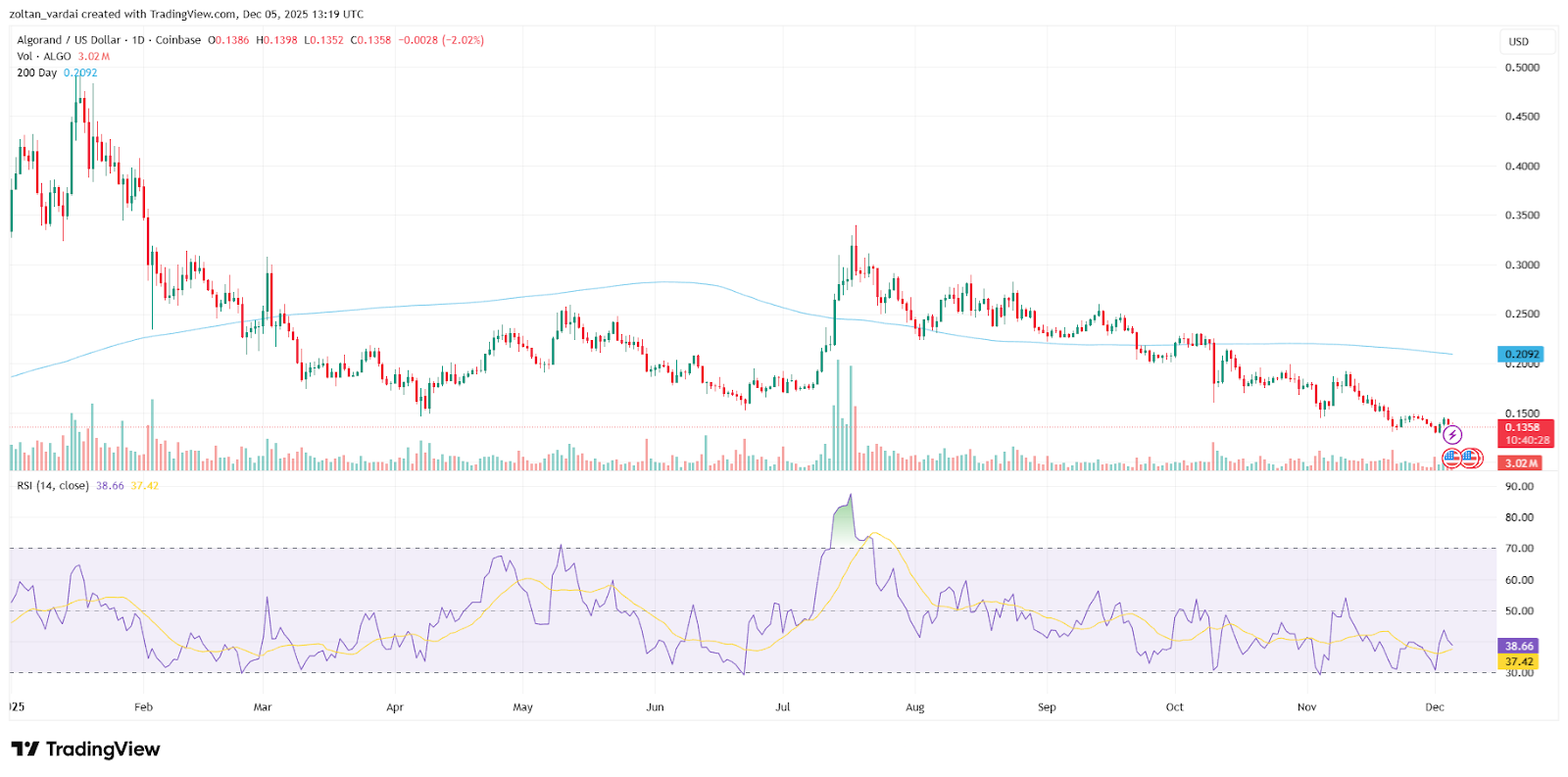
Algorand drew considerable market interest early in the year as tangible signs of expanding real-world enterprise deployment began to materialize. The network’s native token, ALGO, rose by approximately 48% over a three-week period, moving from $0.33 at the end of December 2024 to surpass a yearly high of $0.49 by January 17, according to TradingView data.
The momentum accelerated on January 21 when Algorand announced a strategic partnership with Enel Group, one of Europe’s largest electricity providers by customer count. The collaboration was designed to allow Italian residents to purchase fractional shares of Enel’s solar farms and wind energy installations utilizing tokenized Energy Utility Tokens.
Lacie Zhang, a market analyst at Bitget Wallet, remarked that Algorand’s tangible real-world integrations positioned the underlying blockchain network well for long-term operational relevance. She noted that these milestones reinforced the technical strengths of the platform and highlighted its strategic focus on enterprise-grade, environmentally sustainable use cases.
At the same time, Zhang pointed out that the token’s broader yearly price trajectory reflected macro-level market trends rather than any project-specific weaknesses. She attributed the wider altcoin sector’s underperformance to stubborn macroeconomic headwinds, including elevated interest rates and the prolonged market dominance of Bitcoin, which successfully captured the vast majority of available liquidity within the crypto ecosystem. In this challenging environment, she observed, strong technical progress did not immediately translate into positive price action, though utility-focused networks like Algorand were expected to recover as investor focus shifted permanently from pure speculation to tangible utility-driven adoption.
Despite sluggish price performance following its January peak, Algorand continued to record robust underlying blockchain activity. Data from a Messari research report indicated that the volume of staked ALGO tokens grew by 28% quarter-over-quarter, surpassing 1.95 billion tokens during the second quarter of 2025.
The ecosystem also maintained an aggressive technical development schedule. In March, the network released AlgoKit 3.0, a comprehensive developer toolkit aimed at streamlining the application creation process. Development continued throughout the year, culminating in preparations for the rollout of AlgoKit 4.0, which was slated for early 2026 to introduce composable smart contract libraries alongside expanded programming language support for Rust, Swift, and Kotlin.
A Selective Market Heads into 2026
The stark divergence between Bitcoin and the broader altcoin market left 2025 looking fundamentally different from previous historical crypto cycles. Rather than following familiar cyclical playbooks, the market behaved in a much more selective and fundamentals-driven manner.
While segments of the retail trading community continued to anticipate a traditional altcoin season based on historical precedent, the prevailing market structure instead pointed toward a maturing digital asset landscape. In this new paradigm, individual projects required verifiable underlying utility, clear regulatory standing, and genuine institutional integration to capture lasting market traction as the industry transitioned toward 2026.