
The global cryptocurrency market experienced a week of intense macro and protocol-level developments, highlighted by a pivot in Ethereum’s narrative, political shifts in Washington, major security breaches, and accelerating cryptographic upgrades. Across the industry, stakeholders are grappling with changing regulatory landscapes, evolving technological defenses, and shifting macroeconomic realities as Bitcoin and major altcoins correct from recent local highs.
Ethereum Creator Says ETH Should Be Valued as a Store of Value
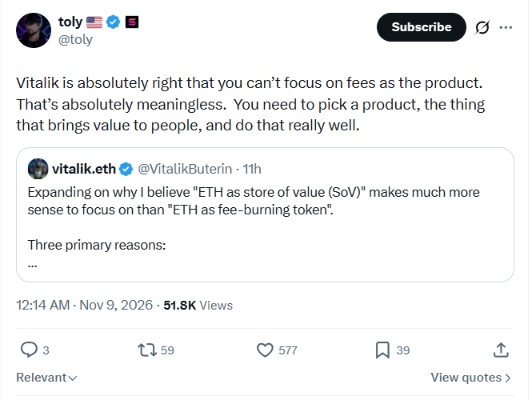
Ethereum creator Vitalik Buterin has sparked widespread debate across the digital asset ecosystem by arguing that the network should actively promote Ether (ETH) as a store of value (SoV) rather than relying on an economic model that derives value primarily from burning transaction fees.
In a detailed social media thread, Buterin asserted that the idea of “ETH as a fee-burning token never was as strong as it seemed.” He cautioned that optimizing the network strictly around fee generation would ultimately compromise Ethereum’s foundational pillars of “decentralization and CROPS”—an acronym referring to censorship resistance, open source principles, privacy, and security. According to Buterin, these intrinsic guarantees will become significantly more valuable in an impending era driven by artificial intelligence disruption.

The debate revisits the major shift brought by the 2021 EIP-1559 fee-burning upgrade, which pushed Ethereum into a deflationary state during periods of high network usage. This dynamic prompted prominent market commentators, including the Bankless podcasters, to champion Ethereum as "ultrasound money." However, structural design choices and scaling upgrades have caused transaction fees and overall network revenue to trend downward. Median transaction fees fell from 35 cents in January to 3.5 cents by October, even as daily transaction counts expanded by more than 50%, rendering the deflationary fee-revenue narrative increasingly unsustainable.
Reactions to Buterin’s remarks were swift and sharply divided. Bitcoin proponents, who closely guard Bitcoin’s undisputed status as the premier store of value, were critical. Held Media founder Dan Held dismissed the comments, characterizing them as an attempt by ETH to adopt Bitcoin’s narrative following the collapse of previous rationales. Held questioned how a protocol with a frequently updated monetary policy could ever achieve sound money status. Conversely, Ethereum supporters welcomed the clarity. MetaLeX attorney Gabriel Shapiro described Buterin’s commentary as a welcome alignment with core fundamentals, suggesting that ETH could potentially surpass both Bitcoin and Zcash as a store of value. Solana co-founder Anatoly Yakovenko similarly weighed in, agreeing that focusing on transaction fees as the core product is fundamentally flawed, though he offered a subtle critique of Ethereum’s overarching product design.
Democrat Sweep Spells Uncertain Future for Crypto Regulations
The recent U.S. midterm elections have left the regulatory future of the cryptocurrency industry in a state of ambiguity. Despite crypto super PACs deploying $176 million across roughly 100 legislative races—including a notable $64 million expenditure aimed at unseating Senator Sherrod Brown—the overall impact of industry spending has ignited considerable debate regarding its effectiveness.
While major super PACs like Fairshake reported backing winning candidates in 92% of their supported races, and advocacy groups like Stand With Crypto point out that nominal majorities in both the Senate and the House of Representatives lean pro-crypto, power dynamics within key congressional committees are shifting. High-profile critics of the industry are expected to assume influential leadership posts. Senator Brown is slated to join the Senate Agriculture Committee, while Senator Elizabeth Warren is widely tipped to chair the Senate Banking Committee.
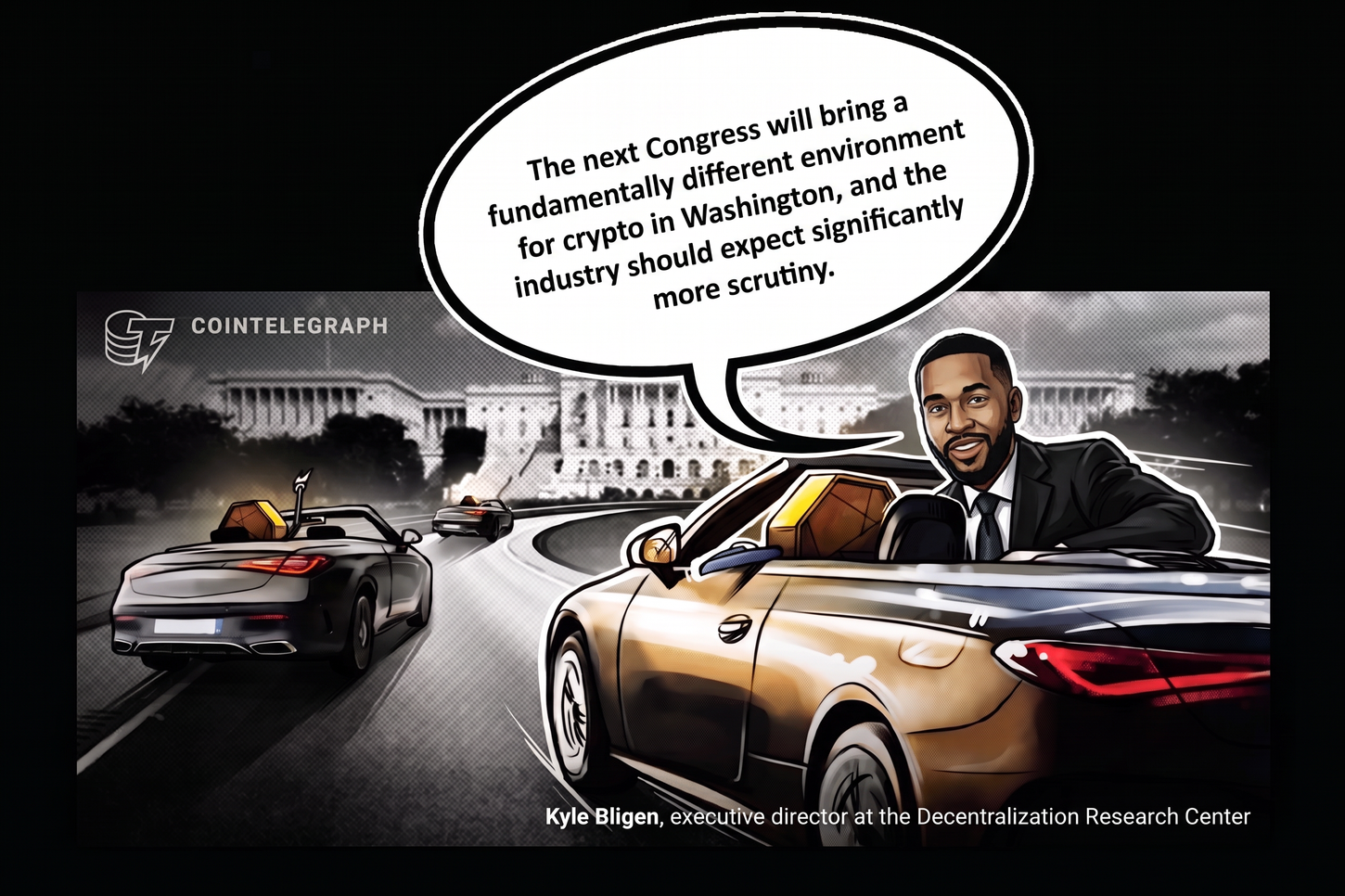
Industry analysts warn that the next Congress will usher in an era of heightened federal oversight. Kyle Bligen, executive director at the Decentralization Research Center, noted that the incoming political environment will subject crypto firms to significantly more intense scrutiny. Lawmakers are reportedly weighing proposals to expand legislative frameworks originally introduced by Representative Maxine Waters into a comprehensive market structure bill. Furthermore, prospects for resurrecting the CLARITY Act remain tied to the inclusion of stringent ethics provisions designed to address perceived conflicts of interest involving executive leadership and political families entering the digital asset sector. These concerns were underscored by market commentary regarding prominent memecoin volatility and a broader correction across risk assets, which saw Bitcoin slip below the $76,000 threshold.
Fake Job Interview Led to Binance’s $6.34 Billion Hack
Security disclosures from Binance have revealed the sophisticated social engineering campaign behind a staggering $6.34 billion exploit orchestrated by state-sponsored actors linked to North Korea.
According to Binance’s official incident report, the multi-month breach began as early as June when an employee inadvertently downloaded a compromised Homebrew installation package while attempting to configure an AI coding utility. Although exchange security teams detected the anomaly, attackers had already extracted reconnaissance data regarding personnel associated with Binance’s core wallet infrastructure.
The threat actors escalated the campaign in September by posing as recruiters targeting a software engineer. The employee was tricked into downloading a malicious file disguised as a routine coding assignment. On October 20, the attackers leveraged the compromised workstation and an internal AI development tool to breach the systems of two additional engineers, ultimately deploying malware that granted unauthorized access to the exchange’s internal wallet-signing service and facilitating the massive capital outflow. Binance co-CEO Richard Teng characterized the incident not as a single operational error, but as an advanced, protracted infiltration campaign.
Ethereum Dev Targets 2028 for Quantum Resistance, a Year Early
Ethereum Foundation researcher Justin Drake has announced an accelerated timeline for achieving post-quantum security across the network. Speaking at Devcon 8 in Mumbai, Drake stated that developers are targeting December 2028 to complete the full post-quantum and post-AI transition, moving the milestone up by a full year compared to the foundation’s previously published September roadmap.

The revised schedule requires core developers to deliver three major network upgrades within a compressed 24-month window. However, this ambitious trajectory unfolds as the broader protocol upgrade schedule experiences temporary friction. Core developers recently opted to delay the upcoming Glamsterdam network upgrade indefinitely until outstanding security considerations concerning eight critical smart contract invariants are fully resolved.
THORChain Restarts Despite FBI Warning
Cross-chain liquidity protocol THORChain has resumed operations across most supported networks, explicitly bypassing an explicit warning from the Federal Bureau of Investigation urging the platform to halt the processing of funds associated with the recent Binance exploit.
Trading for Bitcoin, Ethereum, Bitcoin Cash, Dogecoin, Litecoin, Tron, and Zcash was re-enabled on November 4, driving a 15% 24-hour rally in the native RUNE token. Avalanche, Base, and XRP pairs had already remained active. According to blockchain analytics firm Chainalysis, THORChain processed upwards of $46 million connected to the hack within the first 72 hours following the Binance breach, generating approximately $200,000 in validator fee revenue. Operations were only temporarily paused due to an unrelated Ethereum block reorganization event. THORChain co-founder JPThor argued that the protocol’s ability to disregard the federal directive demonstrates its censorship-resistant, decentralized architecture.

Market Performance and Weekly Sentiment
Broader digital asset markets closed the week in the red. Bitcoin (BTC) declined 4.5% to trade near $74,302, Ethereum (ETH) dropped 6.3% to $2,117, and XRP retreated 5% to $1.11, bringing the cumulative crypto market capitalization to approximately $2.49 trillion. Among the top 100 assets, top altcoin performers included Pieverse (PIEVERSE) up 39.2%, Injective (INJ) up 11.1%, and Tether Gold (XAUt) up 4.2%. Conversely, the most significant weekly losers were Official Trump down 32.8%, Worldcoin (WLD) down 20.8%, and Ethena (ENA) down 19%.
Industry analysts maintained diverse perspectives on ongoing market stress. Grayscale head of research Zach Pandl suggested that the Binance security breach, while creating near-term market turbulence, will ultimately catalyze improved security standards across centralized platforms and emphasize the utility of institutional-grade custody solutions such as U.S. crypto exchange-traded products. Meanwhile, regulatory headwinds continued to impact European operations, with Binance France notifying users that local accounts will close by December 31, accompanied by monthly maintenance fees for remaining balances following regulatory authorization hurdles under the European Union’s Markets in Crypto-Assets framework.