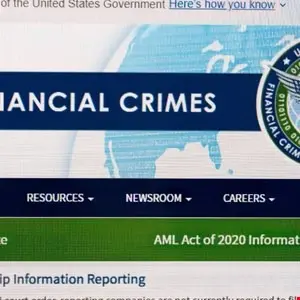
The United States Treasury Department’s Financial Crimes Enforcement Network (FinCEN) confirmed on November 25 that it is currently investigating a cybersecurity incident that resulted in unauthorized access to a limited portion of its internal systems. As one of the most critical components of the U.S. national security and financial oversight apparatus, FinCEN serves as the primary hub for monitoring and preventing financial crimes, including money laundering, terrorist financing, and international trafficking. The breach marks a significant development in an ongoing series of cyber-attacks targeting high-profile U.S. federal agencies.
In an official statement released on Monday, the agency acknowledged the security compromise while emphasizing that it had initiated a swift response to mitigate potential damage. FinCEN officials noted that, as a proactive safety measure, the agency has taken certain non-essential services offline to facilitate a thorough forensic investigation and to ensure the integrity of its broader network environment.
Despite the disruption to some internal operations, the agency was quick to reassure the financial sector that its core reporting infrastructure remains functional. Specifically, the Bank Secrecy Act Electronic Filing (BSA E-Filing) System—the critical, secure online portal used by financial institutions to submit mandatory BSA reports—remains fully operational. This is a vital distinction, as the BSA E-Filing system is the primary mechanism through which banks, credit unions, and other financial entities report suspicious activity to federal authorities. By keeping this channel open, FinCEN ensures that the flow of intelligence concerning illicit financial activities continues uninterrupted, even as it works to secure its compromised segments.
To assist financial institutions that may be navigating the uncertainty caused by this incident, FinCEN has officially extended the deadlines for the submission of various required documents. This administrative flexibility is designed to prevent unnecessary strain on compliance departments during the period in which the agency’s internal systems are undergoing scrutiny.
Furthermore, the agency has provided clear guidance for institutions that must report time-sensitive information. In its communication to stakeholders, FinCEN emphasized that if a financial institution needs to expedite the delivery of critical suspicious activity information to law enforcement, they should utilize the Financial Institutions Hotline at 1-866-556-3974. The agency confirmed that this hotline remains unaffected by the current service disruptions and continues to operate as a secure, dedicated conduit for urgent reporting.
The incident at FinCEN does not exist in a vacuum. It arrives as part of a broader, concerning trend of cybersecurity challenges facing the U.S. government. Reports from recent days indicate that several major federal agencies, including the Federal Bureau of Investigation (FBI), the Central Intelligence Agency (CIA), and the Office of the Director of National Intelligence (ODNI), have begun investigating a series of sophisticated data breaches. These incidents appear to target sensitive information, including records housed within the National Crime Information Center (NCIC) database, as well as various categories of unclassified intelligence information.
The potential breach of the NCIC database, a system that provides law enforcement agencies across the country with access to criminal records, warrants, and other sensitive investigative data, has prompted significant concern among cybersecurity experts and government officials alike. When combined with the intrusion into systems like those managed by FinCEN, the situation suggests a coordinated or at least overlapping effort by threat actors to compromise the nation’s intelligence and law enforcement infrastructure.

FinCEN, by nature of its mission, acts as a bridge between the financial industry and the law enforcement community. It collects vast amounts of data regarding the movement of money, which is then analyzed to detect the footprints of organized crime, drug cartels, and state-sponsored financial actors. Because of the sensitivity of this data, FinCEN’s systems are among the most heavily fortified within the Treasury Department. A successful unauthorized access event—even if limited to a "subset of systems"—raises complex questions regarding the sophistication of the attackers and the vulnerabilities they may have exploited.
Industry analysts have noted that the timing of these attacks, occurring in rapid succession across multiple federal entities, points to a highly capable threat actor. While the investigation is still in its infancy, the fact that these agencies are coordinating their response efforts indicates a high-level concern regarding the scope of the exposure. For financial institutions, the primary concern now centers on the confidentiality of the reports submitted through the agency and the potential for long-term intelligence gathering by those who have gained unauthorized access.
The cybersecurity community is currently waiting for further details regarding the nature of the breach, such as the initial vector of the intrusion and the extent of the data that may have been accessed. Historically, agencies like FinCEN are targeted not only for the financial data they hold but for the connections they maintain with other intelligence networks. The agency’s commitment to transparency, as evidenced by its immediate public statement and the provision of clear instructions for filing entities, is a standard response intended to maintain confidence in the integrity of the financial reporting system.
As the investigation progresses, the Treasury Department is expected to provide further updates on the restoration of its offline services and the results of its forensic audit. The extension of filing deadlines suggests that the agency is prioritizing the security of its network over the immediate processing of routine administrative paperwork.
For the financial sector, the current state of affairs is one of cautious compliance. Financial institutions are accustomed to strict regulatory requirements and high-security environments, but the disruption at a central regulatory hub creates a unique operational challenge. The reliance on the Financial Institutions Hotline, while a necessary fallback, highlights the dependency that the national security infrastructure has on these specific, secure channels.
The investigation into these breaches is expected to be lengthy and complex. As the FBI and other intelligence agencies delve into the forensic footprints left by the intruders, they will be looking for patterns that might link the FinCEN incident to the broader breaches at the CIA and the ODNI. Such a connection would suggest a strategic campaign rather than an opportunistic attack.
In the coming days, the security of federal networks will undoubtedly remain a top priority for the White House and the Department of Homeland Security. The government’s ability to protect the systems that house its most sensitive investigative intelligence is a cornerstone of domestic stability. As for FinCEN, the agency remains operational in its critical mission to combat financial crime, even as it navigates the difficult task of securing its digital perimeter against a persistent and elusive adversary. Infosecurity continues to track this developing story and has reached out to FinCEN for further comment regarding the potential impact on data privacy and the ongoing status of the investigation. The agency’s ability to maintain its core functions, particularly the BSA E-Filing system, remains the key metric by which the stability of the financial intelligence apparatus will be measured in the immediate aftermath of this breach.