
The United Kingdom is rapidly approaching a critical juncture that will likely define the trajectory of its financial future for decades to come. As policymakers work to finalize the nation’s first comprehensive regulatory framework for digital assets, a fundamental question hangs in the balance: Will decentralized finance (DeFi) be permitted to develop through regulated, transparent gateways, or will it be constrained and isolated within a restrictive silo?
According to Katie Harries, the head of policy for Europe at major cryptocurrency exchange Coinbase, this dilemma extends far beyond the immediate interests of digital asset enthusiasts and crypto traders. Instead, she argues, it strikes at the very heart of the future of capital markets, the long-term global competitiveness of the City of London, and the United Kingdom’s broader ability to innovate and shape the next generation of financial market infrastructure.
At its core, decentralized finance refers to a vast ecosystem of software applications built on public blockchains that allows individuals to borrow, lend, trade, and execute various financial transactions directly with one another. Unlike traditional financial institutions, DeFi operates without relying on centralized intermediaries such as traditional banks, clearinghouses, or stockbrokers. In many ways, the underlying software functions less like a traditional financial firm and more like the foundational architecture of the internet itself, promising faster, cheaper financial services that are potentially accessible to anyone around the globe at any time.
While open-source decentralized protocols will always remain accessible through direct, peer-to-peer routes, regulated financial service providers can also serve as a vital bridge. They can offer a structured and secure route to interacting with DeFi, allowing retail and institutional customers to engage with the technology while simultaneously receiving key information about the services they are accessing, the underlying protocols involved, and the specific risks they should be aware of before committing capital.
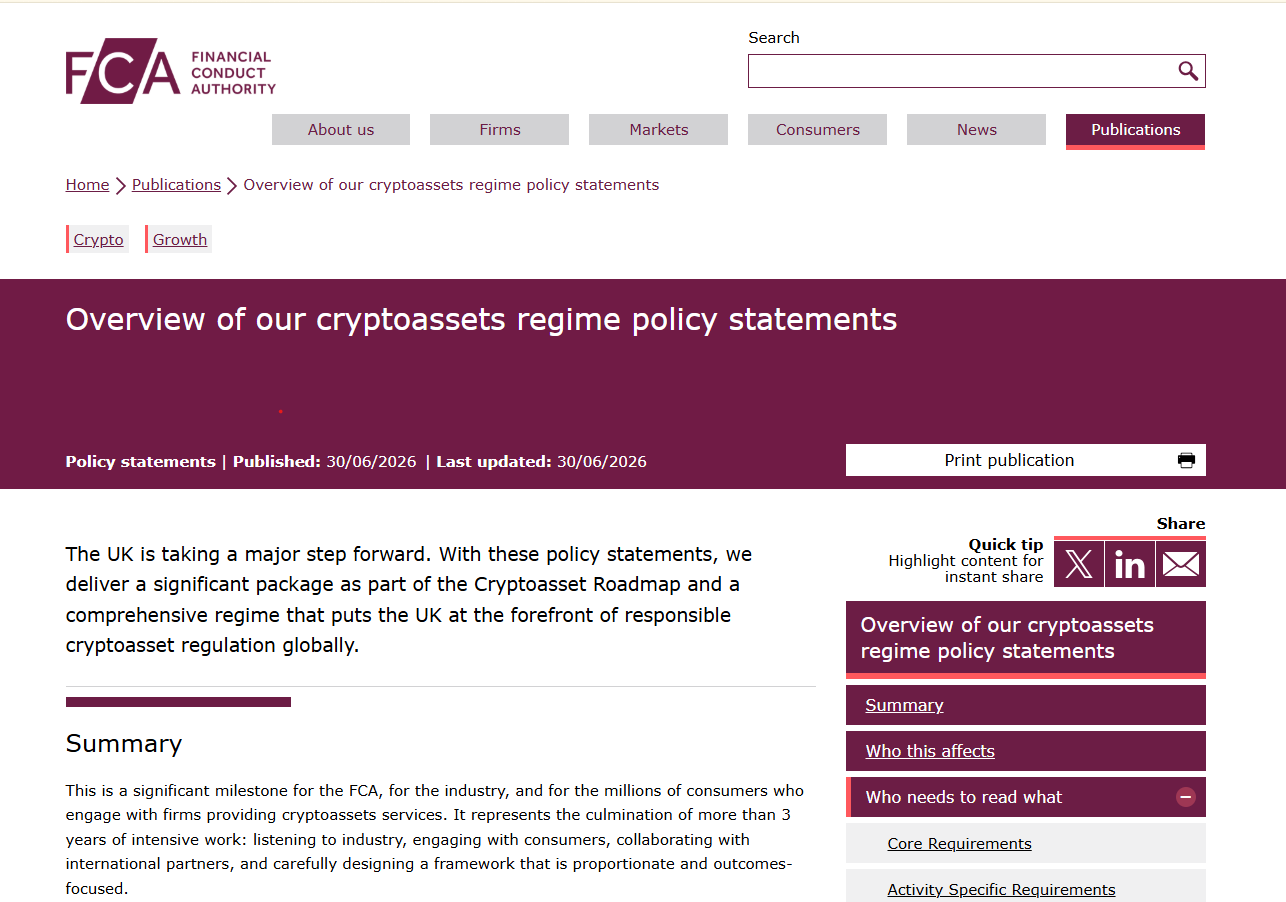
However, industry participants warn that the Financial Conduct Authority’s (FCA) currently proposed cryptoasset regulatory framework could inadvertently make this hybrid model impossible. Under the proposed guidelines, the FCA will expect regulated platforms to ensure that customer orders are executed exclusively on an FCA-authorized venue. While this policy is ostensibly designed to prevent unauthorized overseas firms from illegally targeting and accessing the UK market, it carries a severe unintended consequence: it risks cutting off access to DeFi entirely. This occurs because the decentralized protocols, automated market makers, and liquidity pools where users execute these orders do not have a centralized corporate entity or authorized person behind them that could realistically secure regulatory authorization.
While no specific rule explicitly states that firms are outright prohibited from offering DeFi integrations to their clients, the FCA has made it abundantly clear that it does not intend to draft rules tailored specifically to these novel products. Instead, the regulator has opted to apply the exact same compliance standards to decentralized applications as those applied to fully centralized trading venues. Consequently, industry experts warn that the real-world effect of this stance could amount to a restrictive de facto ban.
Unless the FCA alters its regulatory approach, regulated platforms may find themselves legally unable to provide customers with access to decentralized financial services once the new regime fully takes effect in October 2027. This regulatory friction directly collides with the stated ambitions of the UK government, which has repeatedly pledged that it wants the nation to "lead the world on digital assets." Industry leaders argue that the UK will ultimately struggle to realize this grand ambition if British financial firms are systematically cut off from the very decentralized infrastructure upon which modern digital asset markets are built.
DeFi is Becoming Part of the Next Financial Infrastructure
As UK regulators deliberate over how to handle these emerging technologies, financial watchdogs in other major international jurisdictions are already recognizing the immense economic opportunities presented by decentralized finance. These regulators are actively exploring pragmatic ways to foster DeFi innovation while maintaining robust consumer protection and market integrity.

Within the European Union, the European Securities and Markets Authority (ESMA) has recently proposed allowing regulated firms to provide controlled access to decentralized finance products. In official policy documents, ESMA noted that such a framework could effectively "allow innovation in decentralized finance in a regulated and transparent environment."
Meanwhile, across the Atlantic, the United States Securities and Exchange Commission (SEC) took a notable step in September by granting a temporary "Innovation Exemption." This regulatory carve-out permits the peer-to-peer trading of tokenized stocks using automated trading systems and decentralized liquidity pools.
In short, major global competitors like the US and the EU are actively examining how traditional finance and cutting-edge decentralized infrastructure can safely work together. Market observers argue that the UK should be exploring this exact same potential before it closes off the option completely and falls permanently behind. Onchain tokenized finance simply cannot reach its full economic potential if it remains strictly confined to closed, fragmented systems that are legally barred from interacting with the decentralized technology underpinning them.
A De Facto Ban May Push DeFi Beyond the Regulator’s Reach
The United Kingdom has officially established its first comprehensive rulebook for crypto regulation, setting a hard deadline of October 25, 2027. By this date, all firms wishing to offer crypto-related services to UK-based customers must secure formal authorization from the FCA. To prepare for this milestone, the regulator has been actively consulting on specific guidance detailing how its overarching rules will apply to financial institutions that interact with or incorporate DeFi.
Regulators have pointed to several legitimate concerns regarding DeFi integrations. First, retail customers using a familiar, regulated platform might not fully realize when they have crossed over into an environment where traditional protections, such as compensation schemes, no longer apply. Second, opportunistic firms could potentially utilize DeFi integrations as a loophole to evade standard regulatory obligations. Third, the open and permissionless nature of decentralized systems could introduce heightened risks related to financial crime, money laundering, and overall market resilience.
Yet, industry advocates maintain that these valid concerns point directly to the urgent need for clear consumer disclosures and well-defined corporate responsibilities—not an outright prohibition or exclusion.
Critics of the current approach argue that a de facto ban would ultimately produce the exact opposite of its intended effect. Rather than eliminating DeFi activity among UK residents, a ban would simply push more of that activity beyond the practical visibility of the FCA. Furthermore, it would strip regulated firms of their ability to shape how ordinary customers safely interact with decentralized protocols.
Mainstream, regulated platforms can serve as an invaluable focal point for regulatory supervision. They can implement clear warnings so customers always know when they are stepping outside a fully regulated environment, requiring explicit user consent before proceeding. Additionally, regulated firms possess the capability to curate access to rigorously vetted protocols, conduct thorough operational and governance risk assessments, and report suspicious usage and security incidents directly to financial authorities.
Regulate the Gateway, Not the Technology
The foundational principle of regulating the access point rather than the underlying technology is already well-established in other areas of mainstream finance. UK financial regulators routinely acknowledge that institutional gateways can safely provide consumer access to products or markets that do not inherently carry the same rigorous level of direct oversight.
Today, a wide array of retail trading platforms, investment apps, and multi-service financial "super apps" offer consumers seamless access to a diverse mix of financial products. These range from individual equities and money market funds to physical commodities and foreign exchange products, all of which operate under varying degrees of regulatory protection. The FCA permits these diverse offerings to coexist on single platforms, provided that the platforms clearly communicate to consumers which specific protections apply to each individual product and service.
This precedent is precisely why DeFi integrations require a more nuanced, flexible solution. The FCA has a fundamental mandate to protect consumers from fraud and systemic harm, but it should not attempt to achieve that protection through total exclusion. Responsible integration strategies would provide retail consumers with clearer, more transparent information, grant market supervisors greater visibility over onchain activity, and give the UK financial services sector a fighting chance to compete in the next vital phase of global financial innovation.
Consumers Will Use DeFi, So the Question Is Where
DeFi protocols are inherently global, open-source software, meaning consumers can already access them directly via their own self-custody wallets without ever involving a regulated financial firm. Therefore, the central question facing policymakers is not whether British consumers will use decentralized finance, but rather whether they will be allowed to access it through a regulated, domestic gateway equipped with clear disclosures and essential guardrails.
The economic stakes extend far beyond the narrow confines of crypto trading. Decentralized finance underpins the single greatest potential for cost savings as traditional financial services transition to onchain systems, cutting out costly intermediaries and enabling continuous, 24/7 cross-border activity. Establishing a clear regulatory pathway to support safe DeFi integration is crucial to giving institutional firms the long-term confidence they need to invest heavily in UK-based financial technology innovation.
If prohibitive barriers to entry and access are stubbornly imposed within the UK, the development of tokenized capital markets and broader financial innovation will inevitably migrate to jurisdictions that take a more decisive and supportive approach to DeFi infrastructure. As the global financial landscape evolves, the UK cannot credibly aspire to be a world leader in digital finance while simultaneously walling itself off from the decentralized technological foundation upon which the future of global finance is actively being built.