Bitcoin (BTC) reversed its latest recovery gains following the Tuesday Wall Street opening bell, sliding backward as macroeconomic pressures intensified across global financial markets. The flagship cryptocurrency faced renewed selling pressure as United States bond yields continued a relentless climb to multidecade highs, squeezing risk-on assets and disrupting traditional safe-haven dynamics alike.
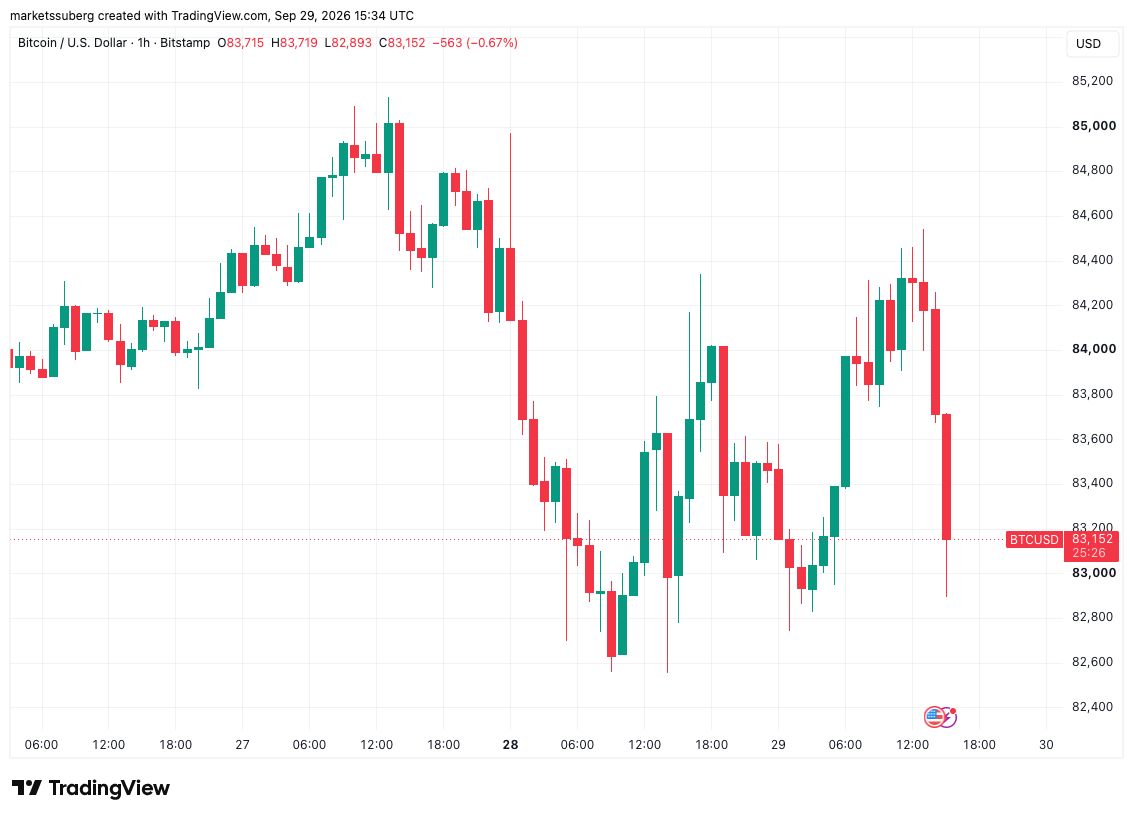
According to data from TradingView, Bitcoin attempted a local rally that pushed the price as high as $84,540 early in the day. However, that upward momentum quickly stalled right as the formal US trading session commenced. The BTC/USD pair retreated below its daily opening level, slipping back down to trade near the $83,600 mark. This rejection near the critical $85,000 threshold mirrors similar liquidity-driven pullbacks seen earlier in the week, demonstrating that bears remain firmly in control of immediate price action.

Bitcoin Rejects Near $85,000 as Bond-Yield Rally Continues
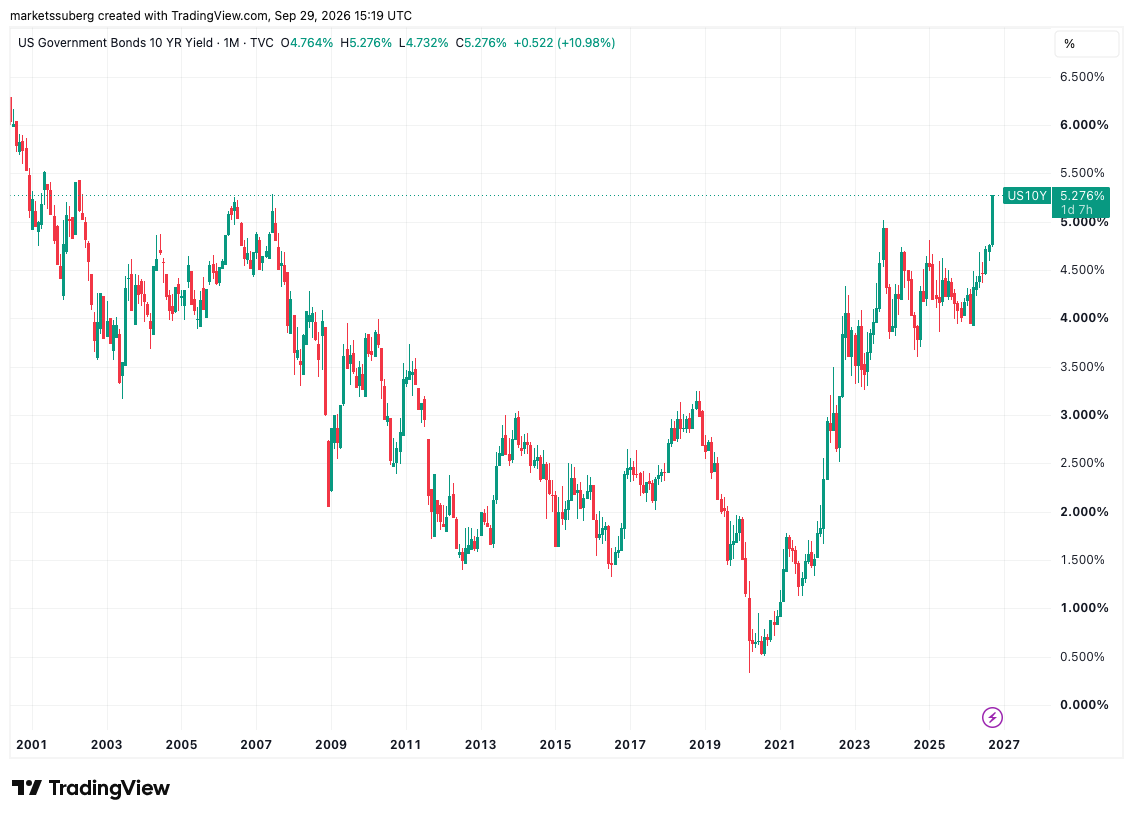
The broader financial landscape on Tuesday showed no indication of a cooling off period for soaring US bond markets. Yields across the curve pushed higher, with the 30-year US Treasury yield scaling new 24-year highs to push firmly above the 5.60% threshold. Meanwhile, the benchmark 10-year Treasury yield surged to 5.26%, bringing it to the immediate cusp of surpassing its June 2007 highs and testing levels last observed in April 2002.
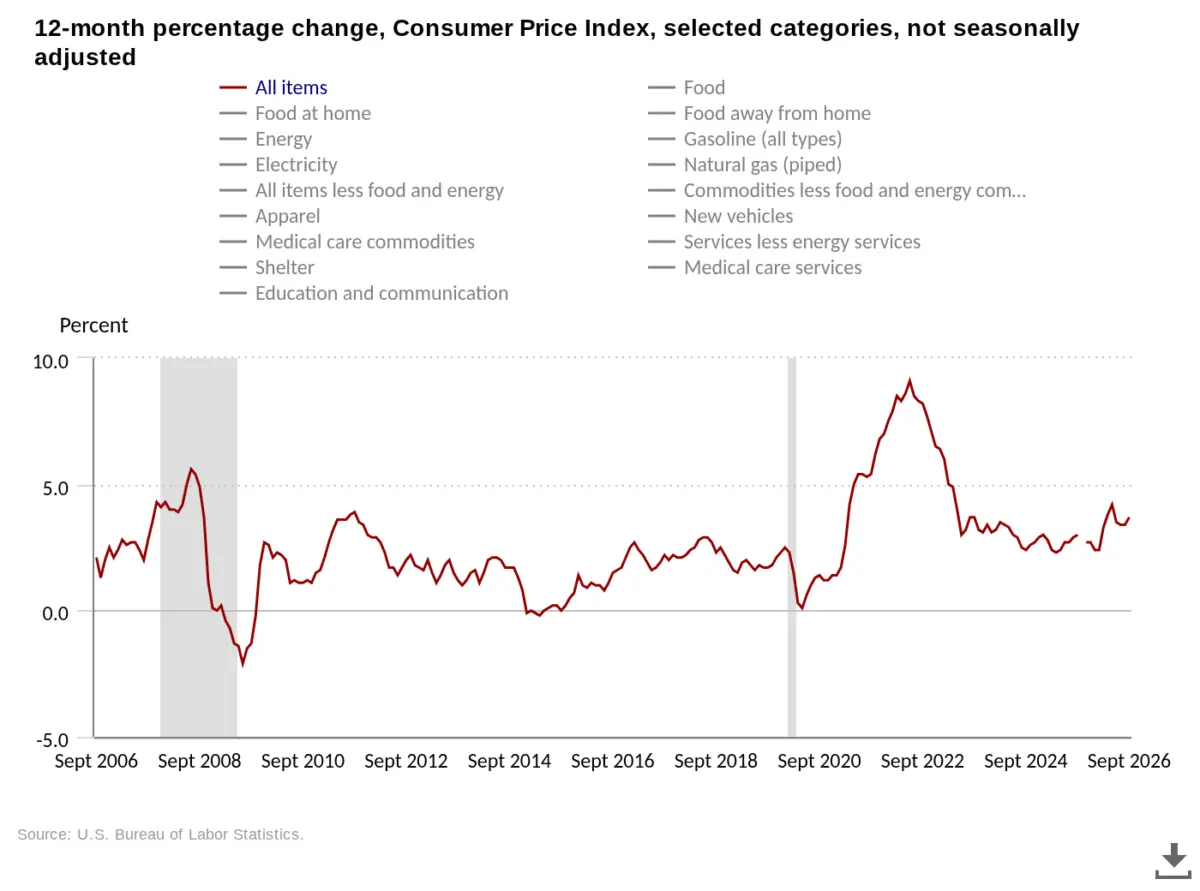
These soaring borrowing costs are taking a heavy toll on various asset classes amid a tense macroeconomic backdrop. Geopolitical uncertainty stemming from the ongoing US-Iran conflict, combined with elevated oil prices and persistent domestic inflation, has left institutional and retail investors operating in an environment of heightened caution.
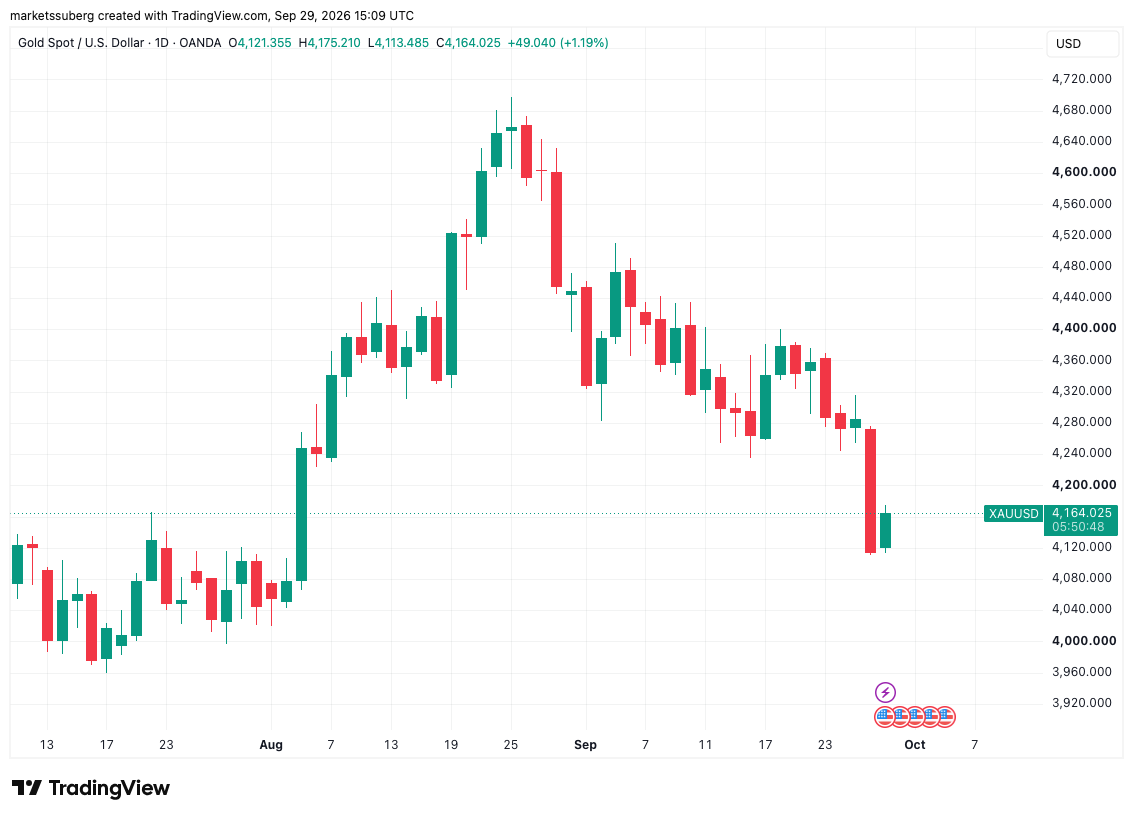
The dramatic surge in bond yields has also spilled over into precious metals, triggering an extraordinary disruption across commodities. Gold experienced a steep decline, falling 3.6% on Monday to touch $4,115 per ounce before staging a modest rebound to $4,166 at the time of writing. Prominent market commentator and research group The Kobeissi Letter highlighted the unusual nature of gold’s recent trajectory in a post on social media platform X, emphasizing that the aggressive expansion in yields is creating unprecedented turbulence throughout the precious metals sector.
While US equities managed to avoid catastrophic volatility during the session, fresh analysis published by trading resource Mosaic Asset Company suggests that the broader market may be harboring potential for a relief rally. According to their latest findings, underlying market conditions have become "extremely oversold." The firm noted that the percentage of stocks trading in short-term uptrends on a year-to-date basis has plunged to levels not seen since late March, when the S&P 500 hovered near formal correction territory.
Additional market breadth metrics point toward a deeply oversold environment, while investor sentiment surveys have registered a sharp spike in bearish outlooks over the preceding two weeks. Despite this pessimistic sentiment, Mosaic Asset Company pointed out that robust fundamental economic data—such as higher-than-expected employment gains reported in August—could provide underlying support for continued equity appreciation, even as the Federal Reserve weighs further monetary tightening. Market expectations currently price in a widely anticipated 0.25% interest rate hike by the US central bank during its upcoming October policy meeting.
Long-Term Holder Supply Reinforces Overhead Resistance
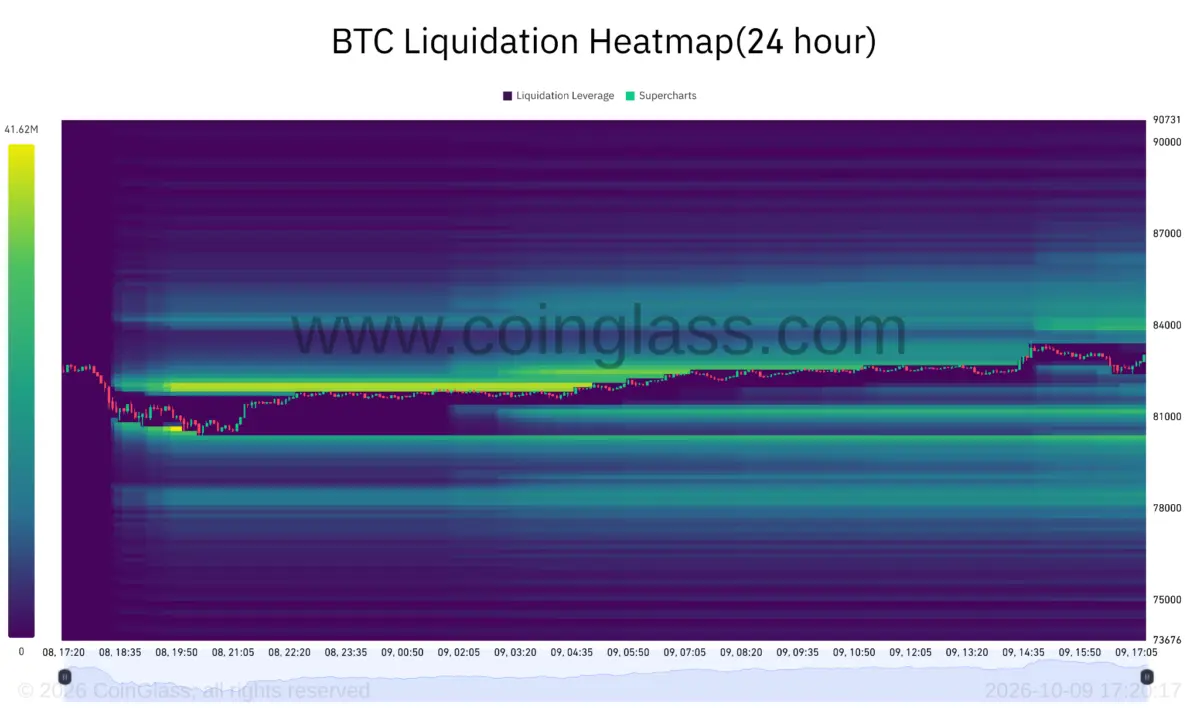
On lower time frames, Bitcoin’s short-term price trajectory continues to be heavily dictated by microstructural dynamics, specifically exchange order-book liquidity shifts. Market data compiled from CoinGlass illustrated a thick wall of overhead resistance accumulating directly around the $85,000 level on Tuesday. As buyers attempted to push past this barrier, the resulting lack of immediate liquidity absorption caused the price to pivot downward, repeating a familiar pattern of liquidity hunting that has consistently blocked bulls from targeting their yearly opening prices earlier in the week.
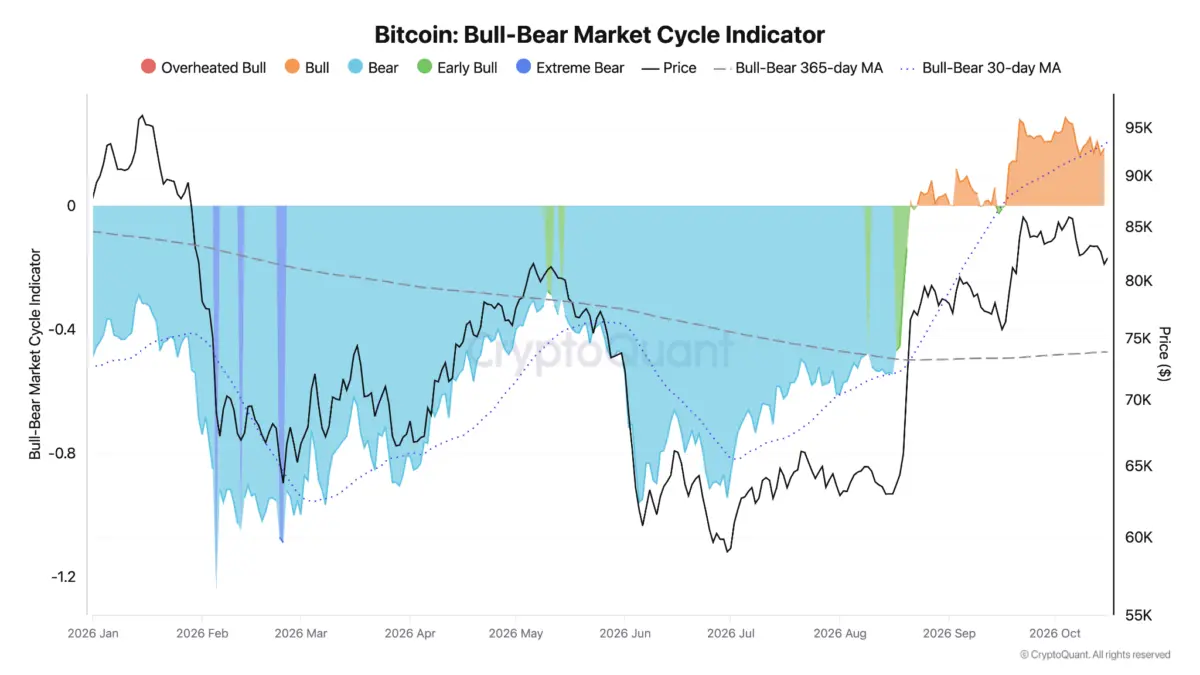
Complicating the bullish outlook further, onchain analytics provided by Glassnode shed light on deeper structural supply barriers. According to their metrics, a massive concentration of coins held by long-term holders (LTHs)—defined as wallets maintaining a spent output lifespan (UTXO) for at least six months without transacting—is heavily clustered right between $84,000 and $85,000. This dense concentration of historical supply significantly amplifies the probability of profit-taking behavior should Bitcoin make another concerted effort to break above the $85,000 threshold.
In a recent update shared with its followers on X, Glassnode noted that Bitcoin has clearly stalled underneath its heaviest supply cluster on the chart. The analytics provider emphasized that a greater volume of long-term holder coins currently sits within the $84,000 to $85,000 range than at virtually any other price point on the current distribution curve. For the broader bull market rally to sustain its momentum and challenge higher technical targets, analysts agree that the digital asset must decisively break through this heavy resistance zone and establish a firm consolidation base well above it.