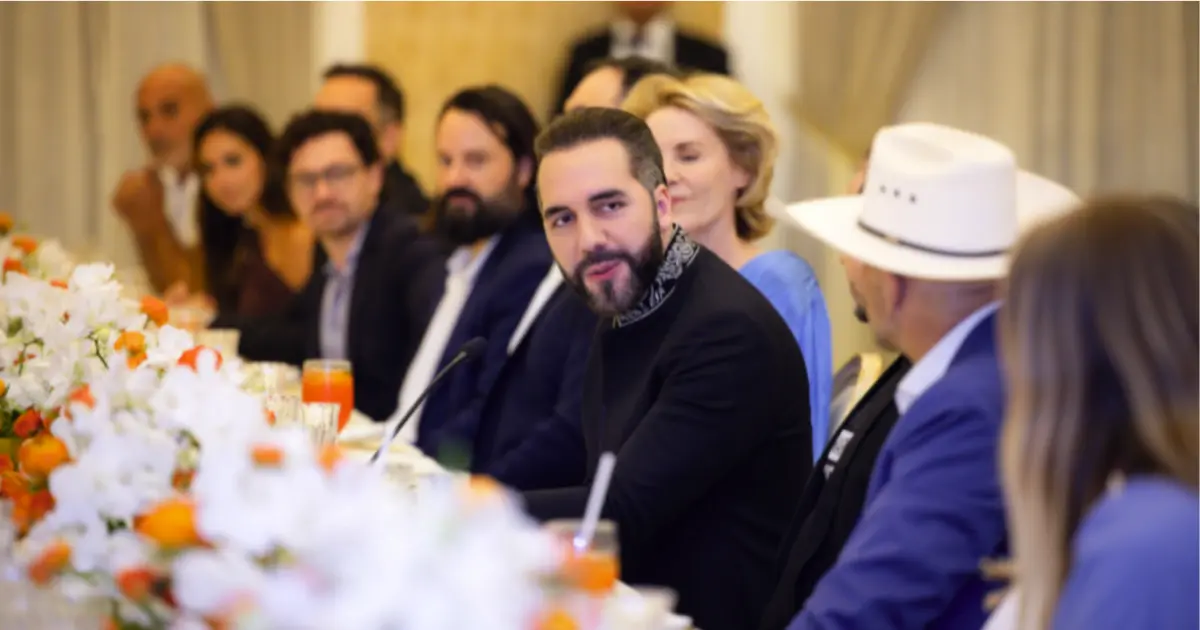
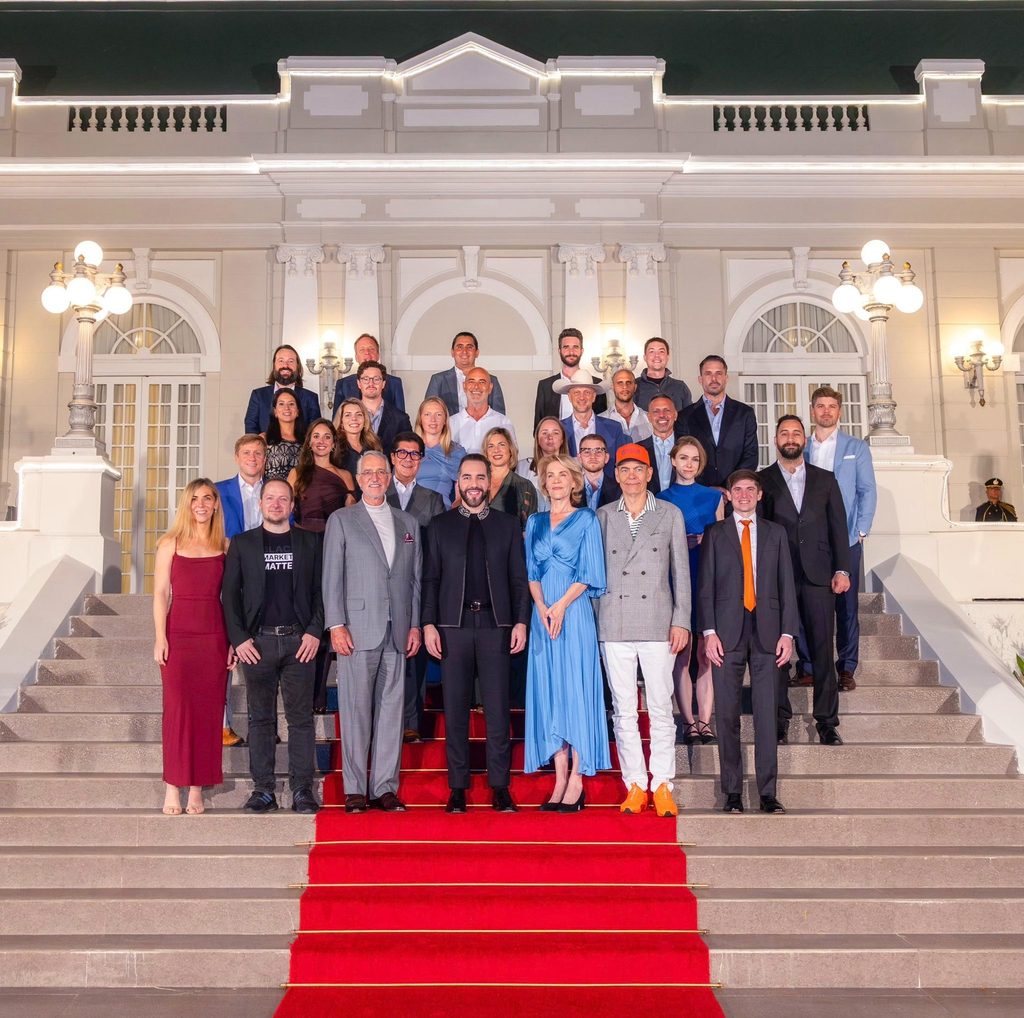
On the evening of November 10, amidst the vibrant backdrop of the Bitcoin Histórico conference unfolding in the Historical Center of San Salvador, an exclusive gathering brought together a diverse cross-section of the global cryptocurrency industry and the nation’s highest office. President Nayib Bukele hosted roughly thirty prominent Bitcoiners for a private dinner at the Casa Presidencial, creating a rare forum for unscripted dialogue regarding the future of El Salvador, energy infrastructure, immigration, and global economic paradigms.
The high-profile dinner was organized by The Bitcoin Office—an agency operating directly under the Office of the President—and was spearheaded by prominent advocates Stacy Herbert and Max Keiser. Running from approximately 7:30 p.m. to 10:30 p.m. local time, the event convened a curated group consisting of regular international visitors to El Salvador, industry founders, investors, miners, developers, economists, and media figures.
Among the notable guests was billionaire Ricardo Salinas Pliego, founder of Grupo Salinas and owner of Banco Azteca. Salinas, a vocal proponent of Bitcoin who has previously made public appearances alongside Keiser and Herbert, reportedly held a private meeting with President Bukele outside of the main dinner. During their private interaction, Salinas gifted the Salvadoran leader volumes one and two of Manuscripts of the Conquistadors, a historical work curated and edited by Jorge Nikaido, Chief of Staff of Grupo Salinas.
The guest list read like a who’s who of the global cryptocurrency ecosystem. Representing the investment and entrepreneurial sectors were Parker Lewis, founder of Unchained Capital; Mike Peterson, widely recognized for his work with Bitcoin Beach; Katie Ananina of Citizen X; and Aleks Svetski, entrepreneur and founder of Satlantis. The mining sector maintained a strong presence through Beau Turner, CEO of Abundant Mines; Nacho Pauls, CCO of OCEAN Mining; and Adam Ortolf of Denver Bitcoin mining. Technical development and artificial intelligence were represented by Bitcoin core contributor Jon Atack, engineer Giacomo Zucco of the Plan B Network, Ginger Gaetz of the ANIA AI initiative, and Marc Seal, founder of Aevonix.
The academic, media, and local business communities also secured heavy representation. Michael Goldstein, also known as Bitstein and co-founder of the Nakamoto Institute, attended alongside Eric Yakes, an economist and author of The 7th Property, and independent journalist and podcaster Efrat Feningson. Local perspective was provided by Michael Ruiz, founder of Build in El Salvador (BIS), an increasingly popular hybrid between a business club and a localized Bitcoin meetup.
Setting the Table
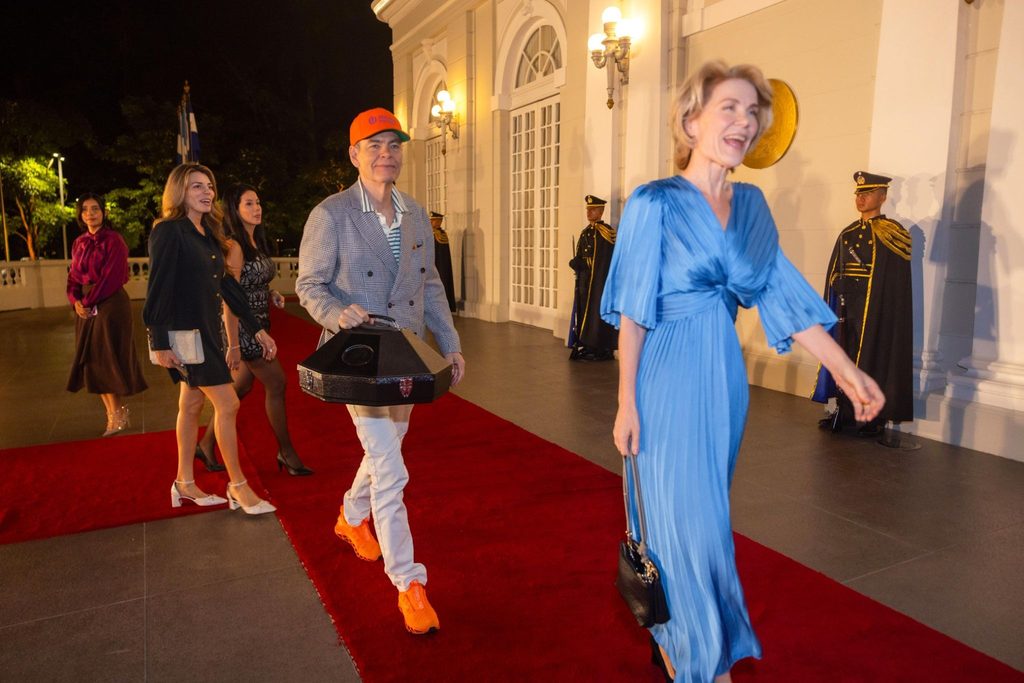
Guests arrived at the Casa Presidencial earlier in the evening, using the pre-dinner hours to network and converse within the historic halls of the executive mansion. Max Keiser arrived carrying a specialized case that sparked immediate curiosity and lighthearted speculation among attendees. While the case was widely understood to contain a Stetson El Presidente cowboy hat, onlookers playfully wondered aloud whether it might actually house the mythical Philosopher’s Stone.
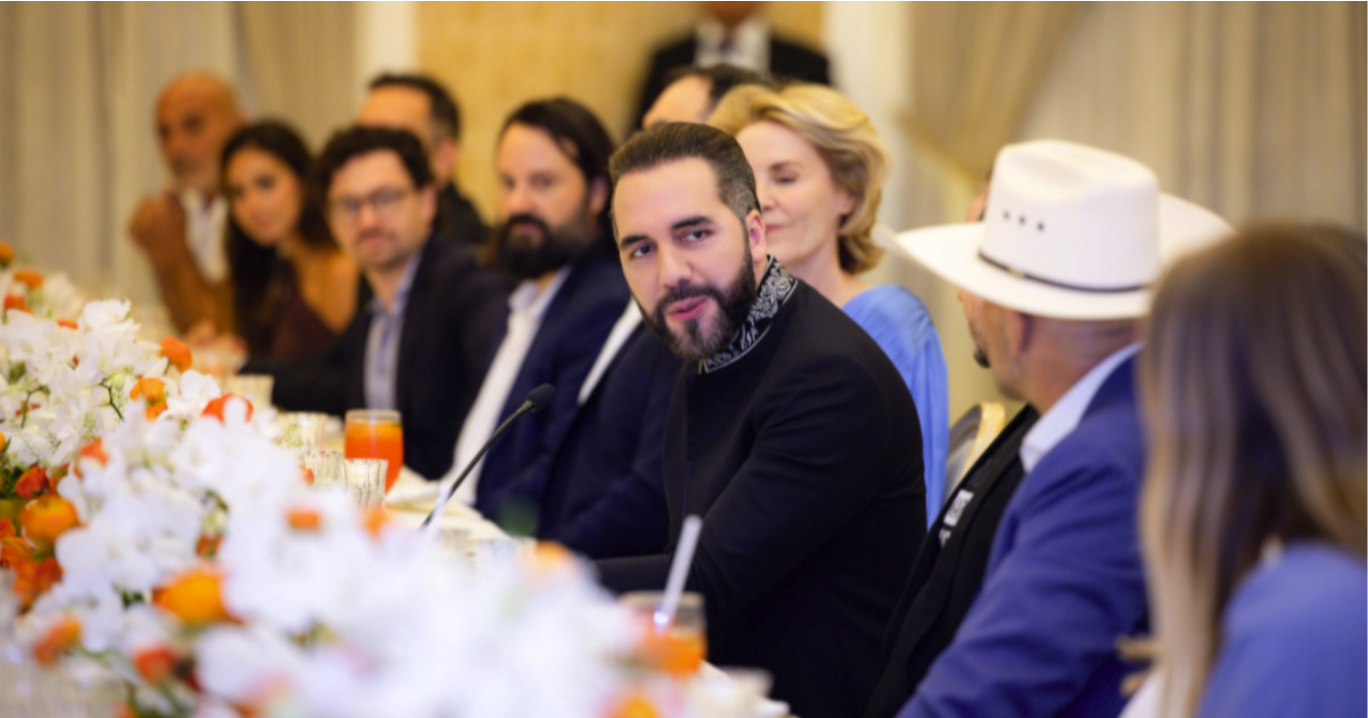
Upon his arrival, President Bukele greeted the attendees individually, offering handshakes before promptly inviting them to take their assigned seats, dine, and relax. Eschewing grand speeches or rigid formalities, the atmosphere quickly shifted into an open, conversational exchange. Katie Ananina described the setting to Bitcoin Magazine as resembling an open-mic format where no topic was placed off-limits.
"President Bukele’s table was adorned with bitcoin orange florals," Stacy Herbert noted, reflecting on the symbolic merging of statecraft and decentralized finance. "We gathered anarchists, billionaire tycoons, Wall Street bankers, circular economy activists, VC investors, bitcoin miners, and content creators at the country’s equivalent of the White House."
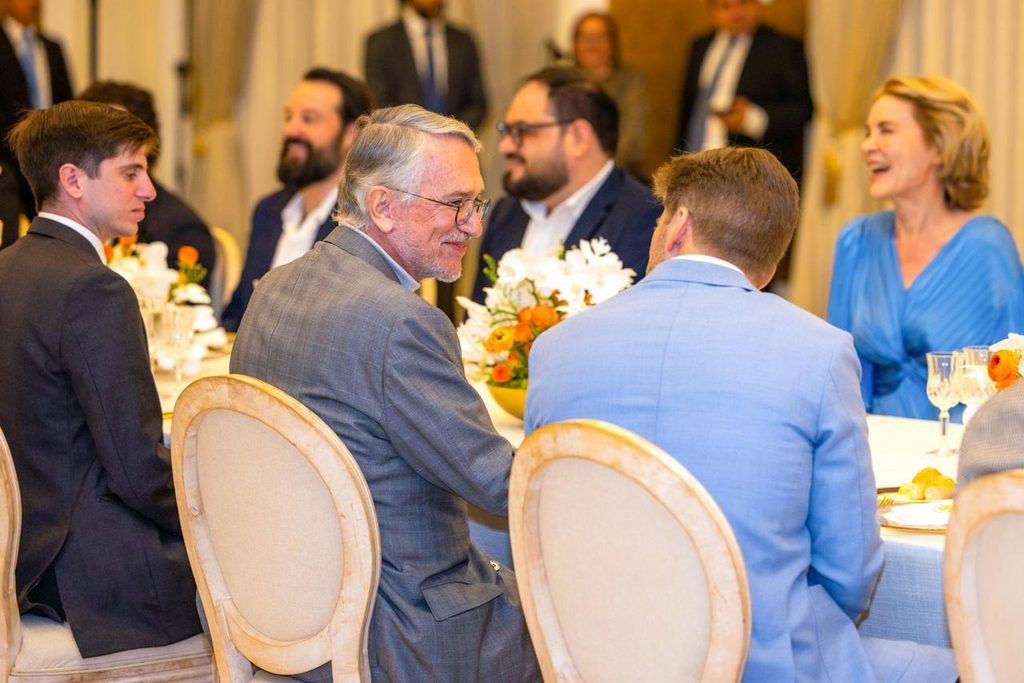
A traditional three-course meal was served, featuring steak as the main course followed by a rich three-layered chocolate dessert. Over the span of three hours, the dinner facilitated intense dialogue driven by six to seven major questions. While President Bukele utilized his own microphone to address the room, additional microphones were passed freely among the guests, ensuring a dynamic exchange of ideas between the head of state and his international guests.
Salinas and Energy Investments
As the conversation turned toward industrial development and infrastructure, the topic of national energy generation took center stage. Ricardo Salinas Pliego actively engaged the Salvadoran president on the subject, drawing on his own extensive background in industrial power production.
Beau Turner, one of the Bitcoin miners in attendance, recalled that President Bukele described El Salvador’s current electricity generation as being roughly matched to the nation’s baseline demand. However, the president outlined ambitious expansion plans aimed at introducing more than a gigawatt of additional power generation through diverse projects, including geothermal energy initiatives and power production utilizing imported liquefied natural gas.
"What stood out to me," Turner remarked, "was how directly he connected those development plans with demand for compute. Bukele said they can develop this power knowing there are users who can put it to work, whether that’s Bitcoin mining or other data centers. The demand could come from the Salvadoran government’s own operations or from outside companies bringing equipment and investment into the country."
Other mining executives responded enthusiastically to the vision. Salinas, whose Grupo Dragón holds substantial investments and operational experience in geothermal, wind, solar, and natural gas generation across Mexico, found significant common ground with the administration’s pragmatic approach to pairing energy development with computational demand.
Immigration and Gentrification
The dialogue naturally expanded into the broader socio-economic impacts of international migration, spurred by Max Keiser’s enthusiastic remarks regarding El Salvador’s national transformation. Keiser argued that the global community should formally recognize the country’s trajectory and encouraged like-minded individuals, particularly Bitcoiners, to consider relocating to the nation.
Michael Ruiz, who was born and raised in the United States to Salvadoran parents and relocated to El Salvador three years ago, seized the opportunity to raise a pressing question concerning immigration, gentrification, and potential local friction. Pointing to critical online commentary and negative characterizations labeling Western migrants as "colonizers," Ruiz asked how the administration viewed the evolving cultural dynamic.
In response, President Bukele posed a direct question to the room: "When you go out, walk around, and interact with Salvadorans, what are the interactions like?"
For anyone familiar with El Salvador’s current social climate, the answer is self-evident. Ruiz affirmed that daily interactions are characterized by warmth and hospitality. "There’s a lot of love," Ruiz explained. "People receive us with open arms, and they’re glad we’re here, and they’re happy."
Official demographic data indicates that inward migration to El Salvador predominantly originates from regional neighbors such as Honduras, Nicaragua, Guatemala, and Colombia, alongside smaller incoming populations from the United States. Addressing the theoretical limits of population growth, Bukele dismissed concerns over overpopulation with characteristic humor, noting that the entire population of the world could theoretically fit within El Salvador if the country matched the population density of Manhattan. Clarifying that this comparison was meant to provide contextual perspective rather than serve as a demographic target, he emphasized that the nation actively seeks out capable and intelligent individuals. "All great empires were built with immigrants’ help," the president observed, encapsulating his administration’s outward-looking philosophy.
Turning to the specific concern of gentrification, Bukele shared a localized economic anecdote involving a fisherman and house caretaker whose wages were raised from $300 to $800 per month after an American purchaser acquired a local property. Empowered by the increased income, the worker purchased a motor for his boat, significantly expanding his daily fishing yield and eventually acquiring a second vessel to double his operational fleet. According to the account, the primary complaints regarding the wage increase came not from the worker himself, but from neighboring residents experiencing social pressure from their own caretakers who sought comparable pay raises.
Among Other Topics
The conversation also touched upon the international criticism frequently directed at the Salvadoran government despite verifiable economic progress. Independent journalist Efrat Feningson raised the question directly, asking how the administration navigated global censure in the face of demonstrable GDP growth, a strengthening economy, and high domestic popularity witnessed firsthand by visitors touring areas previously devastated by gang violence.
"Because I’m not part of their club," President Bukele reportedly responded, explaining that he does not fit the conventional mold of leadership favored by traditional international institutions. He asserted that powerful entities utilize mainstream media to launch campaigns against leaders who challenge established norms, specifically pointing to central banks, including the European Central Bank, as key drivers behind negative media narratives.
Beyond targeted political criticism, Bukele noted that many figures within the international political establishment are not acting out of malice, but rather operate as conventional "order followers" bound by entrenched institutional narratives and resistant to systemic paradigm shifts.
The discussion also highlighted recent domestic achievements, particularly within the education sector. Bukele reportedly discussed the rollout of AI-driven tutoring programs within the nation’s public school system. A multi-year pilot program deployed across public schools has yielded dramatic academic improvements, pushing student performance on international PISA evaluations to levels comparable with Germany and Switzerland, a milestone that recently drew widespread international attention.
Renaissance 2.0
As the evening concluded, attendees reflected on the broader implications of both the presidential dinner and the Bitcoin Histórico conference. Max Keiser offered a sweeping assessment of the event, describing the atmosphere as a manifestation of national renewal.
"Bitcoin Histórico promised two days of Excellence Only, as the Bitcoin Office likes to say, and it delivered big time," Keiser stated. "The National Palace was a regal setting to showcase the Renaissance 2.0 taking shape in El Salvador with presentations by the best Bitcoin minds and builders in the world. Audience members felt like they had been transported to a time and place found nowhere else in the world right now, where hope and happiness are in abundance. No doom."
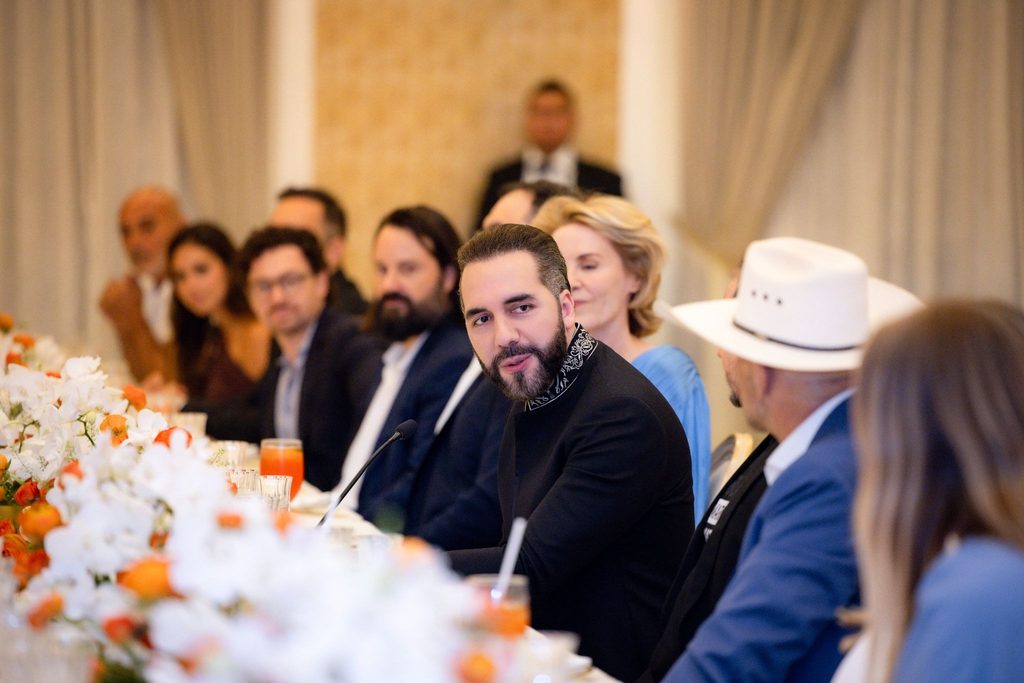
Stacy Herbert echoed these sentiments, emphasizing the careful planning that went into curating an elevated conference experience. "We promoted Bitcoin Histórico as an elevated bitcoin conference experience with Philosopher King meets Renaissance 2.0 vibes," Herbert said. "In every detail, my team and I achieved that, including with the official Bitcoin Office dinner at Casa Presidencial."
Highlighting the unscripted nature of the discussions, Herbert noted that guests were given total freedom to interrogate the administration on any topic of their choosing. "They grilled the President for several hours. His wit, his charm, his intelligence—all unscripted—was there for all to see firsthand. And they will have walked away understanding why it is that El Salvador is winning under his leadership."