The digital asset market experienced a severe wave of volatility as a sharp sell-off across Bitcoin and various altcoins triggered more than $1 billion in liquidations within a 24-hour window. The sudden market downturn caught leveraged traders off guard and prompted a surge of short-term investors to move tens of thousands of coins to centralized exchanges at a loss, reflecting mounting anxiety over near-term macroeconomic and supply-side pressures.
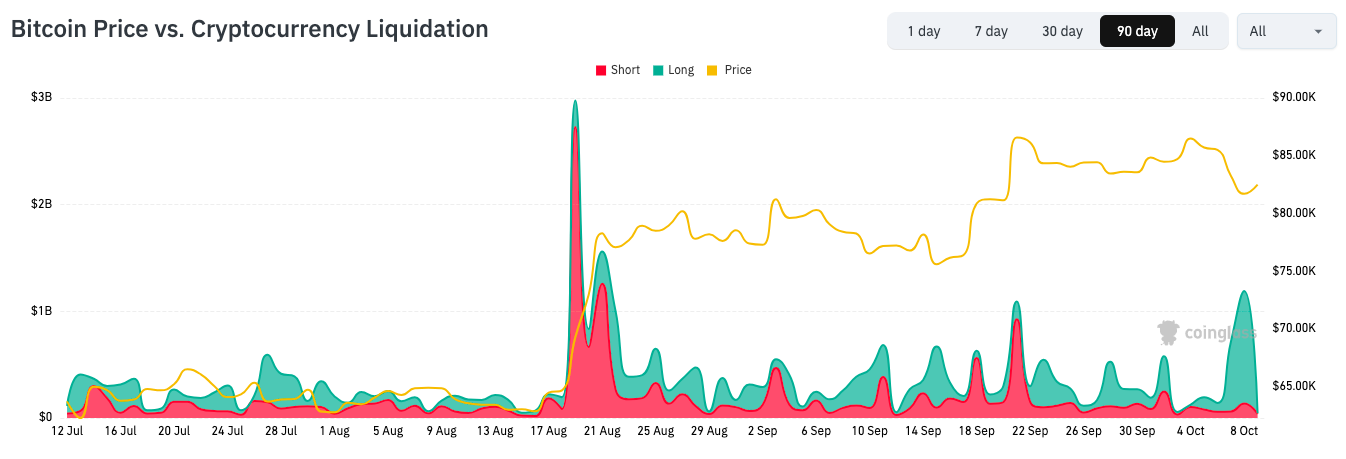
According to comprehensive market data compiled by CoinGlass, total cryptocurrency liquidations reached an imposing $1.09 billion for the 24-hour period leading up to 10:00 am UTC on Friday. This dramatic flush marked the largest single-day tally of liquidations since August 21. During that earlier summer event, the BTC/USD trading pair climbed from $73,000 to $79,500, notching robust two-month highs and compelling $1.3 billion in short positions to be forcefully liquidated.
In sharp contrast to the August squeeze, however, Thursday’s market slide overwhelmingly punished bullish market participants. Long positions accounted for $1.05 billion of the day’s total liquidation volume, illustrating the suddenness with which overly optimistic positions were unwound as prices broke beneath crucial technical thresholds.

The aggressive downward pressure was heavily fueled by persistent market rumors and onchain observations indicating that the United States government had initiated a series of transfers involving more than 12,000 Bitcoin that had been previously seized through various legal enforcement actions. Historically, large-scale wallet movements associated with government entities tend to unnerve market participants, as traders immediately price in the looming possibility of heavy institutional supply being dumped onto open order books.
As selling picked up pace, the flagship cryptocurrency experienced a stark downward correction. BTC/USD tumbled to $80,350 on the Bitstamp exchange, marking its lowest price point since September 18. Following the swift flush, the asset managed a modest recovery, climbing back to hover around the $82,500 mark by Friday.
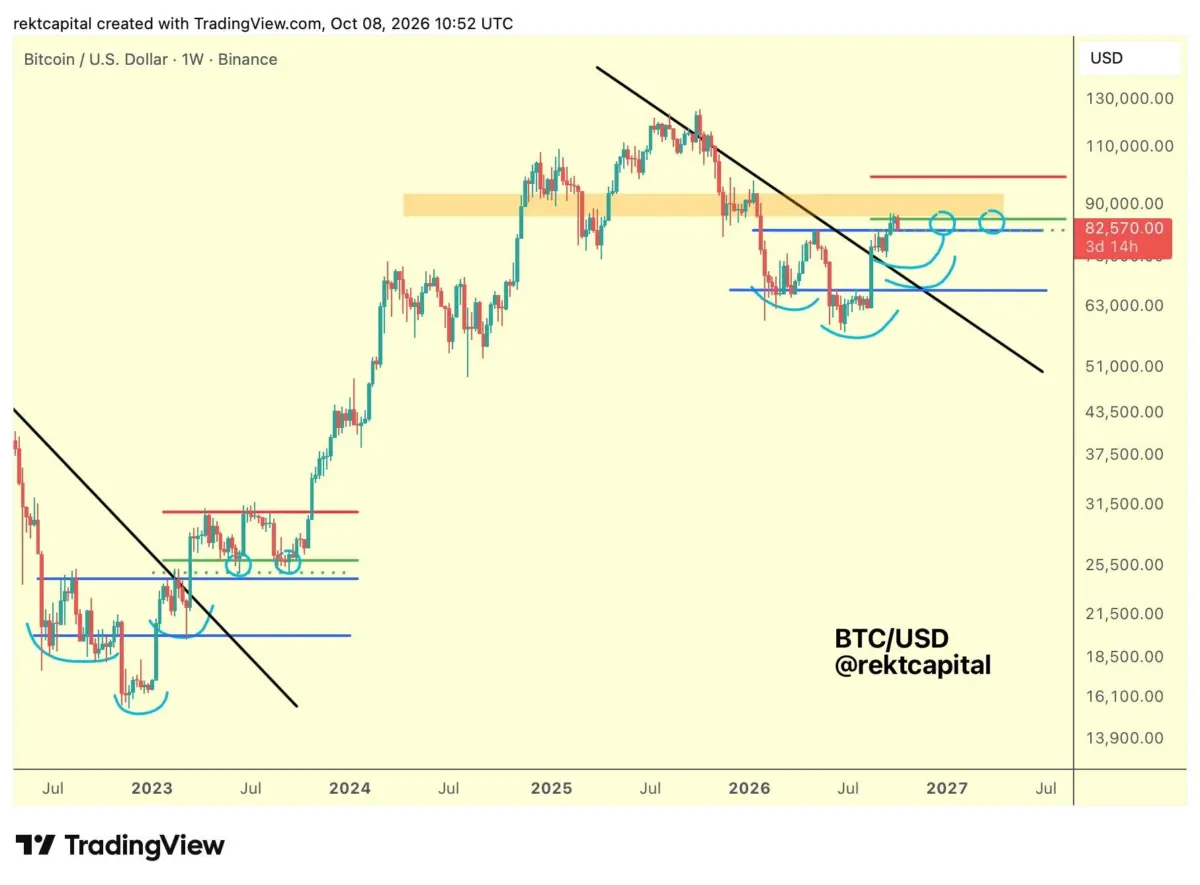
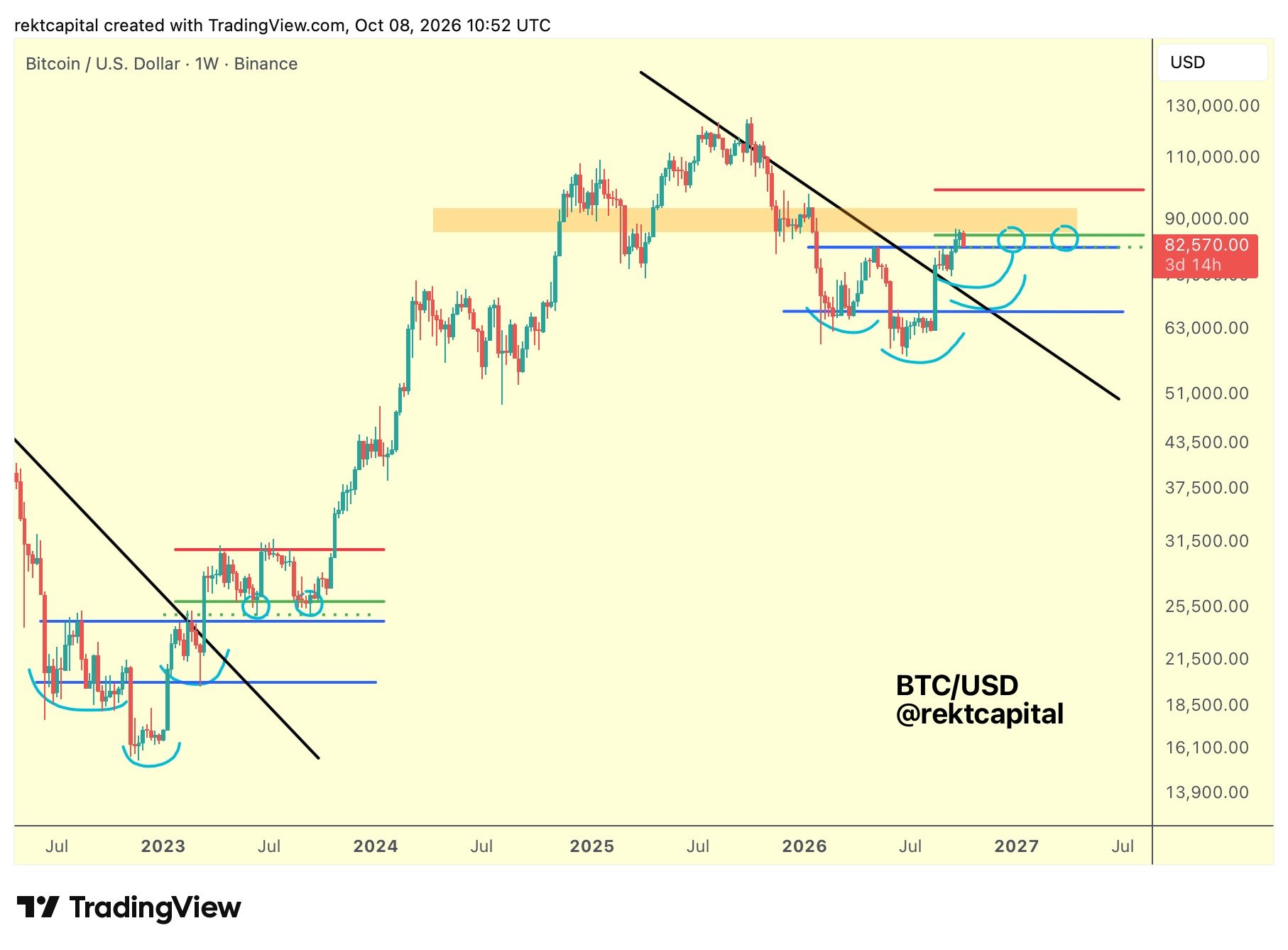
This specific price zone holds monumental technical significance. Throughout Bitcoin’s broader macro uptrend that has steadily developed since early July, the $82,500 region acted as the definitive breakout point for an inverse head-and-shoulders pattern—a classic technical formation that often signals a major bullish reversal. For the broader market recovery to remain intact and structurally sound, analysts emphasize that Bitcoin must successfully defend this level and establish it as firm support.
Prominent trader and market analyst Rekt Capital, who has closely monitored the ongoing reversal pattern and drawn striking parallels to Bitcoin’s historical recovery phase in 2023, pointed to the impending weekly candle close as a critical inflection point for market direction.
"Bitcoin is currently failing its retest of approximately $82,500," the analyst noted via social media on Thursday. He added that a decisive weekly close below the $82,500 threshold would effectively turn the level into solid overhead resistance, dragging Bitcoin right back into its broader macro accumulation range.
Onchain data from specialized analytical platforms further underscored the intense psychological stress gripping newer market participants as the broader valuation pulled back from recent highs.
Analytics platform CryptoQuant highlighted concerning behavior among short-term holders—defined broadly as entities that retain their Bitcoin balances for up to six months without moving them. According to insights shared by CryptoQuant contributor Amr Taha, this cohort aggressively transferred approximately 55,600 BTC to centralized exchanges at a notable loss on Thursday alone.
In the context of blockchain analytics, transactions executed at a loss signify that coins are being shifted to exchange-hosted deposit addresses at a lower market price than when those same coins were involved in their previous ledger transfer. Such behavior typically points to an impulsive, emotional reaction from retail or newer investors eager to cut their losses and exit positions to prevent even deeper financial damage if market conditions deteriorate further.
Notably, CryptoQuant’s historical metrics revealed that Thursday’s aggregate loss tally among short-term participants actually exceeded the volume recorded on June 26, when Bitcoin dropped below the $60,000 threshold for the second consecutive trading day.
The contrast in price levels highlights the distinct nature of the recent market stress. Bitcoin was actively trading well above the $81,000 mark during the latest sell-off, compared to a baseline of roughly $59,300 back in June. This represents a price difference exceeding 36 percent, suggesting that participants who bought near local highs were quicker to panic despite the asset maintaining a significantly higher macro valuation than it did during earlier summer troughs.
At the same time, market analysts note that moving coins to an exchange does not automatically mean that every single unit was immediately dumped onto the spot market. Nonetheless, the sheer scale of loss-driven inflows highlights underlying fragility among leveraged and newly onboarded retail traders.
Looking past the immediate pain of liquidations and tumbling valuations, historical precedents suggest that periods of heavy capitulation among short-term market participants often pave the way for eventual market stabilization. When weaker hands are forcefully flushed out of the system through intense volatility and margin liquidations, the market frequently finds a local bottom, exhausting immediate selling pressure and quietly laying the groundwork for a subsequent price recovery once buyers step back in to accumulate at more attractive valuations.