Published Nov 2, 2026
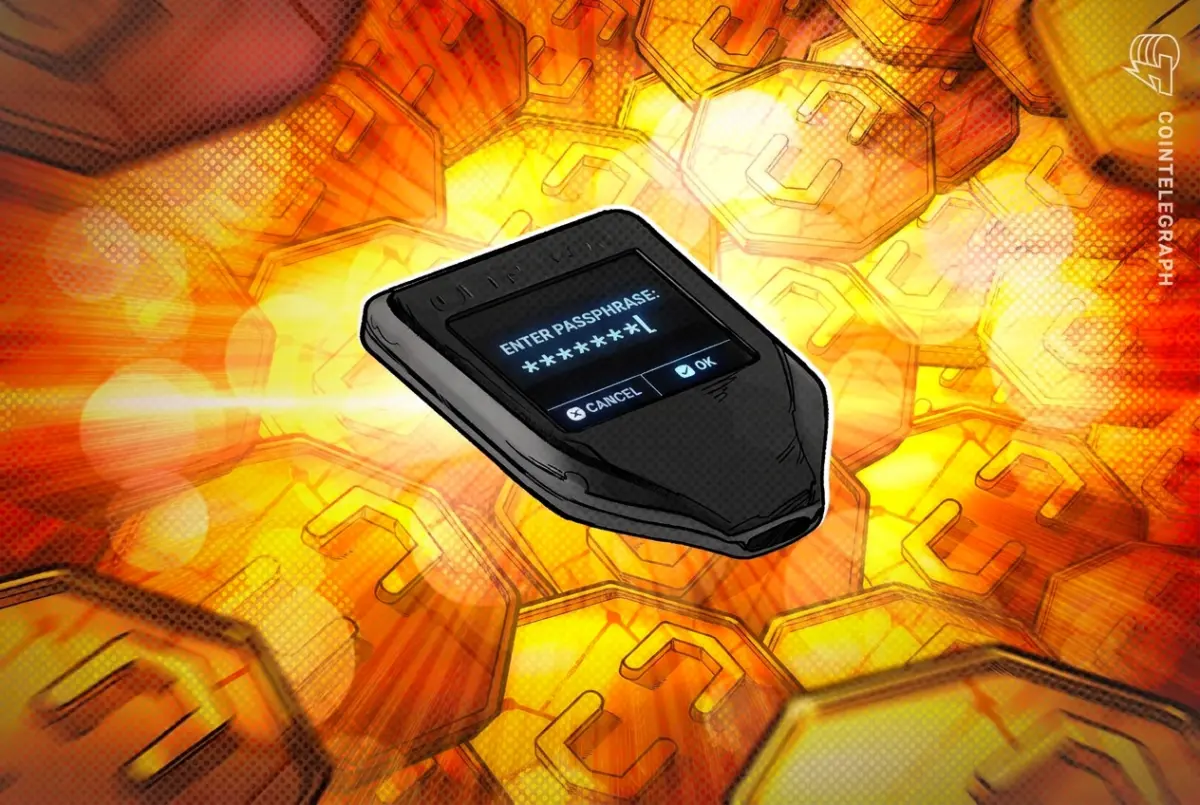
Hardware cryptocurrency wallet manufacturer Trezor has officially increased the maximum length of optional wallet passphrases from 50 to 128 characters, offering users an enhanced layer of cryptographic defense.
Announced on Sunday, the upgrade is designed to significantly fortify self-custody security standards across the digital asset ecosystem. According to the company’s official communications, the expanded character limit is now available to users operating the Trezor Suite alongside updated device firmware. However, older firmware versions will continue to enforce the legacy 50-character limit, prompting developers to encourage regular software maintenance among the user base.
Within the architecture of hardware wallets, a passphrase functions as an additional, user-defined password integrated alongside a standard recovery phrase, which is typically a sequence of 12 to 24 words. Even if a malicious actor manages to acquire or compromise a user’s physical backup recovery phrase, they would still be unable to access the funds stored within that specific wallet without the correct, corresponding passphrase. By extending the allowable length of this secondary credential to 128 characters, Trezor provides an exponential increase in potential cryptographic combinations, making brute-force attacks computationally impractical.
Trezor specifically pointed to the high-profile security incidents involving Coldcard hardware wallets in July as a primary motivating factor behind the upgrade. During those attacks, a firmware vulnerability caused certain devices to generate recovery phrases utilizing insufficient cryptographic randomness. This flaw allowed sophisticated attackers to successfully reconstruct the compromised backup phrases. Crucially, Trezor noted that affected users who had implemented strong, unique passphrases were successfully able to protect their assets from theft, demonstrating the critical safety net that a robust passphrase provides even when primary recovery mechanisms fail.
The rollout of the 128-character passphrase limit follows a separate, unrelated security advisory issued by Trezor regarding potential supply chain vulnerabilities affecting its own device lineup.
On Friday, the company issued a public advisory urging customers who had purchased hardware wallets from CryptoBilis, a former authorized reseller, at any point since March to immediately transfer their funds to newly generated wallets. The warning was triggered after an Indonesian customer reported discovering a suspected unauthorized hardware implant inside a Trezor Safe 5 device. This physical modification allegedly possessed the capability to capture on-screen sensitive information, including recovery phrases, and transmit that data externally over a cellular network.
At the time of the Friday advisory, Trezor stated that it had not yet physically examined the reported device and confirmed that it had received no formal reports of actual financial losses stemming from the incident. Nonetheless, the company emphasized a cautious approach to asset security, reinforcing the broader importance of rigorous supply chain verification and defense-in-depth strategies like multi-word passphrases.
The latest developments highlight the ongoing cat-and-mouse dynamic between hardware wallet manufacturers and sophisticated threat actors targeting cryptocurrency self-custody. As physical supply chain risks and software vulnerabilities continue to pose challenges for the industry, firms are increasingly turning to advanced cryptographic features to give users ultimate control over their digital wealth security.