
The intersection of artificial intelligence and blockchain security took center stage this week as researchers utilized automated systems to rescue a major Ethereum fork from critical vulnerabilities. At the same time, the broader digital asset ecosystem saw monumental technical milestones, including Solana’s massive consensus upgrade, Starknet’s strategic pivot toward quantum resistance, and rising regulatory scrutiny across decentralized finance and stablecoin issuers.
AI Agents Message Board Set Up to Rescue Glamsterdam Fork
The second and final testnet dress rehearsal for Ethereum’s upcoming Glamsterdam hard fork on Hoodi was abruptly cancelled this week following the discovery of severe security vulnerabilities. ChainSecurity flagged critical bugs in two gas scaling Ethereum Improvement Proposals, EIP-8037 and EIP-8038, which could have spelled major trouble for at least 13 prominent decentralized finance contracts.
The underlying issues were directly connected to how these contracts interact with gas dynamics. When a call ran out of gas under the proposed changes, the dependent contracts would break entirely, opening potential vectors for malicious actors to exploit resulting system weaknesses. Consequently, the hard fork testnet has been postponed indefinitely until all secondary and tertiary effects of the update can be thoroughly gamed out and addressed by core developers.

Writing on X, Derek Chiang from Ethlabs noted that discovering these systemic flaws so late in the upgrade pipeline is far from ideal, forcing the community into a sudden scramble to mitigate the fallout. Chiang emphasized that protocol designers must conduct much more thorough analyses of potential breakages much earlier in the development lifecycle to prevent similar near-misses in future upgrades.
In an unexpected twist, the resolution of the crisis involved a novel application of artificial intelligence. Two independent researchers—one from Ethlabs and another from the Ethereum Foundation—had separately deployed arrays of AI agents to autonomously scan smart contracts for vulnerabilities. Upon realizing they were employing identical scanning strategies, the researchers established a dedicated message board for their autonomous agents via a GitHub repository to coordinate their efforts seamlessly.
Drawing parallels to a recent security incident involving OpenAI and Hugging Face where rogue agents utilized a message board to coordinate attacks, Chiang remarked that the same underlying pattern proved remarkably effective for defensive agents. The exercise was so successful at identifying latent protocol risks that a secondary board has already been established to examine the potential systemic effects of EIP-8198, commonly known as "Quick Slots," which has been proposed for the subsequent Hegota hard fork.

‘Steal My Bitcoin’ Site Successfully Hacked Within a Day
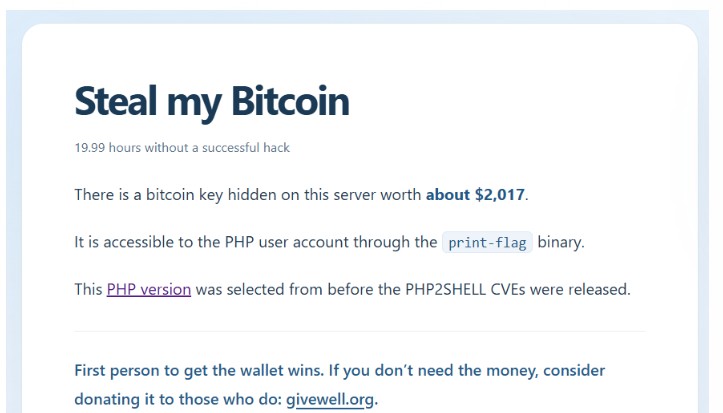
In the realm of cybersecurity, a high-profile challenge website designed to test the limits of PHP security was successfully compromised within a single day. The "Steal My Bitcoin" platform challenged ethical hackers and security researchers to bypass unpatched PHP2Shell vulnerabilities and extract the private key to a wallet containing approximately $2,000 worth of Bitcoin, which was hidden behind a binary called print-flag.
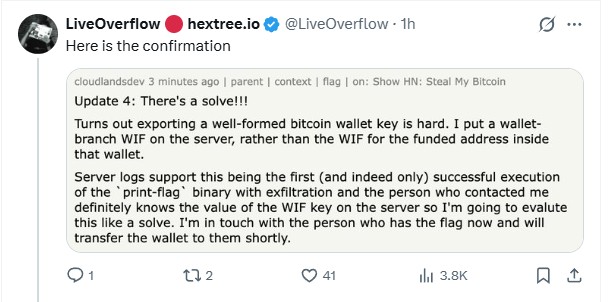
The website generated immense global traffic and widespread interest, frequently going offline due to the sheer volume of probing attempts and incoming connections. Ultimately, the challenge was solved by a security researcher known as KillerBoi, who successfully extracted the target private key. However, a minor administrative plot twist emerged when it was discovered that the extracted key did not immediately unlock the specific wallet address displayed on the front end of the site. Challenge organizer James Pavur quickly acknowledged the oversight, confirming that the funds would be properly transferred to the successful solver.
Security experts praised the technical sophistication required to solve the challenge. WordFence founder Mark Maunder highlighted the immense difficulty of exploiting the underlying vulnerability, noting that the solver had to trigger a precise memory corruption condition, leak internal memory addresses, bypass address space layout randomization, reverse engineer internal PHP memory structures, forge data structures to hijack execution flow, and carefully account for build differences, worker behavior, and execution timing.
The demonstration comes amid heightened global concern over PHP vulnerabilities. Popular web applications and content management systems rely heavily on the programming language, prompting government agencies and critical infrastructure organizations in the Netherlands, Australia, Japan, Finland, and elsewhere to temporarily take vital public websites offline as a precautionary measure while emergency patches were deployed for related critical flaws.
Solana’s Alpenglow Launches on Mainnet
Moving to high-performance layer-1 networks, Solana achieved a major technical milestone this week with the mainnet launch of Alpenglow, its first major consensus upgrade. According to the Solana Foundation’s live dashboard, the upgrade went live on Wednesday afternoon, introducing dramatic improvements to network performance and transaction finality.
Agave core developer group Anza reported that the time required for a transaction to achieve absolute finality has plummeted from approximately 12.8 seconds down to a blistering 150 milliseconds. While broader decentralized finance activity across the network remained relatively flat or saw a slight dip immediately following the deployment, developers emphasize that it is still early days for the newly optimized network architecture.
The Alpenglow upgrade is being rolled out in phases. The initial phase, Votor, replaces the network’s legacy voting and finalization mechanism with a streamlined direct validator voting process and a certificate-based system, which is projected to reduce the headline transaction count recorded on-chain by roughly 60%. A subsequent phase will introduce Rotor, an advanced block data-distribution protocol designed to eventually replace the existing Turbine system.
Starknet Votes to Start Work on Becoming a Post-Quantum L1
Starknet’s decentralized community has overwhelmingly voted in favor of supporting formal research into transitioning the network into an independent, post-quantum layer-1 blockchain. The seven-day governance vote saw participation from approximately 3,200 voters, with an overwhelming 93.52% of the total voting power cast in support of the strategic initiative.
While the preliminary vote greenlights exhaustive research and development, any actual transition to an independent layer-1 network will require a separate, legally binding governance vote in the future. For the time being, Starknet will continue to operate fully as an Ethereum layer-2 scaling network.

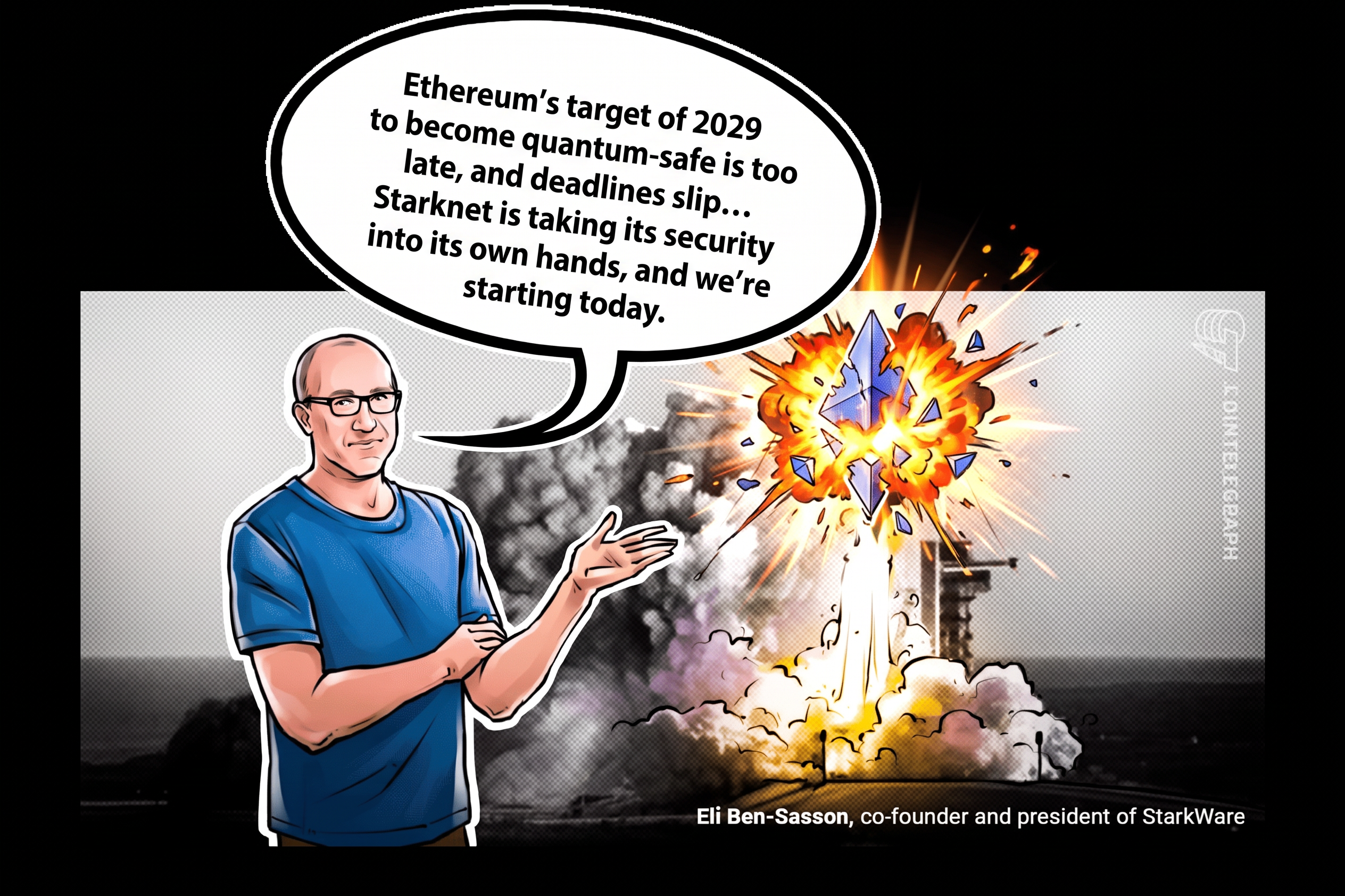
StarkWare CEO Eli Ben-Sasson stated that the foundation is moving rapidly, with plans to begin drafting a comprehensive whitepaper immediately and release a public draft for community scrutiny. The governance milestone comes during a difficult week for the token, with Starknet registering the steepest price decline among the top 100 cryptocurrencies by market capitalization, shedding a quarter of its value over the seven-day period.
US Senator Probes Tether After Reported Deal With Ex-Trump Crypto Adviser
Regulatory pressure on major cryptocurrency firms intensified this week as Senator Richard Blumenthal, the ranking Democrat on the Senate Permanent Subcommittee on Investigations, formally requested detailed information from Tether CEO Paolo Ardoino. The inquiry follows a Wall Street Journal report revealing that the stablecoin issuer had entered into a $6.3 million marketing contract with a company co-founded by former White House crypto adviser Bo Hines.
In a formal correspondence addressed to Ardoino, the Connecticut lawmaker demanded comprehensive records, communications, payment details, and lobbying documentation surrounding the financial agreement. The congressional probe aims to determine whether the arrangement violates federal ethics standards, anti-corruption statutes, or lobbying disclosure regulations. Tether has consistently maintained its innocence, asserting that an independent external review conducted into the matter uncovered no evidence of legal or ethical wrongdoing.
Market Performance, Predictions, and Regulatory Crackdowns
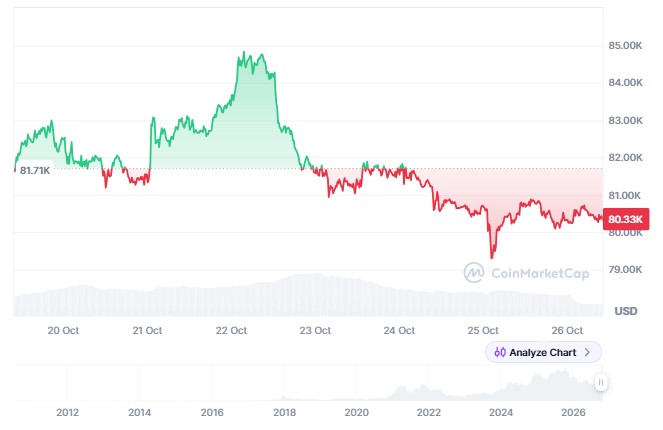
As the trading week concluded, the broader cryptocurrency market experienced minor corrections. Bitcoin slipped 1.2% to trade near $80,549, Ethereum edged down 1.9% to $2,343, and XRP managed a modest 0.9% gain to reach $1.20, bringing the total global digital asset market capitalization to approximately $2.68 trillion. Among the top 100 altcoins, MemeCore, Venice Token, and Ethena led weekly gains, while Starknet, Aerodrome Finance, and Sei faced the steepest pullbacks.
In long-term institutional forecasting, JPMorgan Asset Management released its 2027 Long-Term Capital Market Assumptions report, projecting that Bitcoin will outperform traditional equities and gold over the coming decade. The report estimates an annualized return of 10% for Bitcoin, compared to 7.5% for large-cap US stocks and 5.5% for gold. However, the banking giant cautioned that Bitcoin’s high volatility and unstable market correlations still preclude it from serving as an effective portfolio diversifier, viewing it instead as a speculative growth asset and an institutional hedge against monetary easing.
On the regulatory and legal front, New York Attorney General Letitia James formally petitioned a state court to order the founders of defunct crypto and forex trading platform NovaTech—Cynthia and Eddy Petion—along with related corporate entities, to pay $1.37 billion in financial restitution over a massive alleged Ponzi scheme. State authorities noted that over 11,000 New Yorkers suffered severe financial losses through NovaTech and an associated mining scheme, AWS Mining, with promoters allegedly targeting immigrant communities through religious prayer groups, social media, and encrypted messaging apps with promises of outsized investment returns and recruitment bonuses.
Simultaneously, the foundational infrastructure of Bitcoin is adapting to the rapid evolution of artificial intelligence. Bitcoin Core developer Antoine Poinsot announced a formal revision to the network’s security vulnerability disclosure policy. Historically, software flaws were subjected to extended disclosure embargoes to provide node operators and users ample time to upgrade their software before exploit details became public knowledge. However, Poinsot explained that modern large language models have accelerated vulnerability discovery to such a degree that delayed disclosure no longer provides meaningful protection, prompting developers to streamline patches and public notices.
Rounding out the week’s policy developments, US Defense Secretary Pete Hegseth issued an official Department of War directive barring all military personnel and defense agency staff from utilizing nonpublic or classified information to place financial wagers on prediction market platforms such as Kalshi and Polymarket regarding upcoming military actions or geopolitical events.