Bitcoin (BTC) tumbled to its lowest level in over three weeks on Thursday, dragged down by a wave of risk aversion sweeping across global markets and mirroring steep losses on South Korean stock exchanges.
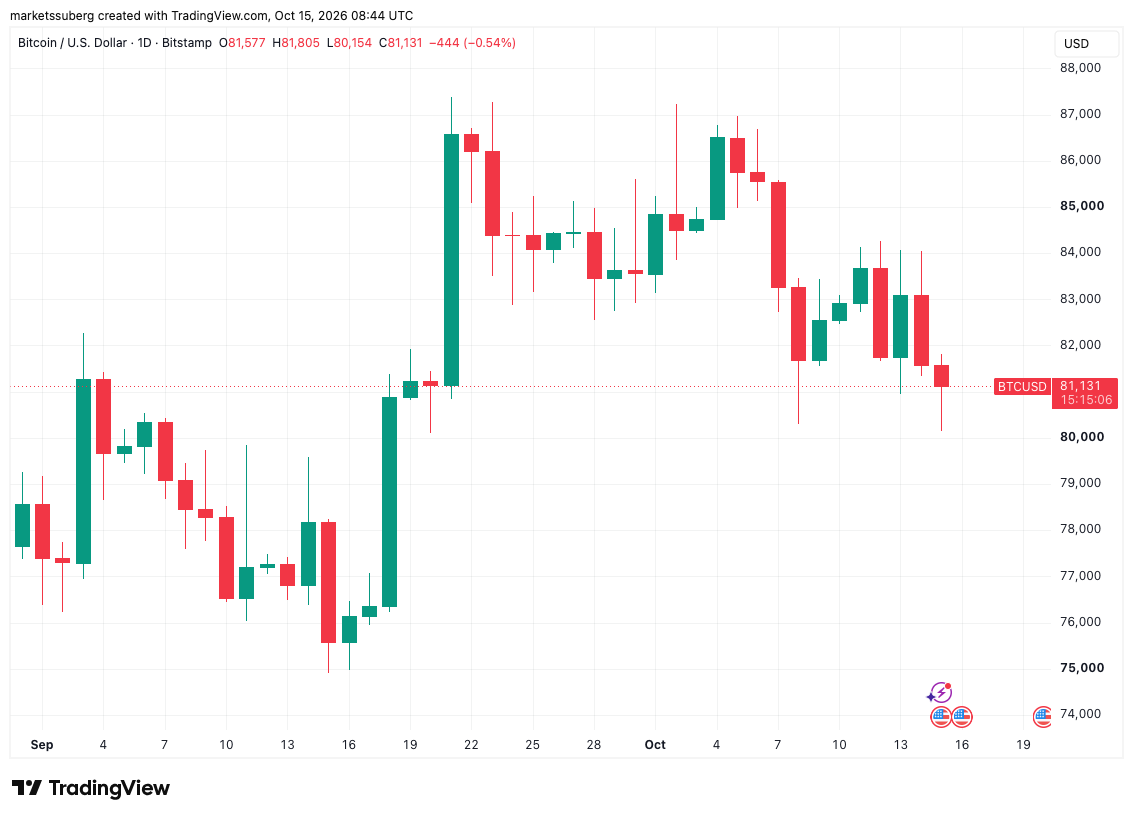
Data from TradingView captured the leading cryptocurrency dropping to $80,154 on Bitstamp, marking a price point not witnessed since September 20. The downward momentum in the digital asset market unfolded concurrently with a severe rout in traditional equities, particularly in East Asia, where mounting macroeconomic headwinds and localized supply-demand pressures triggered aggressive sell-offs among institutional and retail portfolios alike.

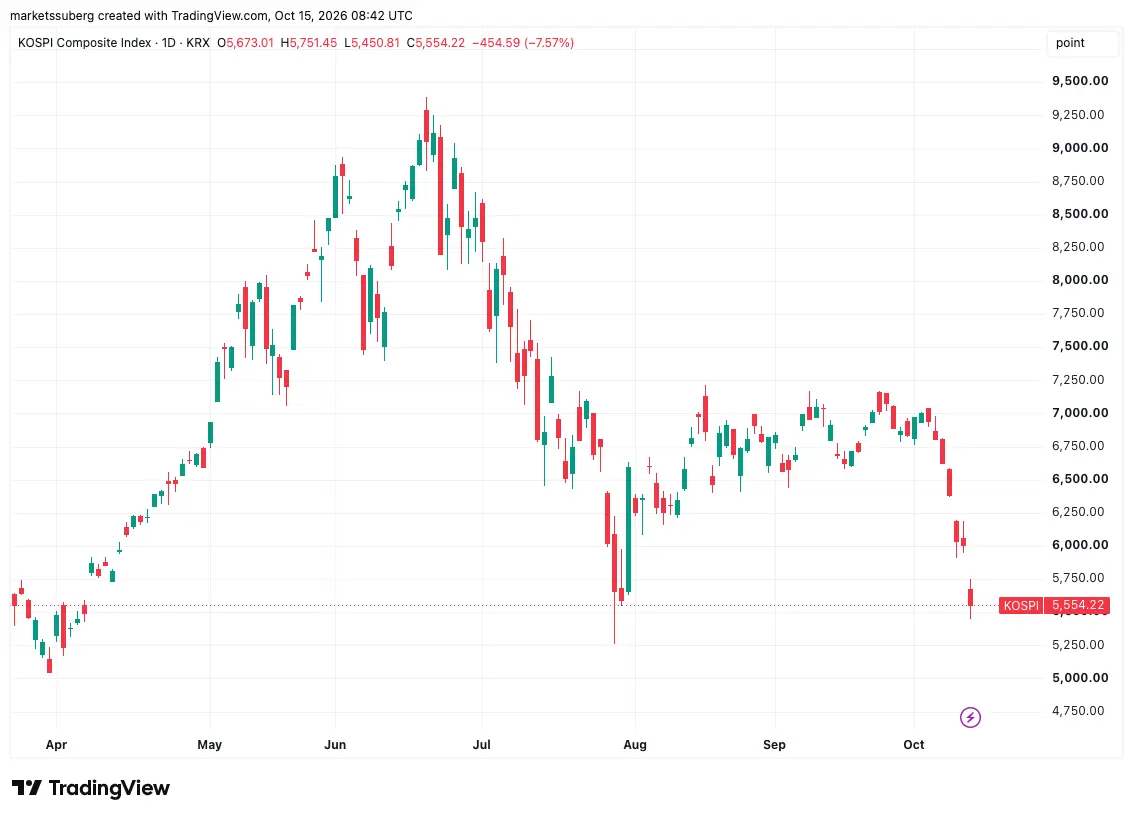
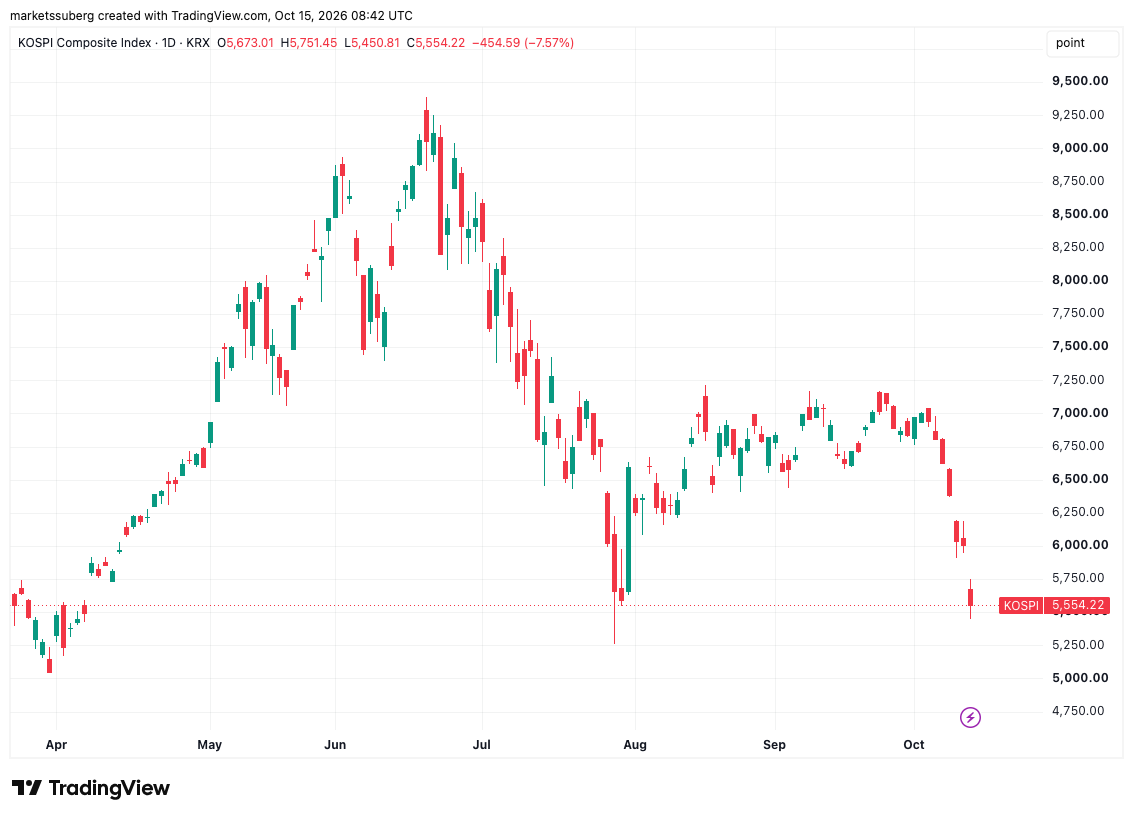
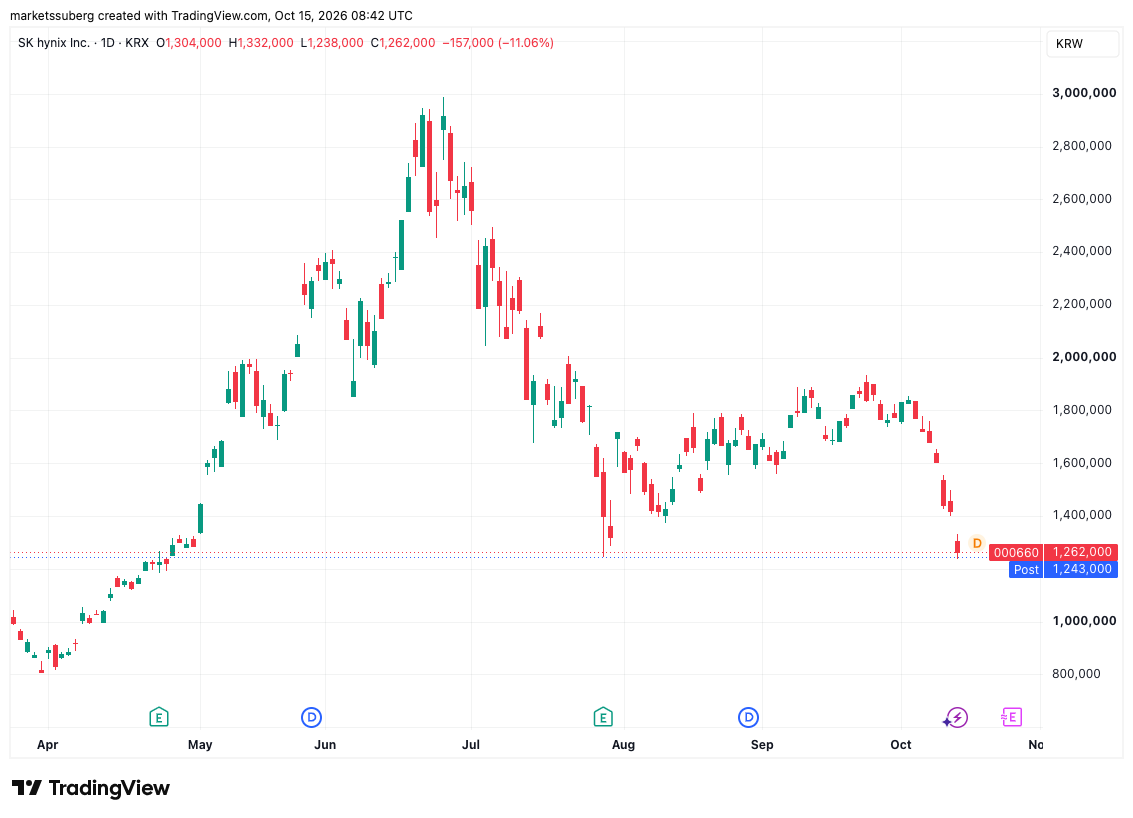
The primary catalyst for Thursday’s broader market jitters stemmed from South Korea, where the Korea Composite Stock Price Index, commonly known as the KOSPI, finished the trading session down by a steep 7.5%. This latest single-day drop extended the index’s losses for the week to an alarming 15.5%. As was the case during earlier trading sessions in the week, South Korea’s heavyweight technology sector bore the brunt of the capital flight. Industry titan SK Hynix saw its stock plummet 11%, while electronics giant Samsung Electronics finished the day down 9.5%.
Market analysts and financial observers have pointed to a confluence of structural and external factors driving the South Korean market decline. Concerns over escalating AI debt obligations, persistent foreign capital outflows, and intensifying competition from Chinese manufacturers have severely dampened sentiment. Consequently, the KOSPI’s crucial 200-day moving average retreated to roughly 5,450 points, dipping to levels not observed since late July. The index ultimately closed out Thursday at 5,554 points, marking its weakest daily finish since April 8.
Weighing in on the domestic and international pressures, Mirae Asset Securities analyst Kim Seok-hwan warned local media publication The Korea Herald that elevated volatility is likely to remain a defining characteristic of the financial landscape in the near term. According to Kim, as domestic supply-demand dynamics deteriorate, the local market has become acutely sensitive to external risks, with little indication of an imminent reprieve in the global macroeconomic environment.
The anxiety surrounding South Korea’s tech sector could face further trials in the coming weeks. Both SK Hynix and Samsung are scheduled to release their third-quarter earnings reports on October 28 and 29, respectively. Should these upcoming financial disclosures fall short of Wall Street and domestic projections, they risk injecting an additional wave of downside volatility into investor sentiment across both traditional tech equities and correlated risk-on assets like cryptocurrency. Current consensus expectations anticipate Samsung to confirm third-quarter sales of 195 trillion won, equivalent to roughly $145 billion, alongside an operating profit hovering near 107 trillion won, or approximately $80 billion.
Compounding the downward pressure on Bitcoin was a broader macroeconomic backdrop defined by stubborn inflationary pressures and shifting monetary policy expectations in the United States. Thursday’s crypto market correction followed hard on the heels of higher-than-expected US consumer price data released earlier in the week.
The September print for the Consumer Price Index (CPI) came in at 3.7% on a year-on-year basis. The reading acted as an immediate trigger for a hawkish pivot in market expectations regarding future interest-rate hikes by the US Federal Reserve, as investors weighed the likelihood of prolonged monetary tightening against mounting signs of financial strain.
Trading and liquidity firm QCP Capital addressed the macroeconomic dilemma in an analytical note shared with market participants, questioning whether the inflation beat would force central bankers into executing further rate hikes, or if underlying credit stress would ultimately prompt a policy recalibration.
Intriguingly, despite the hotter-than-expected CPI print being largely driven by elevated energy costs, both West Texas Intermediate (WTI) and Brent crude oil prices actually moved lower on Thursday. The downward movement in oil persisted even in the face of escalating geopolitical tensions in the Middle East, most notably following an incident in the Strait of Hormuz where a Singapore-registered oil tanker was sunk. The Maritime and Port Authority of Singapore swiftly condemned the event, labeling the action as unjustifiable.
Firas Bechwaty, head of business development at online trading platform ICM, told CNBC that he views the probability of transit volumes returning to pre-war baselines in the Strait of Hormuz as low. However, Bechwaty noted that mitigating factors have managed to keep a lid on runaway oil spikes. Saudi crude continues to find alternative overland and maritime routes to international buyers, while accelerated emergency stock releases coordinated by International Energy Agency (IEA) member states have provided an essential supply buffer. These mechanisms have successfully prevented a catastrophic surge in energy prices, even as regional geopolitical risks remain stubbornly elevated.
By late Thursday, energy markets reflected this subdued reaction. WTI crude traded below $95 per barrel, reflecting a daily decline of approximately 0.5%, while international benchmark Brent crude dropped 2.2% to change hands at $103.7 per barrel. Despite the cooling in crude prices, the dual pressures of a hawkish macroeconomic climate and severe regional equity liquidations proved sufficient to keep Bitcoin under sustained downward pressure as the global trading week drew to a close.