The cryptocurrency landscape of 2025 painted a picture of a maturing, highly regulated, and increasingly institutionalized market, yet it left many retail traders grappling with an unfamiliar reality. For months, market participants anticipated the arrival of the traditional "altcoin season"—a cyclical phenomenon where capital floods out of Bitcoin and into alternative cryptocurrencies, sparking widespread parabolic rallies. However, that anticipated wave never fully arrived. Instead, 2025 became defined by selective risk-taking, rigorous regulatory scrutiny, and a profound shift toward fundamental utility and institutional compliance.
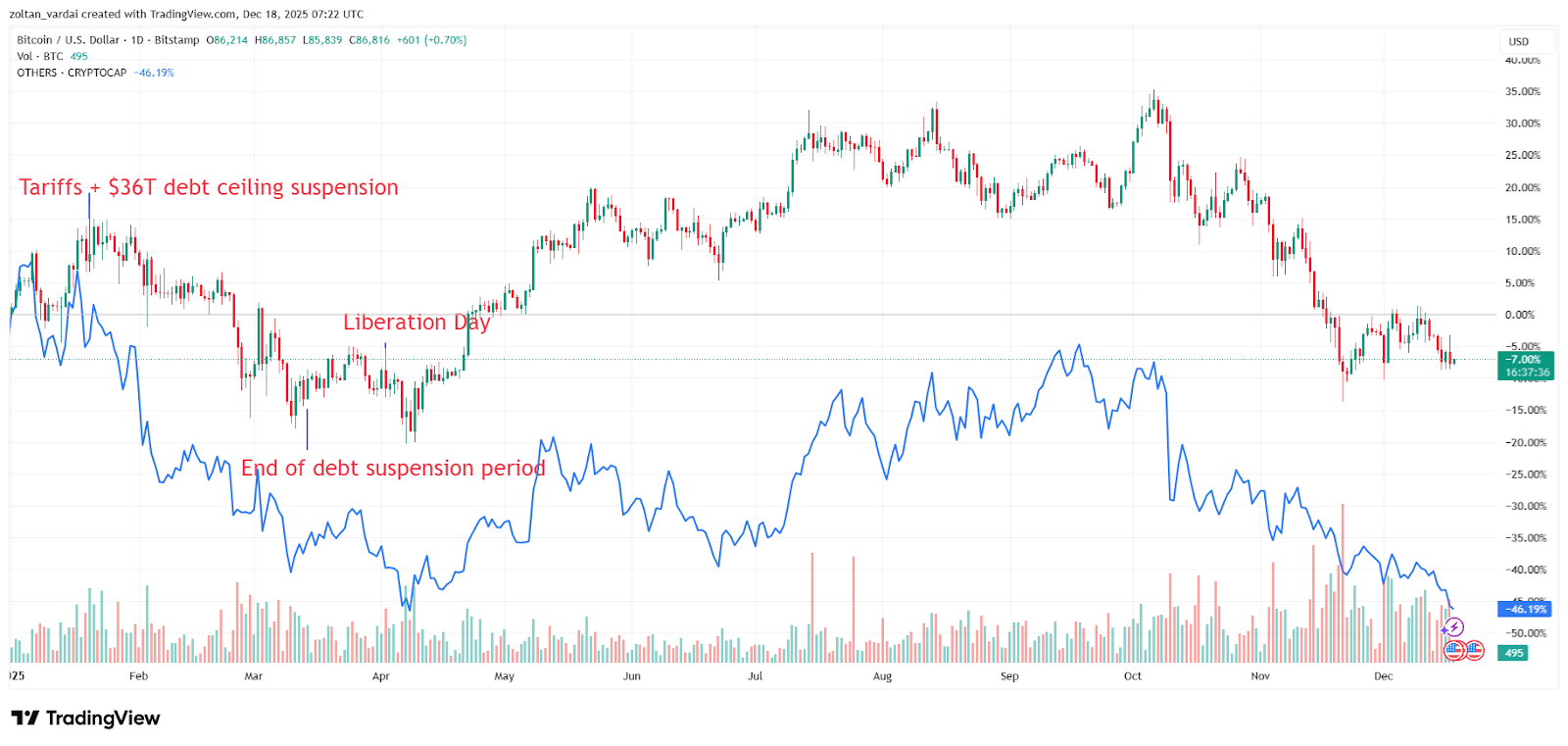
While Bitcoin reached fresh highs earlier in the market cycle, much of the wider digital asset ecosystem lagged behind. According to TradingView data, Bitcoin was down approximately 7% year-to-date following a sharp market-wide sell-off in early October. Meanwhile, the total market capitalization of altcoins suffered a steeper descent, declining by more than 46% from its 2025 peak. Macroeconomic headwinds, including persistently elevated interest rates, combined with Bitcoin’s prolonged market dominance to siphon liquidity away from smaller projects, leaving many technical achievements unrewarded by price action.
Even so, a resilient handful of tokens managed to break away from the broader market malaise, outperforming their peers during a year characterized by heavy oversight. XRP drew fresh, sustained momentum from monumental regulatory developments and the advent of dedicated exchange-traded funds. Zcash rallied dramatically as a renewed hunger for financial confidentiality swept through a digital economy grappling with tighter surveillance. Meanwhile, Algorand secured vital tailwinds from expansive real-world tokenization efforts. These contrasting trajectories illustrated a stark pivot: the era of blind speculation was steadily giving way to an environment valuing compliance, real-world utility, and robust foundational frameworks.
XRP Gains as Regulatory Overhang Eases
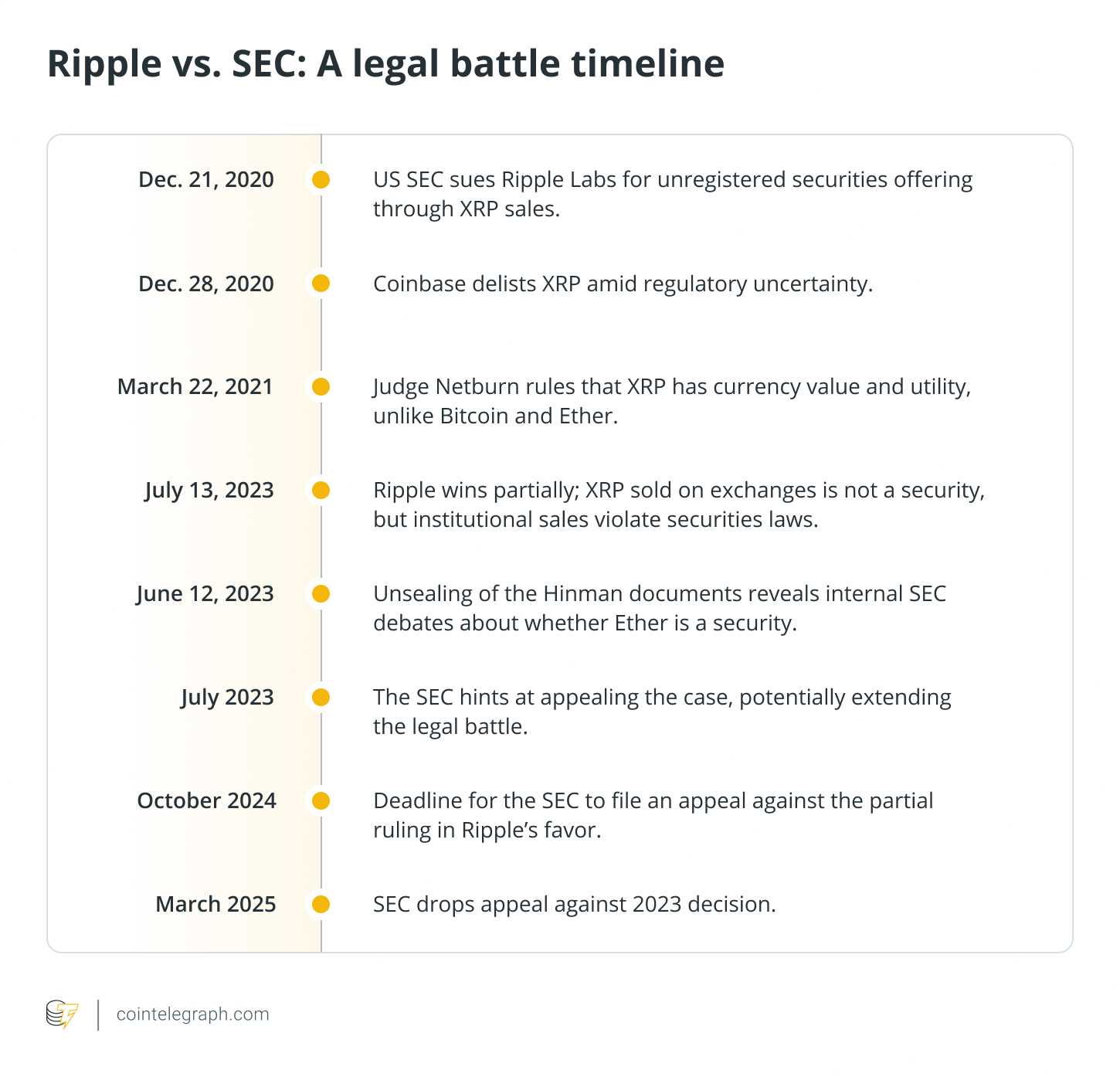
Among the standout winners of the 2025 crypto cycle, XRP defied the broader absence of an altcoin season to outperform the vast majority of digital assets. The token’s fortunes transformed dramatically on the back of growing regulatory clarity, most notably the winding down of the United States Securities and Exchange Commission’s long-standing legal battle against Ripple Labs.
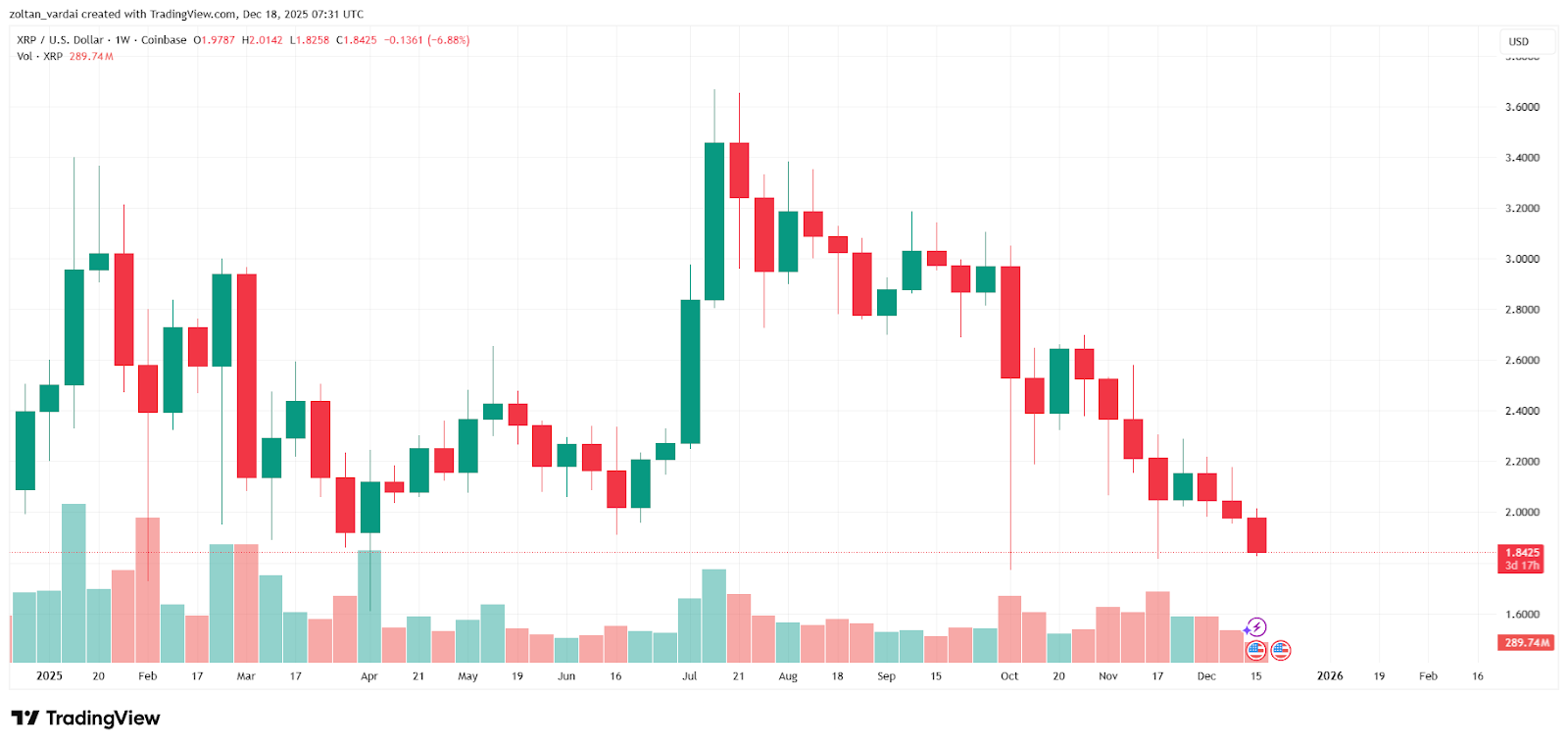
TradingView data indicates that XRP surged by over 35% in July alone, scaling to a yearly high of $3.60 on July 23. This milestone represented an astonishing eight-fold price increase from its previous year’s low of $0.43, which was recorded on August 5, 2024. The primary catalyst behind this explosive revaluation was the dismantling of a multi-year regulatory cloud that had long deterred conservative capital.
Ripple and the SEC formally ended their protracted dispute on August 8. According to court filings, the two parties submitted a joint letter requesting the dismissal of the SEC’s appeal and Ripple’s cross-appeal, with each side agreeing to bear its own costs and fees. This brought a definitive close to a legal saga that began in December 2020, when the SEC initially filed a lawsuit alleging that Ripple had raised $1.3 billion through unregistered XRP sales.
Industry leaders noted that this legal resolution fundamentally altered institutional sentiment. Alex Davis, founder and CEO of blockchain ecosystem Mavryk Dynamics, pointed out that the market was visibly rotating toward assets that regulators could cleanly classify, institutions could accurately model, and compliance teams could officially approve. According to Davis, XRP fit that profile far better than most altcoins throughout the year, allowing institutional participation to resume without the lingering threat of enforcement action.
Further institutional tailwinds arrived in November. The debut of the Canary Capital XRP exchange-traded fund on November 13 provided a crucial gateway for institutional investors seeking regulated altcoin exposure. Isaac Joshua, CEO of crypto startup platform Gems Launchpad, emphasized that XRP’s outperformance was anchored by three main pillars: regulatory clarity, fresh institutional inflows, and a rapidly expanding perception of real-world utility. Joshua noted that if ETF demand remains robust and payment volumes continue their upward trajectory, XRP could successfully transition from a speculative altcoin into a foundational piece of global payment infrastructure. Highlighting this surging demand, XRP-based ETFs accumulated an impressive $756 million in net positive inflows during their first 11 trading days alone.
Zcash Rallies as Privacy Trade Returns
Privacy-focused cryptocurrencies experienced an unexpected and dramatic renaissance in 2025, driven by a surging demand for financial confidentiality as governments and regulatory bodies tightened identity and transaction oversight. Leading this charge was Zcash, which transformed from a low-profile asset into one of the most intensely monitored and discussed tokens in the entire digital asset space.
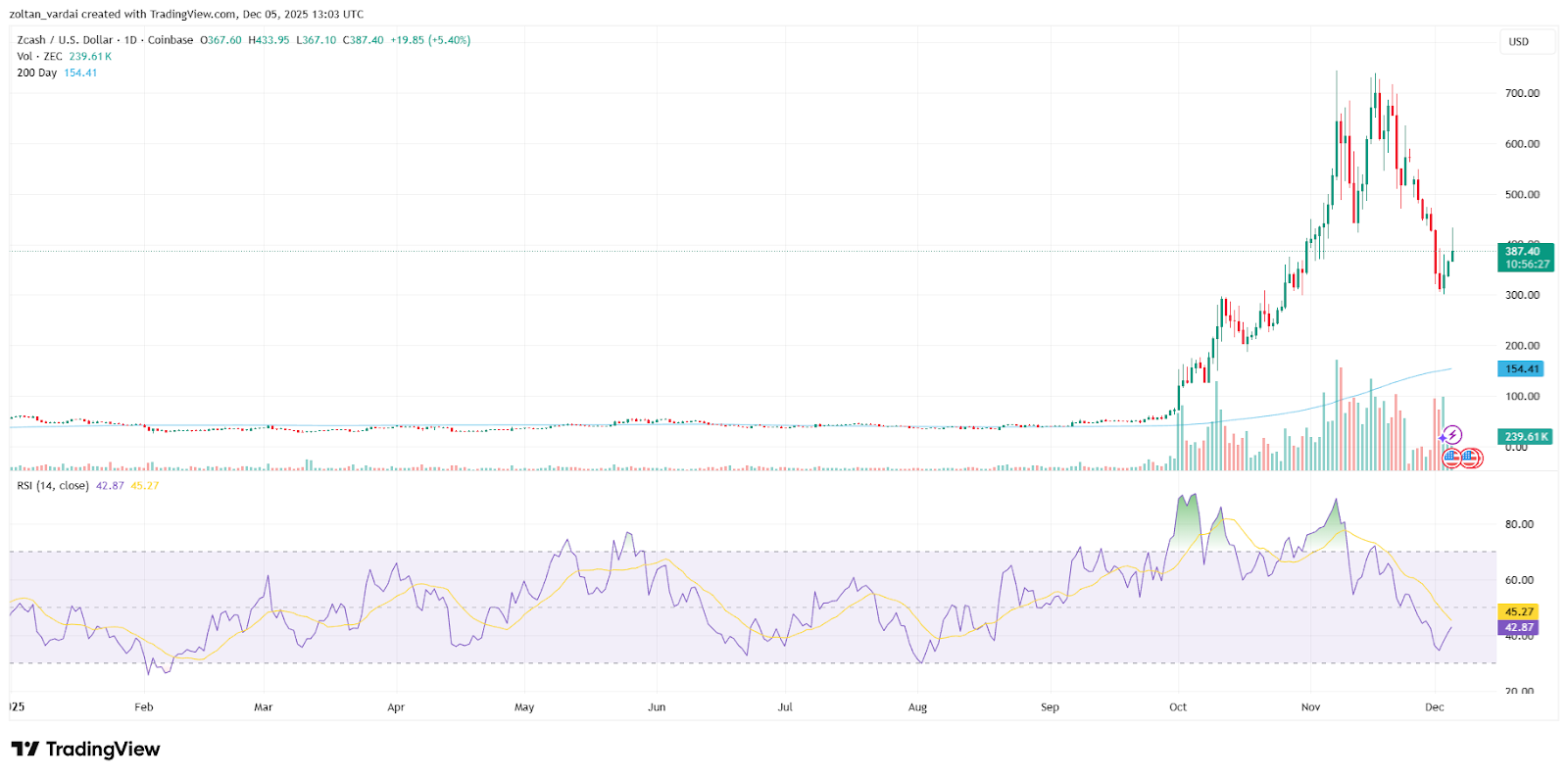
By mid-November, Zcash had surged past both Bitcoin and XRP to become the most-searched asset on cryptocurrency exchange Coinbase. TradingView data reveals that Zcash mounted an extraordinary 12-fold rally, climbing from a yearly low of $48 to touch a high of $744 on November 7. This peak arrived precisely one month after the broader crypto market was shaken by a massive $19 billion market crash at the beginning of October. Despite this massive yearly recovery, Zcash remained well below its all-time high of $5,941, which was set nearly a decade prior on October 29, 2016.
Market observers attributed this privacy rally to structural factors rather than fleeting social media hype. Narek Gevorgyan, founder and CEO of crypto portfolio management platform CoinStats, explained that momentum was fueled by tightening Know Your Customer and Anti-Money Laundering rules across centralized exchanges, alongside increasing government surveillance of everyday digital transactions. This regulatory tightening inadvertently spurred renewed interest among institutions and developers looking closely at zero-knowledge cryptography.
Launched originally in 2016, Zcash merges a proof-of-work consensus model with advanced zero-knowledge proof technology, giving users the choice between transparent transactions and fully shielded transfers that conceal both transaction amounts and wallet addresses. The tangible demand for this privacy architecture was clearly visible on-chain. By November 25, the volume of ZEC tokens locked inside shielded addresses climbed to approximately 4.5 million coins, up sharply from 1.7 million earlier in the year. Notably, 1 million of those tokens were transferred into shielded pools over a compressed three-week window. Additional supply-side pressure came from the network’s previous halving event on November 23, 2024, which slashed block rewards from 3.125 ZEC to 1.5625 ZEC and halved daily new issuance down to roughly 1,800 tokens.
Algorand Jumps on Tokenization Push
Algorand captured significant market attention early in the year by demonstrating tangible, real-world utility through large-scale enterprise deployments. The network’s native token, ALGO, rallied approximately 48% over a three-week window, moving from $0.33 at the close of December 2024 to surpass a yearly high of $0.49 on January 17, according to TradingView figures.
The momentum was heavily catalyzed on January 21, when Algorand announced a strategic partnership with Enel Group, one of Europe’s largest electricity providers by customer count. The collaboration enabled Italian residents to purchase fractional shares of Enel’s actual solar farms and wind installations utilizing tokenized Energy Utility Tokens. Analysts suggested that these deployments cemented Algorand’s standing for long-term relevance. Lacie Zhang, a market analyst at Bitget Wallet, noted that such initiatives reinforced the network’s underlying technical strengths and its specific focus on enterprise-grade, environmentally aligned use cases.
At the same time, Zhang pointed out that Algorand’s broader price action after its January spike reflected wider macroeconomic headwinds rather than project-level deficiencies. Persistent macro pressures, including higher interest rates and Bitcoin’s prolonged market dominance, sucked liquidity away from the wider altcoin sector. Consequently, strong technical milestones did not always translate into immediate price appreciation. However, analysts maintained that networks prioritizing real-world integration would ultimately weather the storm as market sentiment completed its rotation from pure speculation toward utility-driven adoption.
Despite subdued price movement following its early-year peak, Algorand’s underlying network activity continued to expand. Data from a Messari research report indicated that the volume of staked ALGO grew by 28% quarter-over-quarter, surpassing 1.95 billion tokens during the second quarter of 2025. On the development front, the network rolled out AlgoKit 3.0 in March to provide builders with more sophisticated tools. Further cementing its technical roadmap, the ecosystem began preparations for the release of AlgoKit 4.0, slated for early 2026, which aims to introduce composable smart contract libraries alongside native support for Rust, Swift, and Kotlin.
A Selective Market Heads into 2026
The stark divergence between Bitcoin’s performance and the wider altcoin market in 2025 signaled a fundamental shift away from past cycle playbooks. Rather than experiencing a broad-based, speculative tidal wave where all digital assets rose indiscriminately, the market matured into a highly selective, fundamentals-driven ecosystem.
Although historical cycles left many retail investors perpetually waiting for a traditional altcoin season, the structure of the 2025 market demonstrated that modern crypto requires tangible utility, robust compliance frameworks, and clear real-world integration to capture sustained traction as the industry prepares to transition into 2026.