
The intersection of artificial intelligence and decentralized blockchain networks is poised to pose a formidable challenge to the long-standing dominance of Amazon Web Services (AWS) in the global cloud computing market. As the technology sector continues to evolve, the emergence of AI-driven no-code tools—which enable users to build and deploy complex applications merely through linguistic prompts rather than traditional computer code—is radically altering how software is conceived, created, and maintained.
Industry experts argue that this paradigm shift will fundamentally transform the digital landscape. Lomesh Dutta, vice president of growth at the Dfinity Foundation, a non-profit organization dedicated to guiding the development of the Internet Computer Protocol (ICP) ecosystem, noted that these advanced no-code tools are rapidly democratizing access to application creation. According to Dutta, users are increasingly demanding custom-tailored digital experiences that require constant, automated updates and maintenance driven by artificial intelligence.
This burgeoning wave of user-generated applications is gradually eliminating the traditional necessity for centrally managed software solutions that are housed and operated on centralized servers. In an era where applications can be continuously generated, modified, and evolved by AI models, Dutta emphasizes that the underlying infrastructure must undergo a parallel evolution.
"When applications are continuously generated and evolved by AI, you need infrastructure that is secure, tamper-resistant, and able to stay online without constant human intervention," Dutta explained. He added that decentralized blockchain networks have introduced a truly revolutionary computing paradigm, eliminating central points of control to enable the creation of secure, reliable, and fault-tolerant software.
Despite the ideological ethos of decentralization that underpins much of the modern web, a significant contradiction has long persisted within the technology sector. A substantial portion of cryptocurrency companies, decentralized finance platforms, and Web3 projects continue to rely heavily on centralized AWS infrastructure to power their consumer-facing applications, back-end databases, and official websites. This operational reality was highlighted by Dominic Williams, the founder of the Internet Computer, who pointed out the deep-seated reliance that ostensibly decentralized entities still place on centralized cloud giants.

This reliance on centralized infrastructure came under intense scrutiny following a series of high-profile AWS outages that rocked the broader cryptocurrency industry throughout 2025. These unexpected disruptions impacted multiple crypto platforms, trading venues, and financial applications that depend entirely on AWS servers and regional data centers to host their core digital operations.
AWS Outages Rock the Crypto Industry in 2025
The vulnerabilities inherent in relying on centralized cloud providers were laid bare during two major disruptions that occurred in April and October of 2025. The initial wave of disruptions hit in April, directly impacting several major centralized cryptocurrency exchanges, including Binance, KuCoin, and MEXC. The sudden server failure left these platforms scrambling to maintain operational continuity, forcing Binance to temporarily pause user withdrawals until normal service could be fully restored by Amazon’s technical teams.
The fragility of this centralized dependency was underscored once again in October 2025, when AWS suffered another extensive outage. This subsequent disruption crippled the mobile application of Coinbase, one of the world’s largest cryptocurrency exchanges, leading to widespread user frustration characterized by login difficulties, severe application slowdowns, and halted withdrawal processes.
The October incident was not isolated to cryptocurrency exchanges alone. A wide array of financial applications and digital asset tools experienced cascading failures as a result of the AWS downtime. Among the notable platforms affected were the mixed-asset brokerage platform Robinhood and the widely used Web3 cryptocurrency wallet MetaMask, demonstrating that the reach of a single centralized cloud provider extends deeply into both traditional fintech and decentralized ecosystems.
The October AWS outage lasted for approximately 15 hours, serving as a stark reminder of the deep structural irony within the blockchain sector. The extended downtime underscored the profound level of reliance that crypto and Web3 projects—which frequently market themselves as decentralized, censorship-resistant alternatives to legacy financial systems—continue to have on centralized cloud infrastructure providers.
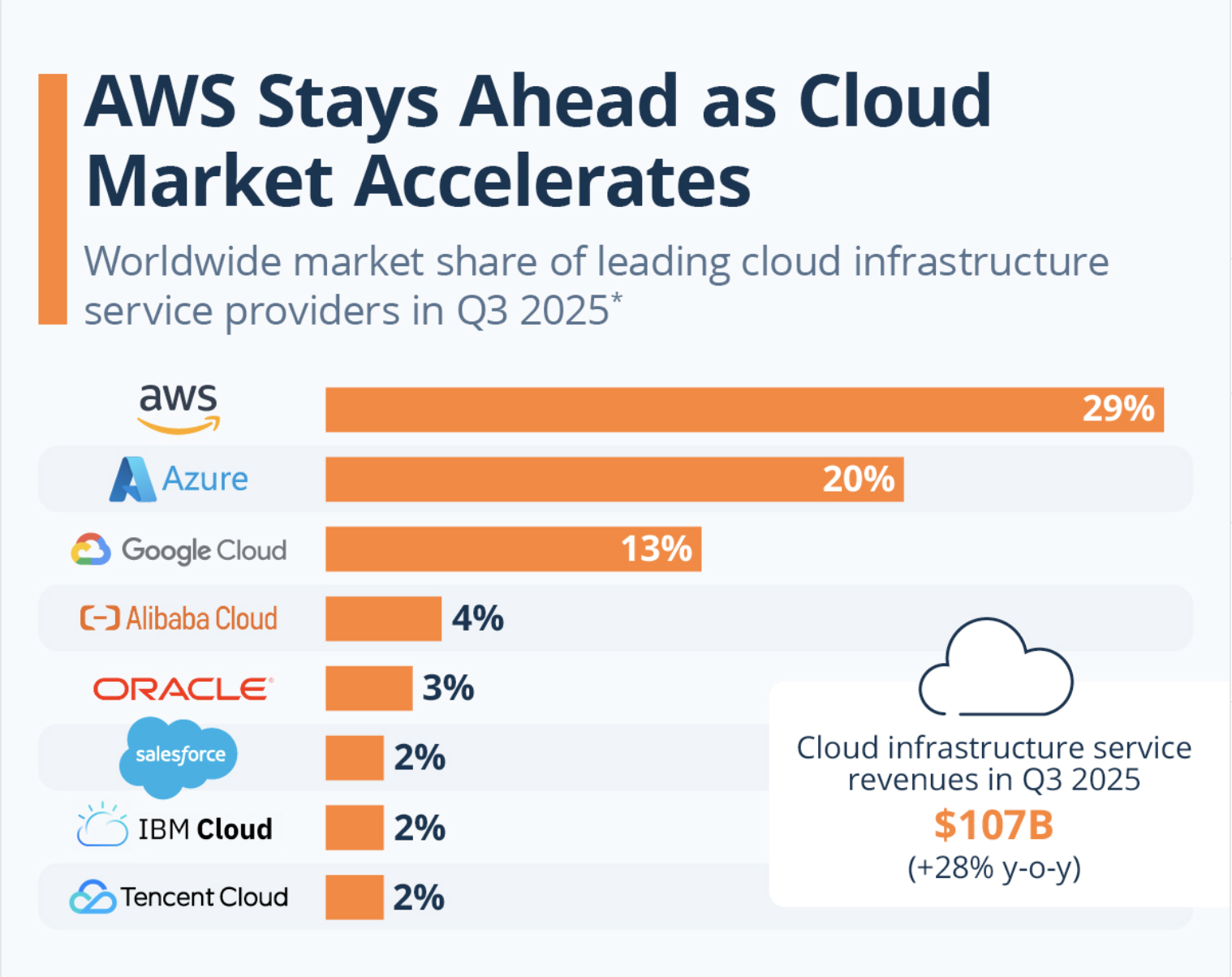
This glaring vulnerability has sparked sharp criticism from numerous prominent figures and executives across the crypto industry. Industry leaders have increasingly argued that the philosophy of decentralization has successfully transformed the ledger layer of digital assets, yet it has fundamentally lagged behind at the core infrastructure layer.
Among those voicing concern is Jamie Elkaleh, chief marketing officer at crypto wallet provider Bitget Wallet, who pointed out the core hypocrisy in October when discussing the state of the industry. "Decentralization has succeeded at the ledger layer but not yet at the infrastructure layer," Elkaleh observed.
Similar sentiments have been echoed by other infrastructure advocates, including Carlos Lei, co-founder of the decentralized physical infrastructure network (DePIN) marketplace Uplink. These voices collectively argue that as long as Web3 ecosystems remain tethered to traditional, centralized cloud monoliths like Amazon Web Services, they will remain vulnerable to systemic single-points-of-failure.
As the technology landscape moves forward, the combination of AI-powered no-code application development and decentralized blockchain infrastructure offers a potential path away from this centralized dependency. By leveraging tamper-resistant, autonomous networks capable of supporting continuous AI-driven software evolution, the industry may eventually forge a truly decentralized alternative to the traditional cloud computing giants.