While an official "altseason"—the colloquial term for a broad, sustained market-wide rally in alternative cryptocurrencies—may not have officially arrived according to traditional market barometers, crypto traders are visibly shifting their capital and executing calculated sector rotations. The resulting numbers across various digital assets are becoming increasingly difficult for market observers to ignore, reflecting a dynamic and fast-evolving landscape of digital asset investing.
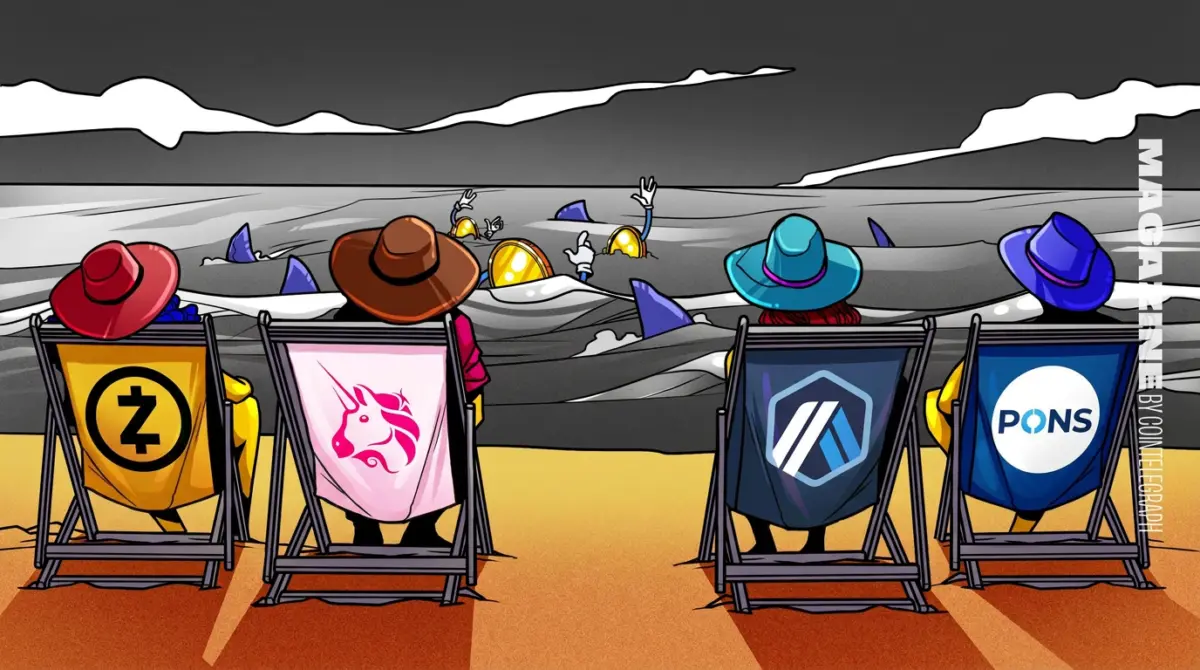
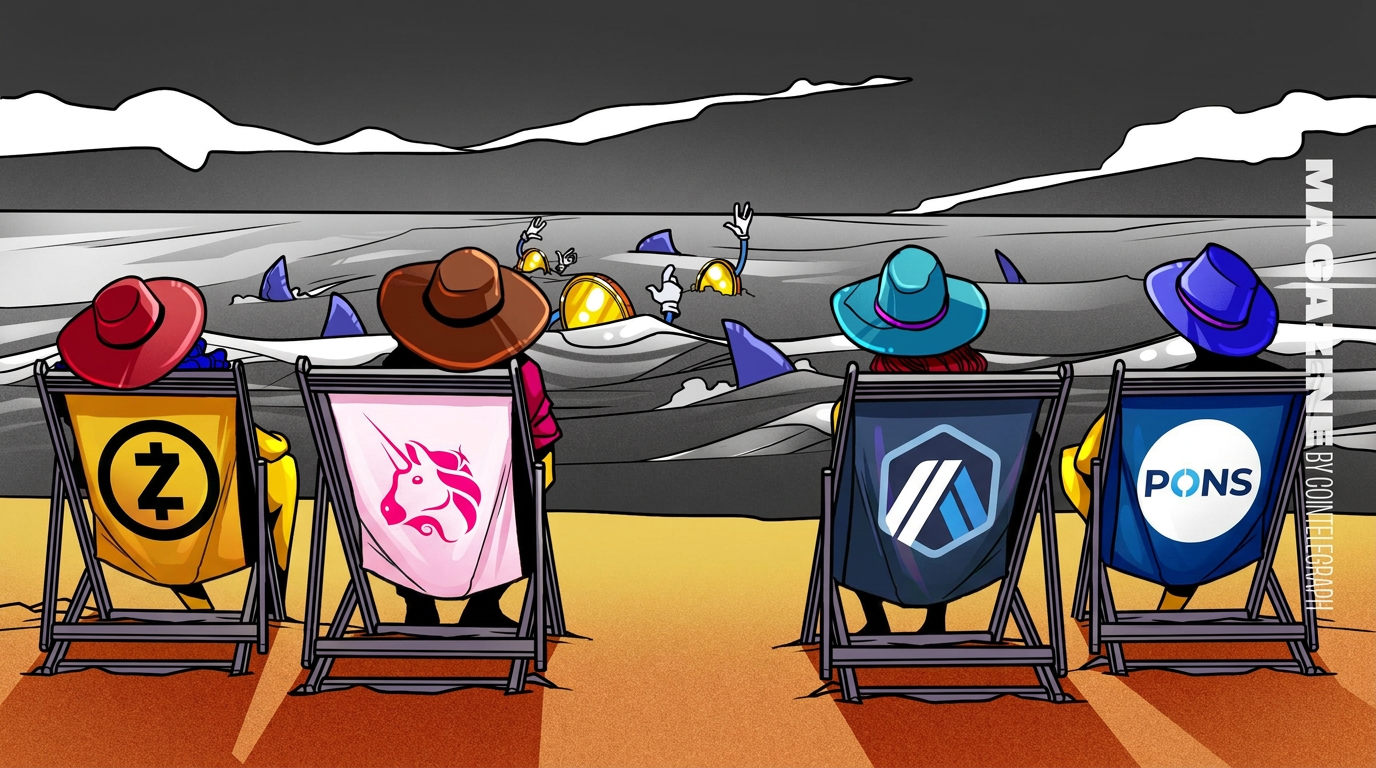
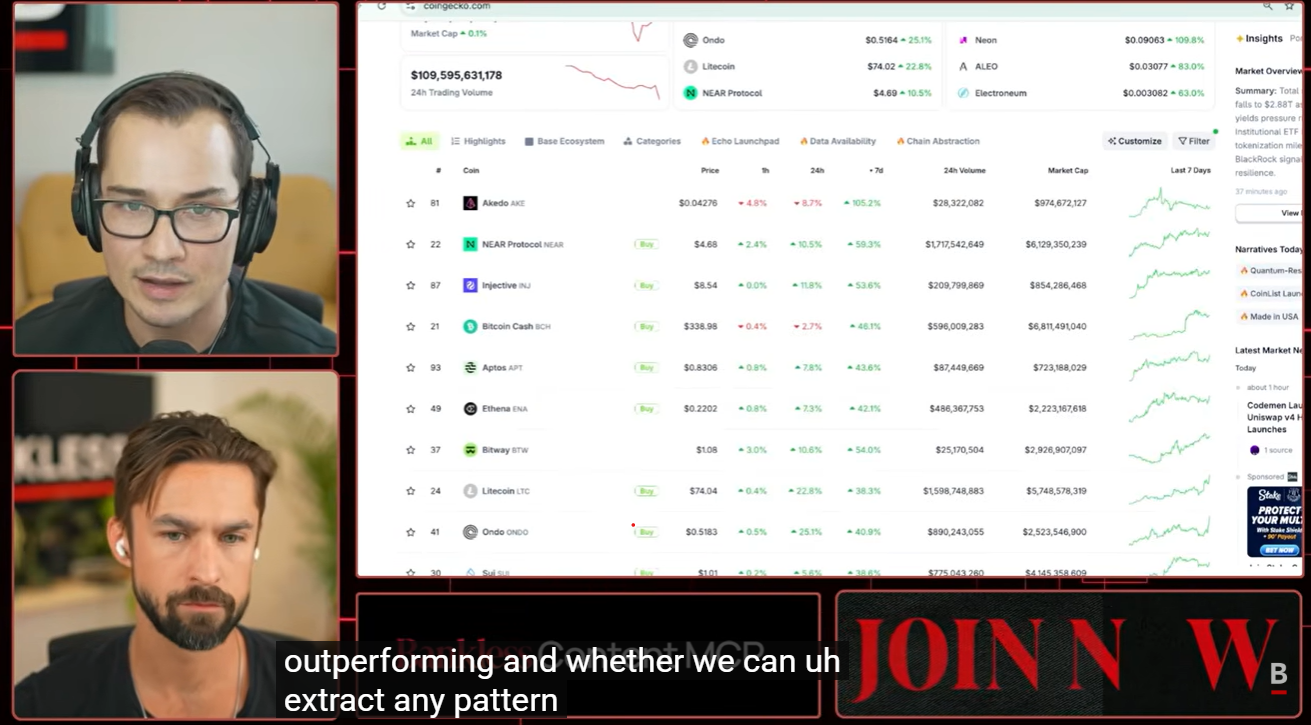
Over the past 30 days, performance metrics across decentralized finance, memecoin infrastructure, artificial intelligence, and privacy sectors have highlighted significant upward momentum. For instance, the memecoin launchpad protocol PONS soared by more than 350% in price over the trailing 30-day window. Meanwhile, prominent decentralized finance assets experienced substantial surges, with Uniswap’s UNI gaining over 110%, Arbitrum’s ARB jumping by more than 150%, and the AI-focused NEAR protocol shooting up by approximately 180%.
The momentum has extended to other corners of the market as well. Privacy token Zcash notably climbed to a record high above $1,600 last week. Additionally, Bitcoin Layer-2 token LIT and memecoin launchpad token PUMP have established themselves among the top-performing assets during this period, according to tracking data from CoinMarketCap. Spanning vastly different technological sectors and use cases, these impressive gains do not point to a single, obvious trade or universally dominant narrative. Instead, they suggest that a significant segment of the trading populace is actively seeking out coins backed by robust underlying business cases, practical application models, and distinct ecosystem values.
Analyst commentary has increasingly pointed toward this fundamental shift. Looking at the massive gains recorded by tokens such as ARB, UNI, Jupiter’s JUP, and Ondo’s ONDO, Bankless podcast host David Hoffman highlighted a common thread during a broadcast, noting that these successful protocols share a distinct characteristic: they generate real revenue. Hoffman suggested that the current market rally could be fundamentally driven by practical utility rather than pure, unadulterated speculation. Supporting this observation, data from the past week reveals that among the top 20 biggest gainers, only two were memecoins, with Pudgy Penguins representing the sole memecoin presence on that specific weekly list.
However, industry veterans caution against writing off speculative fervor entirely. Sergej Kunz, co-founder of major crypto platform 1inch, points out that over the last 30-day period, memecoins have continued to demonstrate some of the strongest growth metrics among everyday retail buyers. At the same time, Kunz acknowledges that capital is branching out simultaneously, with DeFi protocols, privacy-focused tokens, artificial intelligence projects, and tokenized real-world assets capturing substantial market attention.
Describing the current behavioral patterns of market participants, Kunz noted that the overarching trend exhibits breadth before depth. More individual wallets are actively purchasing a broader array of different tokens, but they are typically executing these trades in smaller, more cautious amounts. This underlying caution observed in on-chain data fits seamlessly into a wider pattern of selective participation, where market participants are engaging with the asset class selectively rather than going completely all-in across the board.
Evaluating the Metrics of a Potential Altseason
As the broader market watches these developments unfold, a central question remains: Is the cryptocurrency market finally maturing into a more discerning ecosystem that allocates capital into assets with genuine utility, as Hoffman suggests, or will this cycle ultimately revert to being driven by speculative assets, characterized by dog-themed memecoins and internet humor?
It remains too early to definitively declare a turning point, particularly given that CoinMarketCap’s official Altcoin Season Index has yet to officially cross the threshold into a designated altseason. The index currently hovers at 64 out of 100. While this represents a notable recovery from a reading of 48 just the previous week, it still sits comfortably below the traditional 75 threshold that signifies an official, fully fledged altcoin season.
Furthermore, structural data from institutional trading firms indicates that market capitalization remains highly concentrated. According to data from digital asset infrastructure provider Talos, the top 10 alternative cryptocurrencies currently account for roughly 80% of the total altcoin market capitalization. This concentration represents an increase from approximately 70% at the close of 2024.
Samar Sen, head of international markets at Talos, noted that the data points toward a market where capital is clustering tightly around a smaller group of established assets rather than rotating broadly into the speculative long tail of the market. Sen observed that September flow data from Talos demonstrated a notably strong buying tilt, with net buying dominating on almost every single trading day. This dynamic stands in sharp contrast to late 2024, during which buyers and sellers were far more evenly matched, and the post-election market rally produced a much broader distribution of outperformance across mainstream tokens such as DOGE, ADA, and HBAR.
What Market Participants Are Actively Buying
Examining the specific sectors attracting capital, Sen highlights that the strongest market performance is clustered around clearly defined themes. These include revenue-generating protocols, onchain perpetual trading platforms, and prominent DeFi projects such as HYPE, LIT, UNI, and MORPHO.
Concurrently, privacy-oriented assets like ZEC, NEAR, and XMR have maintained strong performance trajectories, alongside AI-adjacent tokens including VVV and TAO. Talos has also observed a notable flurry of activity surrounding memecoin launchpads like PUMP and PONS, while assets tied to the Robinhood ecosystem and speculative tokens like USELESS have similarly experienced robust trading activity.
Echoing the observations made by Kunz, Sen emphasizes that the market is becoming significantly more selective. Investors are concentrating their capital around specific narratives and operational ecosystems rather than treating the entire altseason category as a single, homogenous broad trade. Asset classes such as tokenized gold and tokenized stocks are also drawing new buyers, while artificial intelligence tokens continue to climb, albeit starting from a comparatively small market base.
Overall, the current environment appears less like a clean, wholesale structural shift away from speculation and toward pure utility, and more like a complex jumble of competing, overlapping narratives. This convergence was vividly illustrated earlier in the month following the explosion of unconventional trading pairs on retail-focused platforms like Robinhood. Market participants witnessed a blurring of lines as traditional asset categories began to overlap, with tokenized stocks suddenly trading directly against memecoins through experimental market pairings such as BONER/HIMS and SPACEHOOD/SPCX. The demand for these novel arrangements was substantial, with a single unique pairing generating more than $425 million in total trading volume over a single 24-hour period in early September.
The Structural Evolution and Institutional Perspective
Offering an institutional outlook on the current market dynamics, Michael Egorov, founder of Curve Finance and Yield Basis, notes a tangible increase in attention directed toward practical use cases and sustainable institutional demand compared to previous market cycles. Egorov observes a growing market appetite for protocols that perform concrete functions, successfully bridge the gap between traditional cryptocurrency infrastructure and real-world financial activity, and prove their capabilities through operational execution.
Stablecoins serve as a primary example of this evolution, particularly regarding their expanding implementation in onchain foreign exchange operations and modern fintech applications. Egorov believes that the single biggest driver for future growth will be the continuous integration of decentralized crypto infrastructure with the broader, traditional economy. Should this real-world demand continue its upward trajectory, it could supply this altseason with an entirely new source of organic buying pressure, making crypto infrastructure valuable far beyond the confines of internal digital asset trading—though that transition remains a significant hurdle.
At the same time, the market participant base driving these trends is undergoing structural changes. Talos data indicates that dealer participation in altcoin trading has dropped from roughly 65% at the end of 2024 to approximately 32% in September, even as overall order flows maintained a resilient buying trend.
Sen points out that this shift represents a significant departure from the previous altcoin rally, indicating that institutional liquidity providers and traditional market makers have played a comparatively subdued role in fueling the current market movement. Simultaneously, technological advancements have drastically simplified market access. Financial exposure that once required traders to interact directly with complex decentralized trading venues like Raydium or Orca is now readily accessible through streamlined, mainstream platforms. This widespread accessibility effectively lowers historical barriers to entry and broadens overall retail participation.
Concurrently, professional traders now possess a significantly more advanced suite of analytical tools to track capital movements across the ecosystem. From sophisticated wallet-tracking software to automated copy-trading systems that provide real-time signals on capital migration, market participants can observe liquidity shifting across wallets, protocols, and distinct blockchain networks with unprecedented clarity. According to Sen, this environment creates a unique intersection featuring broader, simplified retail access alongside increasingly sophisticated mechanisms for professional market participants to identify where trading activity is rapidly accumulating.