The limited partners who provide the foundational capital to venture capital firms—frequently referred to as the "money behind the money"—are experiencing a unique and historically unprecedented moment. Operating in uncharted territory, these institutional investors are navigating an environment that is simultaneously complex and potentially exceedingly lucrative, driven largely by the massive acceleration of artificial intelligence development.
In a conventional venture capital market, limited partners (LPs) typically spread their bets across a wide array of firms to diversify their portfolios. They write checks to both emerging managers and established institutions, balancing generalist firms with specialized ones. The overarching goal has always been twofold: to achieve strong financial returns while actively minimizing portfolio risk through prudent diversification.
That traditional playbook, however, is largely out the window. The valuations of foundational AI giants like OpenAI and Anthropic have shot up so rapidly that nearly everyone in the venture ecosystem has piled into the same two companies on the way up. Frequently, this concentration occurs inside the very same venture capital firm, directly challenging the longstanding venture convention of avoiding investments that conflict with one another. Yet, despite these potential conflicts of interest, no one appears to be complaining. The LPs currently speaking about the ecosystem seem unbothered by these high-stakes gambles, given the extraordinary potential for massive returns. Instead, they are anticipating a historic financial bonanza.
At the same time, these institutional investors do see danger ahead. They frequently describe the current market dynamic as a "yellow light" situation, expressing growing unease over how rapidly venture capitalists are coming back to the market to raise brand-new funds.
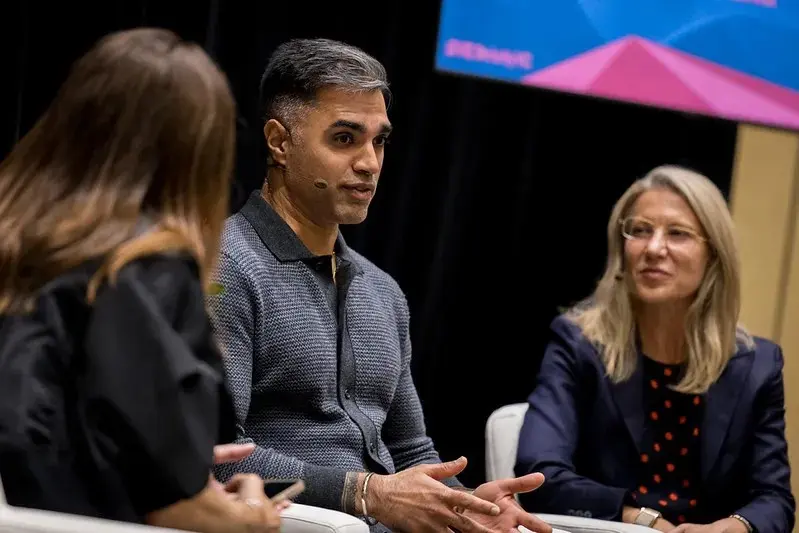
The realities of this shifting landscape were recently discussed with Beezer Clarkson of LGT Capital Partners, a Zurich-based diversified asset manager, and Amit Bhatti of TrueBridge, a Chapel Hill firm that focuses solely on venture capital.
Navigating Strange and Exciting Days in the Startup Ecosystem
These are undeniably strange days for the private equity and venture communities—a period marked by high excitement mixed with underlying caution. Reflecting on their roles and places in the modern startup ecosystem, industry veterans point to the cyclical nature of the business as a steadying force.
Beezer Clarkson notes that while the environment is exceptionally busy, it does not necessarily feel scary. With a career spanning a couple of decades, Clarkson has witnessed multiple market cycles, which helps mitigate anxiety. The presence of immense change and numerous active variables makes the chaos fun for someone who genuinely loves the asset class. Appreciating that market cycles are inevitable allows investors to fully enjoy the upside when it arrives, knowing that downturns will eventually follow, even if the upswing is vastly more entertaining.
From Amit Bhatti’s perspective, the current climate is overwhelmingly exciting. Venture capital is sometimes viewed as a niche corner of finance, but with artificial intelligence becoming all-consuming, global attention is intensely focused on the sector. Bhatti views this moment as a validation of the asset class rather than a cause for alarm. Although the pace of investing and the prevailing valuations are distinct from historical norms, deeply meaningful technological advancements are occurring, drawing unprecedented spotlight to this specific corner of private equity.
The Power Law and Portfolio Concentration
A central tension in modern venture capital is portfolio concentration. Because funds across the ecosystem now hold the exact same high-profile brands—such as OpenAI and Anthropic—multiplied across however many portfolios a single LP backs, the traditional mandate of institutional diversification faces a stiff test. If market conditions were to reverse sharply, the concentration could present significant challenges.
Amit Bhatti argues that venture capital has always been a power law business, meaning that concentration should be viewed as a positive attribute rather than a flaw. As venture funds mature toward the decade-plus mark, successful portfolios naturally consolidate into a handful of dominant names. Past generations of mature funds have routinely concentrated around legendary winners like Databricks, SpaceX, and Stripe. In the current generation of funds, seeing heavy concentration in Anthropic and OpenAI is considered a feature, not a bug. While not every massive bet will succeed, consolidation is a standard characteristic of successful venture portfolios; the only truly different factor today is the sheer speed at which this concentration has materialized.
Beezer Clarkson points out that at the early stage, investors still encounter a diverse array of opportunity sets supported by smaller check sizes. While these early bets eventually aggregate into the same prominent late-stage companies, early-stage funds naturally steer clear of massive late-stage transactions, thereby preserving a higher degree of diversity for LPs seeking broad exposure.
Pacing Concerns and the Rise of Short-Cycle Funds
Another pressing concern for limited partners is the dramatic acceleration of fundraising pacing. Funds that historically operated on four-year investment cycles have progressively shrunk that window to three years, then two, and in some cases, down to 18 or even 12 months.
Beezer Clarkson observes that some funds are returning to the market on a one-year vintage pacing, which is remarkably fast compared to the historical norm of two to two and a half years. Managers are deploying capital much faster because they are committing to concentrated, massive-check positions. While this strategy might ultimately succeed, constructing a sound portfolio on a strict one-year vintage cycle is historically much more difficult to execute correctly.
Amit Bhatti echoes these sentiments, noting that while 24 to 36 months was once the standard baseline, a 12-to-18-month cycle is increasingly common for aggressive funds. Furthermore, numerous managers are bumping up their fund sizes mid-cycle—an unusual practice driven partly by the sheer scale of modern funding rounds. When an enterprise like Anthropic raises an unprecedented quantum of capital, a venture firm committing 20% of its fund to the round will naturally exhaust its capital well ahead of schedule. Additionally, seed round sizes have roughly doubled, forcing lead investors to write significantly larger checks. Bhatti characterizes this acceleration as a clear "yellow light" that generates considerable heartburn.
However, Bhatti highlights a crucial distinction between the current fast-paced cycle and previous speculative frenzies. During the last period of accelerated deployment, capital flowed heavily into zero-revenue cryptocurrency moonshots. In contrast, today’s market features numerous companies scaling rapidly from zero to $100 million in revenue—a velocity that was previously unheard of at this stage.
Managing Relationships and Capital Commitments
When high-performing managers return to the market every year while their returns remain largely on paper, limited partners face a delicate dilemma. Telling a trusted manager to "call me next time" risks losing a coveted seat at the table, yet maintaining commitments requires careful cash-flow management.
Beezer Clarkson explains that severing ties with a manager and attempting to return later is exceptionally difficult. While it does happen, the more typical adjustment is to downsize the investment check. During the peak market activity of 2021, many LPs informed GPs that a planned $10 million commitment would be halved to $5 million because the original allocation was budgeted for a longer timeframe. Maintaining alignment requires LPs to carefully synchronize their own portfolio pacing with the accelerated deployment of their managers.
Amit Bhatti notes that TrueBridge builds detailed calendars anticipating capital commitments well in advance. When a manager deviates significantly from that map, proactive communication is essential to ensure capital availability. Rather than sitting out entirely—which risks forfeiting the status of being a reliable capital partner—investors often see smaller check sizes or upfront discussions about pacing adjustments. This underlying need for capital stability also explains why some managers choose to upsize existing vehicles rather than launching entirely new funds prematurely.
Nevertheless, Clarkson cautions that relentless capital calls without corresponding cash distributions place severe strain on institutional LPs such as university endowments, hospitals, and charitable foundations, which must meet continuous operating commitments regardless of market trends.
Vintages, Liquidity, and the Emergence of Secondaries
Reflecting on the performance of recent fund vintages, including those deployed during the pandemic-era market peak, investors acknowledge that extreme valuations and rapid cycles create lingering challenges. Clarkson notes that 2021 vintages are still relatively early in their lifecycles at five years in, and while some will capture shares of generational AI winners and look exceptional, achieving consistent success under those pricing conditions remains exceptionally difficult.
Bhatti agrees that while the COVID-era vintage may not ultimately rank as the strongest historical cohort, foundational breakout companies like OpenAI and Cursor originated during that era and are embedded within those portfolios. Crucially, liquidity has begun to flow back into the ecosystem. After a couple of slower years, the market has seen prominent exits, headlined by SpaceX, a major exit for Cerebras, several initial public offerings, and substantial merger-and-acquisition activity, including multi-billion-dollar exits that extend liquidity well beyond traditional IPOs.
A major structural evolution in this cycle has been the maturation of the secondary market within venture capital. Clarkson emphasizes that secondaries have become significantly more sophisticated over the last five years. Although secondary transactions remain concentrated among a handful of top-tier companies, their increased prevalence provides essential liquidity options that structurally strengthen the venture ecosystem, preventing investors from having to wait decades for an IPO. Furthermore, secondary activity now occurs at multiple levels, with LPs selling stakes in general partner funds or portions of their portfolios as historical taboos continue to fade.
Bhatti describes secondaries as the third major leg of liquidity alongside IPOs and M&A. Historically, private equity enjoyed a well-developed secondary market while venture capital treated secondaries as a distressed indicator. However, after watching market values fluctuate in 2021, managers increasingly utilize secondaries judiciously. While foundational power law companies are rarely exited entirely, selling a fraction of a position to successfully return a fund has become a standard, prudent tool for professional managers.
Employee Liquidity, Founders, and Geographic Hubs
The rise of early employee tenders and founder liquidity has also prompted strategic evaluation across the ecosystem. Bhatti draws a parallel to the cryptocurrency market, where excessive immediate liquidity for employees holding tokens undermined long-term organizational stability and retention when conditions turned difficult. Consequently, employee tenders are viewed most favorably when restricted to mature companies with transparent financial records, such as Stripe and Databricks. Lead investors frequently engage in behind-the-scenes discussions to temper excessive early tender demands, recognizing that leverage ultimately dictates terms when dealing with powerful founders.
Looking toward the future of the talent pipeline, Clarkson and Bhatti observe that successful startup employees frequently transition into limited partners or launch their own venture funds, mirroring the post-Google entrepreneurial diaspora. While soaring real estate costs in San Francisco present ongoing economic hurdles, the unmatched density of talent, technical expertise, and networking infrastructure ensures that the Bay Area will retain its central role in the global technology landscape for the foreseeable future.
Emerging Managers and the Fundraising Landscape
Despite concerns that a small handful of dominant venture funds capture the vast majority of institutional capital commitments, opportunities for emerging managers persist. Clarkson notes that first-time and early-stage funds—ranging from fund one to fund three—continue to successfully raise capital, provided they offer a genuinely differentiated perspective and a clear reason for existing. While fundraising has grown more demanding, smaller emerging funds with targets between $25 million and $50 million can aggregate sufficient backing to thrive.
Bhatti adds that aspiring managers starting with smaller vehicles, such as $5 million or $10 million funds formalizing their prior angel investing activities, build sustainable track records much more effectively than those attempting to raise massive funds on day one. By proving their access, judgment, and thesis with initial capital, emerging managers position themselves for smoother subsequent fundraising rounds.
Ultimately, the modern venture capital ecosystem continues to adapt to the massive economic waves driven by artificial intelligence, balancing the immense upside of generational technological shifts with the disciplined risk management required by institutional limited partners.