Bitcoin remained under heavy pressure during Thursday’s Wall Street opening bell, struggling to hold ground above the $82,000 threshold as renewed geopolitical tensions surrounding Iran flared up across international headlines. The return of diplomatic and military anxiety over the Middle East sent immediate shockwaves through global risk assets, triggering widespread sell-offs across traditional equities and digital currencies alike.
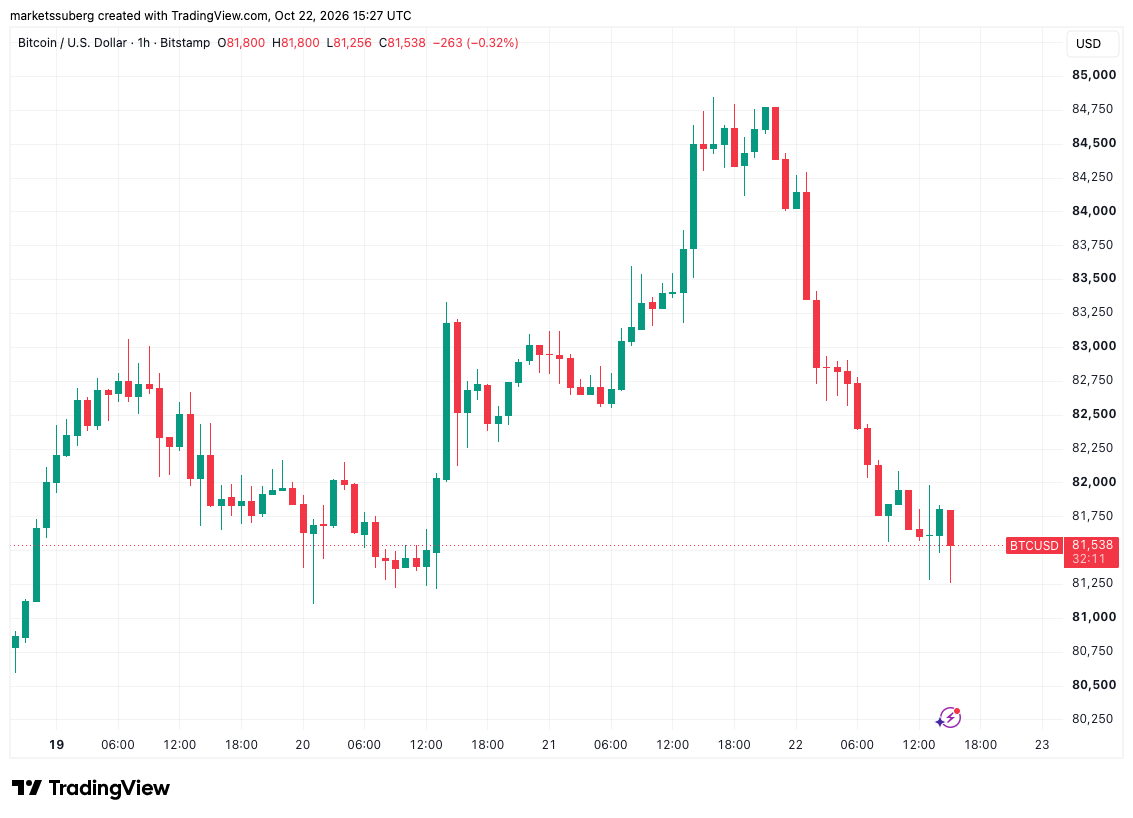
Market data from TradingView and Bitstamp demonstrated that the flagship cryptocurrency dipped to an intraday low of $81,256, registering a 2.9% loss over the 24-hour trading cycle. This downward correction followed a period of cautious optimism earlier in the week, directly interrupting Bitcoin’s momentum as it tested local resistance levels.
The broader financial markets were already navigating a complex landscape defined by mixed reactions to corporate earnings, notably including Tesla’s third-quarter results and associated capital expenditure announcements. However, the overarching market sentiment quickly shifted to a definitive risk-off mentality following fresh commentary from political leaders regarding US foreign policy in the Middle East.
Geopolitical anxieties intensified significantly after statements emerged regarding the diplomatic deadlock between Washington and Tehran. Tensions reached a new high when remarks attributed to political figures indicated that the United States was currently not engaged in active negotiations with the Iranian side. Elaborating on the diplomatic standstill, commentary highlighted that a decisive resolution or event could unfold sooner rather than later, with timing potentially aligning with the upcoming US midterm elections scheduled for November 3. This lack of diplomatic visibility immediately unnerved institutional and retail investors, who quickly moved to trim exposure to high-beta assets.
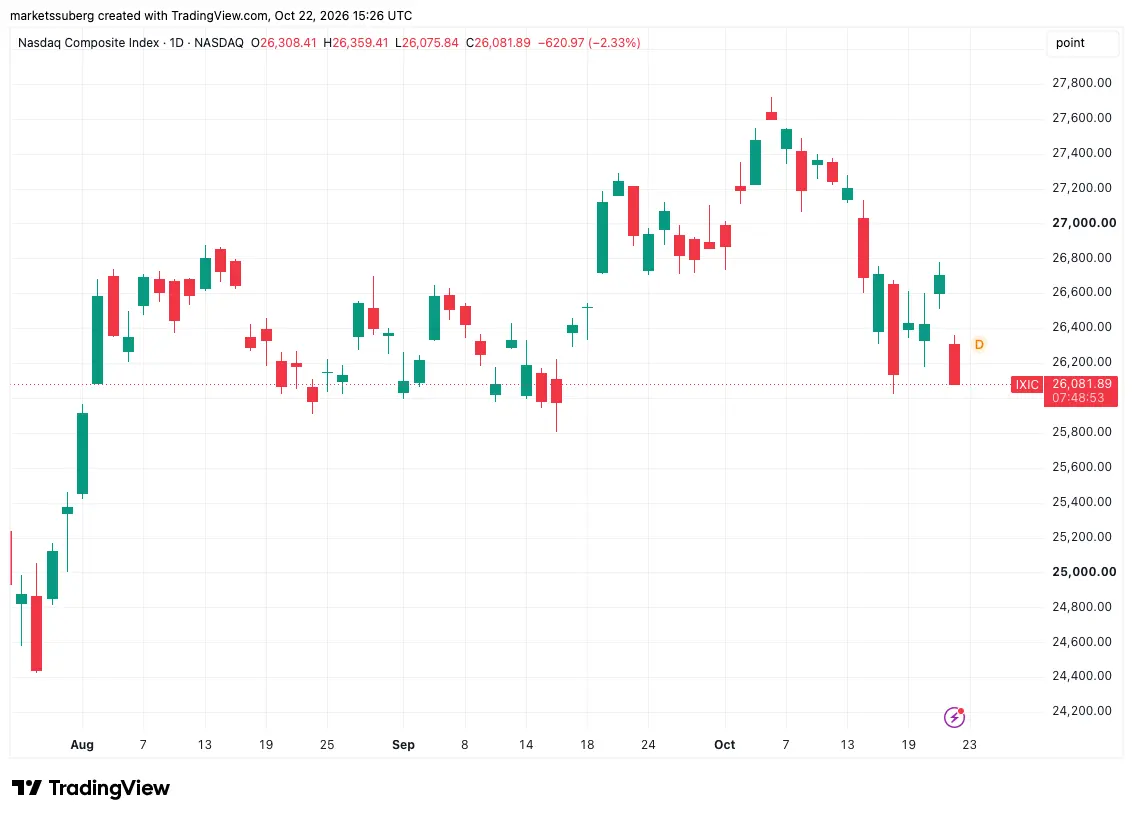
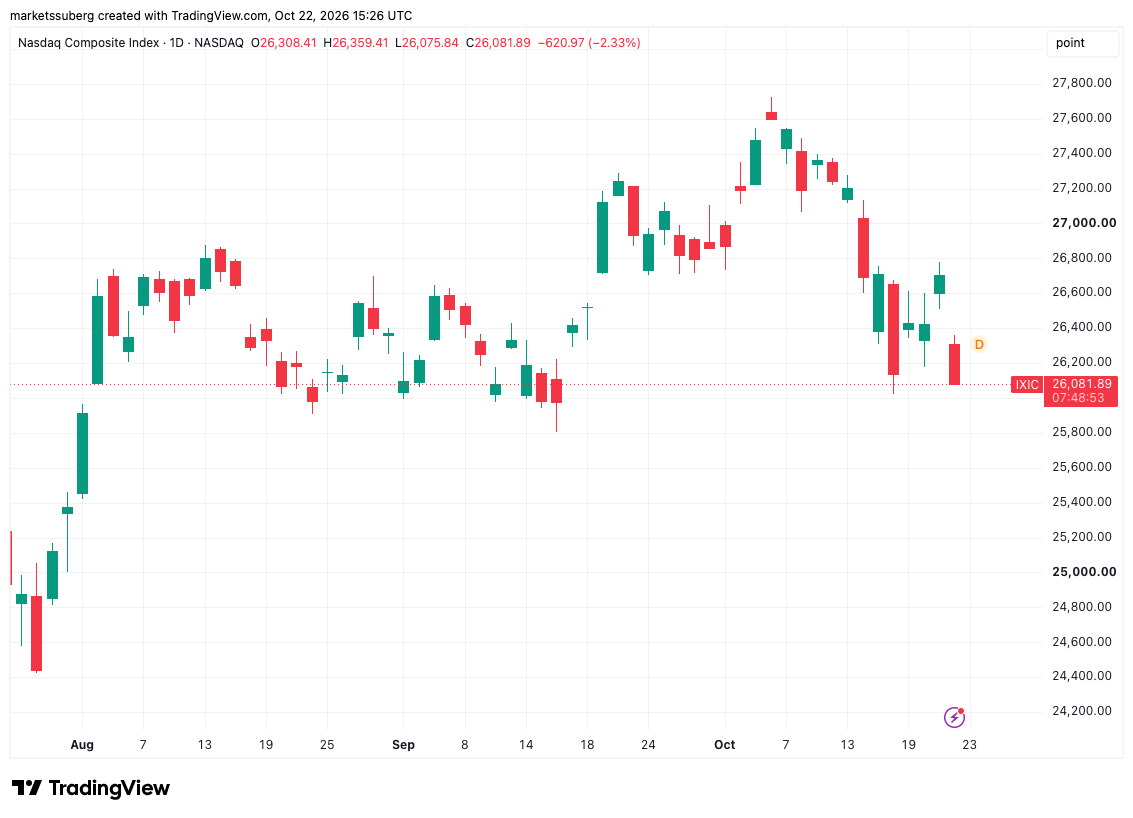
The impact of this risk-off environment was instantly mirrored in traditional stock markets, where major US indices opened sharply in the red. At the time of reporting, the benchmark S&P 500 Index had declined by 1.3%, reflecting broad-based sector weakness. Meanwhile, the technology-heavy Nasdaq Composite Index suffered an even more pronounced retreat, dropping 2.3% as investors aggressively de-risked their portfolios.
Market analysts pointed to a convergence of compounding macro pressures driving the equity sell-off. Ian Lyngen, head of US rates strategy at BMO Capital Markets, noted that technology stocks came under intense pressure amid renewed anxieties regarding artificial intelligence valuations. Furthermore, a sudden rebound in global energy prices further contributed to the prevailing risk-off tone across trading desks. According to Lyngen, US Treasuries emerged as the primary beneficiary of the capital flight, absorbing safe-haven flows as global risk sentiment deteriorated rapidly.
As capital rotated aggressively out of equities and digital assets and into sovereign debt, bond returns experienced notable shifts. The yield on the benchmark US 10-year Treasury note approached the psychologically significant 5% level before experiencing a downward correction, slipping to its lowest mark since September 23. This fluctuation in bond yields underscored the heightened sensitivity of global markets to shifting macroeconomic and geopolitical indicators.
Expectations Point to a Narrow Trading Range Ahead of Fed Meeting
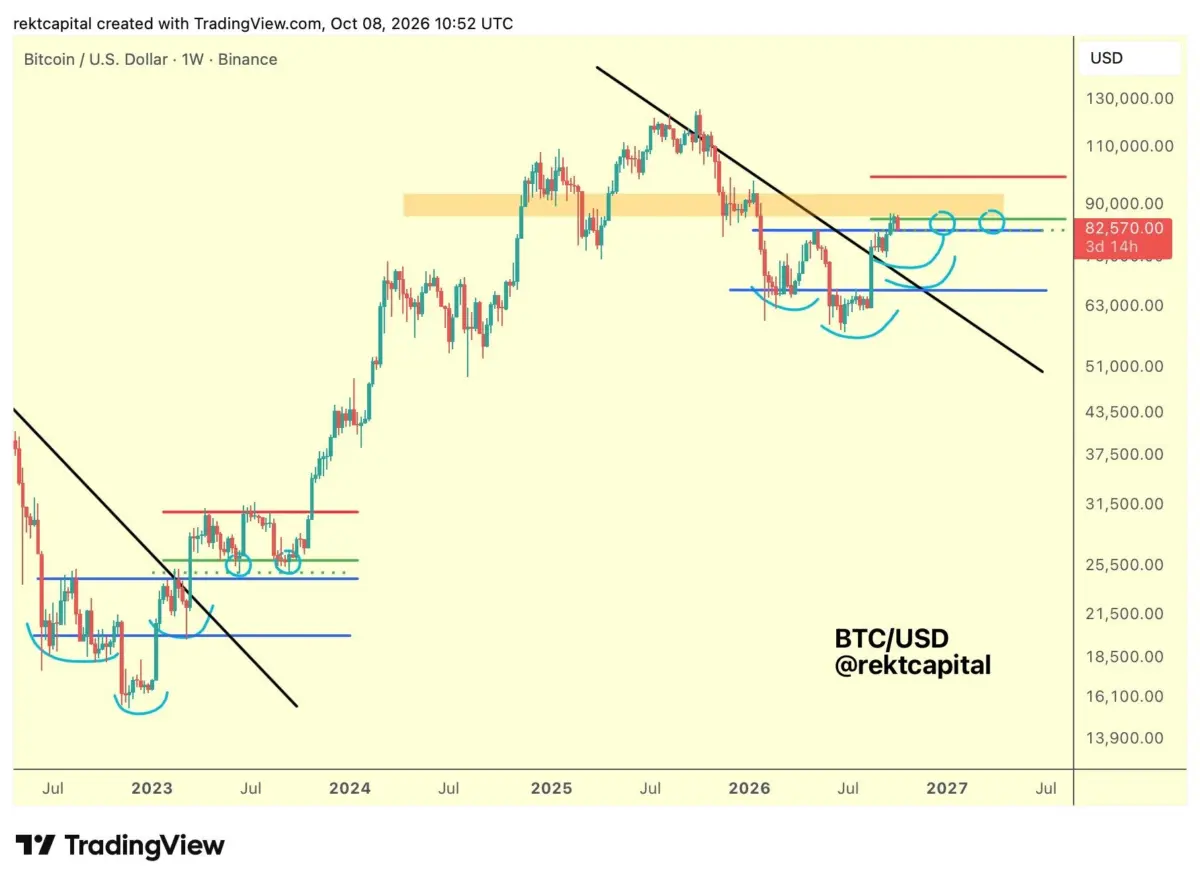
For Bitcoin specifically, the latest correction brought price action back down to familiar territory. After surging close to the $85,000 mark just a day prior, BTC prices began tightly circling the estimated cost basis of US spot Bitcoin exchange-traded funds, which sits at approximately $81,500. This level has increasingly acted as a crucial psychological and structural pivot point for market participants attempting to gauge institutional conviction.
Research notes published by Bitfinex Alpha, the analytical division of the cryptocurrency exchange Bitfinex, provided further clarity on the prevailing market structure. Analysts forecast that BTC/USD is likely to remain confined within a relatively narrow trading band, oscillating between $81,300 and $84,400, until the United States Federal Reserve rate policymakers convene for their upcoming monetary policy meeting on October 28.
The Bitfinex researchers emphasized that sustained institutional demand via spot ETFs, coupled with relatively stable leverage metrics across derivatives markets, would be absolute prerequisites for supporting a decisive bullish breakout above the $84,400 resistance ceiling. Conversely, they warned that persistent macroeconomic headwinds, combined with a daily candle close dipping below the $81,300 support boundary, would substantially elevate the downward risk. Such a break could trigger a cascading move toward the October 15 swing low of $79,821.
Longer-term sentiment among derivatives traders and prediction market participants has similarly turned more conservative. On prediction platforms such as Kalshi, market participants significantly discounted the probability of a major price recovery or a new all-time high materializing by mid-January 2027. Trading activity on these contracts revealed that market participants had trimmed the implied odds of BTC/USD breaking past previous records to a modest 3%, reflecting a cautious outlook as macroeconomic uncertainties continue to dictate the pace of the digital asset economy.