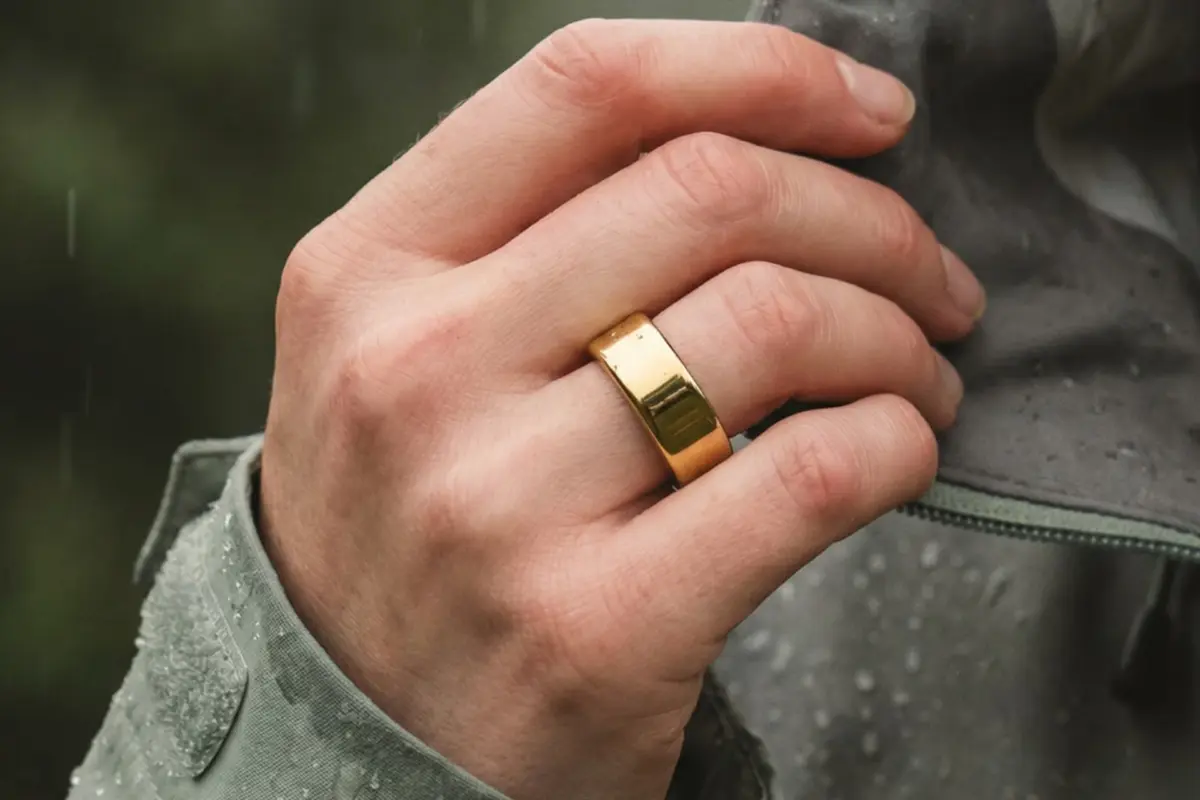
Smart ring pioneer Oura has escalated its legal battle against its Bengaluru-based Indian rival Ultrahuman, filing a fresh federal lawsuit aimed at blocking U.S. sales of the startup’s Ring Pro device. The legal move comes just months after a product redesign allowed Ultrahuman to successfully return to the American market following a stringent import ban. The Texas court case represents the latest chapter in an aggressive series of intellectual property disputes initiated by Oura against virtually all major competitors in the rapidly expanding smart-ring sector, including Samsung, RingConn, Circular, and Zepp Health.
In a complaint filed on Thursday in a U.S. federal court in Texas, Oura alleged that Ultrahuman’s flagship Ring Pro infringes upon two critical patents held by the company. These patents cover both the distinct external design of the smart ring and its complex internal architecture, specifically targeting core hardware components such as the battery and integrated health sensors. Through the new lawsuit, Oura is seeking substantial monetary damages alongside a permanent injunction that would effectively halt the importation, distribution, and sale of the Ring Pro across the United States.
The legal confrontation arrives shortly after Ultrahuman celebrated a major regulatory milestone. The startup launched its redesigned Ring Pro in February, subsequently securing a favorable ruling from U.S. Customs and Border Protection in March. That decision cleared the path for Ultrahuman to stage a comeback in the lucrative U.S. market, overcoming a debilitating import ban on its previous-generation Ring Air device. The original ban had taken effect after Oura secured a decisive patent infringement ruling from the U.S. International Trade Commission (ITC) in August of the previous year.
An Oura spokesperson minced no words when addressing the ongoing rivalry, stating that Ultrahuman has established a clear pattern of adopting innovations pioneered by Oura, a trend underscored by the 2005 ITC ruling against the company. According to Oura, while Ultrahuman introduced a modified ring structure to bypass prior restrictions, the company failed to rectify the underlying infringement of Oura’s intellectual property, choosing instead to capitalize on Oura’s heavy investments in research, development, and market leadership.
Oura contends that the recent favorable ruling by U.S. Customs and Border Protection applied narrowly to the single patent involved in the earlier dispute, leaving the two new patents cited in the current lawsuit entirely unaddressed. In its legal filing, the company emphasized that to safeguard its extensive patent portfolio and proprietary rights, it was left with no alternative but to initiate this latest round of litigation.
Adding to the gravity of the legal challenge is the timing and nature of the patents involved. One of the two patents cited by Oura, designated as patent number 12,769,363, is exceptionally new. It was officially issued to Oura on October 20, merely two days before the company filed its federal lawsuit. This newly minted patent specifically covers smart-ring designs that integrate tightly packed internal components, including curved batteries, custom circuit boards, onboard magnets, and advanced sensor arrays. The second patent invoked in the complaint is designated as D804,471, focusing heavily on the aesthetic and structural design elements of the wearable device.
In a strategic move, Oura has also named Texas-based electronics manufacturer SVTronics as a co-defendant in the lawsuit. According to the court filing, SVTronics manufactures the Ring Pro at a specialized production facility located in Plano, Texas, operating directly under the direction and control of Ultrahuman. The complaint alleges that both Ultrahuman and SVTronics bear collective responsibility for infringing Oura’s intellectual property rights through the domestic manufacturing, commercial importation, and retail sale of the disputed wearable device within the United States.
Ultrahuman leadership has responded to the legal challenge with defiance. Mohit Kumar, co-founder and chief executive officer of Ultrahuman, expressed complete confidence in the integrity of the Ring Pro and confirmed that the startup intends to contest the allegations aggressively through the legal system.
Kumar pointed out the unusual timing of Oura’s legal strategy, noting that the competitor chose to assert entirely different patents, including one issued just forty-eight hours prior to the filing. He reassured customers and stakeholders that no active court orders are currently affecting the availability of the Ring Pro, confirming that the device remains fully accessible to buyers across the United States while the litigation proceeds.
The animosity between Oura and Ultrahuman dates back to 2023, when Oura initially sued the Indian startup over the Ring Air, a product that had been instrumental in helping Ultrahuman gain visibility and traction in the American market. Oura subsequently escalated the matter by bringing a separate case before the U.S. International Trade Commission in 2024, culminating in the import prohibition that temporarily disrupted Ultrahuman’s U.S. operations.
Ultrahuman, however, is far from the sole target of Oura’s aggressive legal posture. The Finnish health-technology company has pursued a broad campaign of patent enforcement across the wearable tech industry. Legal actions have targeted prominent rivals including Samsung, RingConn, Circular, and Zepp Health. While some of these disputes have resulted in protracted courtroom battles, others have been resolved through commercial compromises. Companies such as RingConn and Circular ultimately chose to settle their differences by entering into multi-year patent licensing agreements, agreeing to pay undisclosed royalties to Oura to maintain uninterrupted sales of their respective smart rings in the U.S. market.
These high-stakes legal maneuvers are unfolding against the backdrop of a booming global market for smart rings. Industry analysts and market research firms, including IDC, project robust growth for the category, anticipating that worldwide shipments will increase by 12.8% to reach roughly 4.9 million units, with expectations pointing toward an expansion to approximately 6.3 million units by 2030. While Oura maintains its position as an established market leader, startups like Ultrahuman are capturing increasing market share, intensifying the competitive pressure.
The timing of the lawsuit also intersects with broader corporate developments at Oura. Just weeks prior to filing the complaint, Oura made the strategic decision to shelve its anticipated $2.2 billion initial public offering, attributing the move to prevailing macroeconomic uncertainty in the public markets. Despite pausing its public market debut, Oura has continued to push forward with product development, recently introducing advanced fitness metrics designed to help users monitor how daily physical activities directly influence cardiovascular health.
Meanwhile, Ultrahuman has been aggressively shoring up its financial and technological standing. In September, the startup successfully secured $70 million in a funding round backed by prominent institutional investors, including Qualcomm Ventures and Labcorp, which elevated the company’s valuation to approximately $365 million. Furthermore, Ultrahuman has been actively collaborating with Qualcomm on the development of next-generation smart rings capable of executing advanced software directly on the device. This technological push is part of a broader corporate strategy aimed at expanding the utility of smart rings far beyond basic health and fitness tracking, paving the way for future integration into artificial intelligence interactions and mobile gaming environments.