Money dictates the contours of daily life, determining where people live, what they can afford, and how generational wealth accumulates over decades. Yet, the foundational mechanisms that create and distribute money remain largely obscured from public view, even as the socio-economic consequences of these systems become harder to ignore or endure. For Dutch artist Carlijn Kingma, investigative financial journalist Thomas Bollen, and monetary researcher Martijn Jeroen van der Linden, this profound disconnect served as the primary catalyst for an ambitious multidisciplinary undertaking titled The Waterworks of Money.
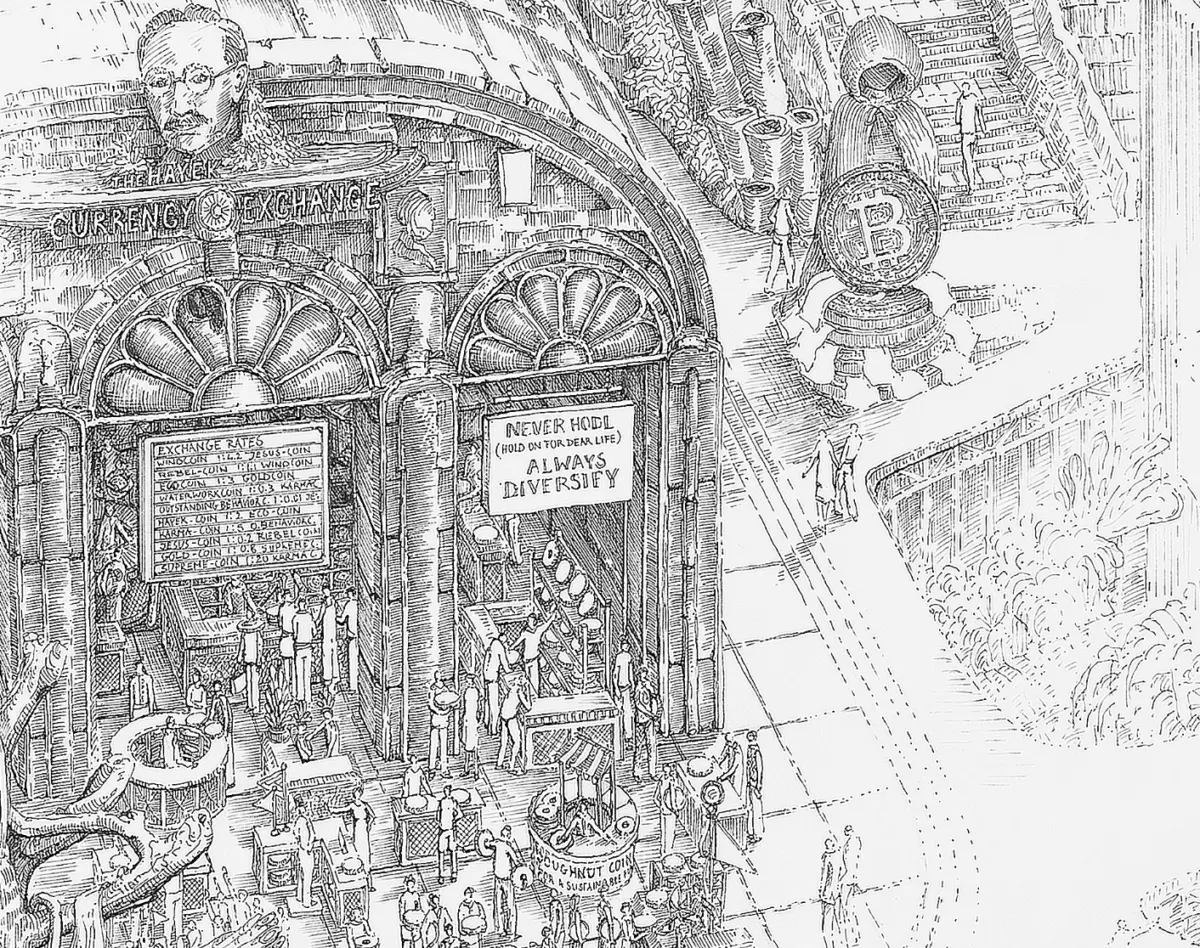
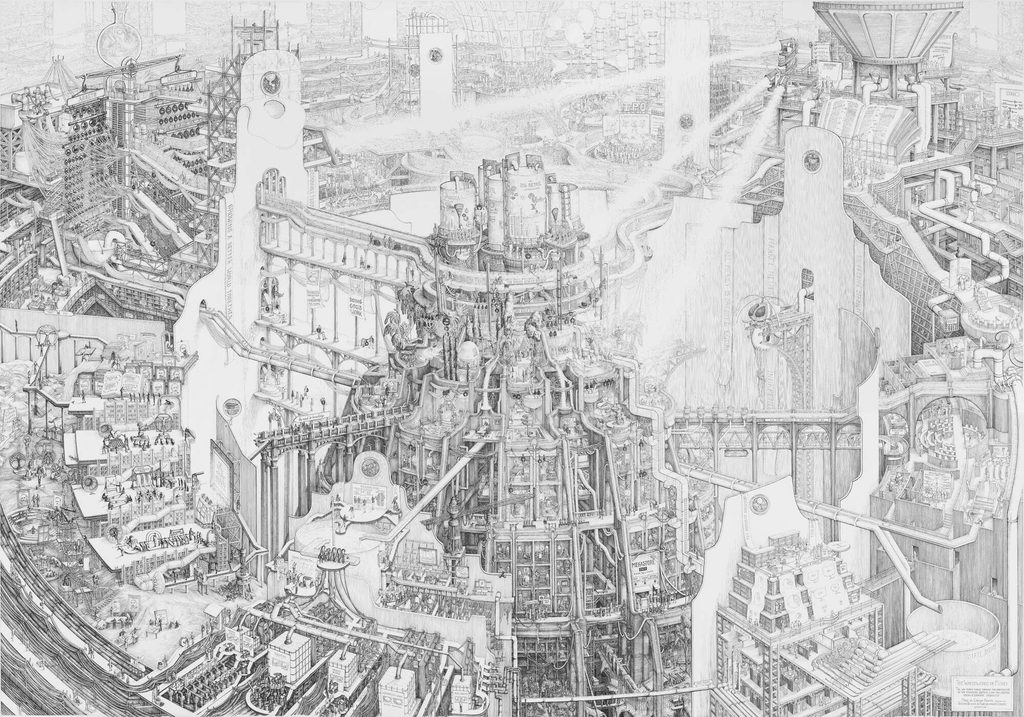
This collaborative project maps the complex, often hidden architecture of the modern financial system through intricate hand-drawn art and animation, rendering the abstract mechanics of monetary policy understandable to the citizens living within it without flattening its inherent complexity. The Waterworks of Money depicts the global financial system as a vast network of reservoirs, channels, and pumps, visually illuminating the precise pathways through which money moves across commercial banks, government treasuries, corporate enterprises, and household accounts. Within this landscape, some sectors receive an abundance of perpetual liquidity, while others remain chronically dry. The resulting artwork operates simultaneously as a stunning visual masterpiece, an educational tool, and a sharp critical examination of structural financial power.
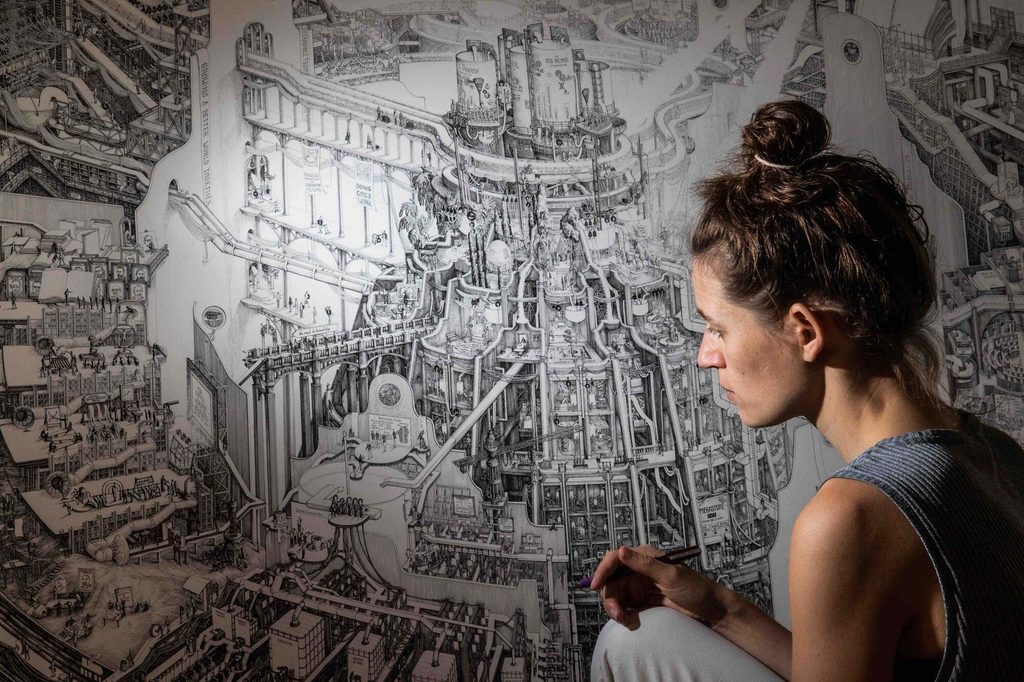
The project emerged from more than two years of rigorous academic and investigative research, which included in-depth interviews with over 100 experts spanning commercial banking, government institutions, academic economics, and monetary reform movements. Kingma dedicated more than 2,200 hours of painstaking labor to translate these dense investigative findings into an intricate, sprawling architectural landscape. Meanwhile, Bollen—whose investigative journalism regularly scrutinizes the inner workings of the financial sector—and van der Linden, whose academic work explores alternative monetary theories and reform, helped develop the robust economic research, historical foundations, and conceptual narratives that underpin the visual art.
Unveiling the Mechanics of Modern Banking
The project explores multiple scenarios for the future of money, including a monetary system shaped profoundly by bitcoin. As bitcoin gradually integrates into traditional finance, it either challenges existing structures of centralized financial power or eventually becomes absorbed by them, an ambivalent dynamic that the project’s collaborators have closely observed. Ahead of the Bitcoin Amsterdam conference, where Bollen is scheduled to participate in multiple panel discussions, the creators sat down to discuss the necessity of making money visible, the deep relationship between monetary design and socio-economic inequality, and the evolving place of bitcoin within Europe’s broader financial future.
Reflecting on the misconceptions surrounding the financial system after years of research, Bollen noted a striking paradox. What surprised him most was that while many professionals inside the financial industry possess deep, specialized knowledge of their specific corner of the market—whether that involves interest rate derivatives, asset management, or mortgage lending—very few individuals can oversee or comprehend the larger system in which they operate.
A fundamental misunderstanding persists regarding how new money enters the economy. Ordinary citizens and even many professionals fail to realize that commercial banks create brand-new money out of thin air when they issue a loan, rather than merely acting as passive intermediaries that pass on the accumulated savings of their depositors. Bollen pointed out that during their research phase, they spoke with numerous bankers, including the chief executive officer of a major bank, who were entirely unaware that they were working for a money-creating institution. He argued that if society wishes to improve financial literacy, reform must begin in schools and universities, noting that many economic textbooks still present outdated models and that economics education largely ignores the mechanics of credit creation. Even elite institutions have perpetuated these myths; as Bollen highlighted, the Riksbank’s prize in economics was awarded as recently as 2022 for research that continued to present banks as mere financial intermediaries.
The Roots of Inequality and Asset Inflation
One of the central theses explored in The Waterworks of Money is that liquidity does not flow evenly through society. In recent years, housing affordability has deteriorated into a profound social crisis across Europe and the United States, while asset prices and financial wealth have increasingly decoupled from stagnant wages. When asked how much of this widening inequality stems directly from the structural design of the monetary system rather than broader economic forces, Bollen explained that while exact quantification is difficult due to the multitude of contributing factors, the monetary system undoubtedly exacerbated inequality during prolonged periods of ultra-cheap credit.
He referenced an observation made by hedge fund billionaire Ray Dalio in 2019, who remarked that money was essentially free for those deemed creditworthy, while remaining entirely out of reach for those without accumulated capital or established credit scores. Cheap credit showered upon wealthy individuals and large multinational corporations—who frequently deployed these funds for aggressive share buybacks and mergers and acquisitions—artificially drove up the market value of equities and residential real estate. This dynamic meant that commercial bank money creation generated a very specific and regressive form of inflation: asset inflation. Wealthy households and massive corporations that already owned these assets profited exponentially more from central bank interventions and loose monetary policy than everyday citizens or small businesses lacking equal access to subsidized credit.
Translating Complexity Through Art
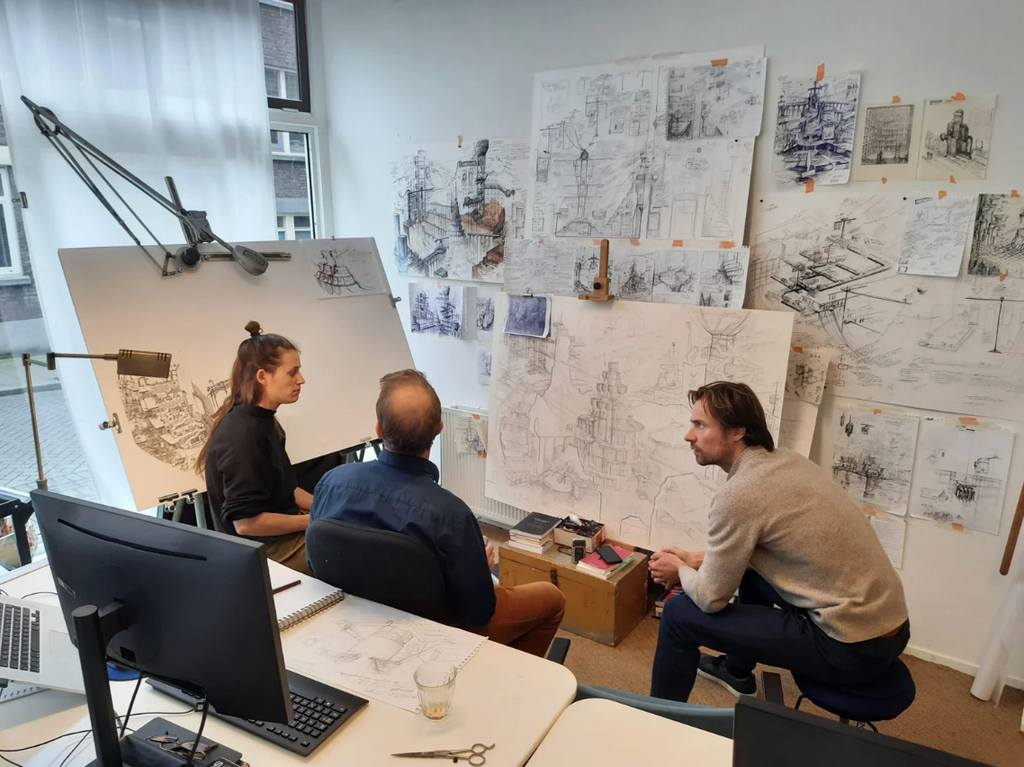
Translating these dense, systemic realities into a cohesive visual medium presented profound artistic challenges. For Carlijn Kingma, the most difficult aspect was capturing the intricate web of connections binding the entire financial apparatus together. Water emerged as the ideal metaphor, aligning naturally with existing financial terminology such as liquidity, cash flows, and drying economies. The metaphor provided a logical framework for drawing the pipes, reservoirs, and canals that link different economic actors.
However, absolute technical accuracy required compromises. Money takes on numerous complex forms throughout the economy, ranging from traditional commodity money and public legal tender to private credit money, short-term debt instruments, and repurchase agreements that function as near-money. Depicting every single nuance of monetary liquidity as physical water flowing through a single drawing proved impossible, requiring a careful balance between artistic license and structural fidelity.
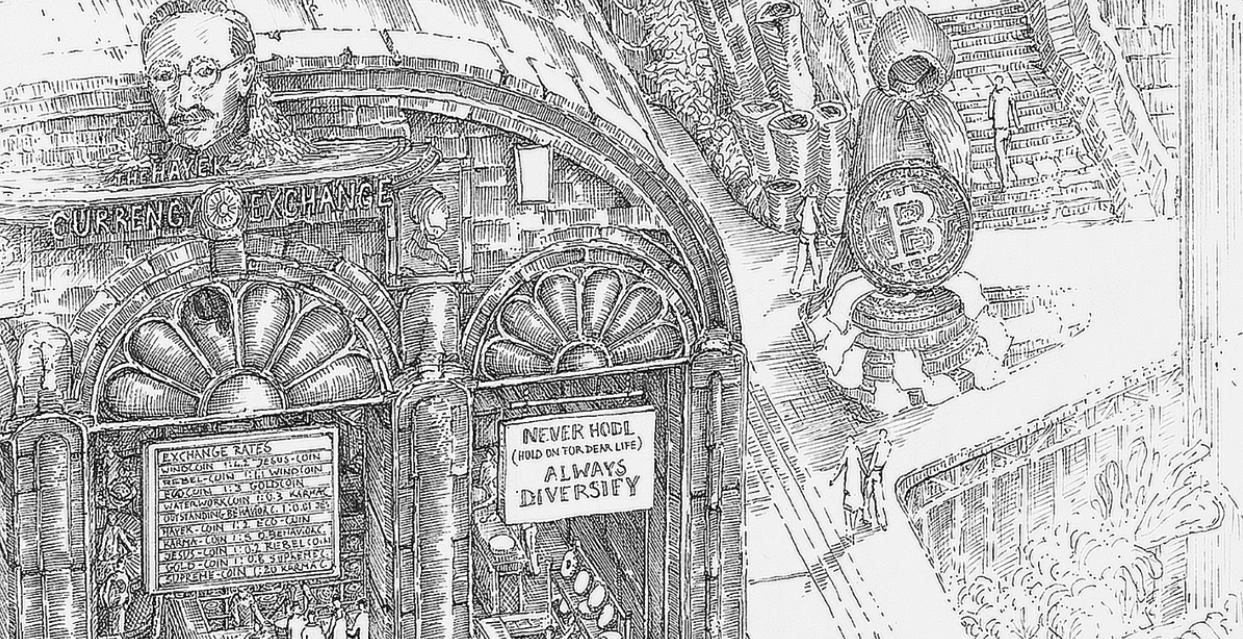
When exhibited to diverse audiences—ranging from contemporary art enthusiasts to professional economists and the bitcoin community—the reception has varied based on prior knowledge. Visitors equipped with deep financial literacy often find subtle humor embedded within the sprawling canvas, such as the satirical renaming of the Basel III post-crisis banking regulations to "Babel III," referencing the massive stack of rulebooks akin to biblical proportions. Similarly, the project’s speculative bitcoin future scenario, titled The Republic of a Thousand Coins, features visual jests aimed at central bankers, including the depiction of former Federal Reserve Chair Alan Greenspan rendered as an inflatable doll. Such humor resonates most strongly with audiences well-versed in monetary history, though Kingma emphasized that art ultimately serves as an accessible gateway, providing all viewers with a visual starting point to discuss the profound social consequences of monetary flows.
Systemic Fragility and the Shadow of 2008
Addressing whether recent decades have witnessed a genuine transformation in financial power or merely a repackaging of the unresolved problems of 2008, Martijn Jeroen van der Linden noted a persistent lack of structural reform. Following the global financial crisis, mainstream policymakers and think tanks agreed that the banking sector required urgent repair. In Europe, the influential de Larosière Group identified excessive leverage, opaque securitization, shadow banking risks, and fragmented cross-border supervision as the root causes of the meltdown, prompting a wave of stricter regulations and coordinated oversight.
However, because the foundational architecture of fractional-reserve banking remained entirely unaltered, fundamental systemic transformation never materialized. This underlying fragility was starkly demonstrated during the banking tremors, when authorities swiftly abandoned crisis playbooks to deploy massive state interventions, such as U.S. guarantees covering all deposits at Silicon Valley Bank well beyond statutory limits, and Swiss state backing for the emergency rescue of Credit Suisse by UBS. Van der Linden argued that despite the proliferation of regulatory compliance, the inherent structural danger of funding long-term illiquid loans with runnable short-term deposits remains unresolved. The modern banking system survives exclusively because of massive public safety nets and extraordinary privileges granted by governments.
While massive, powerful non-bank financial institutions have undeniably risen to prominence in recent years, van der Linden emphasized a crucial distinction: unlike commercial banks, these asset managers do not occupy a pivotal role in the direct creation of money and the operation of core payment infrastructures.
Bitcoin, History, and the Future of Money
Bitcoin originated as an explicit attempt to establish a decentralized monetary network entirely independent of governments and commercial banks. Yet, its increasing adoption by traditional financial institutions and massive asset managers risks replicating the exact concentrations of power it initially sought to dismantle. According to van der Linden, while financialization has granted bitcoin greater asset legitimacy through institutional capital inflows, the growing reliance on paper claims and financial intermediaries has occasionally compromised its foundational promise as a peer-to-peer payment network.
Concurrently, the rise of bitcoin and stablecoins has exerted competitive pressure on legacy commercial banks, forcing them to innovate their sluggish payment rails, as evidenced by initiatives like the Wero digital wallet launched by European banks. Yet, van der Linden views these institutional updates as distinct from true structural reform of money and banking.
Comparing bitcoin’s economic design to historical monetary experiments, Thomas Bollen observed structural similarities between bitcoin and full-reserve banking. Because a bitcoin represents a bearer asset rather than a liability or a claim on a third party, it carries zero counterparty risk of a traditional bank run—a vulnerability inherent to commercial bank deposits, which constitute mere promises to return funds that banks can never honor simultaneously if every depositor demands withdrawal at once.
Amsterdam itself boasts a rich history of monetary experimentation, dating back to the establishment of the Amsterdamsche Wisselbank in 1609, widely regarded as the world’s earliest central bank. Initially operating on full-reserve principles where every guilder was backed by hard coin in the vault, the institution ultimately collapsed only after it covertly began issuing excessive loans to the Dutch East India Company. Bollen noted that this historical trajectory highlights the enduring peril facing all monetary experiments, pointing to modern crypto enterprises that inadvertently replicated traditional banking pitfalls by lending out customer funds behind the scenes, culminating in high-profile collapses such as the spectacular implosion of Sam Bankman-Fried’s FTX exchange.
Thomas Bollen is scheduled to participate in two panel discussions at the upcoming Bitcoin Amsterdam conference on the Treasury Stage. He will appear on the panel examining Europe’s Monetary History & Future: Austrian Economics, Banks & Bitcoin alongside Rahim Taghizadegan and Willem Middelkoop, as well as the panel titled Staat vs. de Markt: Hoeveel Overheid Hebben We Nodig in Geld? alongside Paul Buitink and Simon Lelieveldt.