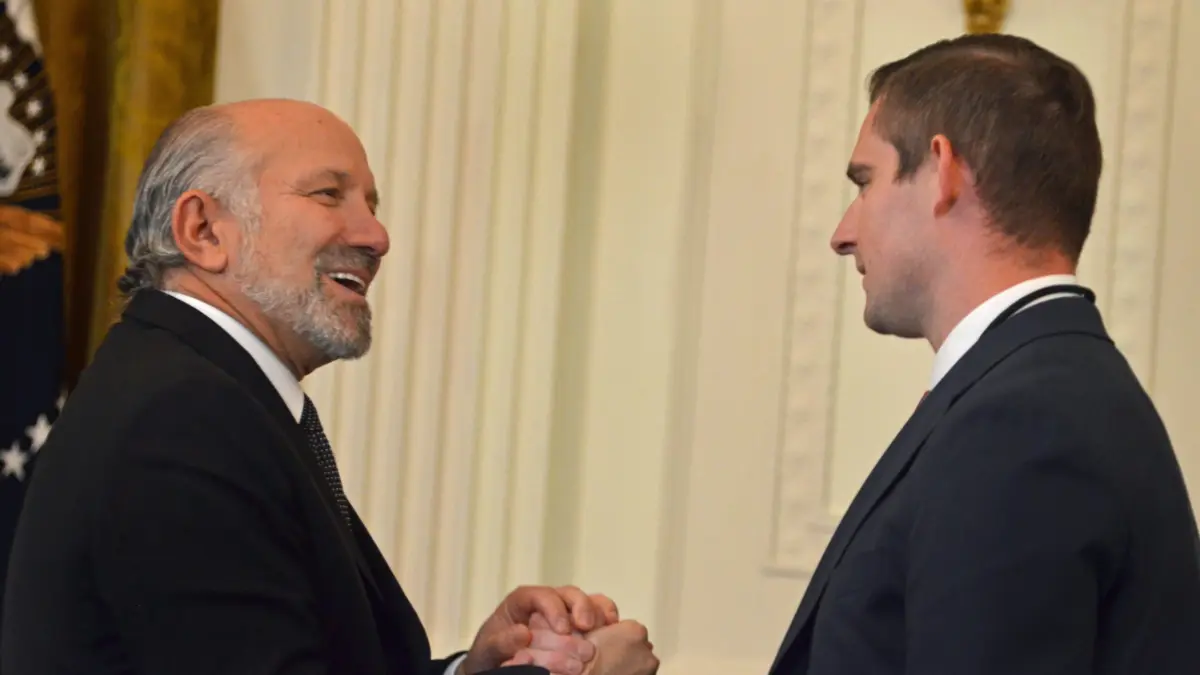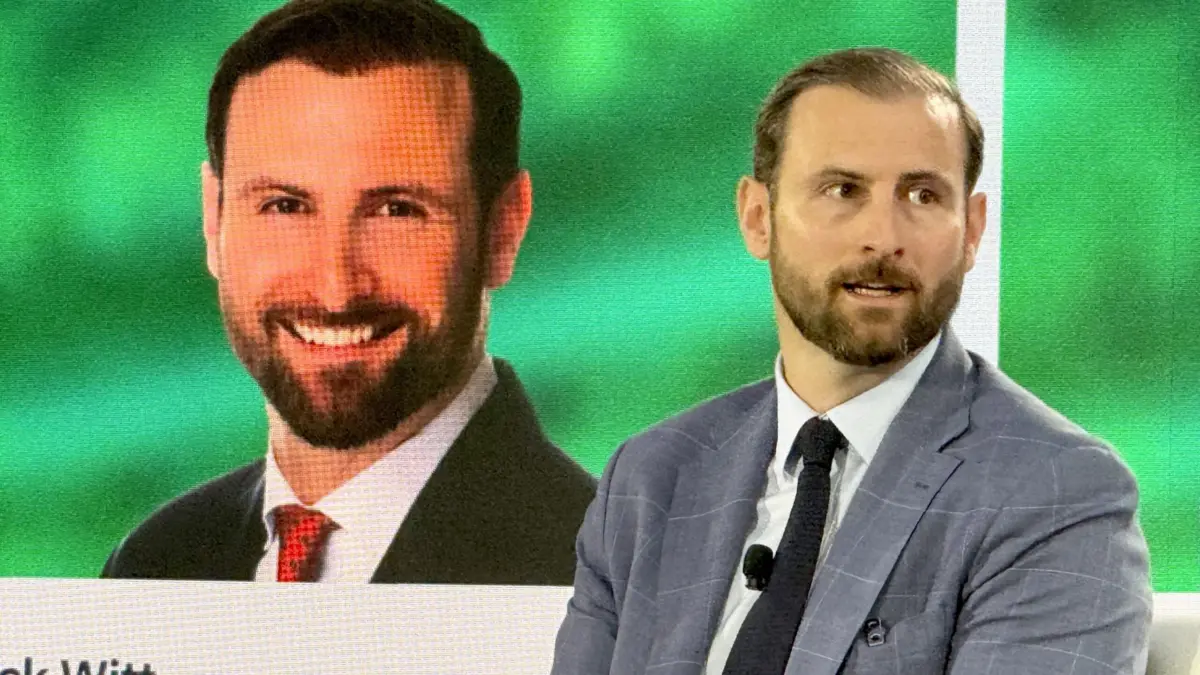
The departure of President Donald Trump’s final white-collar crypto adviser, Patrick Witt, has left the White House digital assets office completely vacant, casting a shadow of uncertainty over the administration’s remaining policy goals for the sector. Witt’s exit marks the end of a turbulent chapter for the White House’s dedicated crypto unit, which began with high-profile appointments and sweeping legislative ambitions when President Trump returned to office.
With Witt’s departure, the administration’s institutional focus on digital asset policy appears to have paused. The shift was underscored recently when the president appointed a new artificial intelligence overseer, notably stripping the role of its former crypto remit. Currently, it remains unclear who, if anyone, is managing day-to-day digital asset policy within the West Wing, even as lawmakers on Capitol Hill ponder whether the final weeks of the congressional session following the November elections might still yield legislative movement for the industry.
While the White House retains a broader staff of policy advisers, and various regulatory agencies—including the Securities and Exchange Commission—continue pursuing crypto-related agendas, no new name has been explicitly attached to Trump’s in-house digital asset initiatives. A White House official told CoinDesk on Thursday that Witt’s work was deeply appreciated, offering wishes of "the best of luck in the future endeavors" while declining to comment on who would step in to take over the portfolio.
"Crypto and Clarity Act will continue to be a priority for the president," the official added, referencing the stalled market-structure legislation.
The White House’s digital assets policy work was never built as a sprawling federal operation, but its advisers commanded significant attention and provided a vital administrative endorsement for the industry’s objectives. The initiative initially took shape several weeks before Trump assumed office in 2025, when the president-elect named former PayPal executive David Sacks as his incoming AI and crypto czar.
Shortly after, Trump tapped Bo Hines, a former college football player with little prior political footprint, to serve as the first director of the newly minted President’s Council of Advisors for Digital Assets. What started as a solo mission eventually expanded to include a deputy. Hines rapidly became the public face of the administration’s crypto push, holding relentless meetings with industry insiders and commanding attention on major conference stages. His roughly eight-month tenure culminated in a landmark legislative victory for the sector: the passage of the Guiding and Establishing National Innovation for U.S. Stablecoins (GENIUS) Act into law.
The legislative win was followed by a high-profile White House signing ceremony and celebration, where many of the most prominent executives in the cryptocurrency space secured front-row seats. Less than two weeks later, the administration published a comprehensive crypto agenda detailing specific strategies to solidify American leadership in digital financial technology.
Following his success with the stablecoin law, Hines transitioned out of government to run the U.S. arm of Tether, the industry’s leading stablecoin issuer. At the same time, a consulting firm called Nxum, which Hines had established alongside his father and another partner, reportedly received millions of dollars as the primary service provider for a newly formed political action committee. That super PAC was primarily funded by Cantor Fitzgerald—Tether’s U.S. financial partner—and was led by a Tether executive.
More recently, the Wall Street Journal reported that Hines’ firm, Nxum, received consulting payments from Tether while Hines was actively working inside the White House on the formulation and passage of the GENIUS Act.
As Hines departed, his deputy on the advisory council, Patrick Witt, stepped up to take the reins as executive director. Like his predecessor, Witt was a former college football player, but he brought a substantially deeper reservoir of Washington experience to the role. Witt quickly became the public champion for the administration’s push to pass the Digital Asset Market Clarity Act. Throughout months of intense and often frustrating negotiations, Witt made little effort to conceal his irritation, frequently using social media platform X to air grievances against lawmakers and officials he believed were obstructing the Senate bill designed to erect a comprehensive U.S. regulatory framework for digital asset markets.
The legislative process grew increasingly complicated as the year progressed. David Sacks stepped down from his broader czar role in March, leaving Witt and his deputy, Harry Jung, to shoulder the burden of managing the administration’s official crypto stance. These efforts were further entangled by intense political scrutiny over President Trump’s personal business ventures in the crypto industry. Congressional Democrats continuously demanded that senior government officials be legally blocked from holding personal crypto ties.
As negotiations dragged deeper into the year and edged closer to upcoming elections, the White House floated several significant concessions. These proposed compromises would have introduced unprecedented ethics constraints regarding the president’s personal digital asset involvement, though Democratic lawmakers ultimately concluded the terms did not go far enough to eliminate conflicts of interest.
Witt had acknowledged back in July that he faced looming military-service commitments with the Georgia National Guard, yet he chose to remain at his post to see the Clarity Act negotiations through to the end, even as his deputy departed to join Hines at Nxum. Despite his efforts, the legislation hit an insurmountable political roadblock just a month ago, failing to advance during a crucial Senate floor vote before the chamber adjourned for an extended recess ahead of the elections.
Following growing rumors regarding his exit, Witt confirmed his departure late Wednesday night with a post on X. He expressed gratitude to the agency chiefs and lawmakers who had collaborated with him on the Clarity initiative, stating that with such regulators and elected officials in place, he rested easy knowing the future of American digital asset innovation remained bright. He confirmed plans to transition into the private sector.
For crypto insiders, Witt’s departure leaves a palpable vacuum, creating uncertainty over who they will interface with now that their immediate hopes for market-structure legislation have largely fizzled.
The uncertainty was compounded earlier this month when President Trump moved to re-establish an artificial intelligence overseer, hiring former SEC Chairman and current intelligence director Jay Clayton to lead his new Super Intelligence Force. Notably, the resurrected oversight role makes no mention of a crypto remit. While artificial intelligence and cryptocurrency share overlapping technological and regulatory territory, Clayton brings a complicated history with the digital asset industry, having led the SEC during the period when the agency initiated its controversial regulatory enforcement approach.