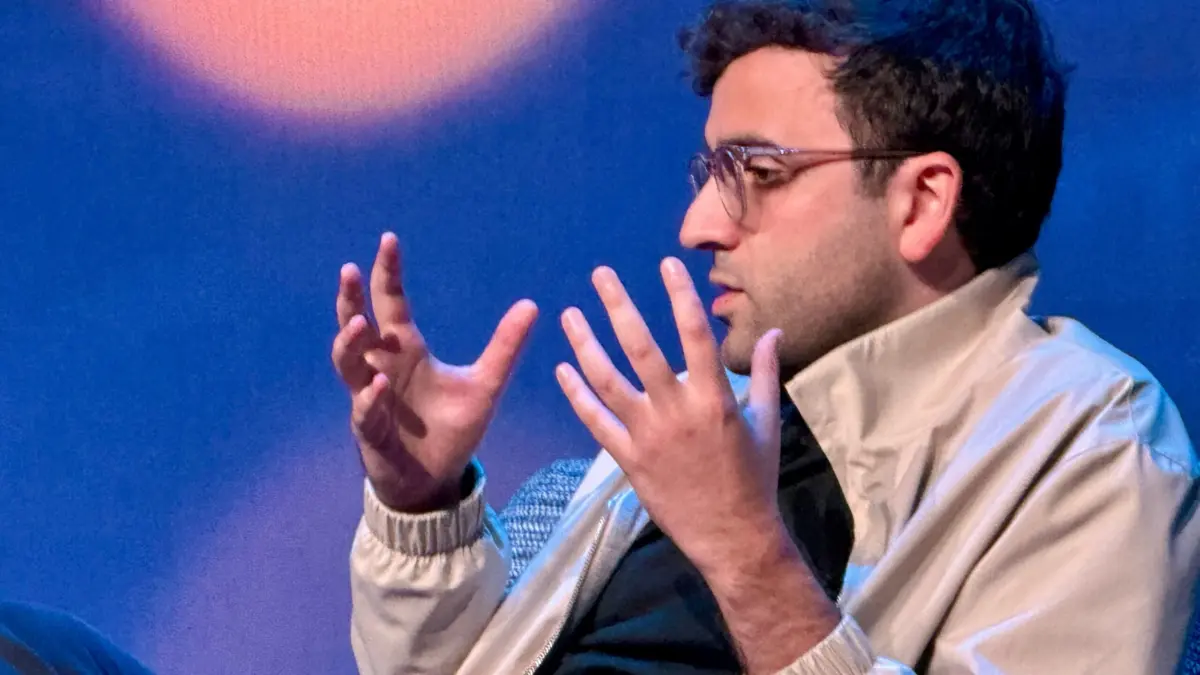
ARLINGTON, Va. — The high-stakes legal battle over the future of prediction markets in the United States has reached a critical juncture, with the leadership of platform giant Kalshi expressing strong optimism about the eventual outcome. Speaking at the DC Fintech Week event near Washington, Kalshi CEO Tarek Mansour said he feels "pretty good" about the pending judicial decisions that will determine whether the rapidly expanding industry remains under federal oversight or gets pushed entirely out of the country.
The core of the ongoing dispute is not merely a turf war between state gambling regulators and federal watchdogs, according to Mansour. Instead, he framed the conflict as a stark existential choice for the American financial landscape: whether innovative prediction markets will be permitted to operate legally within the United States under established federal frameworks, or whether regulatory hostility will force these platforms and their capital overseas.
The controversy has intensified as event-contracts platforms—particularly those incorporating sports-related outcomes—have experienced explosive growth and mainstream adoption. A growing coalition of state-level authorities has challenged Kalshi and rival firms in court, arguing that offering event contracts tied to sporting events constitutes unauthorized, illegal sports wagering that fundamentally falls under the jurisdiction of state gambling commissions.
Conversely, Kalshi and its primary federal regulator, the Commodity Futures Trading Commission (CFTC), have pushed back aggressively in the judicial system. They maintain that the platform’s offerings are properly classified as financial derivatives and that the CFTC serves as the sole, appropriate regulatory body capable of overseeing these nationwide markets.
The legal battle has already cut a winding path through the federal court system, resulting in a fractured appellate landscape. With different federal circuit courts reaching contradictory conclusions—one major ruling supporting Kalshi’s business model alongside two decisions favoring the states’ regulatory claims—the dispute has naturally gravitated toward the highest court in the land. New Jersey recently formally asked the U.S. Supreme Court to step in and resolve the conflicting interpretations.
This high-profile petition has attracted widespread attention from major stakeholders across corporate America and professional sports. Among those weighing in on the debate is the National Football League, which joined a growing chorus of entities pushing back against the expansion of prediction markets as the Supreme Court considers whether to grant certiorari.
Addressing the broader regulatory philosophy underpinning his company’s operations, Mansour argued that prediction markets fit naturally into the long-standing legal definitions governing commodities and financial risk management. He reflected on the trajectory of the Commodity Exchange Act, describing the foundational legislation as a remarkably adaptable framework that historically allowed the U.S. economy to evolve smoothly from traditional agricultural futures markets into complex trading ecosystems for oil, metals, and eventually, intangible financial products such as swaps.
Rejecting the frequent assertion by state regulators and sports leagues that sporting outcomes carry no legitimate economic consequences, Mansour offered a blunt counterargument during his appearance in Arlington. "The notion that sports does not have economic consequence is ludicrous," he told the audience, pointing to the massive commercial footprints, media rights, and broader economic dependencies tied directly to the athletic industry.
In addition to addressing the macro-level regulatory battles facing his company, Mansour used the platform at DC Fintech Week to confront recent scrutiny regarding trading patterns on his platform. Over the past month, observers and market analysts raised questions regarding high volumes in bitcoin and ether perpetual-futures markets on Kalshi, pointing to unusual, repetitive trade sizes that dominated a significant portion of the platform’s daily volume.
The public discussion surrounding these concentrated trading behaviors had sparked considerable debate on social media platforms, particularly on X, formerly Twitter. Addressing what he characterized as online noise, Mansour dismissed the swirling speculation, remarking that "there’s a lot of crazy" circulating across digital platforms regarding the data. Reasserting explanations previously provided to the market, Mansour reiterated that the frequently recurring, standardized trade sizes were standard activity driven by institutional market makers providing necessary liquidity to the young market.
As the legal timeline presses forward and anticipation builds around whether the U.S. Supreme Court will ultimately accept the case, Kalshi’s leadership remains steadfast. Mansour’s remarks underscore the high-stakes reality facing both federal regulators and innovative financial startups as they await a definitive ruling that will shape the regulatory architecture of American financial markets for years to come.