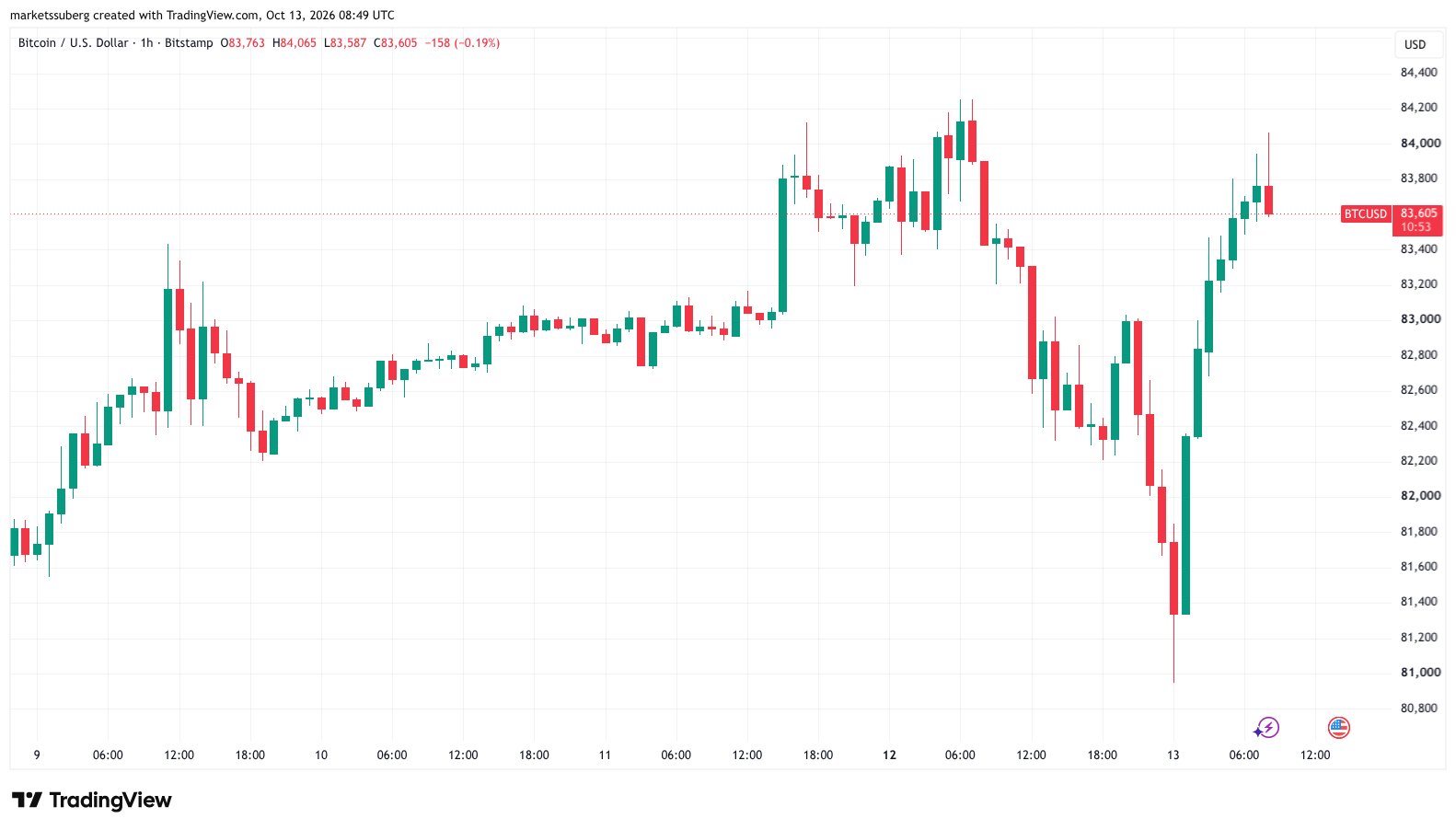
Bitcoin (BTC) staged a notable recovery on Tuesday, climbing back toward the $84,000 threshold as digital asset markets successfully decoupled from a fresh wave of panic sweeping through South Asian equity markets. Rather than mirroring the steep losses suffered by traditional financial exchanges in the region, the leading cryptocurrency demonstrated renewed resilience, recouping ground lost at the start of the week.
Data from TradingView indicated that the BTC/USD pair advanced by more than 2.5% on Tuesday, scaling to $83,944 on Bitstamp and effectively reversing the downward pressure experienced during Monday’s sessions. This upward trajectory allowed Bitcoin to maneuver comfortably within the upper boundaries of its established local trading range, which has largely oscillated between $80,000 and $87,000 in recent weeks.

Market observers noted that this performance stood in stark contrast to broader macroeconomic jitters, signaling a shifting dynamic in how the cryptocurrency handles external traditional market shocks compared to previous quarters.
South Korea’s KOSPI Loses 200-Day Trend Line as Panic Returns
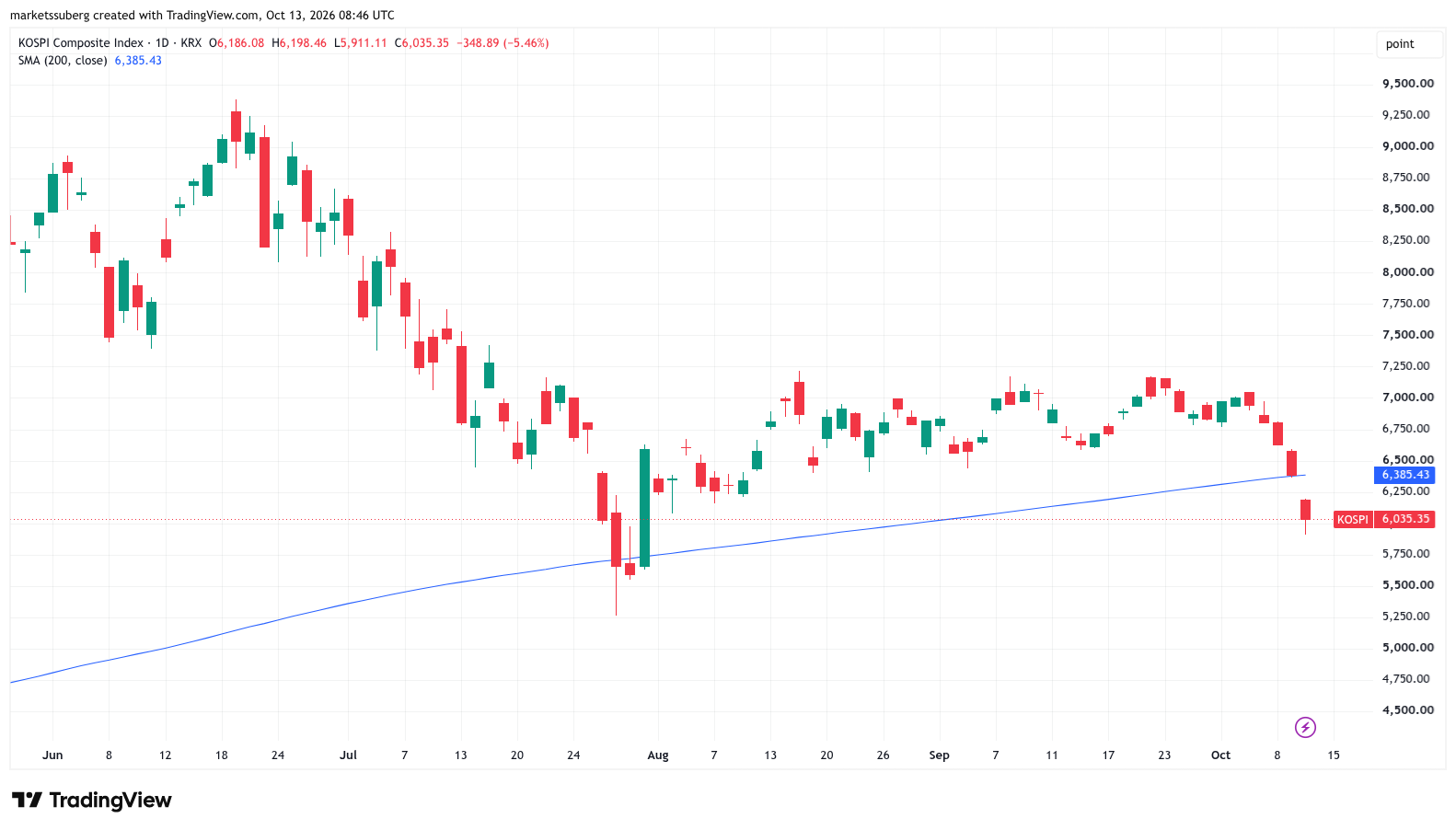
The calming resilience in crypto stood out against a turbulent backdrop in traditional finance, where a fresh tech-driven sell-off gathered intense momentum on South Korea’s KOSPI Composite Index. The regional benchmark extended its losses for the week to a sharp 7.4%, plunging below its critical 200-day moving average for the first time since late July and triggering renewed anxiety among institutional and retail participants alike.
Semiconductor equities bore the brunt of the downward pressure. SK Hynix closed the session more than 10% lower, compounding a difficult period for the sector that followed lower-than-expected third-quarter earnings reported by Samsung just a week prior. Foreign investors have continuously offloaded Korean equities, shedding approximately 173 trillion won—equivalent to roughly $129 billion—worth of SK Hynix and Samsung shares since the beginning of the year. This capital flight has accounted for the overwhelming majority of year-to-date sales across the broader KOSPI index.
The unfolding weakness bore striking similarities to the severe market correction witnessed in August, when escalating concerns over the pace and profitability of the artificial intelligence boom, alongside associated corporate debt obligations, triggered sharp, cascading losses that quickly bled into global financial markets.
Speaking to CNBC on Monday, Vey-Sern Ling, a senior equity advisor at UBP, captured the prevailing market sentiment. He noted that investors remain highly jittery, actively seeking catalysts to lock in profits on AI-related stocks that have outperformed the broader market over the course of the year, with a particular focus on memory chip manufacturers.
Ling also pointed to growing competitive pressures from mainland China as an increasingly complex challenge for South Korean investors, though he acknowledged that the Chinese domestic technology sector continues to navigate significant technological hurdles of its own.
Bitcoin Price Rebounds Despite Waning ETF Demand
Unlike the sharp contagion observed during previous broad-market downturns, Bitcoin managed to avoid a copycat slump this time around. Analysts suggested that the digital asset’s relative strength was underpinned by broader expectations surrounding central bank monetary policy adjustments.
Market participants are currently bracing for major United States inflation data slated for release later in the week, which precedes the United States Federal Reserve’s upcoming rate decision scheduled for October 28. Current consensus expectations anticipate that interest rates will likely be held steady at their existing range of 2.75% to 4%.
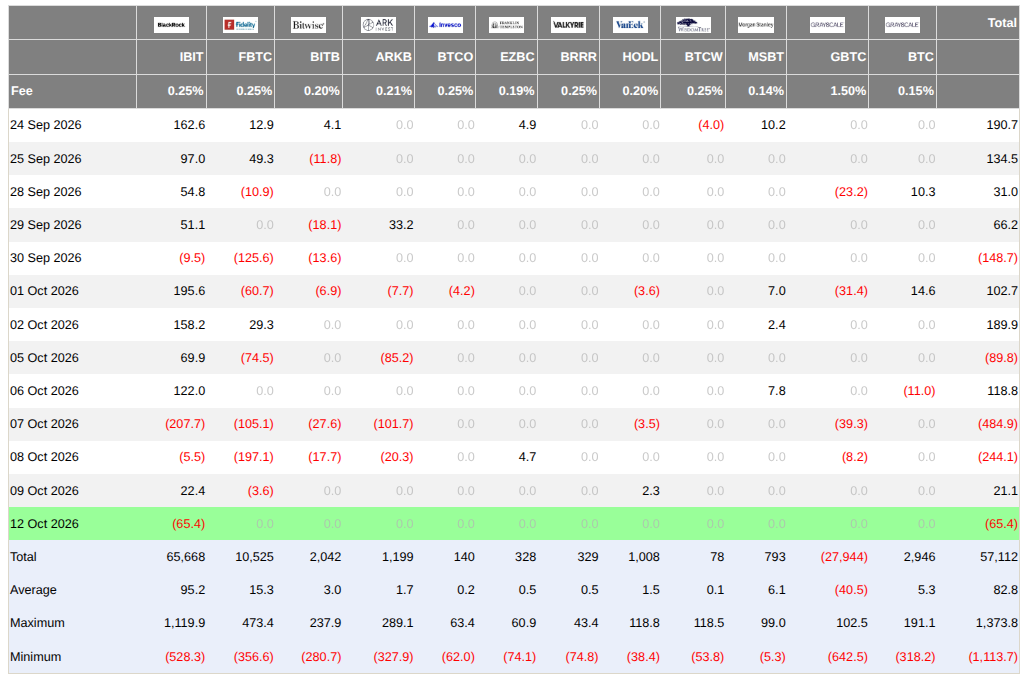
Intriguingly, Bitcoin’s ability to rally toward $84,000 occurred despite a noticeable cooling of institutional demand via regulated investment vehicles. Investor appetite for direct spot exposure has tapered off through October, with US spot Bitcoin exchange-traded funds recording aggregate net outflows of $451 million since the beginning of the month. This included an additional $69 million in net outflows registered on Monday alone, according to data compiled by Farside Investors.
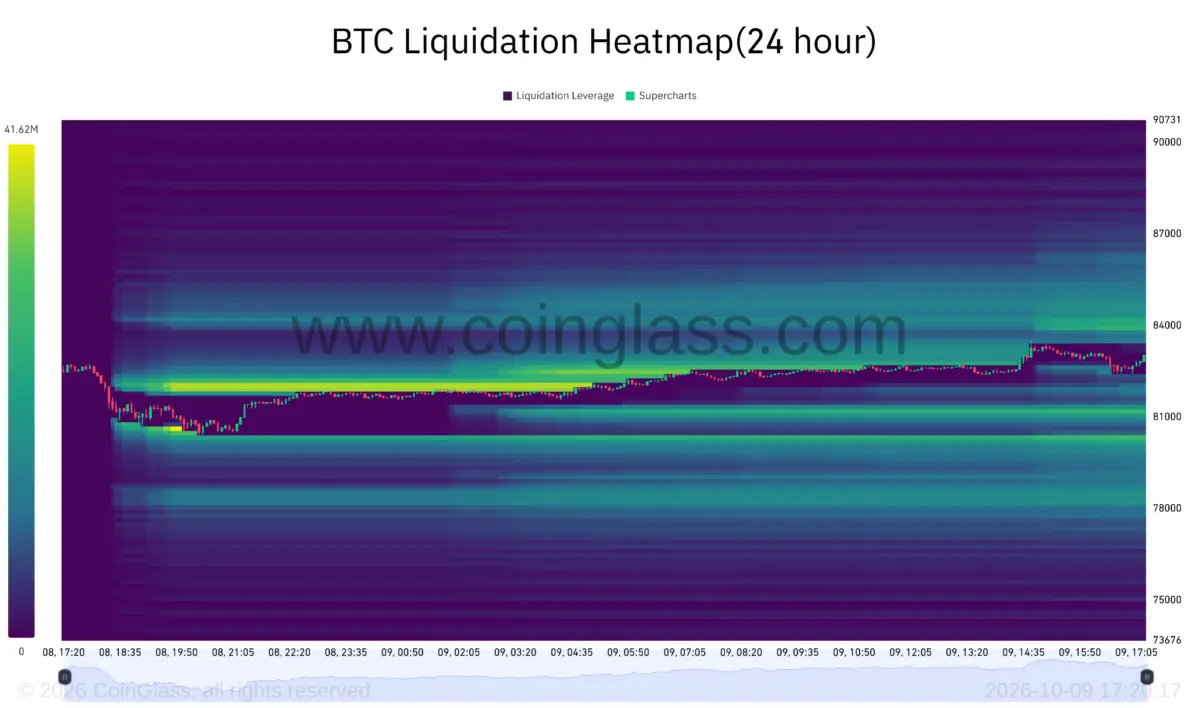
Despite these persistent ETF outflows, cryptocurrency derivatives and spot order books revealed intense positioning around key psychological levels. Short-term traders observed that bullish market participants faced noticeable headwinds attempting to sustain momentum above the $84,000 mark on lower time frames. Data sourced from CoinGlass via liquidation heatmaps highlighted a thickening and robust band of ask liquidity concentrated on exchange order books near that specific price zone, suggesting that bulls will need to absorb substantial sell orders if the asset is to break higher out of its current range.