Bitcoin surrendered its early-week gains as Wall Street opened, pulled lower by mounting geopolitical tensions and fresh doubts surrounding a proposed Russia-Ukraine "energy ceasefire." The world’s leading cryptocurrency faced renewed downward pressure as energy markets reacted violently to ongoing conflicts, shifting investor sentiment across both traditional and digital asset classes.
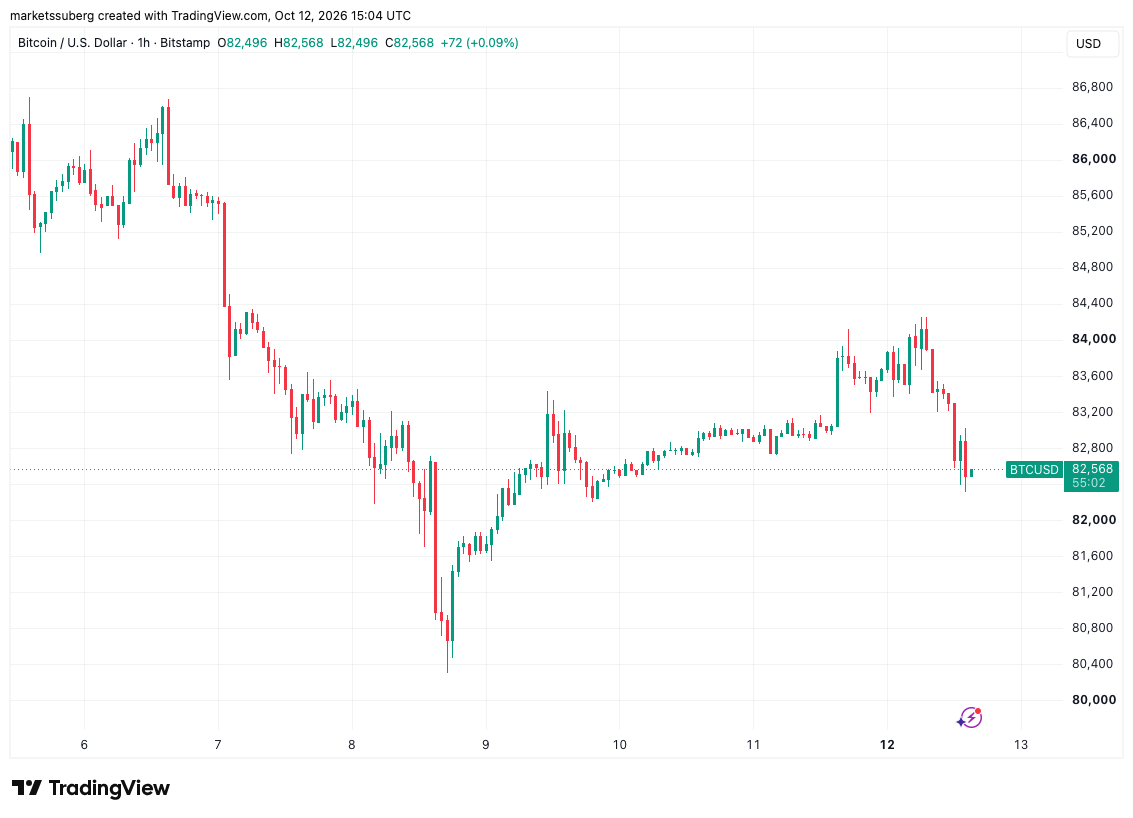
Data from TradingView indicated that BTC/USD climbed to $84,254 on Bitstamp, marking its highest price point since the previous Wednesday. However, momentum quickly reversed, sending the digital asset down by as much as 2.2% as broader macroeconomic and geopolitical headwinds took center stage.

The intraday retreat coincided with sharp accusations from Ukrainian President Volodymyr Zelenskyy, who claimed that Russian forces were continuing to target critical energy infrastructure despite a recent announcement by United States President Donald Trump regarding a moratorium on such strikes. Adding to the unease in global energy corridors, reports emerged from Iran confirming that an oil tanker had been struck and was ablaze in the strategically vital Strait of Hormuz.
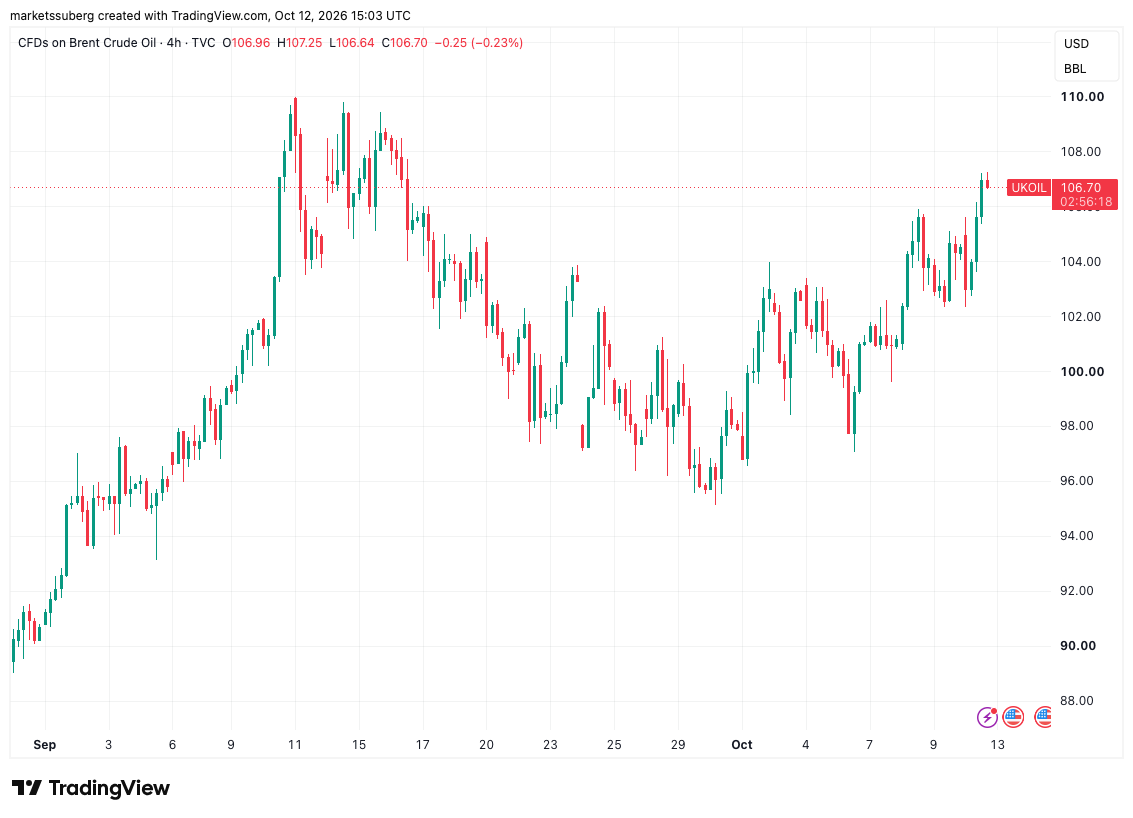
These developments triggered an immediate and aggressive reaction in global oil markets. West Texas Intermediate (WTI) crude spiked past $94 per barrel, while Brent crude surged to $107.25, touching its highest level since September 16.
The sudden escalation in energy prices has placed markets on high alert, arriving just days before the release of critical United States macroeconomic data. Investors are bracing for the Consumer Price Index (CPI) report scheduled for Wednesday, followed by the Producer Price Index (PPI) on Thursday. Financial analysts note that historical data has demonstrated a distinct sensitivity within CPI readings to sudden spikes in global oil prices, compounding inflationary fears that could influence upcoming monetary policy decisions.
Weighing in on the oil market dynamics, Robin Brooks, the former chief FX strategist at Goldman Sachs, suggested that energy traders may have overcorrected by pricing in excessive risk premiums. Analyzing regional flows, Brooks pointed to signs of resilience in Persian Gulf transit volumes despite the ongoing turmoil.
"Oil volumes out of the Persian Gulf are around 13 mb/d compared to a high of 16.5 mb/d a few weeks ago," Brooks noted in a recent commentary. "This is still way better than the height of the war in March and April, but oil prices are back to their highs."
Despite these observations, the immediate spillover effect into financial markets has created a cautious environment for digital assets.
As traders evaluate the path forward for Bitcoin following its rejection near the mid-$84,000 range, insights from institutional trading firm QCP Capital reveal a striking duality within the options market. According to the firm’s latest analysis, a mix of defensive positioning is currently being balanced against ongoing speculation that an upside breakout remains entirely possible given the broader market structure.
"Implied volatility has held firm even as spot settled back into the range, while risk reversals show a less pronounced premium for puts than usual," QCP Capital summarized in its weekly market update. "Read together, the market looks less defensively positioned but still priced for a possible breakout."
The firm further emphasized that a decisive and clean move above the $87,000 threshold would likely shift market focus directly toward the $94,000 region.
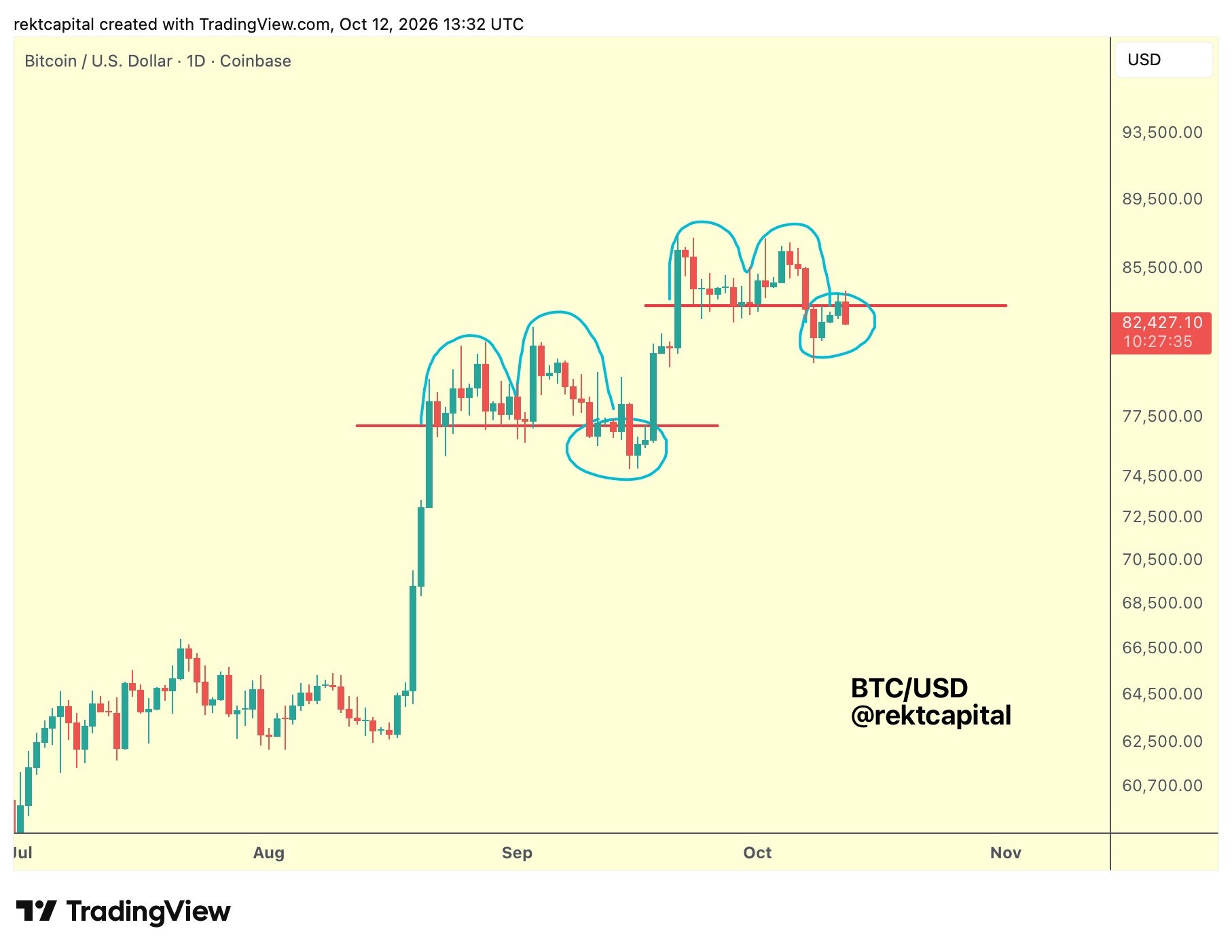
Independent analyst and trader Rekt Capital highlighted $83,400 as a crucial local resistance level for Bitcoin. He pointed out that this current barrier mirrors a similar consolidation and resistance zone observed between $77,000 and mid-September, just before BTC/USD initiated its previous strong upward leg.
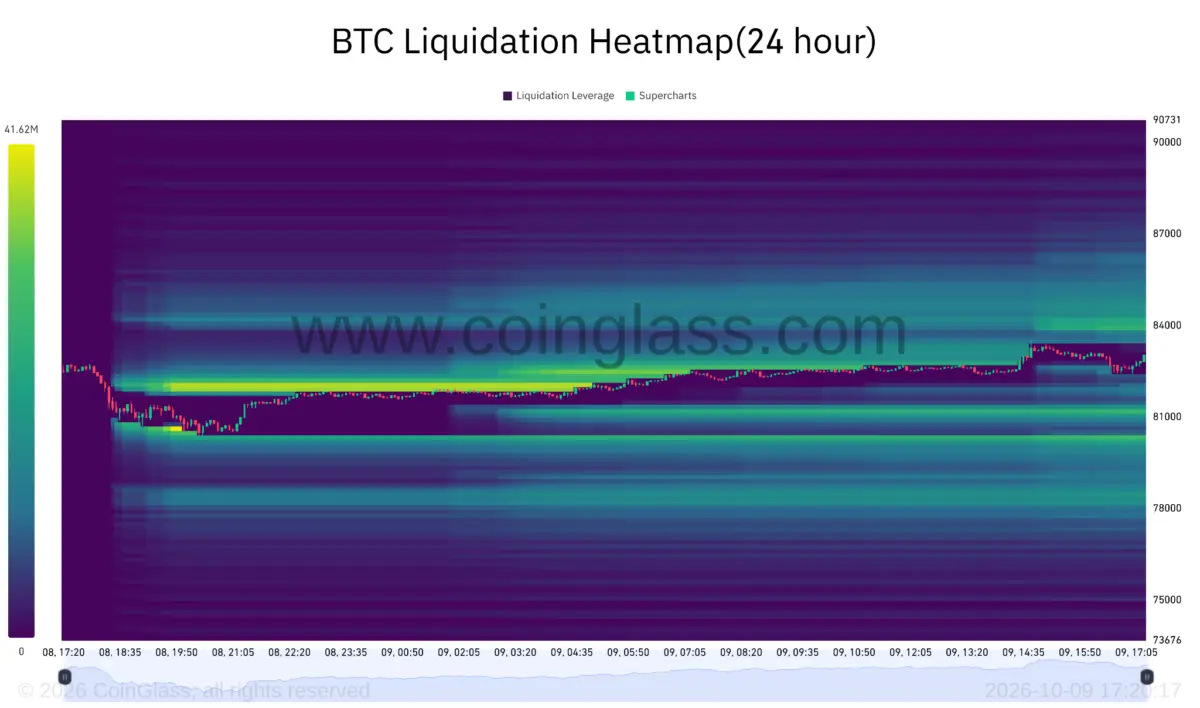
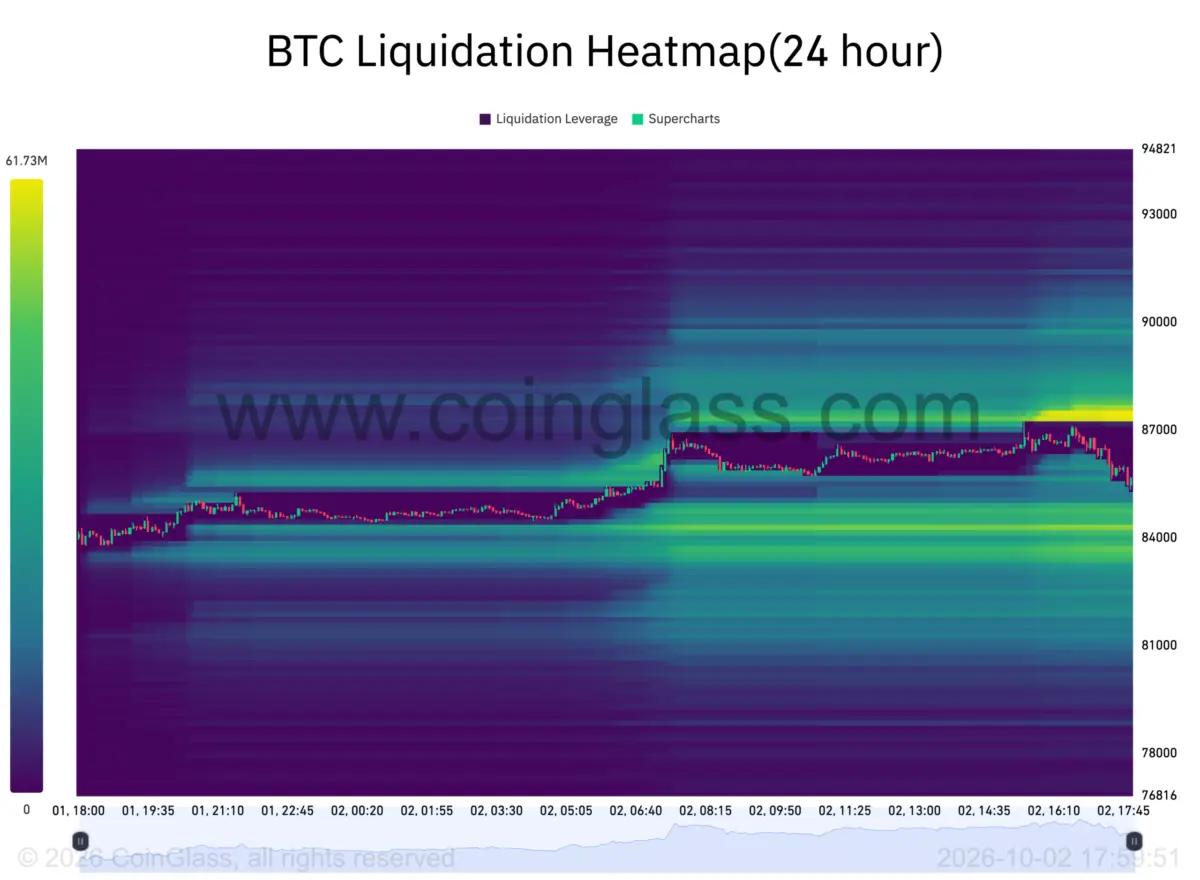
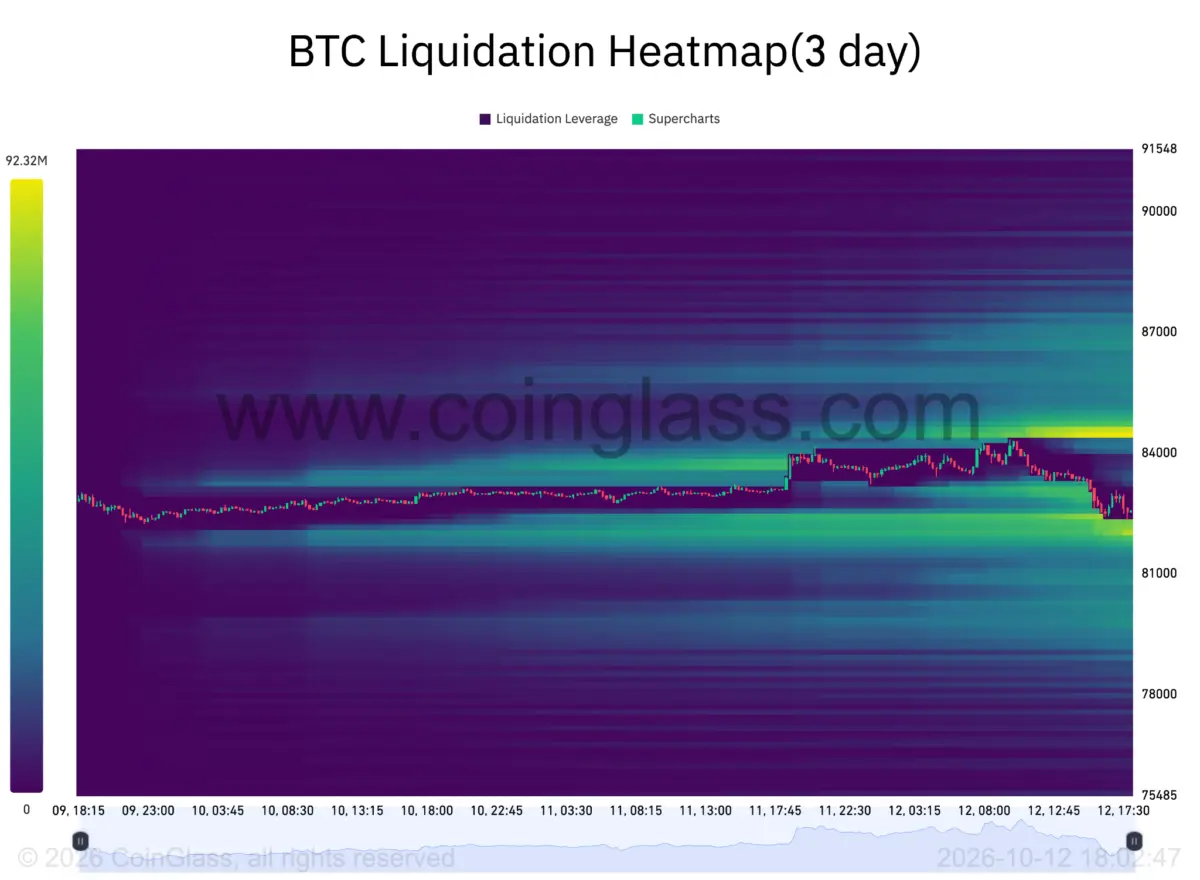
Order book and liquidation data from CoinGlass illustrate where market participants are positioning themselves as the price trends downward. Ask liquidity has clustered heavily around the $84,500 mark across major exchanges, with aggregate open orders at that specific level totaling approximately $180 million. Conversely, significant bid support has begun to materialize around the $82,000 region, serving as the immediate line of defense for spot prices as the trading week progresses.