Meta’s Superintelligence Lab made a significant splash in the artificial intelligence landscape on Monday with the release of a pair of new state-of-the-art models, Muse Wonder and Muse Wonder Full. Representing the tech giant’s first major foray into frontier-tier model development under its current leadership structure, the launch signals a pivotal step forward in the company’s broader ambitions to build advanced, highly capable personal AI systems.
Where the earlier Muse Spark model was intentionally designed as a lightweight, low-latency alternative for swift interactions, the newly introduced Wonder models are substantially larger and considerably more capable. According to Meta’s internal evaluations, these new systems achieve higher benchmark scores and deliver markedly superior results when tackling complex technical tasks, most notably advanced computer programming and software development.
In testing data published alongside the official model card, Meta reports that both the standard Wonder and the advanced Wonder Full models achieve benchmark performance comparable to industry heavyweights such as Fable 5.1 and GPT-6 Astra. This competitive positioning underscores Meta’s aggressive pursuit of leadership in the foundational model space, a sector currently dominated by rival labs like OpenAI and Anthropic.
“Together, they mark the next step on our scaling ladder and a major leap toward personal superintelligence,” Meta’s official research blog post reads, framing the release as a cornerstone of the company’s long-term artificial intelligence roadmap.
That massive scale and computational horsepower are naturally reflected in the commercial pricing structure established for enterprise and developer users. Accessed through the Meta Model API, the standard Wonder model will carry a cost of $4 per million input tokens and $20 per million output tokens. This pricing tier positions Wonder roughly on par with other high-end frontier offerings in the marketplace, such as GPT-6 Sol and Opus 5.5.
However, distribution for the more powerful Wonder Full model will follow a more restricted path. Meta has announced that Wonder Full will not be served through the standard API; instead, it will be made exclusively available to subscribers of Muse Code. Furthermore, both of the newly released models will be integrated under the hood to power the core capabilities of the broader Muse agent ecosystem.
A central focus of Meta’s current AI philosophy is the creation of proactive personal assistants capable of executing complex, multi-step tasks over extended periods. To realize this vision, the company placed heavy emphasis during development on the new models’ capacity to reliably retain, recall, and synthesize information provided by users over time—a critical capability that Meta refers to as "active memory."
To validate and measure improvements in this vital area, Meta highlighted the MemoryBench benchmark, a rigorous evaluation framework designed to test continual learning, long-context retention, and sophisticated memory construction. According to the company’s testing metrics, Muse Wonder currently outperforms competitors like Fable, Opus, and Astra on the MemoryBench scale, demonstrating a superior ability to maintain conversational continuity and historical context.
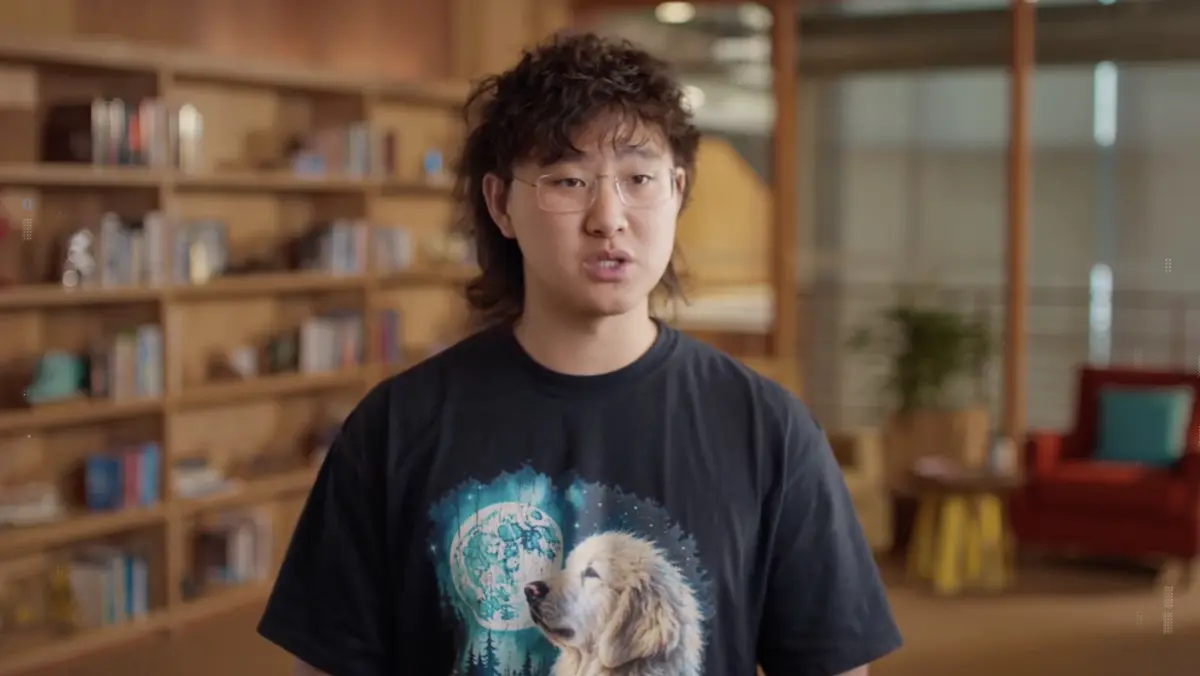
“We put a tremendous amount of effort into making sure your model can remember what’s important to you over days, weeks, months, and beyond,” explained research scientist Kavya Kopparapu in an informational video released alongside the product launch. This emphasis on persistent memory aims to solve one of the most persistent frustrations with modern AI assistants: their historical tendency to forget crucial context across separate sessions or extended workflows.
The unveiling of the Muse Wonder models represents a major milestone for Meta’s AI division, marking its first true frontier model release since Scale AI founder Alexandr Wang undertook a sweeping restructuring of the company’s artificial intelligence efforts in August of last year. In the months following that organizational overhaul, Meta rolled out the lightweight Muse Spark model and introduced the broader Muse agent framework, but largely refrained from releasing the kind of top-tier, heavy-compute frontier models that have defined the public strategies of OpenAI and Anthropic.
The immense computational demands required to train models of this caliber also shed light on Meta’s massive infrastructure investments. According to the company’s launch announcements, Muse Wonder and Muse Wonder Full were trained at Meta’s state-of-the-art Prometheus data center located in central Ohio, a massive facility boasting unprecedented compute capacity that officially came online earlier this year.
As Meta continues to scale its infrastructure and refine its agentic software offerings, the debut of the Muse Wonder series establishes a new baseline for the company’s AI capabilities, setting the stage for deeper integration of personal superintelligence across its consumer and developer ecosystems.