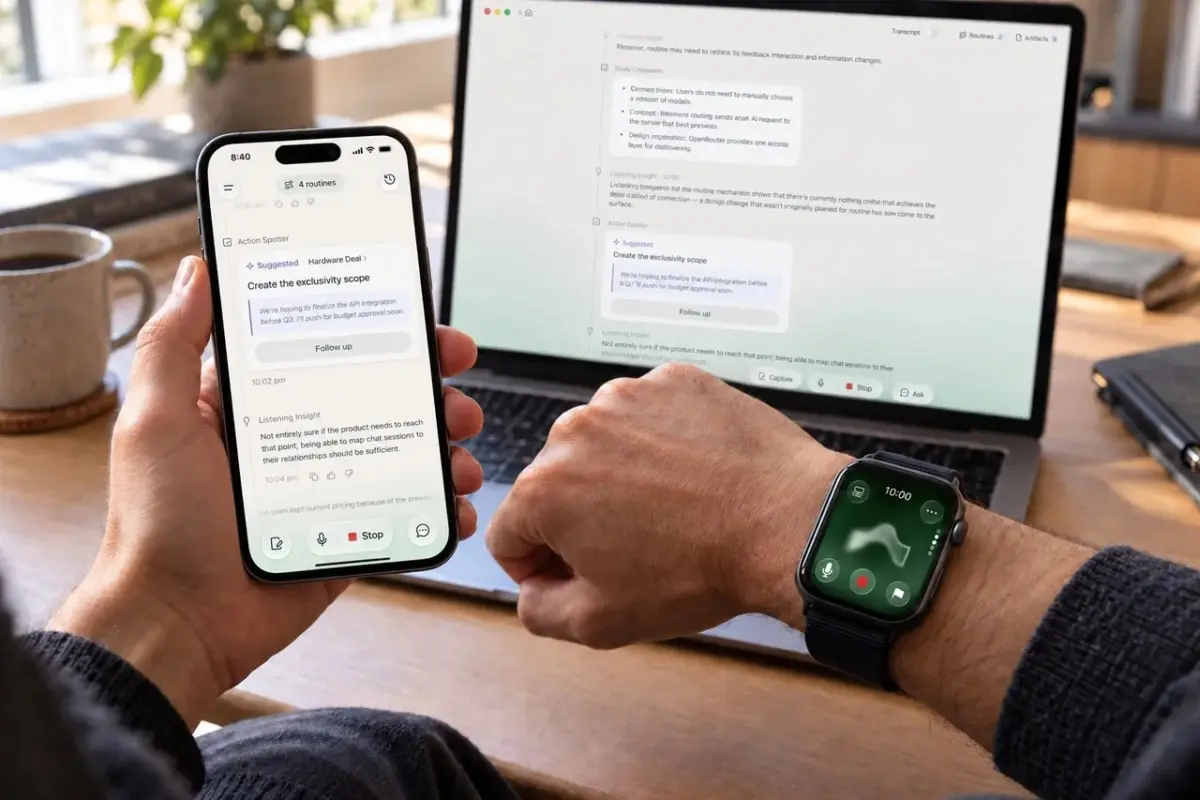
The foundational promise driving the modern artificial intelligence boom is deceptively simple: the more an AI system knows about you, the better equipped it will be to assist you with daily tasks, anticipate your needs, and offer relevant, real-time suggestions. According to the leading voices in the consumer technology sector, realizing this vision requires apps and connected devices to maintain a constant vigil—listening to conversations, watching workflows, and recording user activity around the clock to harvest every available scrap of context.
Naturally, this paradigm brings profound privacy and data security anxieties. The prospect of continuous data collection has long alarmed digital rights advocates and security researchers alike. Yet, undeterred by these persistent concerns, a new wave of venture-backed startups is forging ahead. These companies are operating under the core assumption that consumer demand for hyper-personalized, ambient AI assistance is massive enough to ultimately overshadow privacy hesitations.
The latest entrant into this fast-growing sector is Ambi, a venture spearheaded by former Plaud executive Peter Mo. The startup has set out to deliver real-time intelligence and contextual insights by keeping its software tuned in to users continuously. On Monday, Ambi formally announced that it has successfully secured $26 million across multiple funding rounds. The investment was led by Luminous Ventures—known for backing major players like Meituan and Unitree Robotics—alongside strategic backing from original design manufacturer (ODM) Huaqin.
Simultaneously with its funding announcement, Ambi is rolling out a suite of native applications tailored for iPhones, Macs, and the Apple Watch. At a glance, these applications function similarly to established AI meeting note-takers. However, Ambi’s software is designed to go much further, offering users the option to leave the audio capture running all day to continuously absorb situational context.
Over the past couple of years, meeting transcription and note-taking companies have focused heavily on automating post-meeting workflows. Using the summaries and action items extracted from conversations, these platforms connect to various software ecosystems to handle follow-up tasks after a call concludes. Ambi, by contrast, wants to accelerate this timeline by having its intelligent agent initiate and perform work concurrently while the meeting is still happening.

The company’s central value proposition is that its proactive AI agent can surface relevant knowledge, provide intelligent suggestions, or answer complex questions mid-conversation. These insights are drawn dynamically from a user’s calendar, past meetings, internal knowledge bases, and live web data. Furthermore, the platform is built to support cross-device continuity, allowing users to seamlessly initiate a task on one device and pick it up on another without missing a beat.
"The way we interact with intelligence is limited," Peter Mo, co-founder and CEO of Ambi, explained in an interview. "Often the intelligence is trapped on the screen, and if you use hardware like Plaud, you need to wait for recording to transfer to the phone, upload to the cloud, and get intelligence after processing. That’s why we are building Ambi to use AI anytime and anywhere."
Ambi’s roadmap extends well beyond its initial mobile and desktop software releases. The company harbors grand ambitions to ingest an even wider array of contextual information. Its upcoming desktop application is engineered to passively observe user workflows, storing vital components in a persistent memory bank to deliver increasingly tailored recommendations over time. Similar ambient capture concepts are currently being explored by other emerging competitors in the space, such as Littlebird and Minimi.
Beyond software, the startup is actively developing its own dedicated hardware device. This upcoming gadget is slated to feature a built-in screen, speaker, camera, and an array of microphones designed specifically to capture ambient context and display targeted information without requiring constant interaction with a primary computer or smartphone screen.
Question of privacy
Ambi’s commercial debut arrives at a delicate juncture for the consumer tech industry. It coincides with mounting public scrutiny regarding AI-powered hardware and software that lack clear, unmistakable visual or physical indicators to signal to bystanders that data capture is underway. It remains unclear whether Ambi’s current applications or its future hardware will feature conspicuous, universally understood warning lights or alerts to notify third parties that their conversations are being recorded if the primary user fails to disclose the active use of Ambi’s technology.
This ambiguity is far from theoretical. Several prominent meeting transcription and note-taking tools have recently faced serious legal challenges and lawsuits because their software recorded conversations and gathered sensitive data without the explicit, informed consent of all participants. Furthermore, the recent mainstream rollout of continuous speech transcription features, such as Apple’s Voice Intelligence capabilities on the Apple Watch, has reignited fiery debates about how the tech industry is rapidly normalizing the concept of omnipresent listening devices in everyday public and professional life.

Addressing these concerns, Mo emphasized that users retain full control over the software. Ambient data capture on Ambi’s apps and planned devices can be toggled off at any moment, and the feature is disabled by default out of the box. Additionally, the startup asserts that it does not permanently store raw audio recordings of users and that all captured data is encrypted in transit and at rest, though the company did not publicly specify the exact cryptographic standards it employs.
Despite these technical safeguards, Mo acknowledged a fundamental limitation in the current regulatory and consumer landscape: the legal and social responsibility of declaring ambient capture still rests squarely on the shoulders of the individual user. He characterized this dilemma as an unsolved industry-wide challenge rather than a hurdle unique to Ambi.
"We have to inform our users that they have to tell others about ambient capture," Mo said. "We, as an industry, haven’t solved this problem [of disclosure]. We have tried to put the information about disclosure in every place possible, but if users try to hide the capture, we can’t just solve the problem."
Headquartered with a global footprint, Ambi currently employs a team of over 50 staff members distributed across offices in San Francisco, Beijing, Shanghai, and Shenzhen. To support its ongoing product expansion, the company is actively recruiting top-tier talent for its go-to-market divisions and specialized AI engineers focused on refining advanced speech recognition models.