
The rapid emergence of artificial intelligence-powered no-code tools, which allow users to build and deploy applications simply through natural language prompts rather than writing complex computer code, combined with the rise of decentralized blockchain technology, is poised to mount a serious challenge to the reigning dominance of Amazon Web Services (AWS) in the global cloud computing market.
For over a decade, AWS has commanded the lion’s share of cloud infrastructure, serving as the invisible backbone for millions of websites, corporate databases, and consumer-facing applications. However, industry insiders suggest that the confluence of generative AI development tools and decentralized ledger systems could fundamentally alter where and how software is hosted, maintained, and secured.
According to Lomesh Dutta, vice president of growth at the Dfinity Foundation—a non-profit organization that guides the development and expansion of the Internet Computer Protocol (ICP) ecosystem—these cutting-edge no-code tools are radically democratizing access to application creation. They enable everyday users and enterprises alike to design custom-tailored user experiences on the fly. Yet, these dynamic programs require constant, automated updates and background maintenance that only artificial intelligence can efficiently handle.
"When applications are continuously generated and evolved by AI, you need infrastructure that is secure, tamper-resistant, and able to stay online without constant human intervention," Dutta explained. He noted that decentralized blockchain networks introduced a revolutionary computing paradigm: by eliminating central points of control, they enable the creation of secure, reliable, and fault-tolerant software that operates independently of any single corporate entity or data center.
Despite promoting decentralization and independence from traditional financial systems, a significant portion of modern crypto companies and Web3 projects still paradoxically rely heavily on centralized AWS infrastructure to power their consumer-facing websites and applications, as noted by Internet Computer founder Dominic Williams. This underlying structural reality has left the digital asset sector vulnerable to centralized points of failure, a weakness that was painfully exposed multiple times throughout 2025.

AWS Outages Rock the Crypto Industry in 2025
The risks associated with heavy reliance on centralized cloud providers became glaringly apparent during 2025, when several high-profile AWS outages rippled across the technology sector, heavily impacting multiple crypto platforms, digital asset exchanges, and financial applications that utilize AWS servers and data centers for their day-to-day hosting needs.
The first major disruption struck the industry in April, causing widespread operational failures across several prominent centralized cryptocurrency exchanges, including Binance, KuCoin, and MEXC. The sudden server failure forced these platforms to scramble as users lost access to live trading data and account dashboards. In response to the unexpected infrastructure collapse, Binance temporarily paused customer withdrawals as a precautionary security measure, keeping trading halted until normal service and server stability were fully restored by Amazon’s technical teams.
The vulnerability of the crypto ecosystem to centralized cloud crashes was highlighted again in October, when AWS experienced another severe, prolonged outage. This autumn incident crippled the mobile application and web portal of Coinbase, one of the world’s largest cryptocurrency exchanges. Users attempting to access the platform reported widespread login failures, severe transaction slowdowns, and frustrating withdrawal blocks right in the middle of active market movements.
Beyond digital asset exchanges, the October AWS outage cast a wide net, catching numerous other financial applications and digital tools in its wake. The mixed-asset brokerage and retail trading platform Robinhood experienced major operational disruptions, preventing everyday investors from executing trades. At the same time, MetaMask, one of the most widely used Web3 cryptocurrency wallets, suffered severe connectivity issues, leaving countless decentralized finance users unable to interact with blockchain-based protocols.
The October AWS disruption lasted for approximately 15 hours. The prolonged downtime underscored a profound irony and a glaring structural weakness within the crypto and Web3 industries: projects that aggressively market themselves as decentralized, censorship-resistant alternatives to traditional finance remain deeply reliant on centralized cloud infrastructure providers like Amazon, Google, and Microsoft.
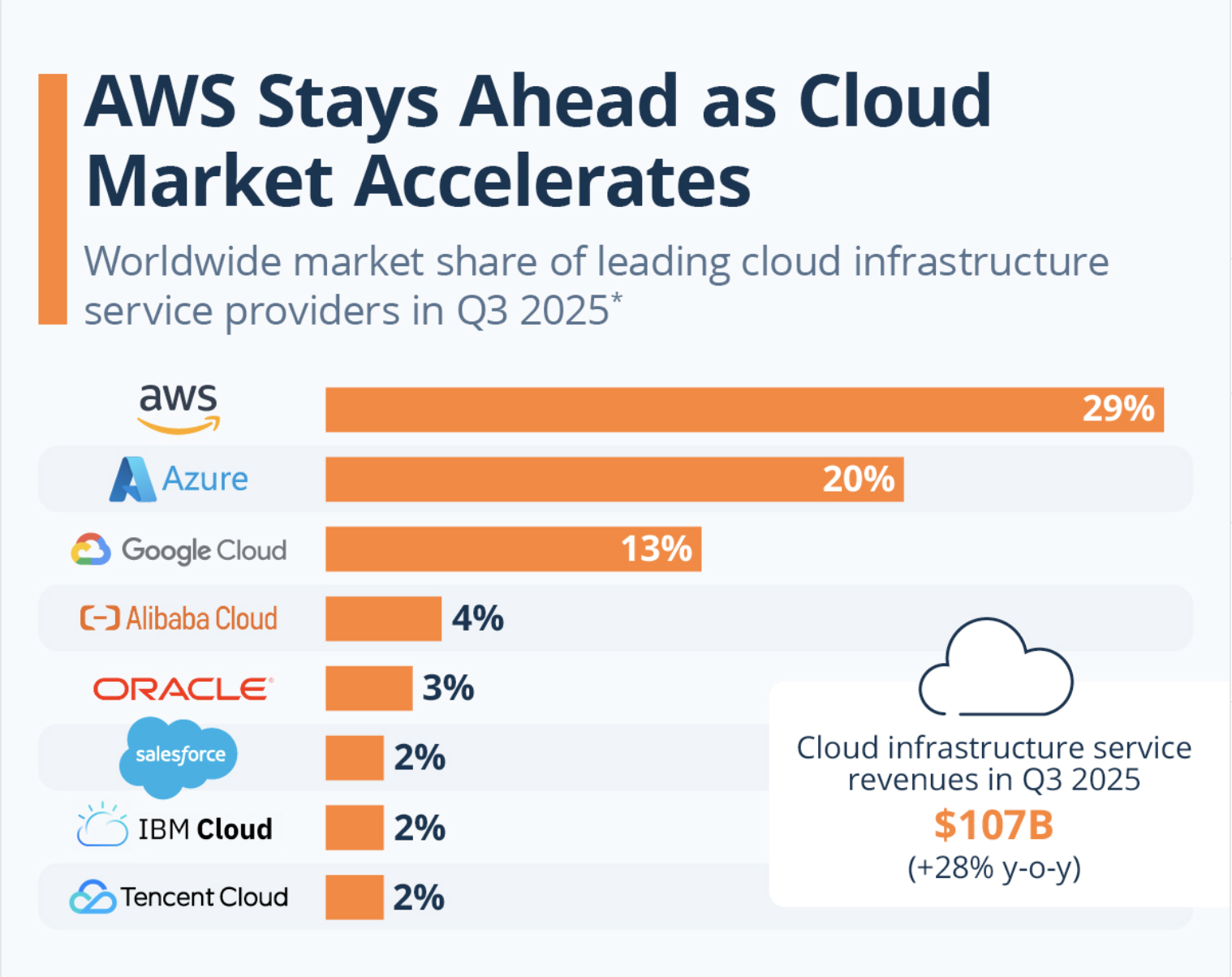
This fundamental contradiction has drawn sharp criticism from several prominent crypto industry executives and infrastructure leaders who have long warned about the dangers of mismatched architectural values. Among them are Jamie Elkaleh, chief marketing officer at crypto wallet company Bitget Wallet, and Carlos Lei, co-founder of the decentralized physical infrastructure network (DePIN) marketplace Uplink.
Reflecting on the fragility exposed by the autumn outages, Elkaleh pointed out the core hypocrisy plaguing the sector. "Decentralization has succeeded at the ledger layer but not yet at the infrastructure layer," he observed, emphasizing that true digital sovereignty cannot be achieved if the foundational servers hosting user interfaces remain centralized in corporate data warehouses.
As artificial intelligence continues to lower the barrier to software development through conversational prompts, and as recurring outages expose the persistent vulnerabilities of legacy cloud giants, industry proponents argue that the shift toward decentralized blockchain infrastructure is no longer just an ideological preference, but an operational necessity for the future of the internet.