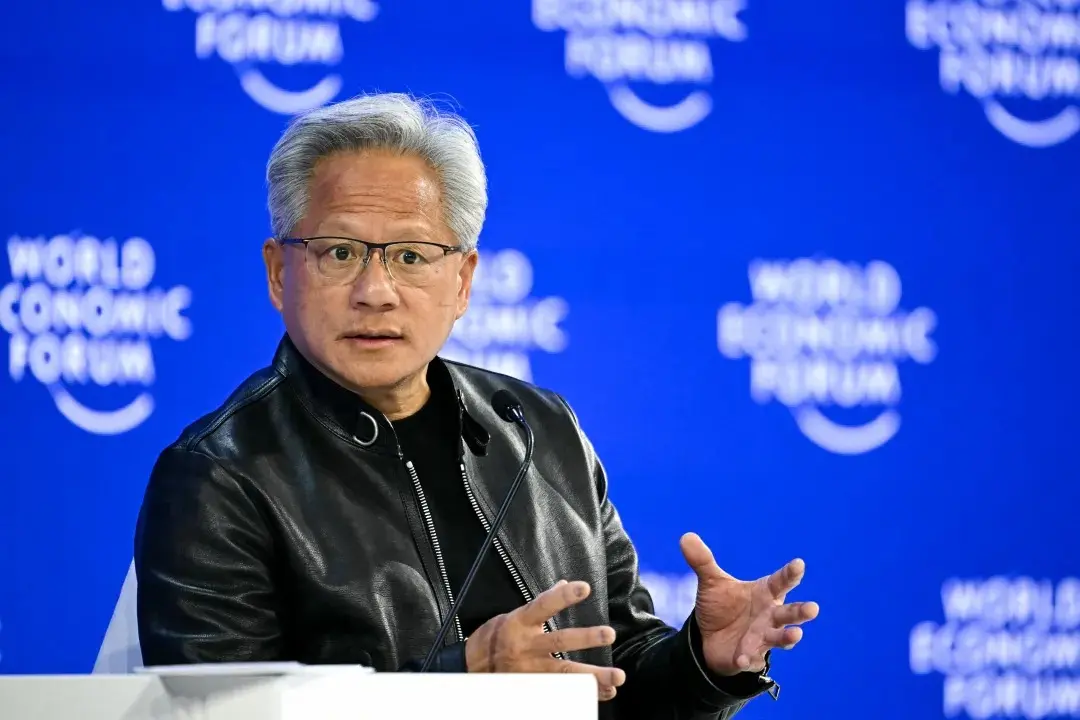
Even as he acknowledged his own infractions, Huang sought to emphasize to the workforce that no individual within the organization, regardless of their title or stature, is exempt from the established rules. Yet, the nuance of his message quickly became a point of discussion. According to accounts of the meeting, Huang noted that admitting to a violation "does not mean, the moment you violate a code of conduct, we walk you out the door." He elaborated that "facts, circumstances, a lot of assessments" still carry significant weight in determining the appropriate response.
In practical terms, this stance establishes a delicate balancing act for the semiconductor giant. The message conveyed to the global workforce was that while the code of conduct applies universally across all tiers of the company, breaking those rules does not automatically trigger an immediate termination—not even for the chief executive who steers the entire ship. For a corporation of Nvidia’s massive scale and cultural influence, this creates an inherently awkward paradigm.
Corporate codes of conduct occupy a unique space in modern human resources management. To many employees, they function almost like quasi-legal rulebooks, setting rigid boundaries for acceptable and unacceptable behavior in the workplace. However, compliance and ethics professionals point out that these documents are often far more accurately understood as living reflections of a company’s core culture and values. When a rule is broken and goes unpunished, the primary danger to the organization is rarely legal or regulatory in nature. Instead, the true threat is cultural—manifesting as a quiet erosion of trust, where employees begin to feel a sense of embarrassment, disillusionment, or outright anger regarding the institution they have dedicated their careers to building. That is precisely the subtle risk that Jensen Huang now finds himself navigating at Nvidia.
The psychological and cultural ramifications of executive rule-breaking are well-documented within the ethics and compliance sector. Matt Plass, chief market strategy officer at LRN—an ethics and compliance training organization—recently spearheaded a comprehensive study on workplace codes of conduct, surveying more than 2,000 workers across a diverse array of industries. From Plass’s perspective, the single greatest hazard when leadership stumbles over ethical standards is that employees will develop a deep-seated shame regarding their workplace.
Elaborating on these findings, Plass noted that modern professionals entering the workforce place an extraordinary value on corporate ethics. They are intensely mindful of the ethical standards upheld by their employers and are genuinely distressed and angered when senior leadership fails to live up to those ideals.
The fallout from such leadership missteps often manifests in memorable, symbolic ways that can linger within a corporate memory for years. Plass illustrated this phenomenon by recounting a case study from another organization that had implemented a strict ban on corporate travel as part of a broader cost-cutting initiative. Despite the strictures placed on the general workforce, the company’s chief executive was later spotted living lavishly in a VIP box at the Olympic Games. The hypocrisy left a permanent mark on the corporate culture. For over a decade following the incident, the mere mention of the Olympics became an enduring internal shorthand within the company—a dark benchmark used by employees to describe the absolute worst kind of executive hypocrisy, often quipping about their own minor infractions with the self-effacing defense that at least they didn’t go to the Olympics.
When senior executives do cross the line, standard corporate governance typically dictates a well-worn playbook designed to restore operational equilibrium. According to Plass, organizations that ultimately decide to remove an executive generally do so following a formal, thorough investigation. Once the leadership change is enacted, the company then pivots to a massive internal and external relations effort aimed at winning back its disillusioned workforce. In most organizations, when a severe violation occurs, they make a definitive change at the top. Following that upheaval, they initiate a broad hearts-and-minds campaign, reaching out directly to their employee base, their customers, investors, and stakeholders to acknowledge the failure, offer an apology, and signal a fundamental cultural reset.
However, that conventional playbook becomes exceedingly difficult, if not entirely impractical, to execute at a company structured quite like Nvidia. Huang’s return to the helm happened under unique circumstances, characterized notably by a lack of a clear, pre-arranged succession plan. Furthermore, the tech industry at large harbors profound doubts regarding whether Nvidia could maintain its historic momentum and continue to thrive without Huang’s singular leadership and vision. In scenarios involving corporate figureheads of this magnitude, Plass acknowledges that there are simply no easy answers.
Drawing a sharp distinction between standard corporate structures and organizations built around a singular visionary, Plass observed that the calculus changes entirely when dealing with companies where the chief executive functions almost as a godhead figure—where the individual and the corporate entity are practically impossible to separate from one another. In those environments, addressing executive missteps becomes infinitely more complicated and delicate.
Viewed through this specific lens, Huang’s careful maneuvering regarding Nvidia’s code of conduct becomes much easier to contextualize and understand. Judging by the overwhelming employee campaigns and public support that accompanied his return, Huang’s recent missteps have not sparked an immediate or crippling morale crisis within the ranks. Yet, as the upcoming quarters place mounting pressure on Huang and his executive team to maintain Nvidia’s dominance in a hyper-competitive market, the decision to sidestep strict enforcement of the code of conduct carries a latent cost. Over time, it could end up depriving Nvidia of something far more valuable than quarterly revenue—the quiet, steadfast pride that its employees take in the integrity of their company.