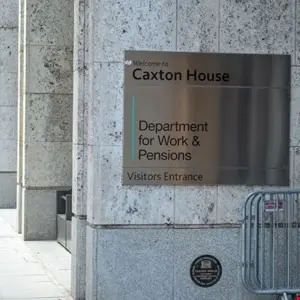
The United Kingdom’s Department for Work and Pensions (DWP), one of the nation’s most critical public sector bodies, has been forced to take a significant portion of its online infrastructure offline following a cyber security incident. The disruption, which was officially acknowledged by the department on November 27, has left millions of claimants unable to access digital portals for essential services, including Universal Credit and state pension management.
The DWP, which serves as the primary government agency responsible for welfare, pensions, and child maintenance policy, confirmed that the decision to shutter its online services was taken as a precautionary measure. While the department has maintained a stance of transparency regarding the outage, it has remained notably tight-lipped regarding the specific nature of the cyber incident, the identity of any potential threat actors, or the extent to which sensitive data may have been compromised.
Continuity of Payments Amidst Digital Outage
Despite the widespread loss of digital access, the department has moved quickly to reassure the public that the core function of the DWP—the distribution of funds—remains intact. In a formal statement released on the official gov.uk website, the department clarified that regular benefit and pension payments are not currently affected by the security event. For the roughly 20 million claimants and customers who rely on the DWP for their livelihood, this confirmation serves as a vital safeguard against immediate financial instability.
However, the operational impact of the incident is significant. Reports suggest that the department began deactivating its online services at approximately 21:00 GMT on November 26. Since that time, the user experience for those attempting to manage their claims has been effectively severed. Steven Swinford, political editor at The Times, reported that while existing, scheduled payments will proceed without interruption, the shutdown has effectively blocked the submission of new claims. This creates a bottleneck for individuals attempting to navigate the welfare system, potentially leading to delays in processing new applications and managing existing account details.
The DWP has stated that it is collaborating closely with the National Cyber Security Centre (NCSC) and the Government Cyber Coordination Centre to investigate the root cause of the incident and to restore functionality as rapidly as possible. In its communication to the public, the department urged patience, noting, "If an online service you need is unavailable, please try again later." Furthermore, the DWP issued a security reminder to its users, emphasizing that the department will never initiate contact via message to request bank details or prompt users to click on external links, a common tactic used by malicious actors during times of heightened digital uncertainty.
A Department Under Pressure
The scale of the DWP’s operational challenge cannot be overstated. As of 2025, the department is one of the largest employers in the UK, with a workforce of nearly 97,000 personnel. It manages a complex ecosystem of benefits, ranging from state pensions to disability and ill-health support, affecting a massive segment of the British population. The transition to digital-first services for Universal Credit and other welfare streams has modernized the department’s reach, but it has also created a centralized, high-stakes target for cyber criminals.
The current disruption is the latest in a series of events that have placed the resilience of UK government infrastructure under the microscope. The incident follows a period of heightened warnings from senior government officials regarding the vulnerability of the UK’s critical national infrastructure (CNI). In October, Secretary of State for Defence Wes Streeting issued a stark warning to the public, advising citizens to prepare for the reality that cyber attacks could lead to the temporary loss of access to essential daily services, including mains water, sewage systems, telephone lines, and internet connectivity.
This proactive stance on public transparency reflects a shifting strategy in government communications. Rather than downplaying the threat, officials are increasingly highlighting the reality that in an interconnected, digital-first society, public services are inherently susceptible to disruption.

The Evolving Threat Landscape
The threat to UK infrastructure is not merely theoretical. In November, NCSC CEO Richard Horne warned of the rapid advancement of artificial intelligence as a force multiplier for malicious actors. Horne highlighted that AI-powered malware is expected to become a core feature of ransomware campaigns targeting critical national infrastructure by 2028. This suggests that the DWP incident, while currently managed as a precautionary shutdown, is part of a much larger, ongoing battle against sophisticated, automated threats.
Earlier this year, the fragility of the government’s digital perimeter was underscored when multiple UK government websites were taken offline in October. This measure was taken to preemptively mitigate the risks associated with the "PHP2Shell" vulnerabilities, which were disclosed publicly before security patches could be fully deployed. By taking the proactive step of shutting down services, the government demonstrated a willingness to sacrifice temporary convenience to prevent the exploitation of sensitive systems.
Assessing the Strategy of "Pulling the Plug"
Industry experts are divided on the long-term viability of the government’s current response strategy. Trevor Dearing, senior director of critical infrastructure at the cyber security firm Illumio, argues that the public will need to adjust to the reality that temporary, precautionary shutdowns will become a regular feature of digital public life.
"Public sector networks are huge, interconnected and full of legacy systems," Dearing observed. "When you can’t be sure how far an attacker has moved, the only safe option is to pull the plug."
This strategy, often referred to as "containment through isolation," is designed to prevent lateral movement by an attacker—the process by which a hacker moves from an initial point of compromise to deeper, more sensitive parts of a network. By disconnecting the affected segments, the DWP is essentially creating a firewall between the suspected breach and the rest of its digital architecture.
However, Dearing also provided a cautionary note regarding the limitations of this approach. While "pulling the plug" is an effective immediate response, it cannot serve as a permanent solution, particularly for departments as vital as the DWP. Millions of citizens are financially reliant on the seamless operation of these systems; for these individuals, even a temporary loss of access can cause significant distress. The challenge for the government moving forward will be to balance this aggressive defensive posture with the need for high-availability services.
As the investigation continues, the focus remains on the restoration of services and the hardening of the systems that underpin the welfare state. The DWP has yet to confirm a timeline for when full functionality will return, leaving millions of users in a state of suspended animation. For now, the incident stands as a poignant reminder of the precarious balance between digital convenience and the reality of an increasingly hostile cyber threat landscape. The department’s ability to recover from this event, and its subsequent steps to bolster its defenses, will likely be subject to intense scrutiny in the weeks to come, as the government continues its efforts to navigate a world where cyber resilience is no longer an option, but a requirement for the functioning of the state.