Preparing for an upcoming wedding or major social event traditionally requires a meticulous, multi-step mental inventory. A shopper must first recall what is currently hanging in their closet, evaluate which garments still fit properly, cross-reference their personal financial budget, and then keep a watchful eye on retail sales until the right moment to buy arrives.
Daydream, a fashion-focused shopping startup, has engineered a new artificial intelligence agent specifically designed to handle that arduous logistical workflow—and crucially, to stop before executing a purchase without explicit consent.
The startup officially launched the Daydream Agent on Tuesday, making the tool immediately available to consumers via its dedicated iOS mobile application and through text messaging interfaces. The specialized agent is programmed to remember each individual user’s unique aesthetic style, sizing and fit preferences, and strict budgetary limits. Simultaneously, it pulls real-time pricing data and inventory availability from a vast network of more than 10,000 distinct fashion brands. Once an outfit has been selected and approved, the system completes the transaction using a streamlined one-click checkout process exclusively available through participating retail partners, according to the company’s official launch announcement.
Since its initial debut in June 2025, Daydream has attracted more than two million active shoppers to its platform. While the startup has not yet disclosed specific metrics regarding how many users have engaged with the new agent, nor the exact mechanics of its payment processing back-end, the enterprise has secured substantial financial backing. Daydream has raised $50 million in seed funding from prominent venture capital investors, including Forerunner Ventures and Index Ventures.
Daydream’s Agent Works from the Closet and the Calendar
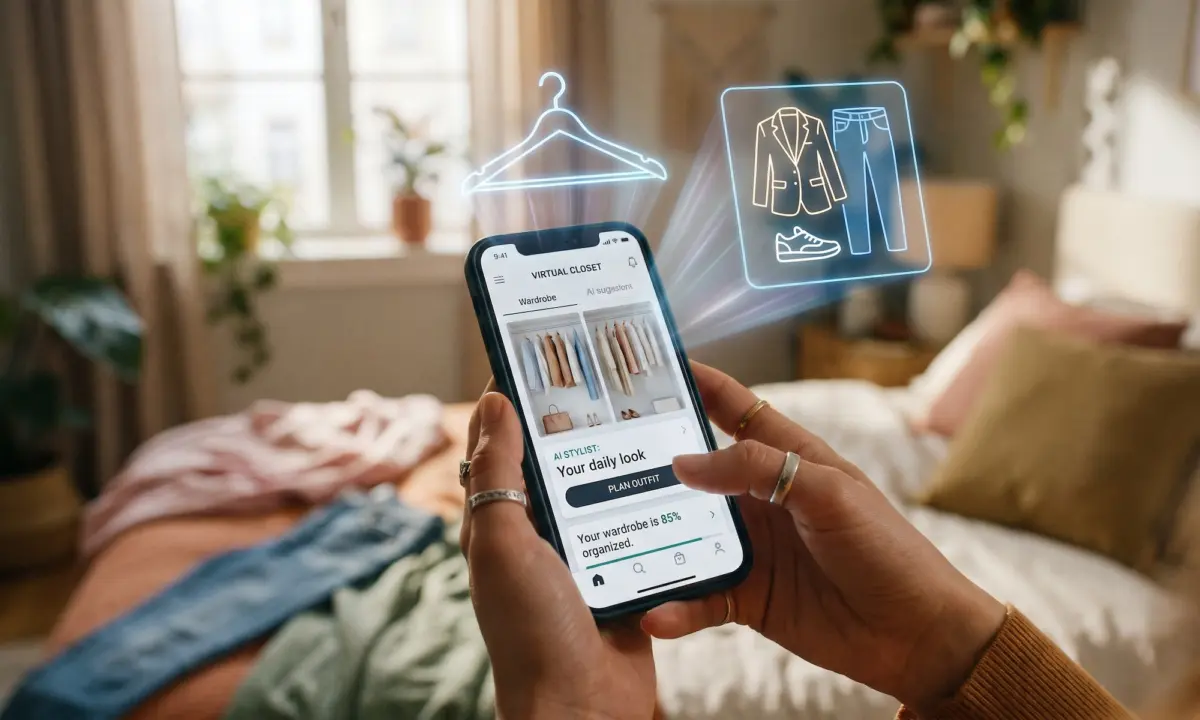
For consumers who choose to opt into the service, the Daydream Agent offers deep integration by connecting directly to both their personal digital closets and their personal calendars. Armed with this holistic view of a user’s life and wardrobe, the AI agent can intelligently construct fresh outfits using items the shopper already owns, while simultaneously planning entirely new ensembles tailored for upcoming social engagements, professional obligations, and milestones. Furthermore, by uploading just a single photograph, a shopper can virtually try on items that have been saved to their digital wishlist or cart.
The utility of the agent extends far beyond active conversational sessions. It continues to operate asynchronously in the background long after a chat window has closed, actively monitoring market conditions and alerting the user the exact moment a watched item goes on sale or when a preferred brand drops a new product collection.
To ensure high standards of curation, Daydream hired Francesca Salih—an international fashion stylist and the founder of StyleGrid—as its first-ever stylist in residence. According to industry reports, Salih’s professional styling expertise and content directly feed the foundational fashion knowledge database that the agent utilizes to build coherent, stylish outfits. This specialized domain knowledge operates on top of fine-tuned foundational models developed by industry leaders including OpenAI, Google, and Anthropic, alongside Daydream’s proprietary models.
Muse Finds Products While Daydream Styles the Shopper
The competitive landscape for artificial intelligence assistants in commerce is rapidly expanding, bringing distinct approaches to light. While Meta’s Muse and the shopping startup Instinct are engineered primarily to search broadly for products across the internet, Daydream’s agent focuses deeply on curating and styling a complete outfit tailored to a specific individual.
General-purpose assistants like Muse and Instinct are built to handle a wide variety of daily errands, ranging from booking complex travel itineraries to managing and answering electronic mail. When Muse is tasked with shopping, it launches an automated browser session, scours various retailer websites, and returns a curated list of options for the user to review and select from.
In contrast, Daydream’s agent approaches commerce by starting directly from the shopper’s individual physical size, financial budget, and existing wardrobe contents, rather than relying on a traditional keyword search query. Julie Bornstein, founder and CEO of Daydream and the former chief operating officer of Stitch Fix, noted that the agent formulates its recommendations drawing directly from the integrated product catalogs of 325 direct retail and brand partners.
These general-purpose assistants command a vastly larger initial user footprint. More than 10 million consumers across the United States and Canada have already configured Meta’s Muse. Meta CEO Mark Zuckerberg has noted that shopping consistently ranks as one of the most popular activities performed on the platform.
Daydream Sells Its AI Search to Staud and Alice + Olivia
Beyond its consumer-facing mobile application and messaging tools, Daydream also operates a business-to-business model, licensing its underlying search technology directly to fashion brands and traditional retailers. In July, the startup introduced Powered by Daydream, a specialized enterprise solution designed to integrate its advanced natural-language search capabilities directly into a brand’s proprietary website. Independent contemporary labels Staud and Alice + Olivia were among the initial five retail brands that went live during the early pilot phase of the program.
Daydream is entering the market at a time when consumers are already exhibiting a strong willingness to complete transactions with the direct assistance of artificial intelligence. According to a research report titled "From Prompt to Purchase: Who Wins the AI Shopper?" published by PYMNTS Intelligence, clothing, shoes, and accessories accounted for 27.7% of consumers’ most recent AI-assisted purchases, edging out electronics and technology, which represented 21.8% of such transactions. The data is derived from an expansive August survey encompassing 2,191 consumers across the United States.
The PYMNTS Intelligence study also examined the specific psychological and functional incentives required to successfully transition shoppers away from general third-party marketplaces and toward buying directly from an individual brand or merchant website. The findings revealed that 53.9% of consumers would be motivated to buy directly if offered a lower price or an exclusive discount. Meanwhile, 12.1% indicated that the presence of an autonomous AI assistant capable of handling the checkout process seamlessly would drive the decision. An additional 21.8% stated they would be comfortable allowing an autonomous assistant to independently choose the merchant on their behalf. Daydream’s newly launched agent directly addresses the needs of the first two consumer segments through its automated sale alert system and its integrated one-click checkout capabilities.