
The cloud computing landscape could face a monumental shift as a powerful combination of artificial intelligence and blockchain technology emerges to challenge the status quo. Industry experts argue that the convergence of AI-powered no-code tools—which enable users to build and deploy applications simply through natural language prompts rather than writing complex computer code—and decentralized blockchain networks will fundamentally disrupt the long-standing dominance of Amazon Web Services (AWS) in the cloud infrastructure market.
This evolution in software creation promises to democratize application development on an unprecedented scale. Instead of relying on traditional programming pipelines, individuals and enterprises alike will be able to spawn custom-tailored user experiences generated on demand. However, these dynamic applications will not function properly under traditional maintenance models; they will require constant, automated updates and intelligent oversight driven by artificial intelligence.
Lomesh Dutta, vice president of growth at the Dfinity Foundation, a non-profit organization that helps guide the development of the Internet Computer Protocol (ICP) ecosystem, explained the implications of this shift during a discussion. According to Dutta, the rise of user-created, AI-managed applications fundamentally alters the requirements for underlying host infrastructure.
When software is continuously generated and evolved by artificial intelligence models, it requires an underlying framework that is inherently secure, tamper-resistant, and capable of remaining online without constant human intervention or centralized administrative oversight. Dutta emphasized that decentralized blockchain networks introduced a revolutionary computing paradigm that addresses this exact need. By eliminating single points of failure and central points of control, blockchain architecture enables the creation of secure, reliable, and fault-tolerant software systems that can outlast or bypass traditional corporate data centers.
Despite the promise of a decentralized future, the present reality of the Web3 and cryptocurrency industries paints a starkly different picture. A significant portion of crypto-native companies, decentralized finance protocols, and broader Web3 projects still rely heavily on centralized infrastructure providers like AWS to power their consumer-facing applications, websites, and data backends. Internet Computer founder Dominic Williams highlighted this ongoing paradox, noting that the very industry built on the ethos of decentralization remains tethered to the traditional, centralized cloud giants.

This heavy reliance on centralized web infrastructure has not gone without consequence. Throughout 2025, a series of high-profile AWS outages rocked the cryptocurrency and financial technology sectors, exposing deep vulnerabilities across multiple digital asset platforms and centralized exchanges that depend on AWS servers and localized data centers for their day-to-day operations.
AWS Outages Rock the Crypto Industry in 2025
The fragility of centralized cloud dependence became glaringly apparent to the digital asset market through successive infrastructure failures over the course of the year. The first major disruption struck in April, sending shockwaves through the centralized crypto exchange ecosystem. Platforms including Binance, KuCoin, and MEXC experienced severe operational disruptions as the AWS servers hosting their applications faltered. The impact was immediate and widespread, forcing major market participants to implement emergency measures to protect user funds and platform integrity.
In the wake of the April incident, Binance was forced to temporarily pause customer withdrawals until normal service could be fully restored by cloud providers. The interruption served as an early warning sign for the industry regarding the risks of consolidating critical financial infrastructure within a handful of centralized cloud providers.
The vulnerabilities were tested once again in October, when AWS experienced another catastrophic outage that crippled an even broader array of financial and consumer applications. The October incident caused widespread disruptions in the mobile application of Coinbase, one of the world’s largest cryptocurrency exchanges. Users flooded social media and support channels to report frustrating login problems, severe platform slowdowns, and an inability to execute withdrawals or trades during critical market windows.
The fallout extended far beyond dedicated crypto exchanges. Other major financial technology applications felt the sting of the centralized failure, including the mixed-asset brokerage platform Robinhood and the widely used Web3 self-custody wallet MetaMask. For a decentralized wallet interface to become sluggish or entirely unresponsive due to a failure in a centralized cloud server underscored the deep ironies embedded in modern internet architecture.
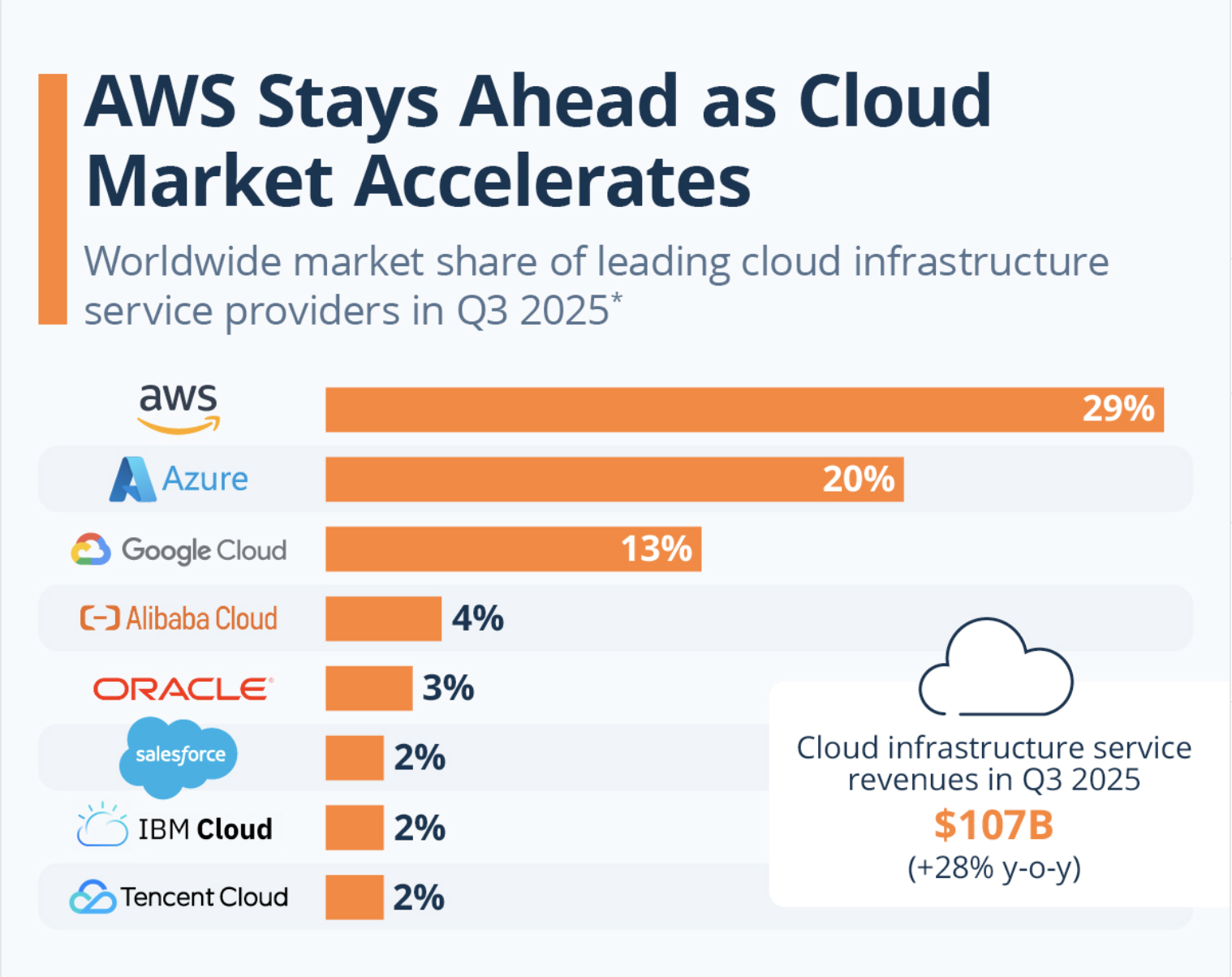
The October AWS outage persisted for approximately 15 hours, serving as a stark reminder of the deep-seated reliance that crypto and Web3 projects—which routinely market themselves as decentralized, censorship-resistant alternatives to traditional finance—actually have on centralized cloud infrastructure providers.
This ongoing reliance has drawn sharp criticism from prominent figures and executives across the digital asset ecosystem. Industry leaders have increasingly pointed out the hypocrisy of building decentralized ledgers on top of highly centralized hardware foundations.
Among the vocal critics are Jamie Elkaleh, chief marketing officer at crypto wallet company Bitget Wallet, and Carlos Lei, co-founder of the decentralized physical infrastructure network (DePIN) marketplace Uplink. Reflecting on the systemic issues exposed by the autumn outages, Elkaleh pointedly noted that decentralization has successfully taken root at the ledger layer, but it has critically failed to propagate downward to the underlying infrastructure layer.
As the pressures mount from both recurring infrastructure failures and the rapid advancement of AI-driven, prompt-based application development, the push for end-to-end decentralization continues to gain momentum. Whether the convergence of artificial intelligence tools and blockchain infrastructure can successfully unseat entrenched giants like Amazon Web Services remains one of the defining questions for the future of the internet.