As the cryptocurrency space headed into the final month of 2025, the overarching mood stood in stark contrast to previous market cycles. The year did not deliver another explosive decentralized finance (DeFi) summer or a wave of non-fungible token (NFT) euphoria. Instead, it ushered in a slow, sober, and deliberate pivot toward actual utility. Rather than chasing fleeting trends, the industry spent the year quietly restructuring its foundations to prepare for mainstream adoption.
Decentralized applications, commonly known as DApps, sit at the heart of this transition. These software programs operate on distributed blockchain networks rather than centralized servers. By leveraging smart contracts, DApps allow users to interact directly with applications for payments, financial services, gaming, or social media while retaining far greater control over their personal identities and digital assets.
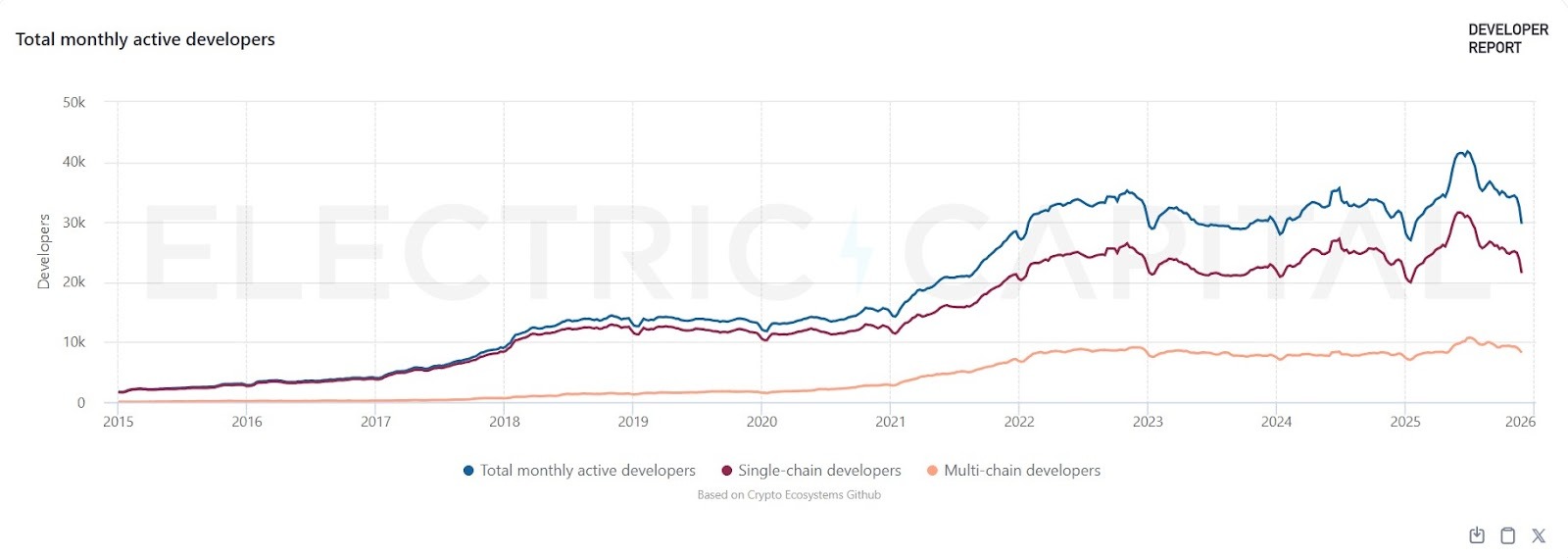
Despite the absence of speculative frenzy, active builders held their ground steady throughout 2025, shifting their priorities toward a much longer-term outlook. According to Electric Capital’s comprehensive Developer Report, the number of full-time crypto developers—defined strictly as contributors committing code at least 10 days per month—actually rose by 5% year-on-year, even as total developer counts experienced a slight dip.
This notable divergence suggests that speculative "tourist" participation has largely waned, while more dedicated builders are pursuing crypto as a full-time profession. In practice, this points to a smaller yet significantly more committed developer base. Sustained development effort is increasingly concentrated among dedicated, long-term teams rather than short-lived projects looking for a quick cash grab.
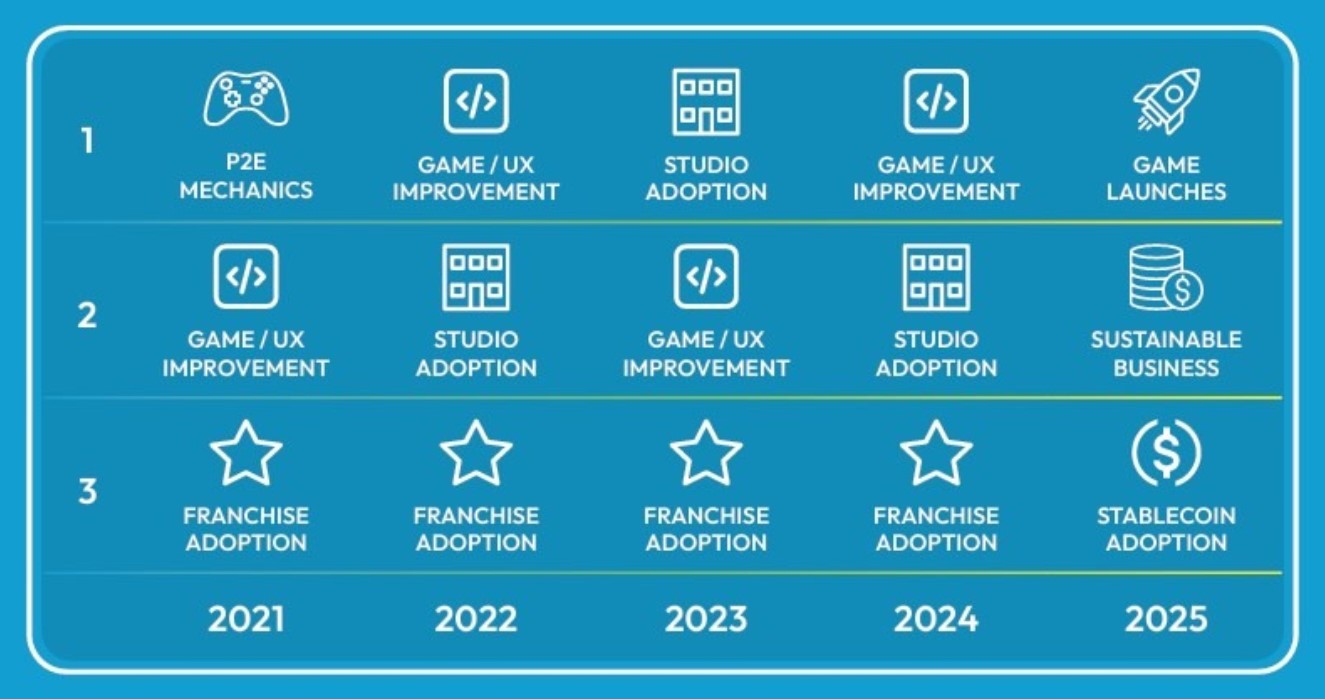
Web3 gaming developers are likewise identifying entirely different drivers of success for gaming DApps. According to a recent survey conducted by the Blockchain Gaming Alliance (BGA), Web3 game developers are tying their long-term success to polished gameplay, sustainable monetization models, and robust infrastructure that naturally supports player spending.
This means that modern builders are depending less on external forces, such as traditional gaming giants finally moving into the Web3 space, and are instead focusing heavily on controllable factors. These internal elements include implementing seamless interoperability, integrating artificial intelligence into in-game mechanics, and creating thriving, player-driven economies.

If 2024 was primarily defined by layer-2 scaling paths and transaction throughput experiments, 2025 transformed into a year of meticulous preparation. Builders focused intensely on making crypto genuinely usable, pushing account abstraction into active production, tightening wallet user experiences, and constructing reliable mobile distribution channels through ecosystems like Solana’s Saga and The Open Network’s deep, native integration with Telegram.
Simultaneously, regulatory bodies across major global jurisdictions, including the United States, Europe, and Asia, have steadily drawn clearer boundaries around stablecoins, digital asset custody, and compliance reporting. These regulatory guardrails have provided developers with a stable, predictable framework to build within. Consequently, the industry spent the better part of the year building essential groundwork instead of blindly chasing breakout consumer applications.
This groundwork now sets up 2026 as a decisive test of real-world relevance. With developer tooling largely in place and compliance landscapes more streamlined, DApps must now confront the challenging question of whether they can effectively attract and retain users without relying on heavy speculative incentives.
The industry spent much of 2025 talking about a long-awaited pivot to utility, but 2026 represents the period where this claim must meet reality. If everyday users choose not to stay once artificial yields fade and short-term rewards disappear, the underlying problem will no longer be the technology itself, but the applications being built upon it.
How DApps Can Compete With Web2 in 2026
While decentralized applications spent previous years largely competing against one another for user attention and liquidity, 2026 may become the year when they must stand up directly against Web2 applications and their massive global scale.
For DApps to stand any realistic chance of competing, they must erase the historical barriers that have traditionally caused friction for mainstream users. Fortunately, this shift is already well underway. Account abstraction is moving steadily closer to becoming the default experience across major blockchain ecosystems, enabling smart accounts that behave much more like familiar internet login mechanisms than complicated cryptographic tooling.
Furthermore, gas sponsorships—where applications pay transaction fees on behalf of users—have successfully reduced one of the single biggest pain points in crypto onboarding. Meanwhile, social logins and Multi-Party Computation (MPC) wallets have largely removed the intimidating need for users to write down and store traditional seed phrases. Moreover, sub-second transaction finality on high-performance blockchains like Solana and modular rollups on Ethereum have significantly narrowed the latency gap with traditional web services.
The emerging layer of AI agents capable of autonomously interacting with smart contracts could soon make DApp usage feel far less like actively managing a cryptographic wallet and much more like interacting with a standard web application.
This highlights the stark contrast between the fragmentation fatigue of 2025, where thousands of isolated DApps—each requiring separate accounts, assets, and user journeys—created an unmanageable cognitive load for newcomers. Because of this historical friction, the next major leap for the sector may come from modular, interoperable super apps that bundle multiple needs into a single, cohesive interface, mirroring how dominant platforms built their massive footprints in the Web2 space.
Payments, savings accounts, and stablecoin settlement rails could soon sit comfortably alongside NFT creator tools, gaming assets, loyalty tokens, and decentralized social identities. This setup would allow users to move fluidly across diverse experiences inside a single, unified ecosystem. If 2025 was the year protocols built the necessary foundation, 2026 may be the year to test whether these systems actually function smoothly in daily life.
Which Ecosystems Are Positioned to Win in 2026?
Several prominent ecosystems enter 2026 with distinct structural advantages, extending far beyond raw throughput or developer tooling into vital areas like distribution, user funnels, and real-world relevance.
Ethereum firmly remains the center of gravity for smart contract development, though its upgrades throughout 2025 were incremental in nature. Improvements tied to the Fusaka upgrade focused heavily on advancing Ethereum’s data availability and zero-knowledge roadmap. These updates include early steps toward more efficient proof systems and shared sequencing concepts, rather than immediate, drastic fee reductions on the main layer-1 network. Coupled with the continued maturation of modular rollups, these changes position Ethereum to support cheaper and faster settlement over time without ever compromising its underlying security model.
Meanwhile, Solana continues to successfully carve out the consumer-facing lane, powering sub-second transactions for everyday payments, in-app micro-purchases, and mobile-native experiences that feel significantly closer to Web2 applications than traditional crypto interfaces.
On the other hand, The Open Network stands out with arguably the strongest native user funnel in the entire digital asset space. Telegram’s massive global user base, combined with its Mini Apps and seamless wallet integrations, has created an organic distribution channel that remains exceptionally difficult for competitors to replicate.
Beyond individual layer-1 and layer-2 chains, thematic sectors are also helping define what will dominate the industry. Decentralized physical infrastructure networks gained substantial traction throughout 2025 by firmly anchoring crypto to real-world workflows such as decentralized bandwidth, compute markets, mobility networks, and energy credits.
These networks provided sustainable revenue paths that do not rely on volatile yield farming or token inflation. A comprehensive report predicted that the sector could experience massive growth driven by the convergence of blockchain technology and artificial intelligence.
Simultaneously, creator-focused DApps are maturing far beyond simple NFTs and speculation, evolving toward micro- intellectual property ownership, music royalties, and fan-powered monetization models. If these positive trends hold firm, the ecosystems best positioned to succeed in 2026 will likely be the ones that effectively combine wide distribution, high scalability, and clear everyday use cases—capturing not just the fastest network speeds, but the most genuinely active users.
2026 Will Be a Turning Point for Utility
The cryptocurrency industry has already spent years building out scalable networks, tightening cryptographic security, refining user experiences, and establishing necessary regulatory foundations to support institutional and retail developments.
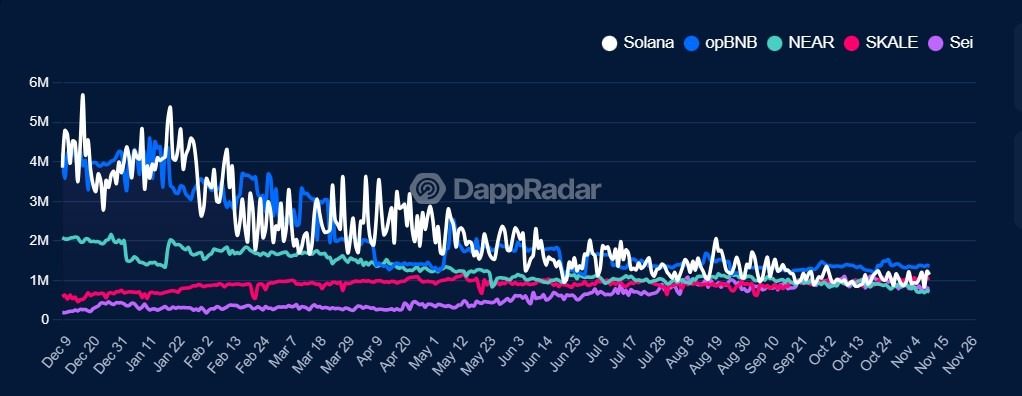
With underlying infrastructure finally reaching consumer-grade readiness, the next phase will likely focus less on which underlying blockchain processes transactions the fastest and much more on which products everyday consumers are willing to return to voluntarily, without relying on temporary token incentives.
If 2025 was a year spent primarily in heavy construction, 2026 is shaping up to be a critical year of evaluation—one where decentralized applications must deliver practical value rather than empty promises. The ultimate winners will be those platforms that feel identical to everyday consumer applications, featuring simple onboarding, invisible transaction fees, and stable cost structures.