Barcelona-based smart TV operating system developer Titan OS has announced that it has successfully raised $46 million in new funding. The capital injection consists of a strategic mix of equity and debt facilities, highlighting growing institutional confidence in the startup’s alternative approach to the connected television ecosystem.
The latest round features debt financing provided by funds and accounts managed by financial giant BlackRock, alongside continued backing from existing venture capital investors, including Highland Europe and Mangrove Capital Partners. This fresh capital follows a substantial $58 million fundraising effort secured by the startup late last year, bringing Titan OS’s total cumulative funding to an impressive $110 million.
According to company executives, the startup was in a financial position to sustain organic growth at a slower, more conservative pace if it so chose. However, leadership opted for a more aggressive growth strategy to aggressively scale operations, forge critical industry partnerships, and expand its footprint into new geographic markets.
At its core, Titan OS offers a compelling value proposition to hardware television manufacturers. As thin margins and slowing hardware sales squeeze traditional TV makers, the Barcelona-based startup provides an operating system that allows original equipment manufacturers to unlock long-term recurring revenue streams. By loading the Titan OS platform onto their units, manufacturers can monetize hardware sales well beyond the initial point of purchase through integrated partnerships with Free Ad-Supported Television (FAST) channels and targeted advertising across multiple screens.
The commercial momentum of this model is clearly reflected in the company’s recent user acquisition milestones. Titan OS now serves a rapidly growing base of 30 million active users, representing a significant jump from the 18 million users it reported last year. This expanded network encompasses key strategic collaborations, including acting as a sales partner for TiVo in select regions and supporting Tubi in the United Kingdom.
The startup’s roster of manufacturing partners has likewise expanded significantly over the past year. In addition to its successful foundational partnership with Philips—which has prominently chosen to transition away from Google TV and adopt Titan OS exclusively for its 2026 television models—the company has successfully onboarded major global brands such as Sharp, AOC, Vestel, and Skyworth.
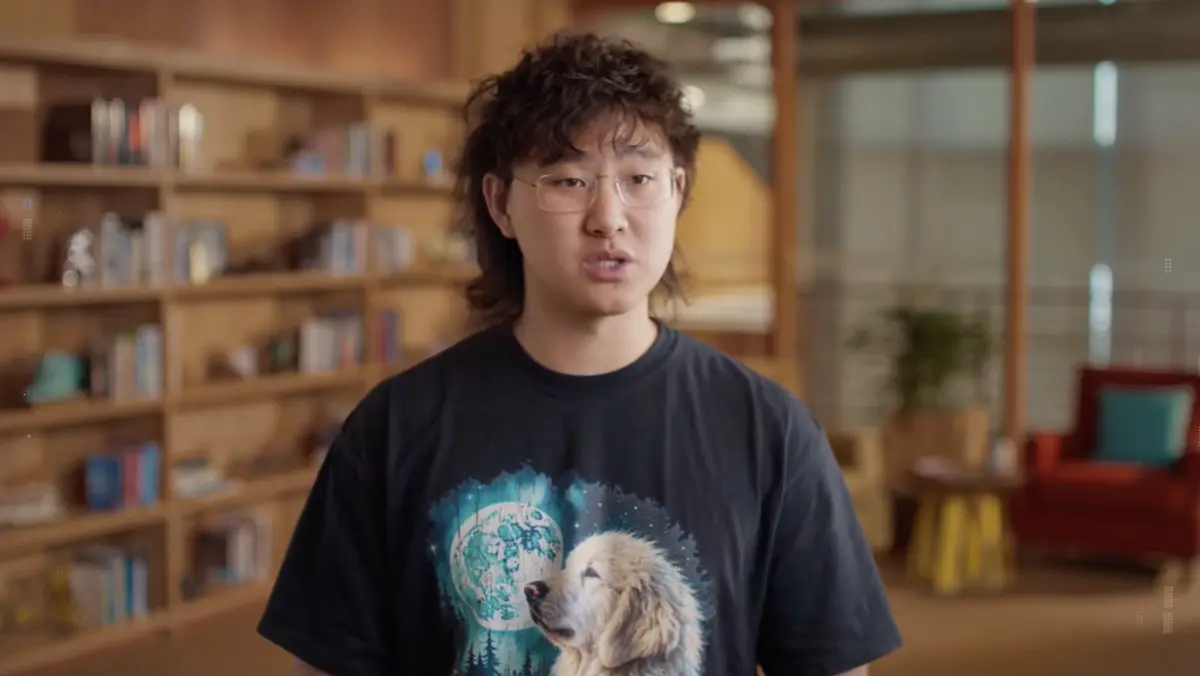
This broadening network coverage provides Titan OS with a significantly larger advertiser footprint, enabling the platform to offer marketers robust audience engagement metrics and expansive inventory pools. Hyoungung Kim, the company’s newly appointed Chief Financial Officer, explained the dynamics of this growth during a recent interview, emphasizing the compounding nature of the platform’s business model.
"Our bread and butter is the monetization of our inventory on our own network. But the point is that we’re going beyond that. That’s why our reach has increased significantly, which then triggers the flywheel effect by also attracting more sales partners and more agencies that want to spend on our platform, whether it’s owned and operated or via our extensions," Kim noted.

To support this rapid scaling, Titan OS has expanded its internal workforce to approximately 250 employees over the past year. The company also established a dedicated office in London to sharpen its focus on advertising operations, complementing its existing corporate and operational hubs located in Barcelona, Amsterdam, and Taipei.
With the infusion of $46 million in new capital, Titan OS leadership plans to direct resources toward several key strategic pillars. Foremost among these is content discovery. Despite the proliferation of streaming options, consumers globally continue to face friction and spend excessive amounts of time attempting to find content to watch. To combat this friction, the startup is actively deploying interface enhancements and artificial intelligence-driven algorithms to streamline discovery, while concurrently expanding its network of content providers, including additional FAST channel integrations.
Executives at the firm are careful to contrast their neutral positioning with the ecosystems fostered by dominant technology giants. Tobias Pfalzgraff, Senior Vice President of People and Marketing at Titan OS, pointed out that the platform’s independence is a primary differentiator in the marketplace.
"What differentiates us here from the walled gardens is that we do not have our own content offering. Like Google is trying to channel people to YouTube. We do not have that, and we are impartial in our role in content discovery. We are working and trying to reduce time spent searching," Pfalzgraff explained.
Pfalzgraff also highlighted that the company is leveraging advanced artificial intelligence to refine its advertising recommendation systems and audience segmentation capabilities. While Titan OS has established a dominant presence across Europe, leadership believes that the broader global landscape offers substantial runway. With only a handful of major consumer electronics manufacturers currently developing and maintaining their own proprietary operating systems, Titan OS anticipates that numerous other hardware makers will look to follow Philips’ lead and outsource their software infrastructure.
This outlook is further reinforced by macroeconomic pressures facing the consumer hardware sector. As the global artificial intelligence boom drives up the costs of essential hardware components, chipsets, and semiconductors, hardware manufacturers are finding traditional television manufacturing margins increasingly compressed. In an environment where gadget sales are slowing and hardware profitability remains razor-thin, set makers are urgently rethinking their long-term revenue strategies.
Elaborating on how these industry-wide pressures are driving manufacturers toward software partnerships, Kim emphasized that hardware constraints have only deepened the alliance between TV makers and software platforms like Titan OS.
"The TV hardware industry is not a very profitable business. That’s why they are so reliant on partners like Titan OS that share revenue after the sale of the TV. But now, of course, the chip sets, the chip prices are increasing more and more. Right. With the AI boom, they have basically doubled down on our partnership," Kim said.