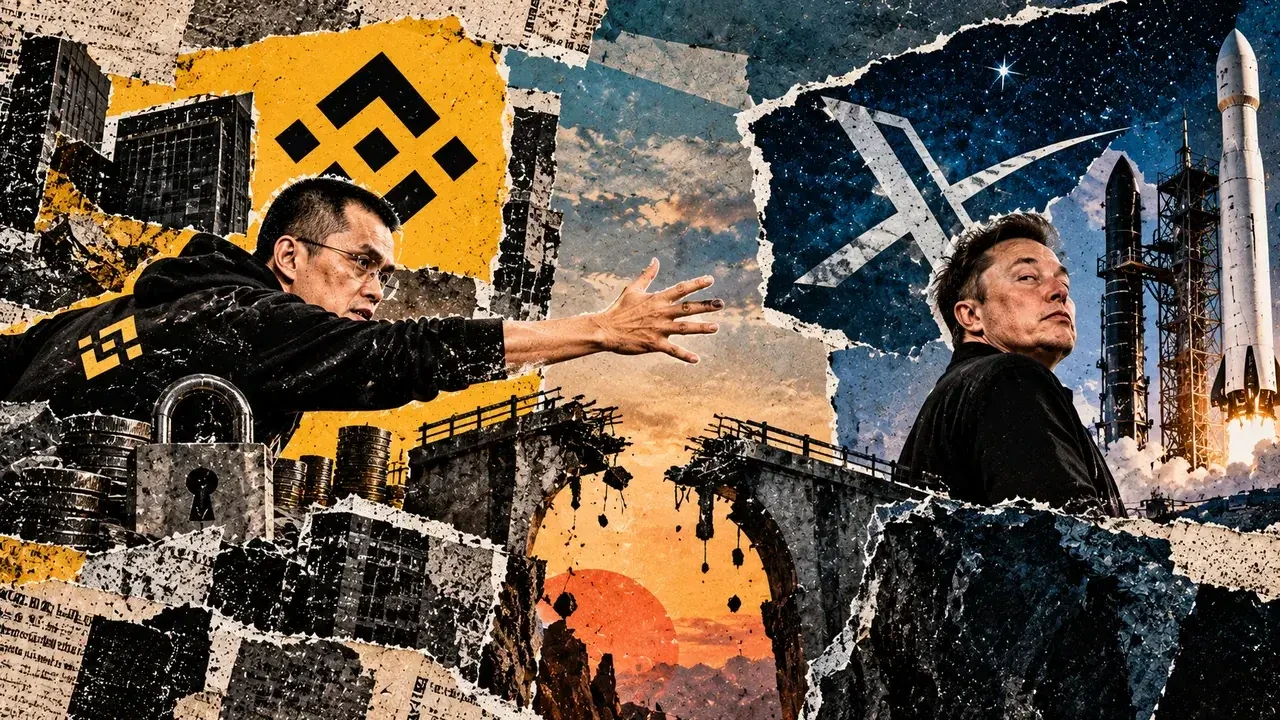
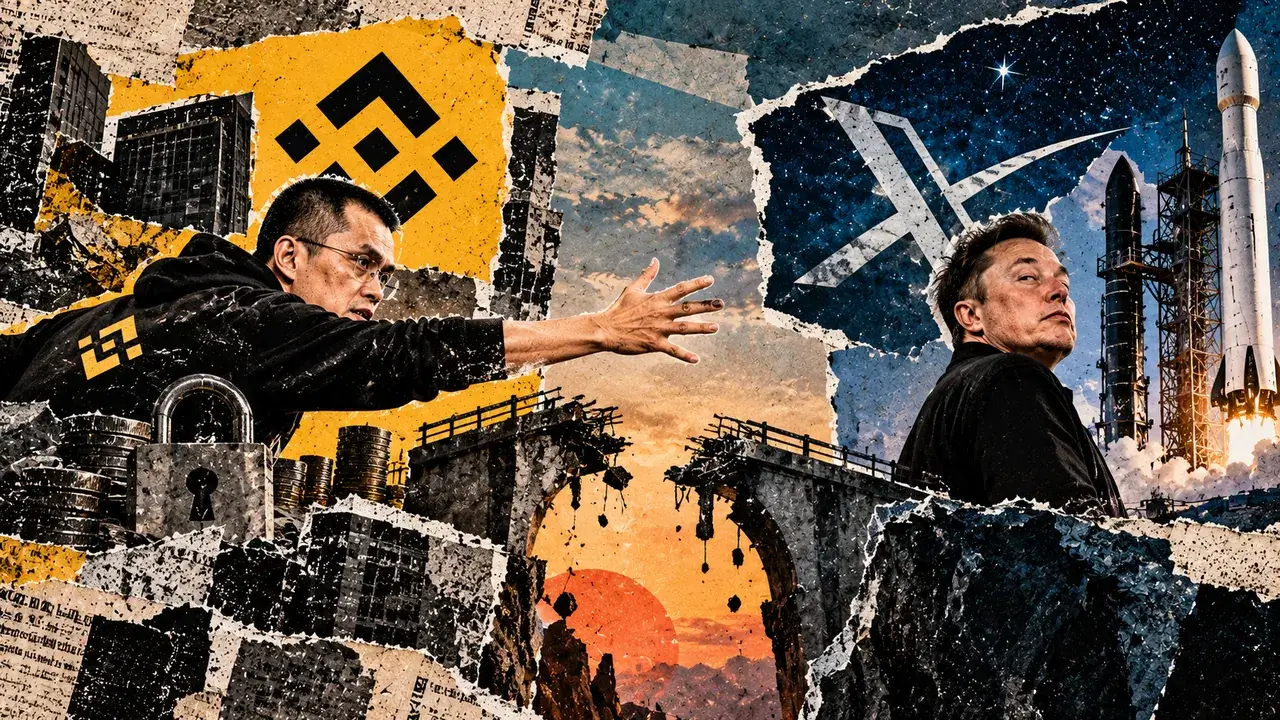
Binance co-founder Changpeng Zhao publicly appealed to billionaire Elon Musk to halt online trolling during a severe security crisis for the cryptocurrency exchange on October 30. In his social media appeal, Zhao pointed to a substantial equity holding in SpaceX—which he valued at upwards of $1 billion—as a tangible anchor of financial stability while urging the tech entrepreneur to show support rather than mockery.
The unusual public exchange unfolded as Binance scrambled to manage a high-stakes security breach that triggered intense market scrutiny. Moments before Zhao’s direct plea, Musk had posted a grimacing-face emoji in response to the unfolding news, prompting the Binance co-founder to step into the digital fray.
“Elon, have a lot of respect for you, but bad time to troll. Please stop,” Zhao wrote from his official account, @cz_binance, before pressing Musk to offer words of encouragement or backing as the exchange tackled the emergency.
The reference to the aerospace company quickly drew attention across financial and cryptographic circles. Zhao identified the holding as “our SPCX shares,” linking the asset directly to Binance’s historical $500 million financial investment in Musk’s high-profile acquisition of Twitter, which has since been rebranded as X. Zhao asserted that the equity position had appreciated significantly, placing its current valuation well above the $1 billion mark. However, both the precise valuation and the direct structural link between the Twitter investment and the SpaceX shares remain based on Zhao’s public accounting.
As observers debated the implications of the high-profile appeal, fellow Binance co-founder Yi He stepped in to clarify the exchange’s immediate liquidity position. Posting from her verified account @heyibinance, she assured the community that the company’s robust annual revenue was more than sufficient to absorb and cover the losses stemming from the hack. Consequently, she emphasized that Binance did not need to liquidate its SpaceX shares to manage the fallout.
Zhao later elaborated on his rationale for invoking the SpaceX holding in a reply to Yi He, explaining that he had explicitly mentioned the assets to remind Musk of recognizable financial ties, hoping to demonstrate that the exchange possessed deep-pocketed backing and that outside observers had little reason to panic.
Behind the public social media back-and-forth, Binance’s internal finance and risk teams were working rapidly to quantify the damage and deploy corporate reserves. In a subsequent funding update released later that same day, the exchange announced it had formally earmarked more than $6 billion in company funds to cover the incident and make affected users whole.
In another post outlining his “rough math,” Zhao weighed the estimated losses from the hack against a complex matrix of frozen digital assets, the Secure Asset Fund for Users (SAFU), and the estimated value of the SPCX equity holding. He characterized the resulting financial gap as deeply painful, yet ultimately manageable for an enterprise of Binance’s scale.
Financial analysts, however, noted the critical distinctions inherent in such calculations. Annual corporate revenue differs fundamentally from immediately available liquid cash at any given moment. Similarly, an estimated equity valuation in a private firm like SpaceX cannot be instantly translated into spendable funds without a formal sale or liquidity event, while frozen stolen assets present an entirely separate recovery challenge that depends on law enforcement cooperation and blockchain tracking.
SpaceX Shares and Binance’s Funding Commitment
In its comprehensive funding statement issued on October 30, Binance detailed the mechanics behind its multi-billion-dollar commitment. The exchange disclosed that $5 billion of the reserved corporate funds was already held in the exact token assets impacted by the security breach. To cover the remaining shortfall, the company confirmed it was actively purchasing the necessary tokens through standard market channels and over-the-counter (OTC) desks.
Binance cautioned that the acquisition process could take time due to varying degrees of market liquidity and the slower settlement times associated with large-scale over-the-counter transactions. These tactical purchases were specifically designed to match the depleted token assets and address shortfalls directly, ensuring that user balances would be fully restored regardless of external asset recoveries.
Furthermore, the exchange explicitly separated these dedicated financial commitments from frozen or protected digital assets. Binance reported that approximately $3 billion in stolen funds had successfully been frozen across various platforms and networks. However, the company stressed that frozen assets remain subject to ongoing legal verification, recovery processes, and technical retrieval efforts. By drawing a clear line between its own corporate funding commitment and the uncertain outcome of efforts to retrieve stolen cryptocurrency, Binance sought to provide a transparent picture of its immediate solvency.
The security incident follows earlier breach coverage by CryptoSlate, which reported that Binance had identified multiple breach points during the exploit and pledged to leverage both the SAFU insurance fund and core corporate resources to absorb the impact. For everyday users and market participants assessing the platform’s long-term stability, Binance’s demonstrated operational progress in acquiring and replenishing the affected tokens remains far more critical than the theoretical valuation of private equity holdings.
Ultimately, while the public plea to Elon Musk and the mention of billion-dollar SpaceX shares added a dramatic flair to an otherwise tense corporate crisis, the resolution of the incident rests primarily on Binance’s concrete financial reserves, active token repurchases, and the ongoing execution of its recovery protocols.