Recent price gains in Bitcoin (BTC) do not yet reflect a healthy surge of fresh capital entering the digital asset market, according to comprehensive on-chain data and market analysis. While the world’s leading cryptocurrency has continued to hover near high levels, underlying capital inflow metrics suggest that the current market momentum is being sustained largely by existing participants rather than a fresh wave of external investors, corporate treasuries, or retail adopters.
In the latest edition of its regular newsletter, "The Week Onchain," leading crypto research and analytics platform Glassnode revealed that long-term participants and existing holders are primarily responsible for driving Bitcoin’s recent upside. This realization sheds light on the fragile nature of the current market structure, wherein rallies depend heavily on seasoned participants paying increasingly higher prices for circulating coins.
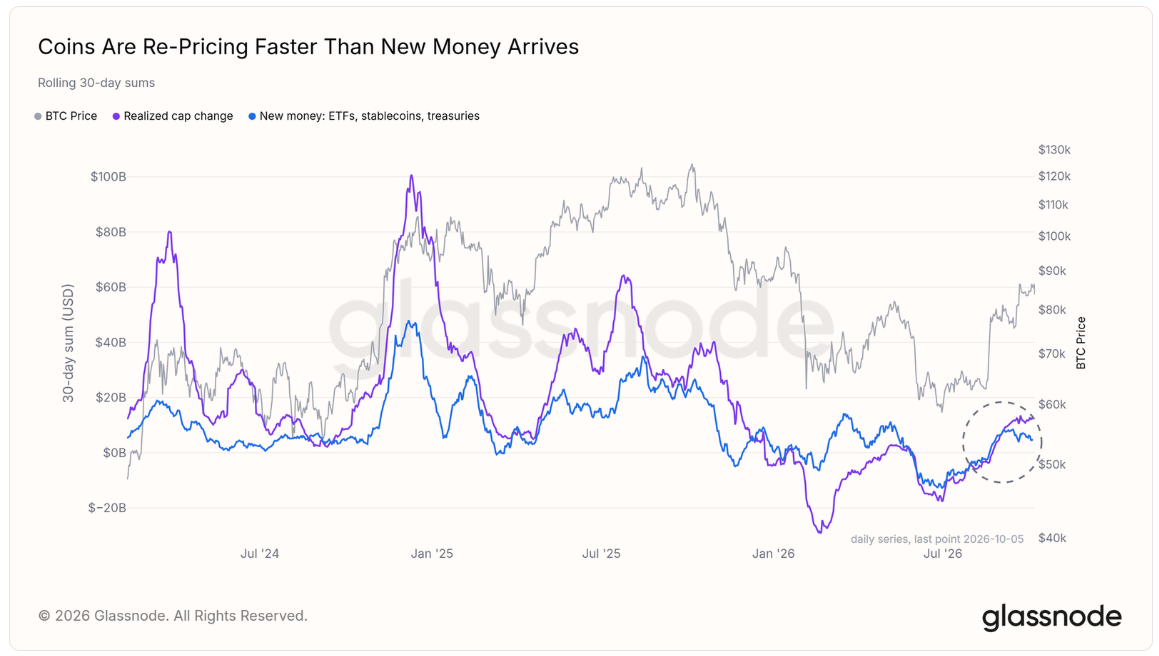
To understand the health of a bull market, analysts closely monitor capital inflow metrics alongside overall valuation changes. "New money" inflows—defined as purchases originating from corporate treasuries, stablecoin growth, and net inflows into United States spot Bitcoin exchange-traded funds (ETFs)—totaled approximately $4.9 billion during the 30-day period leading up to October 5.

However, during that exact same timeframe, Bitcoin’s realized cap expanded at a much faster pace. The realized cap, a metric that values each individual coin at the exact price it was last moved on-chain rather than its current spot market value, grew by a staggering $12.8 billion—more than twice the amount of fresh capital introduced from external sources.
Glassnode noted that new money therefore covers less than two-fifths of that total rise. The rest of the capital growth is driven simply by coins changing hands at higher price points among money that is already sitting within the ecosystem.
Accompanying historical data shows that recent rallies in the BTC/USD trading pair have exhibited this exact same divergence ever since the spot Bitcoin ETFs officially launched in January 2024. At that time, regulated institutional products opened the floodgates for institutional capital, fueling historic price discovery phases. Currently, however, market conditions are notably different. Inflows remain relatively modest when compared against short-term realized-cap gains, creating a distinct divergence that seasoned analysts are watching closely.
The analytical report points out that while the explosive rallies observed throughout 2024 and 2025 featured a similar mix of internal capital circulation, they were backed by vastly larger overall inflows. Until those external capital inflows pick up pace once again, any subsequent upward price movement remains entirely dependent on existing market participants continuing to pay higher prices.
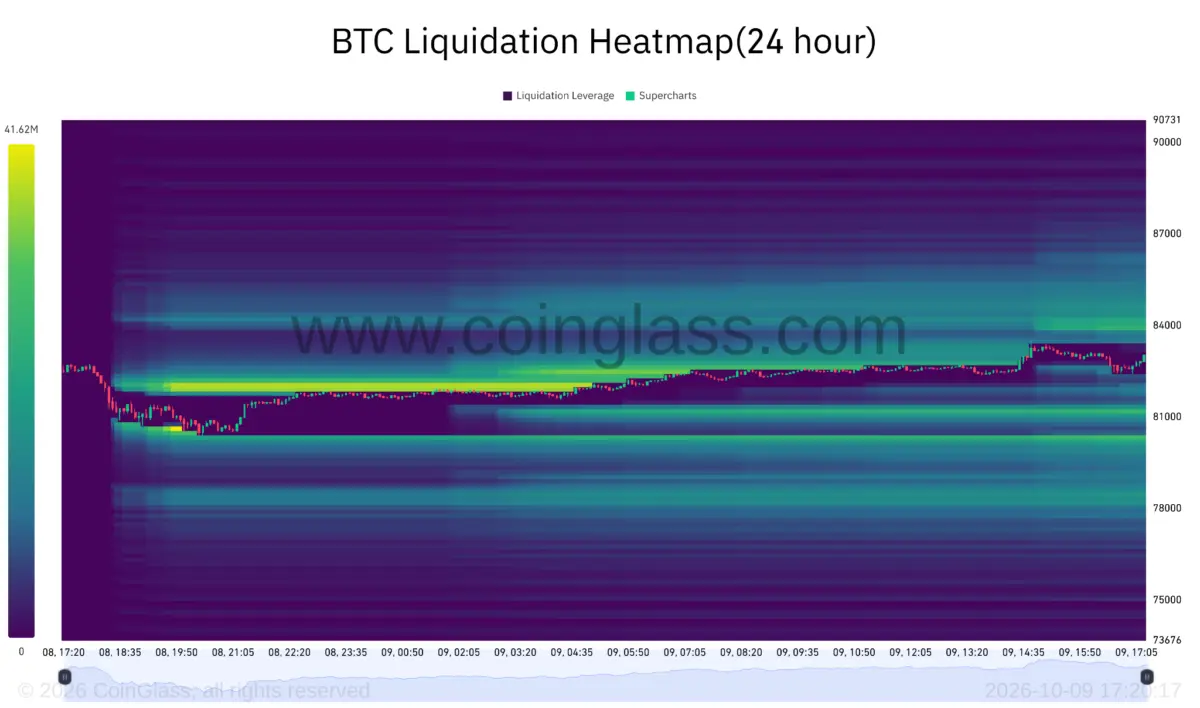
This reliance on internal capital rotation has coincided with a notable psychological and technical barrier around the mid-$80,000 range. Since September 21, Bitcoin has attempted to break out and rise beyond the $87,000 threshold on four separate occasions. Each of these breakout attempts ultimately failed as eager buyers encountered thick, formidable overhead ask liquidity on exchange order books. Consequently, the BTC/USD pair hovered near the $83,000 mark, marking a modest decline of approximately 1% month-to-date.
The broader macroeconomic environment has also added downward pressure. Recent geopolitical anxieties and broader financial market movements, including a resurgence in bond sell-offs driven by tensions involving Iran, have periodically dragged the broader market down, touching local monthly lows near $82,700 and complicating the path toward sustained price discovery.
Adding to the resistance at higher price levels, Glassnode flagged a significant surge in profit-taking activity among newer market entrants over the weekend, a period that saw Bitcoin register its first weekly market close above the $85,000 mark since January.
The data highlights a distinct behavioral shift among recent buyers. Of all the coins deposited onto centralized exchange order books that day, approximately 86% originated from short-term holders—defined as entities holding their coins for less than 155 days—who were actively moving their assets at a profit. To put this intense wave of realization into perspective, that figure represents the highest single-day share of short-term holder profit-taking observed over the past year. On a typical trading day under normal market conditions, that metric sits below two-fifths.
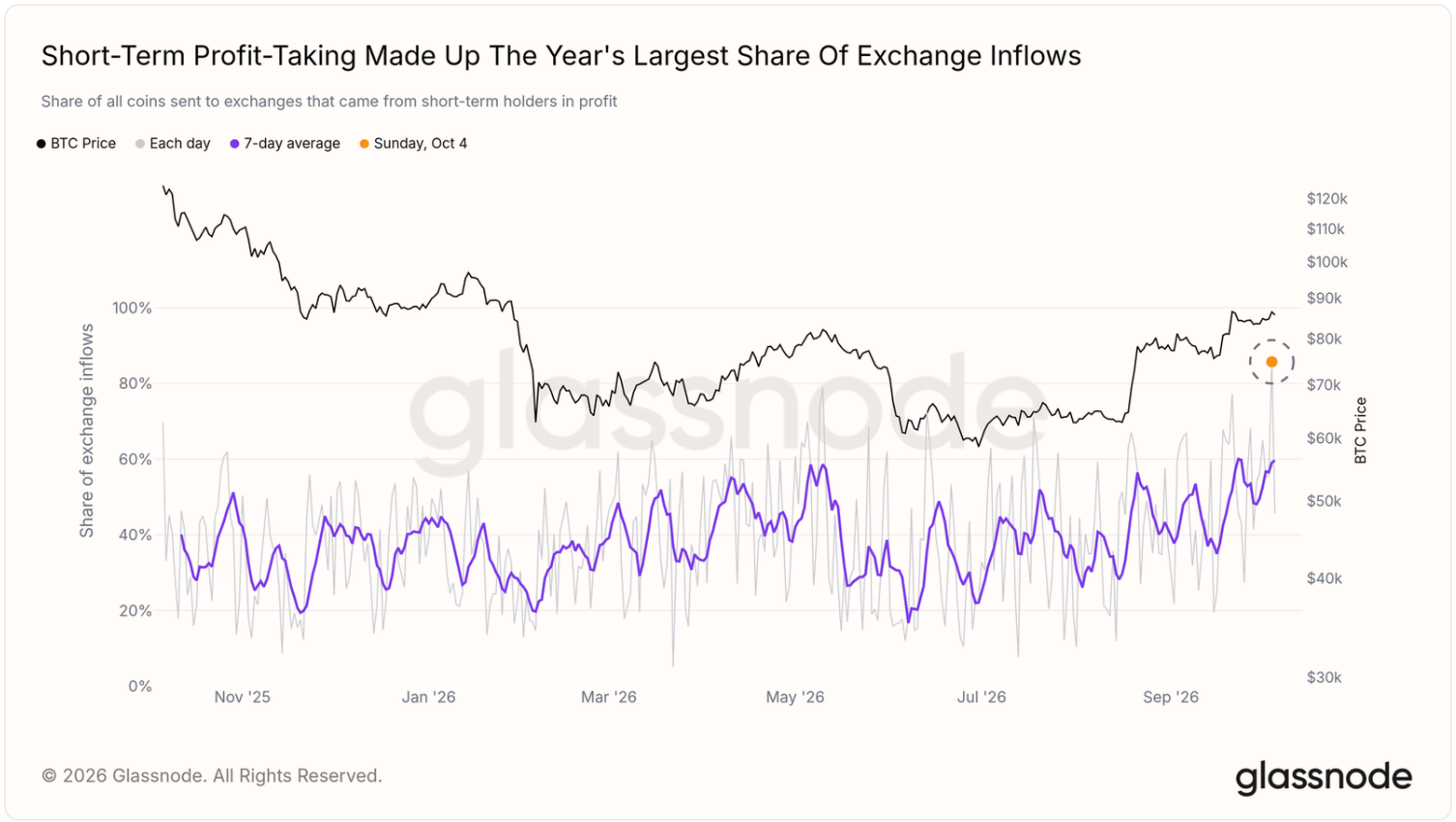
Short-term holders are traditionally recognized within market analytics as being far more sensitive to immediate price volatility and macroeconomic shifts than long-term investors or institutional funds. Because they tend to buy during localized market frenzies, they are often quick to secure gains whenever prices approach significant psychological resistance milestones, such as the $85,000 level.
Despite this aggressive wave of profit-taking, the short-term holder cohort remains firmly in a state of net profit overall. According to data compiled from CryptoQuant, the aggregate cost basis for this group—frequently referred to as the short-term holder realized price—remains anchored around $78,250. This healthy buffer suggests that while newer investors are eagerly locking in gains after the recent push past $85,000, their average acquisition price sits comfortably below current spot levels, providing a vital psychological and technical support cushion should the market experience deeper pullbacks in the near term.