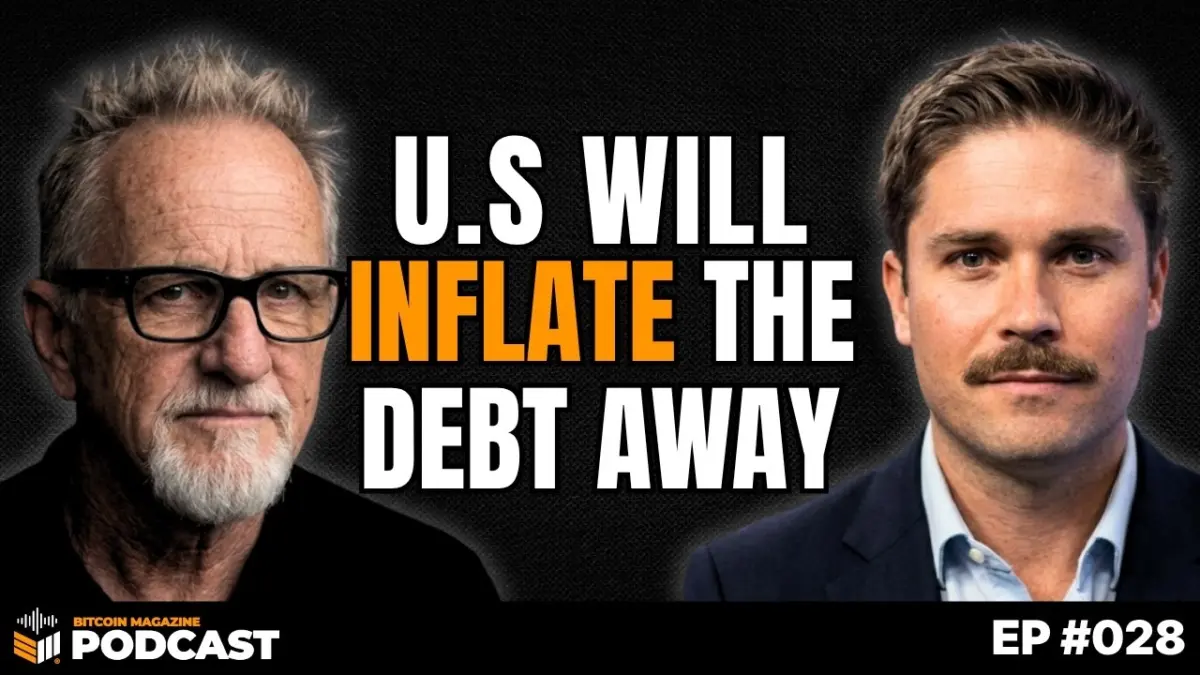
Decades of relentless offshoring have left the United States critically dependent on foreign rivals for essential technology, defense equipment, and vital natural resources. According to independent investor Craig Tindale, this systemic industrial hollowed-out process has evolved from an economic strategy into an acute national security crisis. In a recent interview on Bitcoin Magazine hosted by Spencer Nichols, Tindale drew heavily upon the foundational philosophies of American statesman Alexander Hamilton and former President Dwight Eisenhower to examine how the modern United States arrived at this precarious juncture. He framed artificial intelligence, sovereign debt dynamics, and the race for hard assets as central pillars of an unfolding geopolitical battleground.
The conversation, spanning a wide array of macroeconomic and geopolitical topics, highlighted the urgent vulnerabilities embedded in America’s supply chains. Tindale pointed out that the United States has largely lost the domestic capacity to build its own advanced defense equipment, robotics, and critical artificial intelligence hardware. Because generations of policymakers prioritized short-term financial efficiency and globalized labor arbitrage over long-term industrial resilience, the nation now relies heavily on geopolitical competitors for critical metals and foundational technologies. In Tindale’s view, this dependency is unsustainable in a fragmenting multipolar world and demands an immediate reevaluation of national policy.
To contextualize this vulnerability, Tindale invoked the historical framework of Alexander Hamilton, America’s first Treasury Secretary and a primary architect of the nation’s early industrial policy. Hamilton’s vision for a self-sufficient domestic economy protected by strategic tariffs and state-backed manufacturing provided the blueprint for the early republic’s industrial rise. Tindale argued that a similar protectionist and reindustrialization mindset is desperately required today to rebuild America’s shattered manufacturing base. Paired with Eisenhower’s historic warnings regarding the military-industrial complex and the imperative of technological supremacy, Tindale presented artificial intelligence not merely as a commercial software tool, but as a vital defense mandate—a high-stakes race to automate society and establish an impenetrable digital and physical defense network.
Beyond the immediate challenges of manufacturing and technology, the discussion explored the complex architecture of modern global finance, touching on financial repression in an era of superintelligence, rising sovereign yields, and the mechanics of modern central banking. Tindale analyzed why sovereign yields are climbing globally and demystified the notion that modern nation-states simply go broke in traditional terms. Instead, he examined how sovereign debt burdens and fiscal pressures are managed through mechanisms reminiscent of Operation Twist and evolving central bank accords between the U.S. Treasury and the Federal Reserve.
A central theme of this financial analysis is the burden borne by domestic savers. Tindale explained how financial repression functions as a hidden tax, systematically eroding the purchasing power of ordinary citizens while insulating large-scale financial institutions and governments. As global powers navigate a shifting monetary landscape, the reliance on traditional fiat systems is being challenged by alternative instruments and hard assets. The conversation highlighted Hong Kong’s gold vault strategy and the broader historical necessity for nations to secure hard assets—such as gold, silver, copper, and decentralized currencies like Bitcoin—to maintain sovereignty and economic stability.
The conversation also turned to the rapid proliferation of stablecoins, the legislative implications of initiatives like the GENIUS Act, and the broader financial fragmentation occurring across a multipolar world. As traditional economic blocs fracture, digital assets and decentralized monetary networks are increasingly utilized by individuals and institutions seeking refuge from inflation, currency devaluation, and capital controls. Tindale emphasized that protecting capital in such an unpredictable environment requires deliberate diversification into tangible commodities and immutable, decentralized networks that operate independently of centralized political whims.
Bringing these macroeconomic and technological threads together, Tindale concluded by assessing the broader concepts of resilience, self-sufficiency, and historical cycles. Referencing cyclical theories of societal transformation, he argued that weathering the current economic and geopolitical turbulence requires a return to foundational economic strength, domestic industrial capacity, and robust individual self-reliance.
As always, media and publishing entities associated with the discussion maintain standard industry disclaimers regarding the content provided. The views and opinions expressed by participants on the program are strictly their own and do not necessarily reflect the official policies or positions of BTC Inc., Bitcoin Magazine, or any affiliated corporate entities. The information shared during the interview is intended strictly for informational and educational purposes and should not be interpreted or construed as professional investment, legal, tax, or accounting advice. Nothing discussed in the program constitutes a solicitation, recommendation, endorsement, or offer to buy or sell any securities, commodities, or financial instruments, and viewers are consistently advised to consult with their own qualified financial and legal advisors before making significant economic or business decisions.